Amazon ECS Gateway Unveils New Account-Level Resource to Streamline Ingress Networking for Containerized Workloads at Scale

Managing containerized applications at enterprise scale has long presented platform engineering teams with significant architectural friction, particularly regarding ingress networking. As organizations adopt microservices architectures and deploy hundreds or thousands of discrete services on Amazon Elastic Container Service (Amazon ECS), configuring and maintaining entry points for external and internal traffic historically required intensive manual intervention. For every new service introduced into production, teams were traditionally obligated to provision, wire, and continuously synchronize multiple AWS resources—including Application Load Balancers (ALBs), AWS Certificate Manager (ACM) SSL/TLS certificates, AWS WAF web access control lists (web ACLs), and complex security groups. This per-service operational overhead has consistently acted as a bottleneck, dampening deployment velocity, increasing administrative toil, and heightening the risk of configuration drift across large cloud environments.
To address these systemic challenges head-on, Amazon Web Services has officially announced the launch of Amazon ECS Gateway, a transformative account-level resource engineered to radically simplify ingress networking for containerized workloads. By automating the dynamic provisioning, orchestration, and lifecycle management of underlying networking infrastructure directly within a user’s AWS account, ECS Gateway bridges the historical divide between platform engineering goals and application delivery speed. This release marks a pivotal evolution in how AWS approaches container traffic management, establishing a robust paradigm for cost optimization, security enforcement, and developer autonomy.

Architecture and Core Operational Mechanics
At its structural core, Amazon ECS Gateway introduces a clean, deliberate separation of responsibilities between centralized platform teams and distributed application development teams. Platform engineering units maintain overarching control by defining and provisioning gateways, setting up foundational security guardrails, and establishing network boundaries. Meanwhile, application teams are empowered to seamlessly connect their individual container services to pre-existing gateways using streamlined configuration connectors, entirely bypassing the need to manage load balancer target groups or DNS records manually.
One of the most compelling economic and architectural features of ECS Gateway is its support for host-based routing via Application Load Balancers, allowing up to 25 distinct services to share a single ALB. This high-density consolidation drastically optimizes infrastructure costs by preventing the resource sprawl associated with provisioning dedicated load balancers for low-traffic services. Furthermore, Amazon ECS assumes full lifecycle management responsibilities for the underlying hardware infrastructure. The system automatically provisions the initial ALB when the first service establishes a connection, scales out by adding subsequent ALBs as capacity thresholds are reached, and safely deprecates and removes load balancers when workloads scale down or decommission. Upon successful provisioning, every integrated service is automatically assigned a unique DNS hostname, delivering an immediate, ready-to-use production endpoint.
The flexibility of ECS Gateway is further underscored by its robust many-to-many relationship model. A single gateway can be associated with up to 10,000 distinct ECS clusters, while an individual cluster can support up to five separate gateway associations. This architectural fluidity allows platform teams to segment traffic effortlessly across diverse environments—such as establishing dedicated public-facing gateways alongside isolated VPC-internal gateways—while applying granular access controls using AWS Identity and Access Management (IAM) policies.

Chronology and Deployment Workflow
The rollout of Amazon ECS Gateway follows a methodical, phased engineering release schedule by AWS to ensure comprehensive platform stability and seamless integration with existing container primitives. Early preview cycles focused heavily on refining the developer experience and ensuring compatibility with core AWS security frameworks. Today, the feature is generally available across all commercial AWS Regions where Amazon ECS is supported, enabling immediate enterprise adoption.
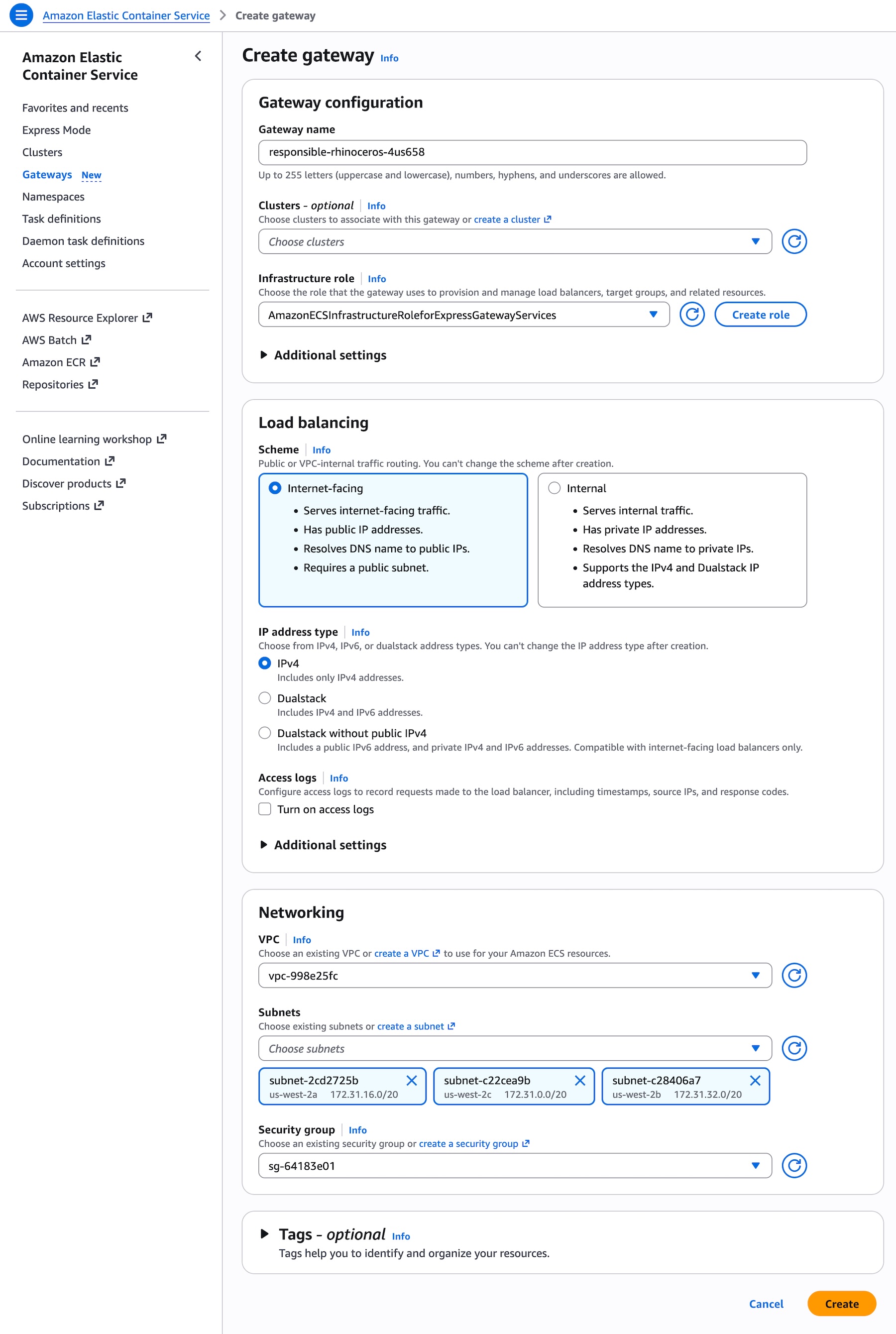
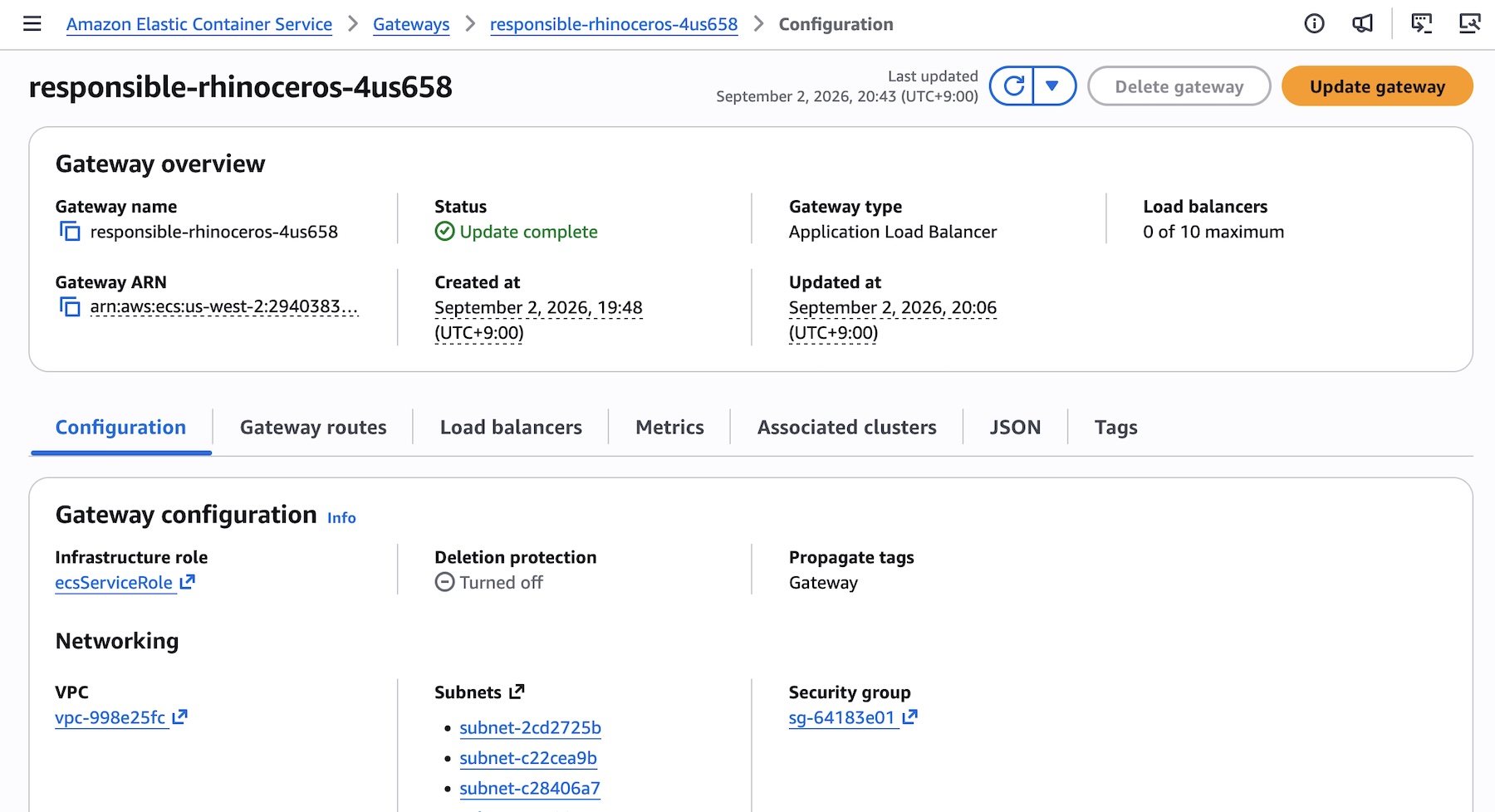
Getting started with the service requires a straightforward orchestration workflow that can be executed either graphically through the Amazon ECS console or programmatically via the AWS Command Line Interface (AWS CLI) and infrastructure-as-code tooling. Platform administrators initiate the process by creating a gateway and assigning an authorized IAM infrastructure role. This specialized role grants ECS the necessary permissions to provision, configure, and maintain networking components—such as ALBs, subnets, and certificates—within the customer’s account.
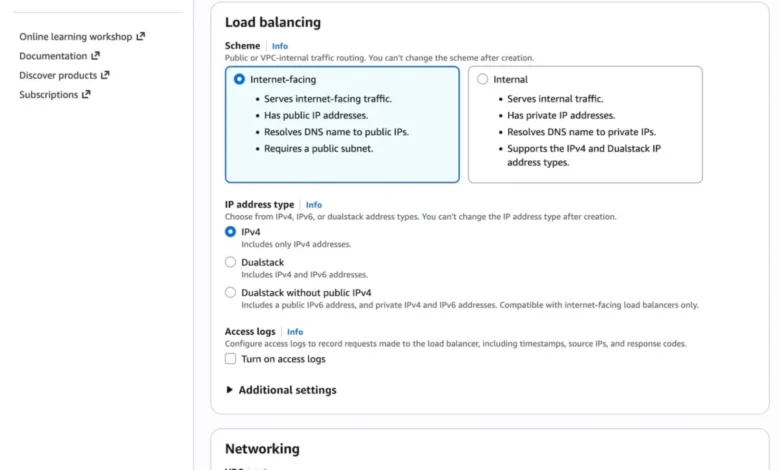
Administrators select a load balancing scheme during creation, choosing between internet-facing public routing or VPC-internal traffic routing. Advanced configuration parameters allow operators to define listeners, communication ports, maximum load balancer scaling thresholds, and AWS WAF web ACLs to mitigate common web vulnerabilities. Once the gateway shell is established, administrators execute commands such as AssociateGatewayWithCluster to bind the gateway to targeted ECS clusters.
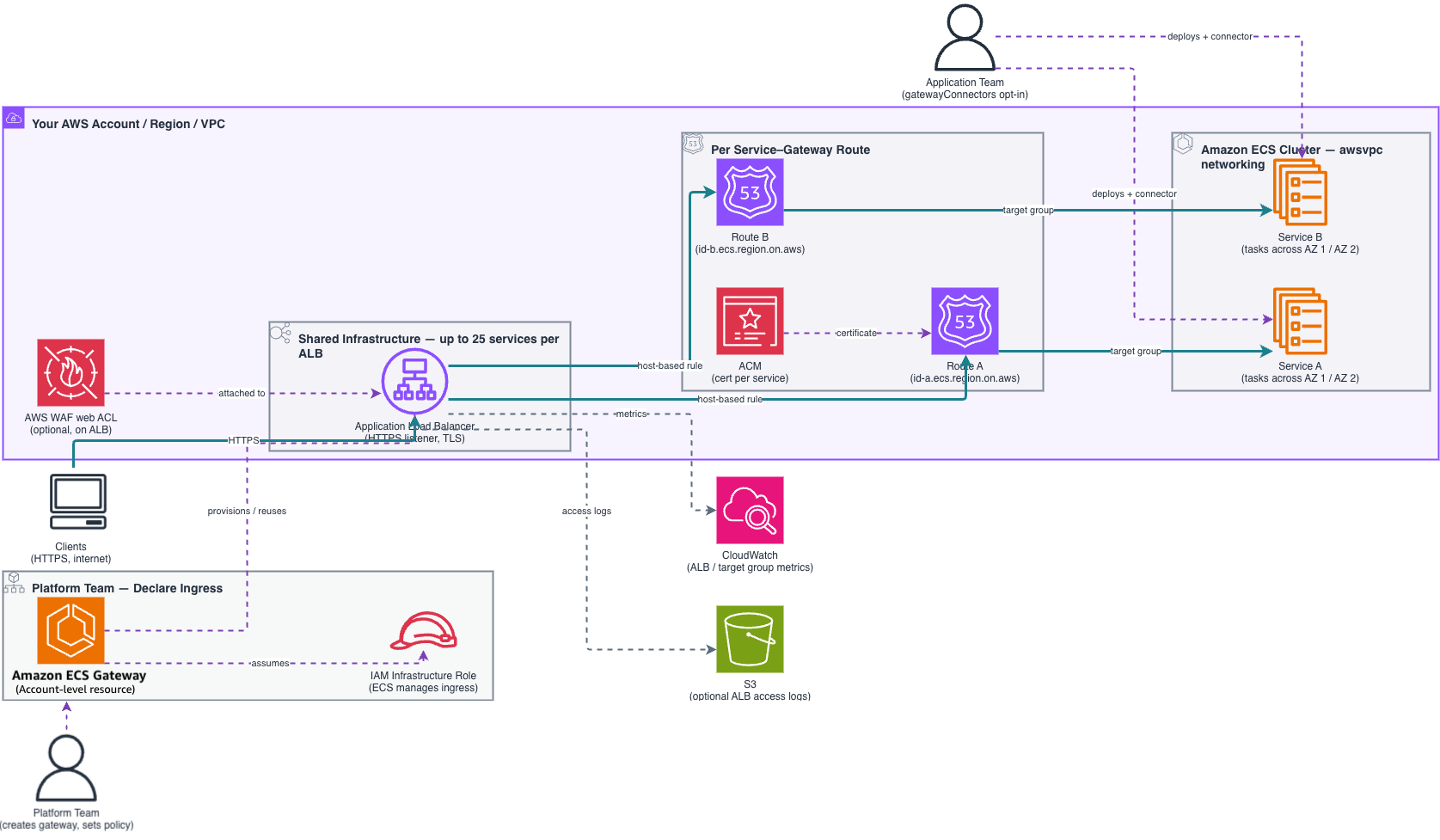
For application teams, adoption is frictionless. Developers simply incorporate a gateway connector into their service definitions using the CreateService or UpdateService API operations. Organizations operating legacy ECS services equipped with traditional, dedicated load balancers can execute an incremental migration path. By utilizing UpdateService to append a gateway connector, teams can maintain dual ingress paths concurrently, validating the performance and reliability of the new ECS Gateway route before safely deprecating and removing legacy load balancer configurations.
Technical Deep Dive: Behind the Scenes
When a deployment is triggered, Amazon ECS executes a sophisticated evaluation algorithm. It scans the gateways associated with the target cluster and identifies compatible connections by matching access type filters, verifying shared VPC boundaries, and ensuring comprehensive coverage across all Availability Zones utilized by the service’s subnets.
Upon establishing a connection, ECS automates the complex web of underlying resource provisioning:
- It assigns the service to an active Application Load Balancer possessing available capacity (or provisions a new ALB if current thresholds are exhausted, subject to pre-configured
maxAlbCountlimits). - It generates and validates a dedicated AWS Certificate Manager (ACM) SSL/TLS certificate for secure transport.
- It allocates a unique DNS hostname linked directly to the containerized service.
- It dynamically updates ALB listener rules to route incoming traffic matching the unique hostname directly to the correct service target group.
- It configures specialized service security groups, strictly enforcing inbound traffic rules to permit packets exclusively from the designated ALB security group, thereby hardening the network perimeter.
Once these automated tasks complete, the gateway route transitions to an ACTIVE state, and the service URL becomes immediately responsive to incoming web traffic. Furthermore, ECS Gateway natively manages dynamic operational lifecycle events, ensuring that rolling updates, auto-scaling events, and service terminations automatically propagate through the routing architecture without requiring manual DNS or load balancer realignment.
Industry Implications and Strategic Analysis
The introduction of Amazon ECS Gateway arrives at a critical juncture in the evolution of cloud-native computing. As organizations increasingly scale their microservices footprints, operational toil and cognitive load on engineering teams have emerged as primary inhibitors to velocity and reliability. By abstracting the boilerplate complexity of ingress networking, AWS is directly addressing the "day-two" operational challenges that often plague fast-growing engineering organizations.
Industry analysts note that automated ingress management bridges a long-standing usability gap between managed container orchestration platforms and traditional network configuration paradigms. While Kubernetes environments have historically relied on complex ingress controllers and external service meshes to solve similar multi-tenant routing challenges, Amazon ECS Gateway provides a natively integrated, AWS-optimized alternative that eliminates the heavy lifting of third-party tool maintenance.
By driving high-density resource sharing—specifically allowing up to 25 services to share a single Application Load Balancer—ECS Gateway also delivers profound financial efficiencies. In enterprise environments running thousands of microservices, the reduction in redundant load balancer baseline charges and associated data processing overhead can translate to substantial cloud spend optimization. Moreover, the integration of native AWS security primitives like WAF and ACM directly into the gateway provisioning pipeline ensures that security compliance is baked in by default, rather than bolted on as an afterthought.
Availability and Pricing Structure
Amazon ECS Gateway is available immediately across all commercial AWS Regions where Amazon ECS is operational. AWS has structured the release with a developer-friendly economic model: the ECS Gateway feature itself incurs no additional software license or management charges. Customers pay solely for the underlying AWS infrastructure resources that are dynamically provisioned within their accounts when services actively connect to a gateway. This consumption-based model encompasses standard charges for Application Load Balancers, CloudWatch logs and metrics, ACM certificates, and standard inter-region or internet data transfer fees.
To assist developers in adopting the new functionality rapidly, AWS has introduced robust integration options, including support for the AWS MCP Server and specialized plugins for preferred AI-driven coding assistants, enabling programmatic interaction with ECS Gateway APIs. Platform teams and cloud architects are encouraged to review the official Amazon ECS Gateway documentation to design their routing topologies, instantiate their first gateway instances via the AWS console, and provide feedback through community forums such as AWS re:Post for ECS.