AWS Announces General Availability of Continuum for Code Vulnerabilities to Streamline Cloud Security and Automated Patch Management

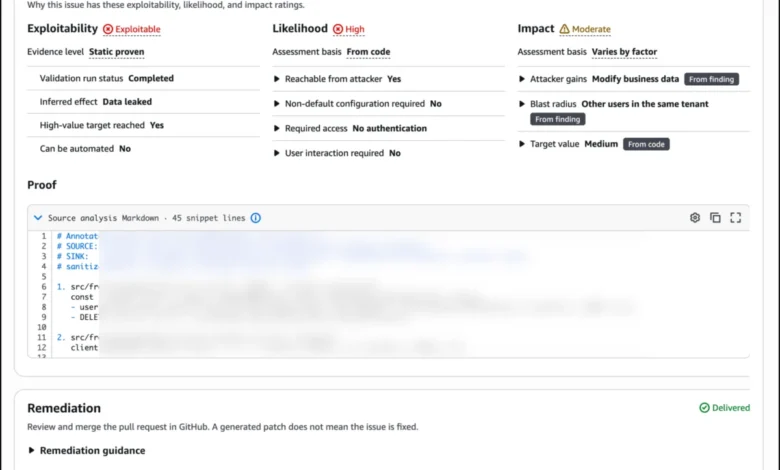
Amazon Web Services (AWS) has officially announced the general availability of AWS Continuum for code vulnerabilities, a security service engineered to detect, validate, and remediate application security flaws. Designed to combat the exponential threat landscape driven by modern artificial intelligence, AWS Continuum automates the labor-intensive lifecycle of vulnerability management. By combining code repository analysis with live AWS environment telemetry, the service generates targeted patches, conducts automated sandboxed exploit testing, and delivers ready-to-merge pull requests directly to developers. Initially launched in select domestic regions, the tool aims to eradicate the industry-wide bottleneck of alert fatigue and manual triage.
The Genesis of Cloud Alert Fatigue and the AI Threat Vector
For decades, enterprise software development has struggled with the sheer volume of security alerts generated by static application security testing (SAST), software composition analysis (SCA), and infrastructure scanning tools. Modern application estates frequently bombard development and security teams with thousands of low-, medium-, and high-severity findings daily. Historically, organizations lacked contextual visibility to differentiate between an isolated, unreachable development utility flagged as critical and an accessible service sitting adjacent to a core payment database.

Compounding this operational friction is the rapid democratization of exploit development. Threat actors increasingly leverage frontier artificial intelligence models to weaponize newly disclosed vulnerabilities within minutes of public release. As adversaries accelerate their attack lifecycles using machine learning, defensive teams remain tethered to manual workflows. Prior to the introduction of contextual orchestration platforms, confirming whether a single security finding was exploitable often required hours of forensic investigation by senior engineers. Furthermore, deploying a reliable patch historically demanded days of cross-departmental coordination between security teams, infrastructure administrators, and software developers who had to manually evaluate the potential blast radius of every single code modification.
AWS Continuum bridges this operational gap by introducing automated validation and contextual risk ranking. Rather than forcing teams to manually parse endless lists of raw scanner output, Continuum synthesizes data from multiple operational layers to establish precise, evidence-based prioritization.
Context Graph Architecture and Dynamic Risk Assessment
At the technical core of AWS Continuum is its context graph engine, which ingests data streams from two primary sources: connected code repositories—such as GitHub integrations or secure Amazon S3 buckets—and the live AWS infrastructure running the applications.

To map the infrastructure context, administrators deploy an AWS Continuum collector within the specific AWS account and region hosting the workload. This collector aggregates detailed resource metadata, including configurations derived from AWS Config and complex network topology mapping. By analyzing this information, Continuum calculates network reachability, determining whether a vulnerability is exposed to the internet, isolated within a private subnet, or already mitigated by existing runtime security controls and network access policies.
Furthermore, the context graph maps systemic dependencies across microservices, identifying data flows, ownership lineage, and proximity to high-value assets such as customer databases, authentication services, and payment processing pipelines. Instead of relying solely on generic severity matrices like the Common Vulnerability Scoring System (CVSS), Continuum ranks issues based on real-world exploit paths.
When a vulnerability is flagged, Continuum assigns a rigorous evidence level. For reproducible vulnerabilities, the service executes the exploit within an isolated sandbox environment, generating concrete proof-of-concept code, step-by-step reproduction paths, and a precise blast radius assessment. It then evaluates whether existing security defenses would detect and intercept the validated attack vector before it reaches critical systems.
Automated Remediation and the Human-in-the-Loop Paradigm
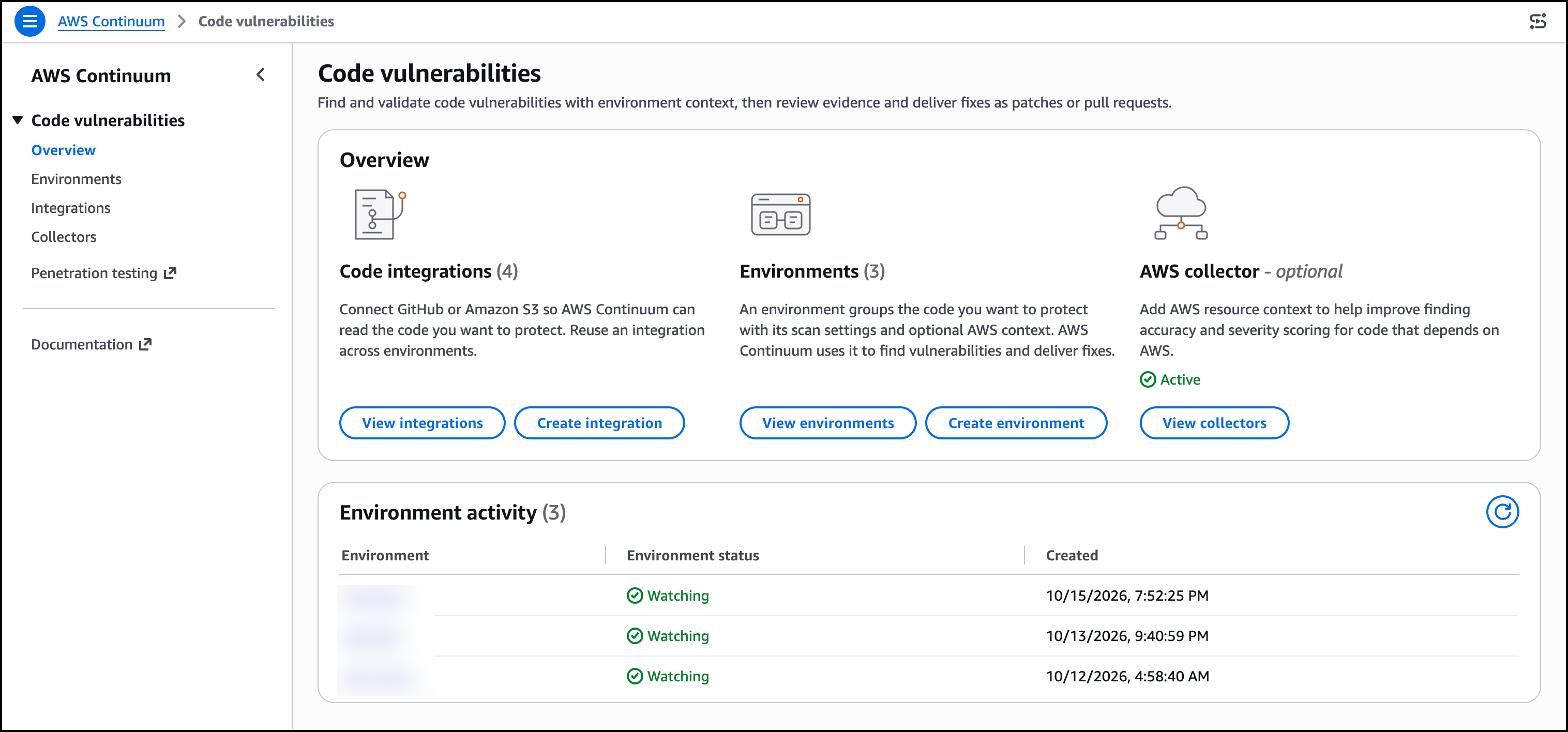
Once AWS Continuum validates a vulnerability and assesses its business impact, it initiates the remediation workflow. For each confirmed issue, the service automatically generates a corrective patch—which may involve a code modification, a dependency upgrade, or an infrastructure configuration adjustment. This fix is packaged and opened as a pull request directly in the connected source code repository.
To maintain stringent governance and architectural safety, AWS Continuum operates under a strict human-in-the-loop governance model during its initial rollout. Automated code modifications do not deploy directly to production environments without oversight. Instead, engineers receive a pull request containing a comprehensive description of the risk assessment, the underlying proof of exploitability, and a clear summary of the proposed changes. Developers review the evidence and choose whether to merge the pull request, ensuring that final operational control remains firmly with internal engineering teams.
AWS has indicated that future iterations of Continuum will introduce configurable automation policies. Within strictly defined guardrails—such as mandatory test coverage thresholds, strict scope limitations, and historical success metrics—organizations will eventually be able to authorize Continuum to autonomously apply specific classes of remediation patches without manual intervention.
Operational Deployment and Console Integration
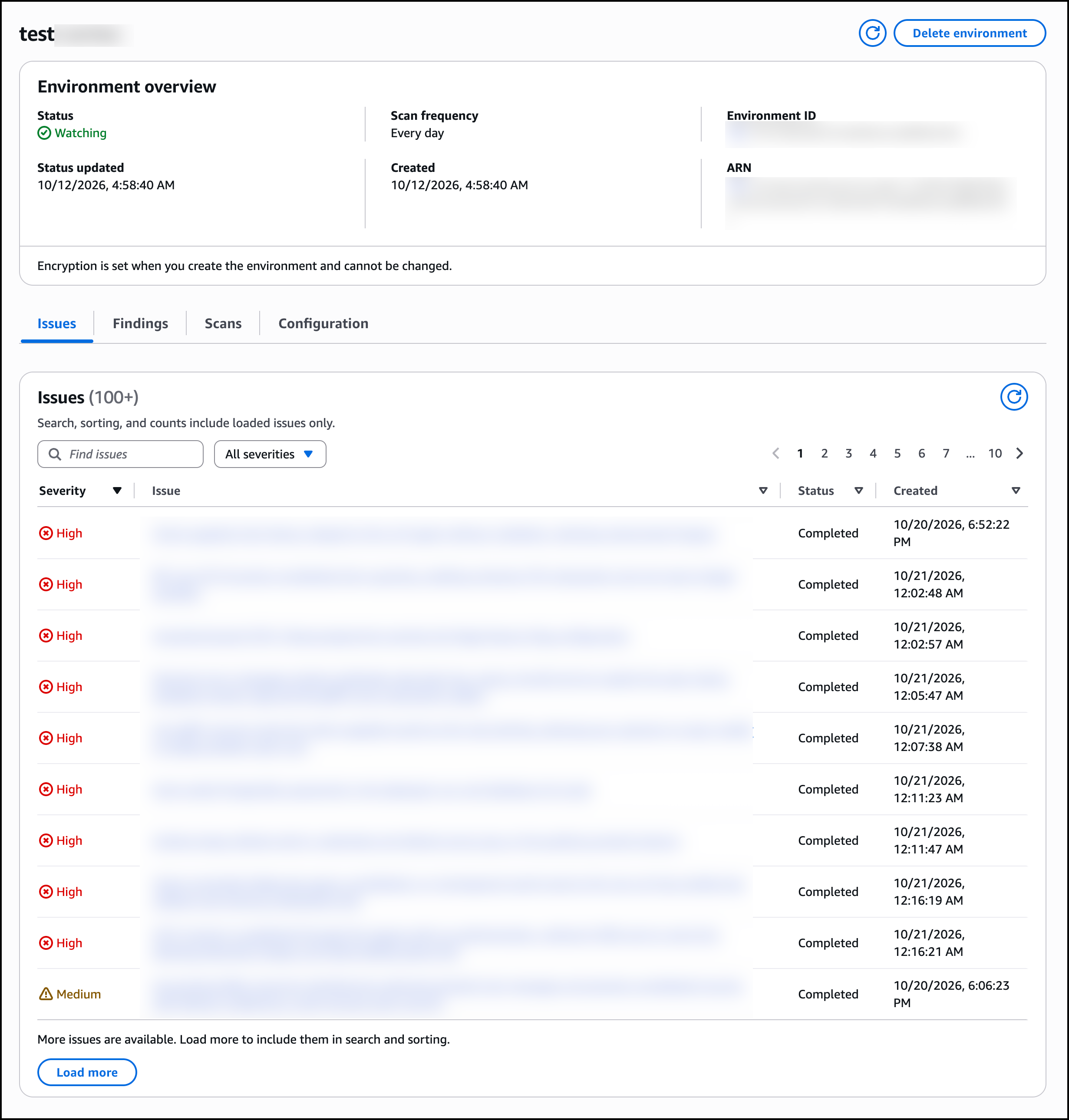
Administrators can configure and monitor AWS Continuum through the centralized AWS Management Console under the dedicated Code vulnerabilities dashboard. Setting up an environment requires establishing a secure link to a code repository via GitHub or an Amazon S3 bucket located within the same AWS account and region where the service is enabled.
Once connected, the Continuum console aggregates infrastructure metrics, environment health statuses, and active code integrations onto a unified Overview page. Security analysts can navigate directly to the Issues tab to review prioritized findings rather than raw scanner alerts. Each issue entry details its exploitability status, likelihood of exploitation, potential business impact, and direct links to the generated pull requests in GitHub. Additionally, dedicated tabs for Scans and Configuration allow teams to adjust scanning cadences, execute on-demand evaluations, and manage collector permissions.
Market Implications and Industry Analyst Perspectives
Industry analysts and enterprise security leaders have closely monitored the rollout of automated remediation platforms, viewing them as a necessary evolution in cloud-native security posture management (CNSPM). As organizations accelerate cloud migration and embrace continuous integration and continuous deployment (CI/CD) pipelines, traditional security tools that focus solely on detection have created unsustainable operational friction.
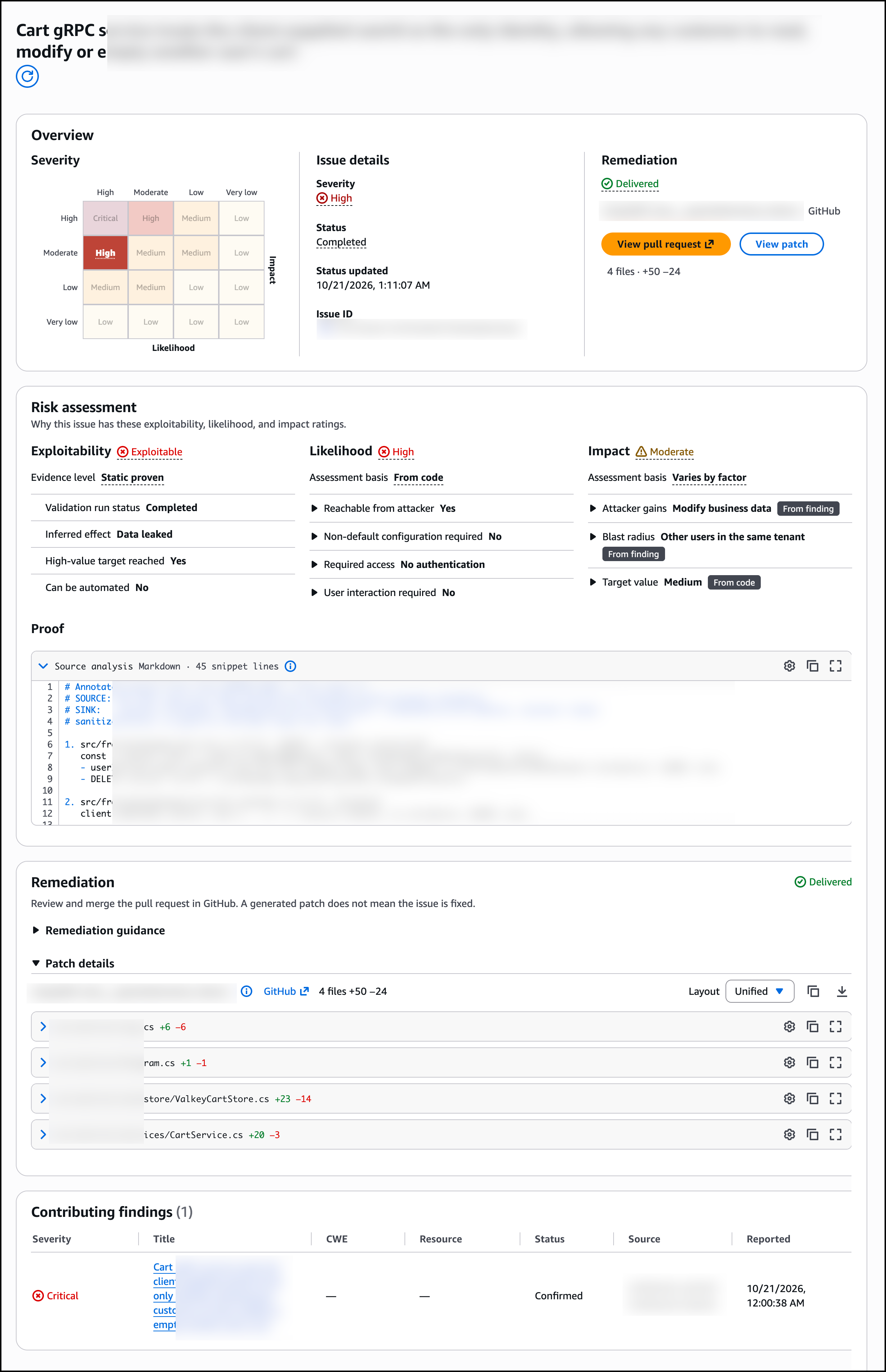
By shifting the paradigm from passive vulnerability identification to active, context-aware remediation, AWS Continuum addresses the fundamental economic challenge of application security: the disproportionate ratio of security alerts to available engineering hours. Observers note that while automated patch generation significantly reduces the mean time to remediation (MTTR), the ultimate success of such tools will depend on the accuracy of their context graphs and the reliability of their generated patches in complex, enterprise-scale software environments.
Furthermore, the integration of sandbox-based exploit verification introduces a higher standard of proof into vulnerability management. By demonstrating empirically whether a flaw can be exploited in a specific network topology, enterprises can eliminate false positives and focus engineering resources exclusively on genuine threats that jeopardize core business infrastructure.
Availability and Pricing
AWS Continuum for code vulnerabilities is commercially available starting today. The service has launched in key domestic cloud zones, specifically the US East (N. Virginia) and US West (Oregon) AWS Regions. Organizations looking to deploy the service can review detailed pricing models on the official AWS Continuum pricing page, consult the comprehensive user guide in the AWS documentation repository, and begin configuring environments through the AWS Management Console. Support inquiries and technical feedback are being routed through standard enterprise AWS Support channels.
Related posts: