CUKTECH 15 140W PowerStation Launches in the United States Offering Multi-Device Desktop Charging Efficiency

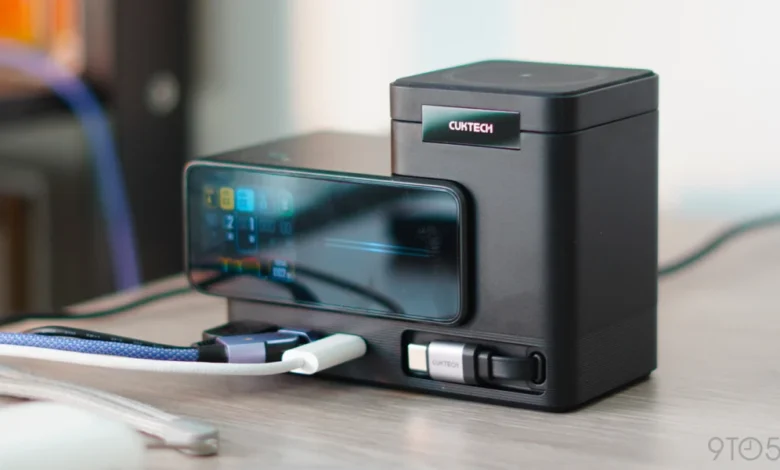
The landscape of personal workspace technology has shifted significantly over the past five years, as the modern professional’s arsenal has expanded to include an array of power-hungry hardware. Recognizing this demand for centralized, high-wattage power management, CUKTECH has officially brought its 140W PowerStation to the United States market. Priced at $149, the device represents a convergence of GaN (Gallium Nitride) technology, wireless inductive charging, and real-time data monitoring, aimed at streamlining the cluttered desks of power users who juggle multiple Apple and cross-platform devices simultaneously.

Technical Specifications and Engineering Architecture
The CUKTECH 15 PowerStation operates on advanced Gallium Nitride technology, which allows for higher power density and thermal efficiency compared to traditional silicon-based chargers. At the heart of the unit is a total output capacity of 140W. This power is intelligently managed to accommodate a variety of charging profiles.
When a single device is connected to the primary USB-C port, the station can deliver the full 140W, which is the requisite wattage for fast-charging high-performance laptops such as the 16-inch MacBook Pro. When multiple devices are connected, the internal power delivery controller redistributes the load across its six available charging points. The connectivity array includes:

- Multiple USB-C Power Delivery ports for high-speed device charging.
- A legacy USB-A port, acknowledging the continued utility of older accessories and specialized hardware.
- Integrated magnetic wireless charging capability, compatible with Apple’s MagSafe standards.
- A secondary wireless charging zone specifically optimized for peripherals like AirPods.
- A retractable cable system to minimize desk cable management issues.
The device also features a built-in TFT diagnostic display. This display provides users with real-time feedback on wattage output, allowing for the verification of charging speeds. This feature is particularly valuable for professional users who need to confirm that their hardware is negotiating the correct power protocols to maximize battery health and charging efficiency.
Chronology of Market Expansion
The journey of the CUKTECH 15 to the American market follows a deliberate rollout strategy. Initially, the product was introduced to European markets, where it underwent rigorous regulatory testing and user feedback cycles. This phased approach allowed the manufacturer to optimize the power distribution logic before scaling production for the North American region.

Following its successful tenure in Europe, the product was cleared for import and distribution in the United States, officially appearing on major retail platforms in October 2026. This launch aligns with a broader trend of "Tech-tember" and autumn product cycles, where hardware manufacturers often release accessories alongside new smartphone and laptop iterations to capitalize on the surge in consumer demand for upgraded ecosystem peripherals.
Contextualizing the Need for Centralized Charging
The necessity for such a device is rooted in the current state of consumer electronics. As manufacturers continue to ship devices without bundled power adapters, consumers are tasked with sourcing their own charging solutions. Furthermore, the proliferation of devices—laptops, tablets, smartphones, and wireless earbuds—has led to a "charger sprawl" on the modern desk.

Industry analysis suggests that the desktop charging station market is currently seeing a compound annual growth rate driven by the rise of hybrid work environments. Professionals who transition between home and office spaces require portable, yet powerful, solutions that minimize the time spent managing individual power bricks. The shift toward GaN technology has been the primary catalyst for this trend, as it enables manufacturers to pack high-wattage capabilities into smaller footprints.
Performance and Reliability Implications
From a technical perspective, the inclusion of a USB-A port alongside modern USB-C standards is a strategic decision. While the industry is moving toward a USB-C unified standard, a significant portion of medical, photographic, and industrial equipment still relies on USB-A interfaces. By maintaining this backward compatibility, CUKTECH has positioned the PowerStation as a "future-proof" hub that does not force the abandonment of older, yet still functional, legacy hardware.

The unit’s ability to support "StandBy Mode"—a feature found on modern smartphones that turns the device into a smart display while charging—further integrates the charging station into the user’s workflow. By holding the phone in an upright position, the station serves as a secondary information hub, rather than merely a passive power source.
Broader Industry Impact and Competitive Analysis
The entry of the CUKTECH 15 into the $150 price bracket places it in direct competition with established players in the accessory market, such as Anker, Satechi, and Belkin. However, the specific combination of a retractable cable, a diagnostic display, and a six-in-one form factor differentiates it from standard charging hubs that often require users to provide their own cabling.

The potential implication for the accessory market is clear: consumers are no longer satisfied with simple "wall warts." There is a growing demand for "intelligent" charging infrastructure that offers transparency. The use of a TFT display to show power draw is a trend that began in the enthusiast sector and is now reaching the mainstream, as users become more educated about battery chemistry and the benefits of fast-charging versus trickle-charging.
Future Considerations and Conclusion
As the hardware industry continues to push for higher energy efficiency, the role of intelligent, multi-port stations will likely expand. The CUKTECH 15 PowerStation is not merely a utility; it is a management tool for a complex ecosystem of mobile computing.

While the device excels in versatility, users should note that the 140W total output is a shared resource. In scenarios where all six ports are populated, the power distribution will throttle to ensure the safety and longevity of all connected batteries. This is a standard industry limitation, but one that power users should be cognizant of when planning their desk configurations.
Ultimately, the CUKTECH 15 reflects the current state of consumer technology: a demand for consolidation, aesthetics, and high performance. By addressing the specific pain points of cable management and power visibility, the device serves as a case study for how accessory manufacturers can add value to an otherwise commodity-driven sector. With its availability on major retail platforms, it provides a viable option for those looking to declutter their workspaces while maintaining the high-speed connectivity required by modern professional hardware. As the market continues to evolve, the success of such devices will depend on their ability to remain compatible with ever-changing proprietary fast-charging protocols and the shifting power requirements of next-generation mobile devices.