Court-Ordered Domain Transfer Strips Radaris of Its Flagship Web Address Following Daniel’s Law Violations


The consumer data broker landscape has undergone a dramatic legal shift after a New Jersey court ordered the transfer of radaris.com and more than a dozen associated web domains to privacy enforcement plaintiffs. The landmark decision stems from systematic refusals by the people-search conglomerate to comply with state privacy mandates designed to protect law enforcement personnel, judicial officers, and government officials from digital exposure.
For over a decade, Radaris maintained a reputation for ignoring opt-out requests, dodging accountability, and deploying complex corporate shell games across international jurisdictions. That era of evasion hit a wall when Atlas Data Privacy Corp pressed aggressive litigation under New Jersey’s statute known as Daniel’s Law. With a federal judge transferring ownership of its primary digital assets to the plaintiffs, the infrastructure of one of the internet’s most prolific data-harvesting operations has been fundamentally disrupted.
A Decade of Obfuscation and Corporate Shell Games
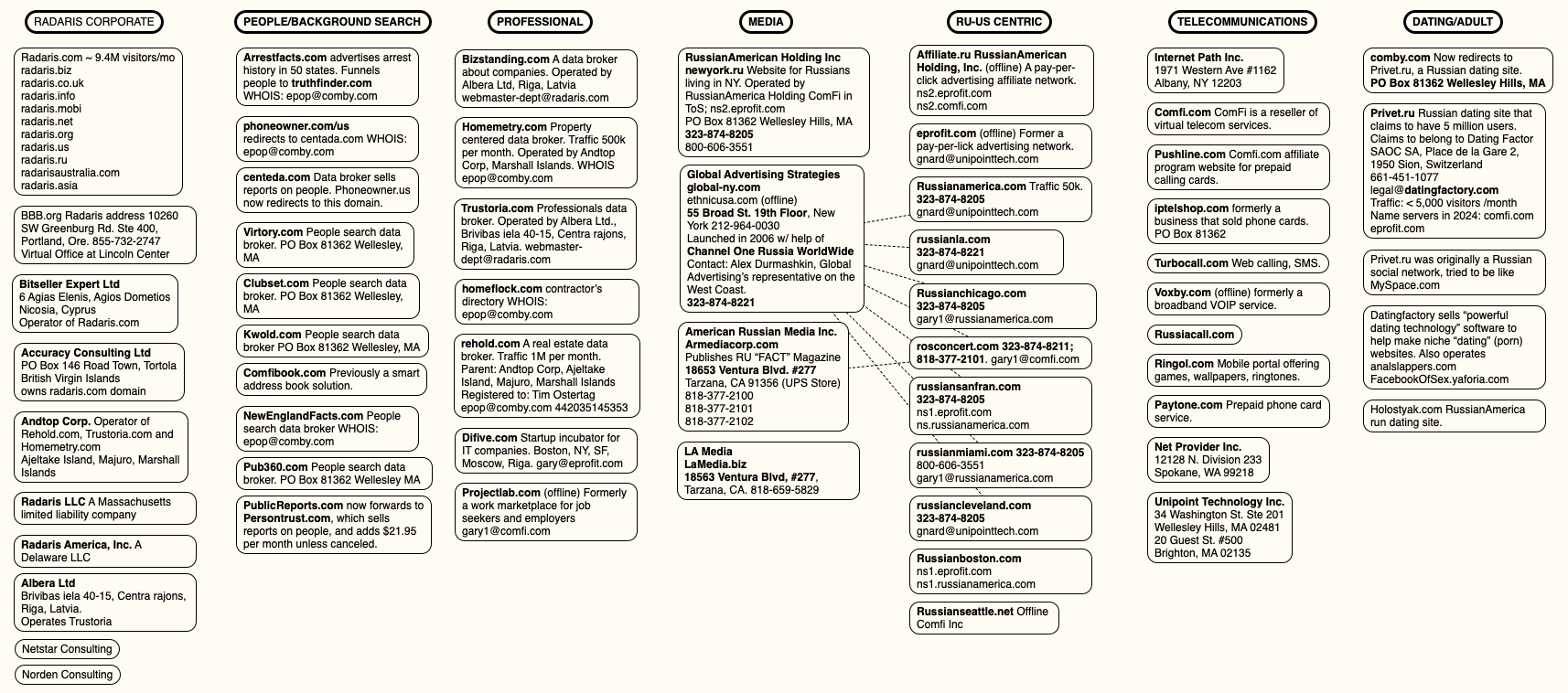
The mechanics behind Radaris have long been shrouded in layers of corporate obscurity. Operated primarily by Russian-born brothers Igor and Dmitry Lubarsky—who reside in Massachusetts—the enterprise grew into a sprawling network of people-search engines, affiliate programs, and niche dating sites. Investigative reporting exposed how the brothers utilized a revolving door of shell companies and fictitious executive identities, such as a fabricated CEO named "Gary Norden," to court investors while shielding themselves from liability.
As regulatory and legal pressure mounted, the operation engaged in what industry observers describe as an "island-hopping" strategy. When targeted by litigation, the network continually updated its terms of service to shift nominal ownership across offshore havens, including Cyprus, the Marshall Islands, the British Virgin Islands, and the Seychelles.
Legal representatives for Radaris frequently utilized delaying tactics, waiting until the eleventh hour to contest default judgments or asserting that plaintiffs had failed to serve the actual foreign entities pulling the strings. According to Matt Adkisson, president and CEO of Atlas Data Privacy Corp, investigators discovered that newly designated corporate managers—ostensibly based in places like the Marshall Islands—frequently did not even exist as legal entities at the time they were claimed to operate the domain.
The Chronology of Escalating Legal Battles
The legal confrontation traces back years, marking a gradual escalation from isolated consumer complaints to systemic corporate dismantling:
- 2017: Radaris temporarily lost a class-action lawsuit (Huebner v. Radaris, LLC) after failing to contest claims in court. When plaintiffs attempted to collect a $7.5 million default judgment, a court ordered the registrar Verisign to transfer radaris.com. Radaris appealed, arguing that a Cyprus-based entity named Bitseller Expert Limited was the true owner, successfully halting the transfer.
- October 2020: Operational control of the platform shifted to Andtop Company, an entity formed in the Marshall Islands, continuing the trend of offshore distancing.
- February 2024: Atlas Data Privacy Corp formally filed a lawsuit against Radaris for violations of Daniel’s Law, which imposes fines of $1,000 per violation for publishing restricted personal information of public servants.
- March to June 2024: Investigative exposés revealed the Lubarsky brothers’ involvement and the use of the fake CEO persona. The defense threatened defamation lawsuits before admitting that the corporate hierarchy had fabricated executive profiles.
- June 2025: Atlas refiled and significantly expanded its lawsuit, incorporating a broader web of sister data brokers into the complaint to counter ongoing corporate restructuring.
- August 2025: A New Jersey judge ruled that the defendants had repeatedly squandered opportunities to defend themselves. Due to persistent stonewalling, the court ordered the transfer of radaris.com and 13 other domain names directly to the plaintiffs.
Inside the Engine Room: Financials and Corporate Networks
Discovery documents obtained during the litigation—comprising more than 10,000 emails and internal records—provided unprecedented transparency into the backend of the Radaris empire. The documentation definitively linked nominal legal fronts like Radaris America, Bitseller Expert Limited, Digital Orbit Corp, and Veripages Inc. to a single administrative core.
Financial disclosures within the emails revealed the lucrative nature of the people-search model. Radaris.com was pulling in approximately $42,000 per month, while sister site Veripages.com generated roughly $45,000 monthly through partnerships with major marketing entities such as the Lifetime Value Company, which operates brands like PeopleLooker, PeopleSmart, and Bumper.

Furthermore, the documents highlighted lucrative cross-industry monetization, showing that the Radaris network earned up to $25,000 monthly through partnerships with Onerep—a privacy-cleansing service whose founder had similarly launched competing people-search engines like Nuwber. This symbiotic relationship effectively allowed bad actors to profit both from exposing consumer data and from selling solutions to scrub it.
Defense Strategy and Ongoing Constitutional Challenges
Following the August ruling, defense representation shifted. Attorney Victor Worms replaced Boston Law Group lawyer Val Gurvits, immediately filing a motion to vacate the default judgment. The defense argues that because "Radaris.com" is not a legal entity with the capacity to be sued, the transfer amounts to an unconstitutional forfeiture.
Simultaneously, the broader data broker industry is pushing back against Daniel’s Law on constitutional grounds. Roughly 150 data broker firms targeted by Atlas have mobilized a collective defense, successfully moving at least 70 of the lawsuits to federal court. The industry argues that restrictions on publishing public records violate First Amendment protections.
While the U.S. Court of Appeals for the Third Circuit weighs these constitutional arguments—with an ultimate destination likely at the U.S. Supreme Court—the legal battleground continues to expand. At least 14 states have enacted legislation modeled after Daniel’s Law, though judicial resistance has emerged; a federal district court ruled West Virginia’s version facially unconstitutional in August 2025.
Broader Implications for 21st-Century Digital Privacy
Privacy experts point out that state-level statutes, while impactful for targeted officials, highlight a glaring vacuum in federal data protection standards. Justin Sherman, a privacy expert and author of "The Middlemen," notes that federal lawmakers face intense lobbying from social media giants, cryptocurrency firms, and artificial intelligence developers who resist regulatory constraints on data scraping.
Furthermore, state privacy laws routinely carve out sweeping exemptions for records categorized as "public" or "government" documents, including voter registries, marriage certificates, property filings, and motor vehicle records. Without comprehensive federal baseline legislation that restricts how aggregators can harvest, store, and monetize public records, people-search operations will likely continue to adapt and thrive.
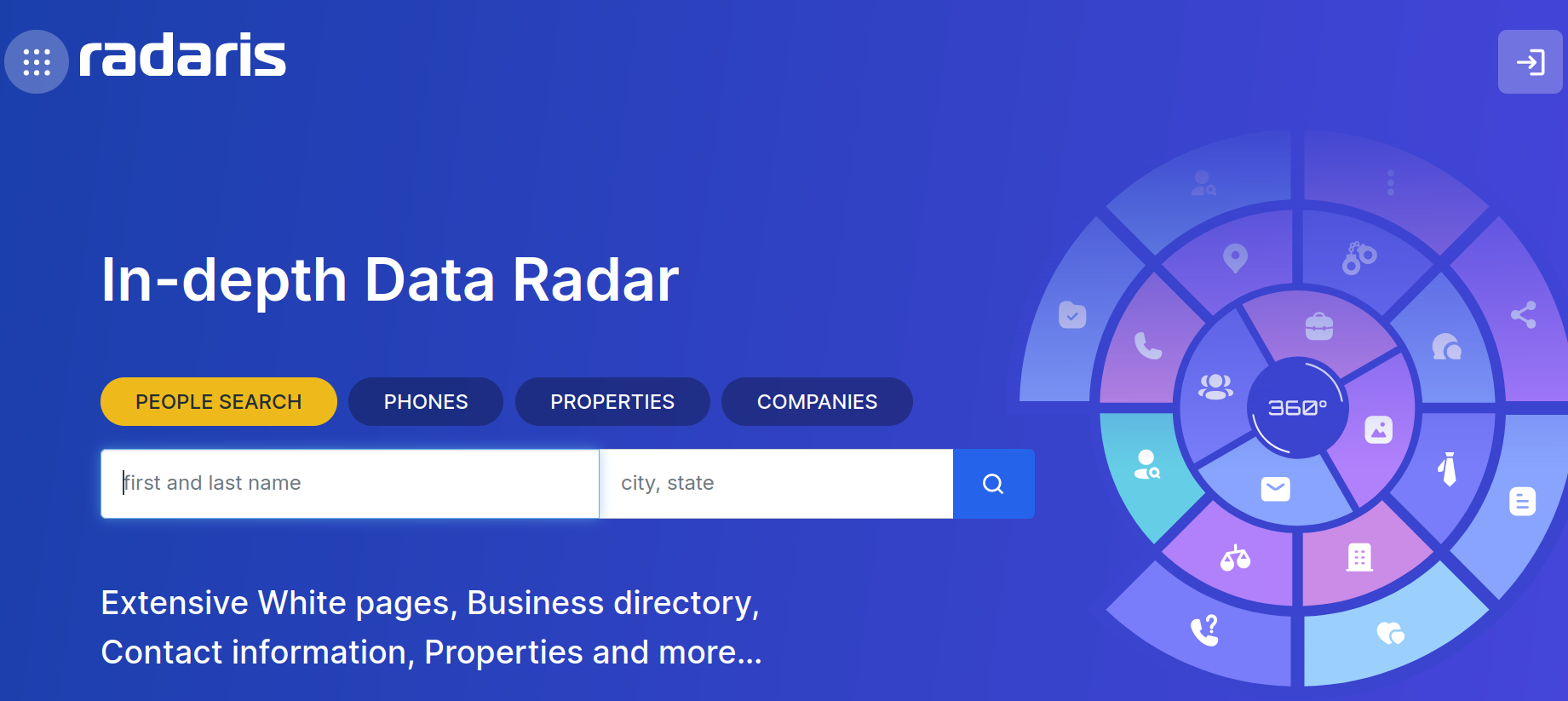
For now, visitors to radaris.com are greeted not with exhaustive dossiers on millions of U.S. citizens, but with a notice from Atlas Data Privacy Corp documenting the court-ordered transfer. While the core infrastructure of the flagship site has been grounded, the outcome of pending federal appeals and the broader constitutional fate of Daniel’s Law will determine whether this enforcement mechanism can permanently reshape the American data brokerage ecosystem.
Related posts: