Beyond the Payload Crisis: Why the Booming Space Economy Is Starved for Orbital Choice

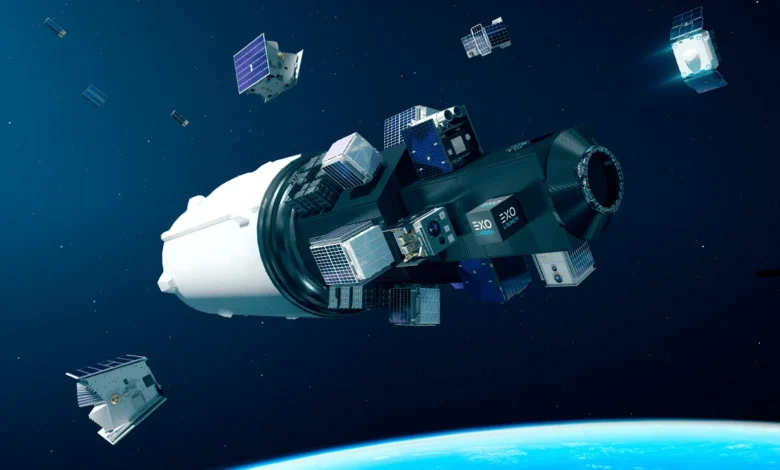
The global space industry achieved a historic milestone last year by sending more rockets into orbit than at any point in human history, yet satellite operators are confronting a surprising and deeply frustrating paradox: there still are not enough rides to go around. This friction points to a maturing commercial space sector where raw launch frequency no longer equates to operational agility. As the space economy surges past half a trillion dollars, the bottleneck has shifted from mere volume to a profound deficit in choice, flexibility, and destination diversity.
Industry data underscores the sheer scale of the launch surge. According to statistics from the Federal Aviation Administration (FAA), the agency licensed 187 orbital launches in fiscal year 2026, marking a dramatic escalation from fewer than 100 launches a decade prior. This upward trajectory is showing no signs of slowing, fueled by aggressive government and commercial mandates. Notably, the Trump administration has called for U.S. spaceports to support a staggering volume of more than 1,000 launches and reentries annually by the year 2030, reflecting an unprecedented national commitment to establishing dominance in the space domain.
Despite these swelling aggregate figures, satellite manufacturers and operators find themselves languishing in months- or even years-long queues waiting for suitable transit. The core of the problem lies in a structural mismatch between supply and demand. Rather than enjoying a robust menu of flexible options, much of the commercial space industry has grown heavily dependent on a relatively small number of highly prolific launch vehicles that predominantly service similar orbital pathways.
Market Realities and the Demand Curve
Robert Sproles, chief executive of Exolaunch—a Berlin-based global launch services broker that has successfully integrated and deployed 912 satellites across 51 distinct launch events—succinctly summarized the market tension.
"Demand is crazy," Sproles said, emphasizing that the commercial demand curve has grown exponentially steeper than the available supply curve.
Sproles explains that raw launch statistics obscure a much more complex operational reality. For a satellite operator, a rocket heading to the wrong orbital inclination at the wrong time is fundamentally useless. As the space economy expands, choice has rapidly materialized as one of the aerospace sector’s most severe constraints. Bridging the gap requires more than simply building additional rockets; it necessitates expanding the diversity of available launch profiles.
"Yes, we need to meet demand," Sproles noted. "But we also need to make sure we’re putting that demand in the right places. We need to recognize what types of launches are best for what types of missions, and we need to make sure those types of launches are available when the launch customer needs them."
A Trillion-Dollar Ecosystem in Motion

The backdrop to this launch crunch is an era of extraordinary financial and institutional growth. Market research firm Novaspace reported that the global space economy achieved an estimated valuation of $626 billion in 2025. Citing a powerful convergence of market consolidation, technological integration, and closer alignment among institutional stakeholders regarding national security, resilience, and operational efficiency, Novaspace forecasts a steady annual growth rate of 5.5% through 2034. By that milestone, the global space economy is projected to surpass the $1 trillion threshold.
An economic engine of this magnitude is inherently multifaceted, requiring a diverse industrial foundation. However, industry veterans point out that the market has paradoxically regressed in terms of vehicle variety over the past decade.
"If you rewind to, say, 2016, there was more launch diversity in the market at that time than there is today," Sproles observed. "There was not more capacity, but there was a wider variety of vehicles that you could reliably gain access to."
This contraction in launch diversity stems from a complex intersection of technological shifts, macroeconomic pressures, supply chain disruptions originating from the COVID-19 pandemic, and intense geopolitical realignments. These factors have collectively driven the consolidation of global launch capacity into the hands of a small coterie of mega-providers.
The Divergent Paths of Modern Launch Providers
To understand the industry’s desperate need for variety, one need only examine the contrasting business models of today’s two most dominant launch providers: SpaceX and Rocket Lab.
SpaceX, anchored by its ubiquitous Falcon 9 workhorse, has optimized its operations for large-scale commercial satellite constellations, national security payloads, human spaceflight, and heavy commercial rideshares. Its economic model relies on high-cadence, high-capacity flights to standardized low Earth orbits.
Conversely, Rocket Lab and its Electron vehicle cater to a vastly different market segment. The Electron is specifically tailored for smaller satellites, technology demonstrators, and CubeSats that frequently demand custom orbital planes, unique inclinations, and specialized deployment timelines.
"You could not come up with two more different vehicles both in terms of performance and commercial offerings," Sproles said, "which just goes to show you that the industry is as hungry for choice as it is for capacity."
Moving Beyond the Rideshare Era

In the contemporary space landscape, rideshare missions serve as the foundational bedrock for countless small satellite developers. By aggregating dozens of disparate payloads onto a single massive rocket, rideshare providers have democratized access to space for universities, startups, and research institutions.
Yet, as spaceborne missions grow increasingly sophisticated, specialized, and commercially demanding, the traditional rideshare model fails to accommodate every operator’s needs.
"Rideshare is appropriate when your schedule is flexible enough to align with when a planned rideshare is launching, and when you have enough orbital wiggle room to go where the masses want to go," Sproles explained. "Basically, it makes sense when you have less rigid mission constraints."
When mission constraints are rigid—such as precise Earth-observation revisit times, dedicated telecommunications footprints, or synchronized multi-satellite constellations—one-size-fits-all rideshares fall short. Consequently, the industry is increasingly looking toward alternative paradigms. These include shared launches, which are conceived from the outset with multiple primary customers in mind rather than forcing smaller payloads to piggyback haphazardly on a monolithic mission, and dedicated launches, where a single customer procures an entire rocket tailored precisely to their schedule, destination, and orbital parameters.
The Proof of Portfolio Diversity
The tangible benefits of maintaining a diverse launch portfolio are readily apparent in execution. Demonstrating this strategy, Exolaunch executed its first eight orbital missions of 2026 across four distinct launch vehicles originating from three separate continents. By securing capacity across a broad matrix of rocket types, launch inclinations, and spaceports, the company provides its clientele with insulated, predictable pathways to orbit alongside vital financial and scheduling flexibility.
Despite these localized successes, the overarching vision for the commercial space sector remains largely aspirational. Sproles envisions a mature future where entering orbit is as routine and friction-free as terrestrial freight shipping—an ecosystem where commercial manufacturers can build satellites confident that a reliable transport option will always be waiting.
"The ideal situation is that customers don’t have to think about what the vehicle is or when it’s going because there’s always an option to get to the desired orbit at the time when their satellite is manufactured," he said.
Realizing that future, however, rests squarely on the shoulders of the world’s launch providers.
"We have multiple launch providers who have shown they can launch rockets," Sproles concluded. "Now, we need those launchers to launch. We need them operating reliably at cadence, and we need them going to multiple orbits. They can do it. We just need them to execute."
Related posts: