AWS Contributors Engage Open Source Communities at Open Source Summit Korea and MCP DevSummit Seoul 2026

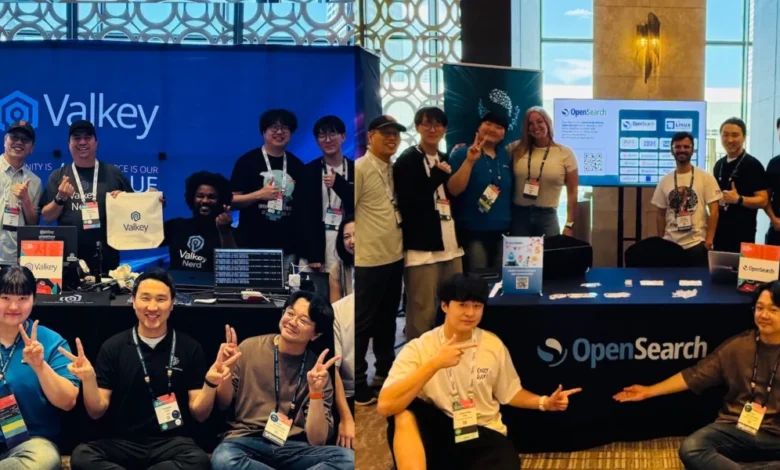
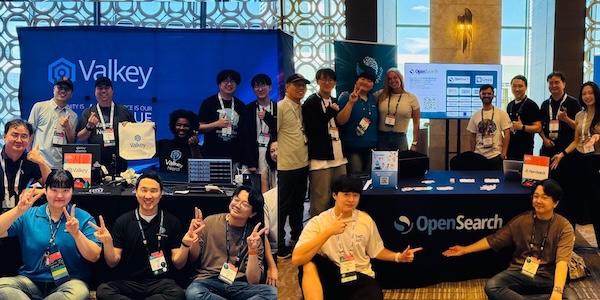
The intersection of enterprise cloud computing and open-source collaboration took center stage recently as Amazon Web Services (AWS) contributors converged on the South Korean capital for a multi-day technology showcase. Bringing together developers, engineers, and project maintainers, AWS representatives participated actively in both the Open Source Summit Korea 2026 and the MCP DevSummit Seoul 2026. These high-profile gatherings served as crucibles for community-driven innovation, focusing heavily on two major Linux Foundation projects: OpenSearch and Valkey. Over the course of four intensive days, participants engaged in technical workshops, collaborative coding sessions, and strategic planning meetings aimed at charting the future of enterprise search, observability, and high-performance data caching.
The presence of AWS at these summits underscores a broader industry shift toward deep integration with community-governed open-source software. By embedding core engineering contributors directly into these ecosystems, cloud providers are attempting to bridge the gap between upstream community development and enterprise-grade deployment. Local Korean OpenSearch community leaders played an instrumental role during the events, volunteering at exhibition booths and hosting specialized user group meetups that drew dozens of regional developers. These side sessions provided a collaborative forum for local practitioners to discuss architecture patterns, troubleshoot complex scaling challenges, and share real-world deployment experiences with AWS engineering teams.
Background and Evolution of OpenSearch 3.7
At the heart of the enterprise search discussions was OpenSearch, a widely adopted, open-source search and observability suite designed to bring order to massive volumes of unstructured data. Originally spun out to maintain an open-source alternative for search and analytics, the platform has grown into a cornerstone for modern log analytics, application performance monitoring, and security information and event management (SIEM) systems.
The momentum behind the project surged earlier in the year with the release of OpenSearch 3.7 on June 9, 2026. This major iteration introduced sophisticated diagnostic and monitoring tools designed to unify telemetry data. Engineering teams can now query, set up alerts, and track Service Level Objectives (SLOs) across distributed logs, application traces, and underlying metrics through a single, cohesive user interface. Furthermore, version 3.7 addressed the surging demand for artificial intelligence and machine learning workloads by introducing vector search enhancements that retrieve high-dimensional vectors up to 5.5 times faster than previous iterations.
Building on these upstream improvements, AWS integrated the updated software suite into its managed infrastructure portfolio. On July 30, 2026, the company officially rolled out support for OpenSearch version 3.7 on Amazon OpenSearch Service. This managed implementation allows organizations to leverage the latest vector search performance gains, enhanced search relevance algorithms, and advanced Query Insights without the operational overhead of managing underlying hardware clusters manually. Industry analysts view this tight cadence between upstream open-source releases and managed cloud availability as a critical competitive advantage for enterprises scaling generative AI applications, semantic search engines, and real-time anomaly detection systems.
Valkey 9.1 and the Evolution of High-Performance Caching
Parallel to the discussions on search and observability, the summit dedicated substantial programming to Valkey, the high-performance open-source key-value datastore that has rapidly gained traction as a drop-in replacement for traditional in-memory caching layers, message queues, and primary databases. As organizations demand lower latencies and higher concurrency for microservices architectures, the Valkey project has accelerated its development roadmap to meet stringent enterprise performance requirements.
A significant milestone in this trajectory was the release of Valkey 9.1 on May 19, 2026. This release delivered architectural refinements, most notably a redesigned Input/Output (I/O) threading model. By optimizing how network operations and thread synchronization are handled, Valkey 9.1 achieved up to a 17% increase in overall system throughput. Additionally, core memory management optimizations reduced memory consumption for string data types under 128 bytes by up to 20%, a crucial efficiency gain for large-scale deployments handling millions of diminutive keys.
Capitalizing on these performance breakthroughs, cloud infrastructure teams moved quickly to operationalize the software. On June 23, 2026, Amazon ElastiCache introduced native support for Valkey 9.1 across node-based clusters. This managed service offering allows enterprises to harness the improved throughput and memory efficiency while benefiting from enterprise-grade security features, such as enhanced access control mechanisms tailored for complex multi-tenant cloud environments. Database administrators and systems architects attending the Seoul summits noted that these advancements significantly lower the total cost of ownership for high-throughput, low-latency caching layers.
Chronology of Recent Open Source Milestones
To understand the current state of enterprise open-source adoption, it is helpful to examine the precise timeline of technological rollouts that culminated in the Seoul and regional developer summits:

- May 19, 2026: The Valkey project officially releases Valkey 9.1, featuring a redesigned I/O threading model that boosts throughput by 17% and cuts memory usage for small strings by up to 20%.
- June 9, 2026: OpenSearch 3.7 launches, introducing unified telemetry tracking for logs, traces, and metrics alongside a 5.5x speed increase in vector retrieval performance.
- June 23, 2026: Amazon ElastiCache announces general availability for Valkey 9.1, bringing improved multi-tenant security and memory efficiency to managed clusters.
- July 30, 2026: Amazon OpenSearch Service integrates OpenSearch version 3.7, empowering managed deployments with advanced Query Insights and superior vector search relevance.
- August 2026: AWS contributors and Linux Foundation project maintainers converge at Open Source Summit Korea and MCP DevSummit Seoul to foster developer collaboration, community networking, and technical knowledge exchange.
Industry Implications and Broader Technological Impact
The convergence of global cloud providers and local developer communities at events like Open Source Summit Korea 2026 highlights a fundamental maturation in the open-source software economy. Historically, commercial cloud adoption of open-source projects occasionally created friction between project maintainers and infrastructure vendors. However, modern collaborative frameworks—exemplified by the Linux Foundation governance models for both OpenSearch and Valkey—have fostered a symbiotic relationship where upstream innovation directly informs downstream managed services, and vice versa.
From an economic and architectural perspective, these developments lower the barrier to entry for advanced workloads such as Retrieval-Augmented Generation (RAG) for generative AI, real-time telemetry analysis, and high-scale distributed caching. By optimizing vector search capabilities in OpenSearch and reducing memory overhead in Valkey, open-source maintainers are directly addressing the hardware efficiency challenges that accompany hyper-scale data processing. Enterprises can consequently scale their digital infrastructure while maintaining strict cost controls and avoiding proprietary vendor lock-in.
Furthermore, regional developer summits in technology hubs such as Seoul play an indispensable role in decentralizing software contribution and governance. By actively engaging with Asian developer communities—which represent some of the highest concentrations of enterprise cloud consumption globally—project maintainers ensure that global codebases benefit from diverse operational use cases, localized feedback, and rigorous stress-testing under extreme traffic loads.
Future Outlook and Community Engagement
As the 2026 conference season progresses, the momentum generated in Seoul is expected to ripple across upcoming international developer events. Both the OpenSearch and Valkey communities have scheduled subsequent regional meetups, hackathons, and virtual symposiums designed to maintain continuous dialogue between core maintainers and everyday users.
For developers and systems architects looking to participate, official community portals maintain active calendars of upcoming events, webinars, and contribution workshops. Concurrently, major cloud platforms continue to expand their educational resources, developer centers, and community grants to support grassroots innovation. As enterprise reliance on open-source infrastructure deepens, the collaborative synergy demonstrated at Open Source Summit Korea 2026 serves as a blueprint for sustainable, community-driven technological advancement in the cloud computing era.