Amazon Announces CloudWatch Omni to Revolutionize Application and AI Agent Observability

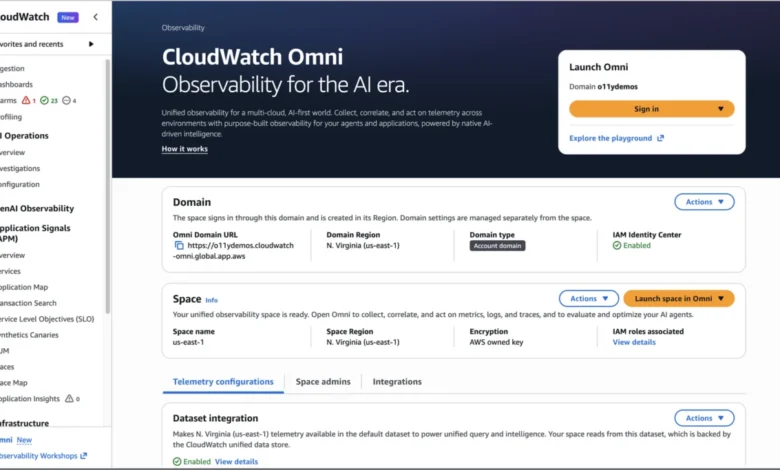
The landscape of modern software engineering has long been burdened by fragmented tools, siloed data, and the tedious maintenance of static dashboards. To address these persistent industry challenges, Amazon Web Services (AWS) has officially announced the launch of Amazon CloudWatch Omni, a unified, AI-powered observability platform designed to monitor traditional applications, modern microservices, and emerging generative AI agents within a single, cohesive experience.
Built natively on OpenTelemetry and integrated deeply with enterprise identity providers, CloudWatch Omni seeks to redefine how engineering organizations, Site Reliability Engineers (SREs), and developers detect, investigate, and resolve production incidents. By shifting the observability paradigm away from isolated infrastructure signals and toward holistic application-centric topologies, AWS aims to streamline incident response and significantly reduce mean time to resolution (MTTR) across complex enterprise environments.
The Evolution of Observability and Industry Pain Points
For decades, monitoring complex software architectures required engineering teams to juggle a myriad of specialized tools. Database administrators looked at database metrics, backend developers tracked server logs, and SREs monitored network traffic and infrastructure alarms. When an incident occurred—such as a sudden spike in HTTP 500 errors or cascading latency—context was frequently lost. Troubleshooting sessions often devolved into frantic searches across scattered Slack threads, manual screenshot sharing, and endless context-switching between disparate monitoring screens.
Furthermore, maintaining static dashboards and tuning threshold alerts has historically consumed a significant portion of an engineering team’s operational bandwidth. As microservices architectures expanded and systems grew more dynamic, traditional static monitoring tools struggled to keep pace. The introduction of generative AI workloads and autonomous AI agents added an entirely new layer of complexity, requiring specialized telemetry to track agent reasoning paths, token usage, and multi-step agentic workflows.
Recognizing these compounding industry pain points, AWS developed CloudWatch Omni to bridge the gap between traditional application monitoring and cutting-edge generative AI observability. By consolidating telemetry data without requiring cumbersome data migration or complex reconfigurations, the platform addresses the core inefficiencies that have plagued modern engineering workflows.

Core Architectural Features of CloudWatch Omni
At its architectural core, CloudWatch Omni is constructed on the OpenTelemetry standard. This foundational choice ensures that organizations do not need to reconfigure their existing telemetry pipelines. Data already being sent to Amazon CloudWatch flows seamlessly into Omni, while any additional workloads instrumented with OpenTelemetry can transmit data directly to an OpenTelemetry Protocol (OTLP) endpoint.
The platform introduces several key architectural pillars designed to enhance collaboration, adaptability, and automated investigation:
- Unified Enterprise Collaboration via Spaces: CloudWatch Omni breaks down organizational silos by introducing "Spaces"—dedicated workspaces that group applications owned by specific teams alongside their corresponding telemetry. Engineers access these spaces through a secure, dedicated organization URL utilizing enterprise Single Sign-On (SSO) via AWS IAM Identity Center. Supporting major identity providers such as Okta and Azure Active Directory, Omni eliminates the need for direct AWS Management Console access during routine troubleshooting, allowing developers, SREs, managers, and database specialists to collaborate within the exact same investigation context.
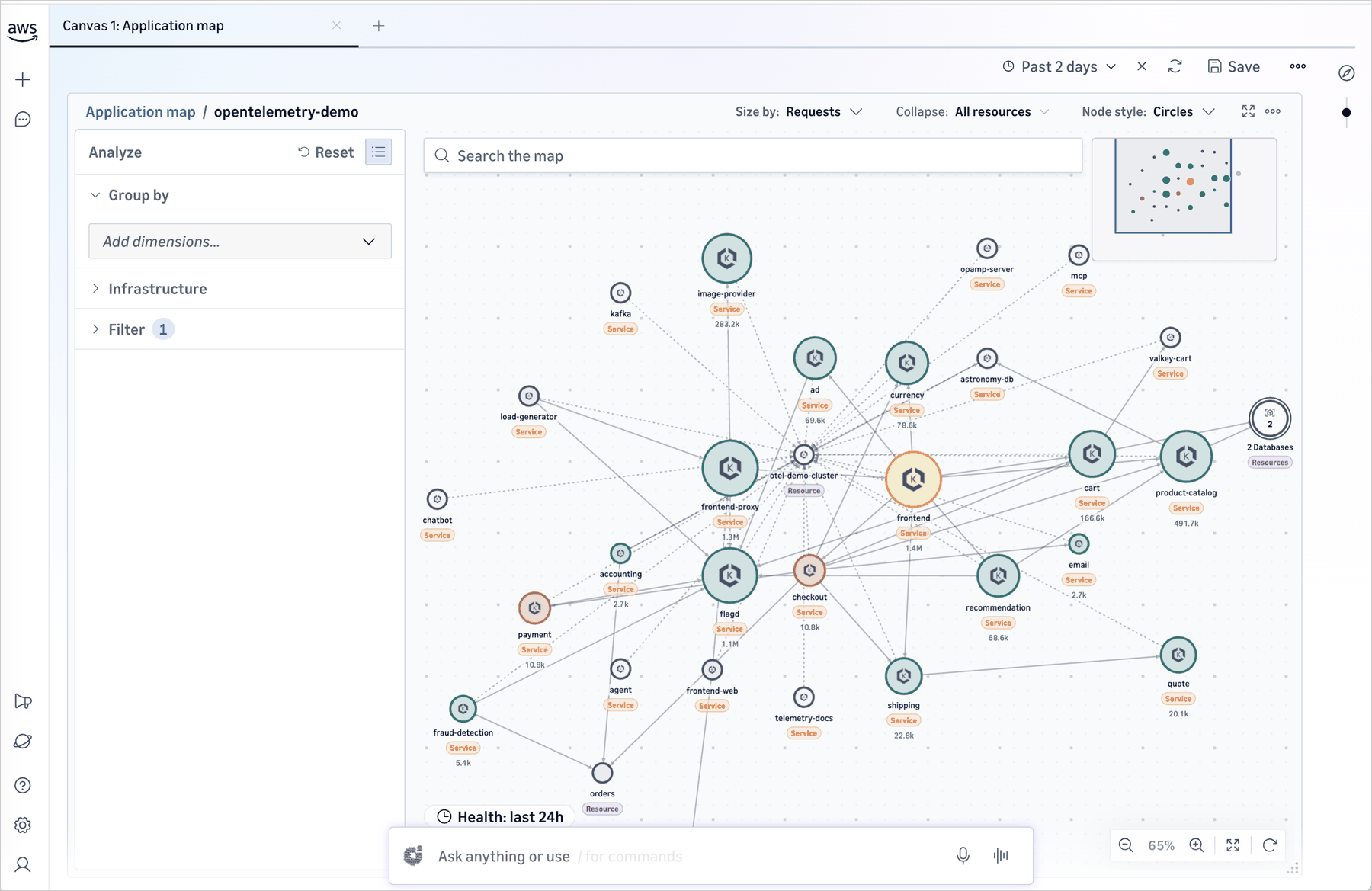
- Dynamic Topology Mapping and Adaptive Alarms: Moving away from static dashboards, Omni automatically discovers services and maps underlying dependencies using existing telemetry and AWS Config resource discovery. Teams declare their operational targets—such as availability goals, latency budgets, and error rate boundaries—and the system automatically adapts its monitoring thresholds as the underlying application architecture evolves and expands.
- AI-Powered Root Cause Analysis with Amazon DevOps Agent: Integrated directly into investigation sessions, the Amazon DevOps Agent serves as an active participant alongside human engineers. Operating on the exact same telemetry streams viewed by the team, the DevOps Agent correlates disparate signals, traces root cause paths across complex dependency graphs, and suggests actionable remediation steps. Furthermore, it automatically maintains a comprehensive audit history of the entire investigation for post-incident reviews, eliminating the need to manually draft exhaustive incident reports.
A Typical Incident Investigation Workflow in Practice
To understand the practical impact of CloudWatch Omni, industry analysts have examined its proposed incident lifecycle. In a traditional scenario, an alert regarding elevated error rates in a checkout service triggers a paging notification, forcing an on-call engineer to manually piece together logs, deployment timelines, and downstream API health.
With CloudWatch Omni, an alarm triggers a pre-loaded investigation session. Upon opening the workspace, the on-call SRE immediately encounters a visual service topology map highlighting the affected checkout service, a correlated deployment event that occurred ten minutes prior, and a simultaneous increase in latency originating from a downstream payment API.
The DevOps Agent provides an initial correlation analysis, noting that the latency spike aligns with a configuration change in the payment provider’s API gateway. When the incident escalates, a payment engineer joins the exact same session, instantly viewing all historical context, trace views, and AI-driven insights compiled up to that moment. The team identifies the root cause collaboratively, executes a rollback, and closes the ticket. Because Omni captures the entire investigation trajectory automatically, the team bypasses the administrative burden of writing a separate post-mortem incident report.
Deployment, Accessibility, and Pricing Strategy
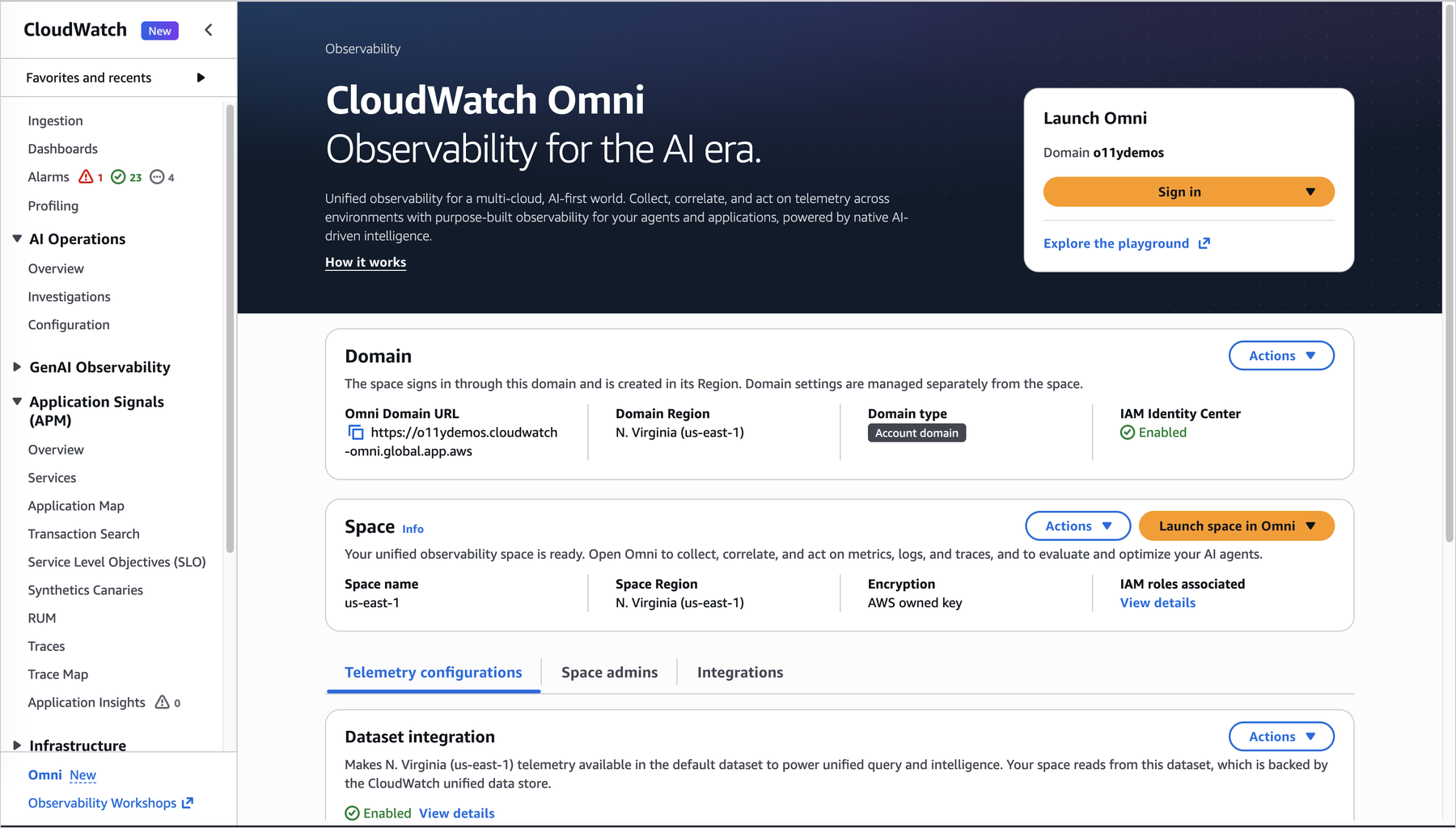
Getting started with CloudWatch Omni has been engineered for frictionless adoption. For existing Amazon CloudWatch customers, enabling the platform requires minimal effort. Administrators can access the setup interface directly from the CloudWatch console, establish a dedicated domain, configure enterprise SSO through IAM Identity Center, and define team Spaces.
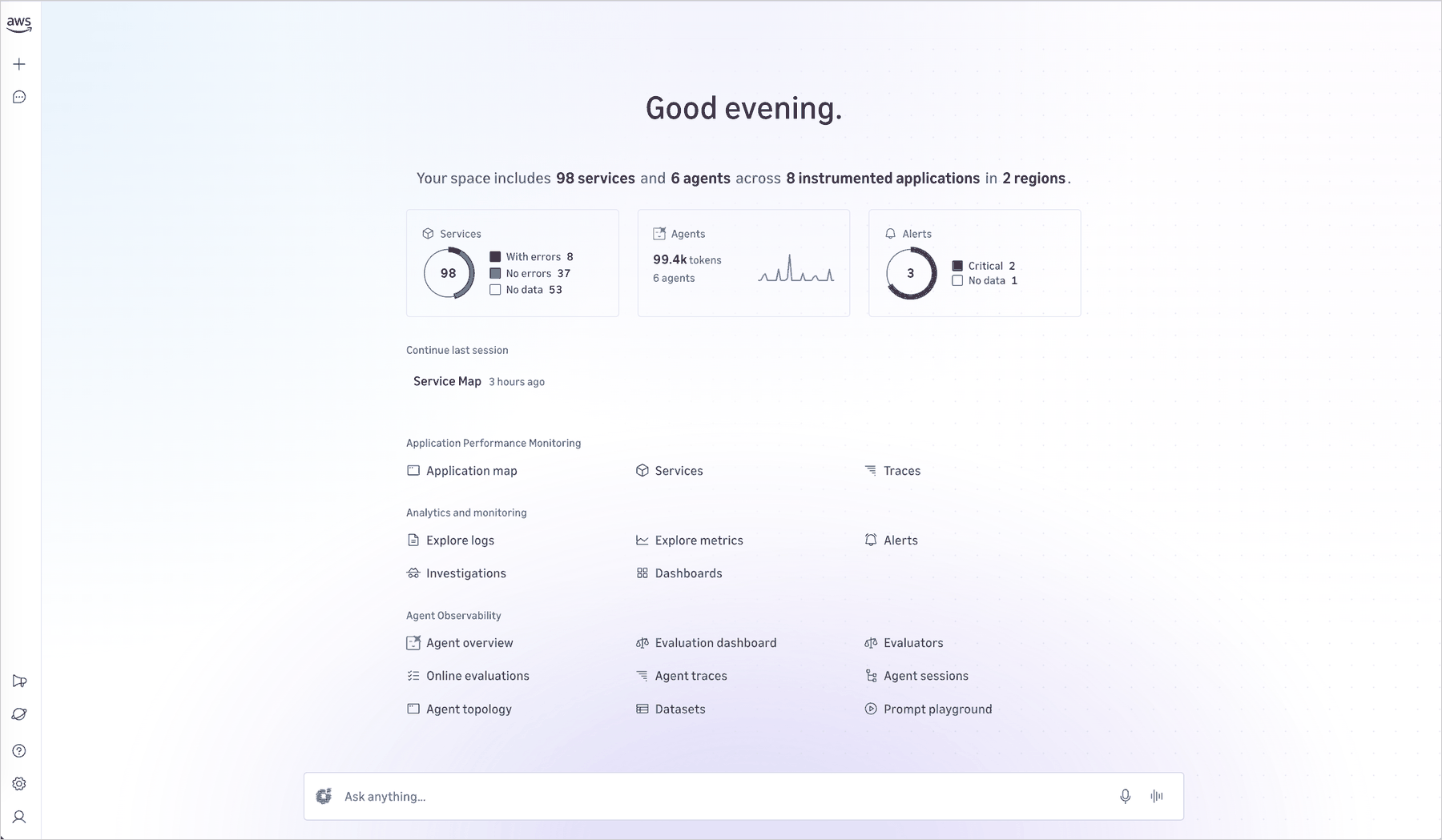
Because Omni points directly to existing CloudWatch data—including logs, metrics, traces, and alarms—organizations can deploy the platform without executing costly or time-consuming data movement operations. Additionally, built-in connectors allow engineering teams to ingest telemetry from external environments outside of AWS, consolidating all monitoring data into a single pane of glass.
Pricing and availability details have been made live alongside the product launch. Existing customers can begin exploring the platform immediately through the Amazon CloudWatch console, with regional availability details and comprehensive API documentation accessible via the official AWS documentation portal and the AWS MCP Server toolkit.
Industry Implications and Future Outlook
The release of Amazon CloudWatch Omni arrives at a critical juncture in the evolution of enterprise cloud computing. As businesses increasingly rely on complex, distributed microservices and rush to integrate generative AI agents into their core product offerings, observability has transitioned from a backend utility to a core driver of business reliability and operational velocity.
By fusing collaborative enterprise workspaces with autonomous artificial intelligence agents like Amazon DevOps Agent, AWS is signaling a broader shift toward proactive, agent-assisted software operations. Industry observers note that platforms capable of bridging human collaboration with machine-driven data correlation will likely set the benchmark for enterprise cloud management in the coming years.
As engineering organizations face mounting pressure to accelerate deployment frequencies while maintaining uncompromising uptime standards, tools like CloudWatch Omni offer a glimpse into a more streamlined, less fragmented operational future. By eliminating the administrative overhead of dashboard maintenance and context fragmentation, AWS continues to push the boundaries of what cloud infrastructure monitoring can achieve.