Microsoft Azure Databricks Delivers Exceptional Value, Validated by Independent Forrester Study

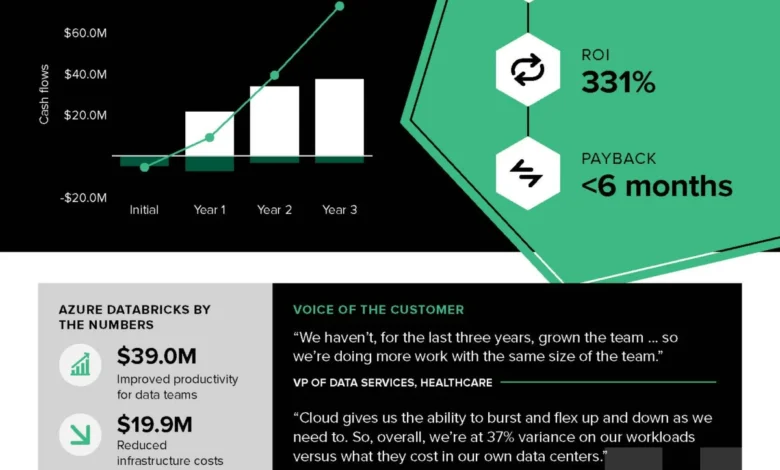
Microsoft Azure Databricks, a cornerstone of Microsoft’s comprehensive data and artificial intelligence (AI) strategy, is demonstrating significant, measurable value for organizations, according to a recent Total Economic Impact™ (TEI) study commissioned by Microsoft and conducted by Forrester Consulting. The findings reveal that a composite organization leveraging Azure Databricks achieved a staggering 331% return on investment (ROI) over three years, with a net present value (NPV) of $58.1 million and an investment payback period of less than six months. This independent validation underscores the tangible business benefits derived from the deep, first-party integration of Databricks’ leading unified analytics platform with the Azure cloud ecosystem.
The inherent advantage of Azure Databricks lies in its co-engineered nature, a result of a strategic partnership between Microsoft and Databricks. This collaboration ensures that Databricks is not merely hosted on Azure but is a native service, deeply embedded within the Microsoft data and AI stack. This native integration means that Azure Databricks seamlessly aligns with existing Microsoft tools, identity management systems, and governance frameworks that organizations already utilize. This "built-in, not bolted on" approach streamlines operations, enhances performance, and ultimately reduces the total cost of ownership.
The co-engineering effort extends to a shared integration roadmap and aligned go-to-market strategies, presenting customers with a unified experience: one operational motion, one consolidated bill, and a single, comprehensive support path. For technical teams, this translates to enhanced native integration capabilities and superior performance. For the business, the implications are profound: reduced risk, lower operational expenses, and a significantly accelerated time to realizing business value from data initiatives.
The Forrester Total Economic Impact™ Study: A Deep Dive into Quantifiable Benefits
To rigorously assess the business impact of Azure Databricks, Microsoft commissioned Forrester Consulting to conduct a TEI study. This comprehensive analysis involved interviewing actual Azure Databricks customers to build a representative composite organization. The study modeled a $6 billion company operating within a regulated industry, managing approximately 10 petabytes of data.
Prior to adopting Azure Databricks, this composite organization faced significant challenges with its data estate. It was characterized by fragmentation, high costs, unreliability at scale, and difficulties in effective governance. The implementation of Azure Databricks dramatically reshaped this landscape, yielding an impressive $75.6 million in total benefits against $17.5 million in costs over a three-year period. This resulted in the aforementioned $58.1 million in net present value, with the initial investment recouped in under six months.
The study identified four primary drivers of this substantial value:
- Reduced Infrastructure Costs: By consolidating data workloads onto a single, optimized platform, organizations can eliminate redundant infrastructure and associated maintenance costs. Azure Databricks’ efficient resource utilization and autoscaling capabilities further contribute to cost optimization.
- Increased Productivity of Data Teams: The seamless integration with existing tools and the intuitive nature of the Azure Databricks platform empower data engineers, data scientists, and analysts to work more efficiently. Reduced time spent on data wrangling, infrastructure management, and tool integration frees up valuable resources for higher-value analytical and development tasks.
- Enhanced Business Agility and Faster Time to Market: The ability to rapidly ingest, process, and analyze data, coupled with accelerated development cycles for AI and machine learning models, allows businesses to respond more quickly to market changes and seize new opportunities.
- Improved Decision-Making and Revenue Generation: By unlocking deeper insights from data and enabling more sophisticated analytical applications, organizations can make better-informed strategic decisions, optimize operations, and identify new revenue streams, directly contributing to top-line growth.
Beyond these quantifiable benefits, Forrester also highlighted several critical, albeit unpriced, advantages. These include the deep native integration with other Azure services, leading to faster deployment and operational efficiency. The platform facilitates quicker access to insights, democratizing data access across the organization. Furthermore, the robust governance capabilities, particularly through Unity Catalog, ensure data security and compliance without hindering productivity. These qualitative benefits are foundational to the quantitative returns observed.
The Genesis of Value: A Co-Engineered Ecosystem
The exceptional value delivered by Azure Databricks is rooted in its fundamental architecture and the symbiotic relationship between Microsoft and Databricks. As a true first-party Azure service, it benefits from direct engineering collaboration and a unified roadmap that prioritizes deep integration across the entire Microsoft data and AI ecosystem. This eliminates the inefficiencies and added costs often associated with integrating disparate third-party tools.
A prime example of this synergy is the integration of Azure Databricks Genie with Microsoft Copilot. This integration allows organizations to imbue their existing productivity tools with business-specific context, building upon AI-driven intelligence. Genie enables users to query their lakehouse using natural language, directly within applications like Microsoft Teams, Microsoft 365 Copilot, and Copilot Cowork. Crucially, this intelligence is grounded in trusted data through Genie Ontology and scoped by Unity Catalog, ensuring that users only access information they are authorized to see. This seamless flow of secure, context-aware intelligence directly into the user’s workflow is a game-changer for productivity and governance.
This depth of integration extends across the broader Azure platform, encompassing:
- Azure Active Directory (now Microsoft Entra ID) Integration: Providing unified identity and access management for secure, seamless access to data and resources.
- Microsoft Purview Integration: Enabling comprehensive data governance, lineage tracking, and data discovery across the data estate.
- Azure Synapse Analytics Synergy: Facilitating the orchestration of complex data pipelines and the integration of analytical workloads for comprehensive business intelligence.
- Azure Machine Learning Collaboration: Streamlining the development, training, and deployment of machine learning models by leveraging shared data and environments.
- Power BI Connectivity: Enabling users to easily visualize and report on data residing within Azure Databricks, driving broader adoption of data-driven insights.
These integrations, while not always directly priced in the study, are instrumental in driving the productivity gains and cost efficiencies that were quantified. They create a virtuous cycle where enhanced tooling leads to greater user adoption, which in turn fuels more sophisticated data analysis and AI-driven innovation.
Performance Under Pressure: Independent Benchmarking
Beyond the economic impact, the performance of Azure Databricks has also been rigorously tested. Principled Technologies, an independent research firm, conducted a decision-support benchmark, akin to industry-standard TPC-DS, on a 10-terabyte dataset. The results demonstrated a clear performance advantage for Azure Databricks. In a single query stream scenario, Azure Databricks completed queries up to 21.1% faster than Databricks on AWS (when autoscale was disabled). Furthermore, when running four concurrent query streams, Azure Databricks finished the workload more than nine minutes faster, highlighting its superior efficiency and scalability under load. This performance edge is critical for organizations that require rapid data processing and analysis to maintain a competitive advantage.
Implications for Businesses: A Strategic Advantage
The decision to adopt a data and AI platform is a strategic one with long-term implications. Azure Databricks offers a compelling proposition where various components reinforce each other to deliver sustained value. The tight integration drives the cost savings identified by Forrester, while the robust performance ensures that these gains are maintained and scaled as data volumes and analytical demands grow. At its core, this success is built upon a foundational first-party partnership, with Microsoft and Databricks engineering, product roadmaps, and support teams working in concert to empower organizations’ data estates.
The measured ROI of 331% and a payback period of under six months are not mere marketing claims; they are empirical validations of the platform’s economic efficacy. This makes Azure Databricks a compelling choice for teams seeking to harness the full potential of their data and AI initiatives, transforming raw data into actionable intelligence and tangible business outcomes.
Looking Ahead: Continued Innovation and Partnership
The ongoing strategic alliance between Microsoft and Databricks promises further innovation. Customers can anticipate continued advancements in areas such as generative AI integration, enhanced data governance, and expanded capabilities for real-time analytics. The commitment to a unified roadmap ensures that Azure Databricks will remain at the forefront of data and AI technology, providing organizations with the tools and insights they need to navigate an increasingly complex and data-driven world. The consistent delivery of measurable value, validated by independent research, solidifies Azure Databricks’ position as a leading platform for enterprises committed to digital transformation.
Explore Further Resources:
For those interested in delving deeper into the capabilities and economic impact of Microsoft Azure Databricks, the following resources offer valuable insights:
- The Total Economic Impact™ of Microsoft Azure Databricks Study: [Link to Forrester TEI Study]
- Microsoft Azure Databricks Product Page: [Link to Azure Databricks Product Page]
- Azure Databricks Genie Integration Details: [Link to Azure Databricks Genie Documentation]
- Principled Technologies Benchmark Report: [Link to Principled Technologies Report]
- Microsoft Data and AI Blog: [Link to Microsoft Data and AI Blog]