Anthropic Claude Fable 5.1 Launches on AWS Bringing Advanced Long-Run AI Capabilities and Strict Enterprise Safeguards to Cloud Infrastructure

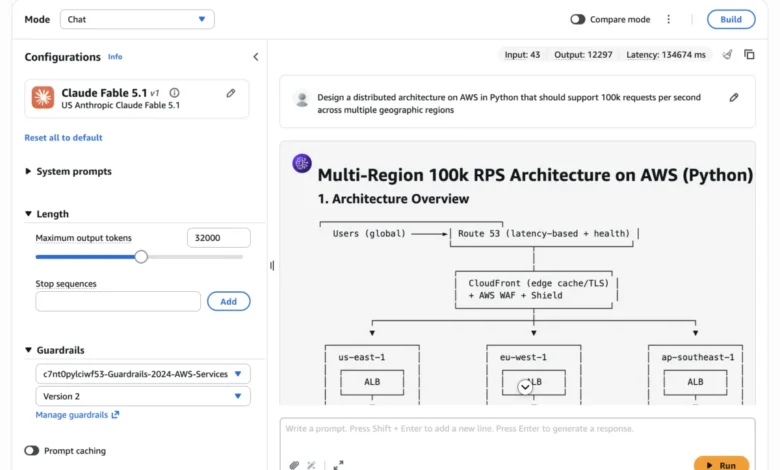
The landscape of enterprise artificial intelligence experienced a significant expansion last week with the official deployment of Anthropic’s Claude Fable 5.1 on Amazon Web Services (AWS). This integration marks a major milestone in the ongoing partnership between Amazon and Anthropic, designed to bring frontier intelligence directly to developers, researchers, and large-scale enterprises operating within cloud-native environments. Claude Fable 5.1 is engineered specifically to tackle high-stakes, long-running computational and creative workflows that span multiple applications and demand autonomous execution over extended periods.
As organizations increasingly demand artificial intelligence models capable of handling complex reasoning, deep code maintenance, and intricate data analysis without constant human supervision, the introduction of Fable 5.1 addresses a critical capability gap. Available immediately through Amazon Bedrock and the Claude Platform on AWS, the model is poised to transform how engineering teams approach software development, scientific discovery, and corporate operations.
Main Facts and Core Capabilities of Claude Fable 5.1
Claude Fable 5.1 arrives with a reputation for delivering sophisticated frontier intelligence tailored for demanding enterprise tasks. Unlike traditional large language models that excel primarily in short, conversational exchanges or isolated query-and-response scenarios, Fable 5.1 is built for durability and autonomy.
According to technical documentation and announcements from Anthropic, the model can sustain complex execution cycles lasting for hours. This endurance allows it to manage extensive software engineering projects independently. Rather than merely generating isolated snippets of code, Fable 5.1 can navigate entire codebases, implement features across multiple directories, perform thorough code reviews, and execute performance optimization tasks over extended operational sessions.
In scientific research and enterprise workflows, this capability translates to the ability to process sprawling datasets, draft comprehensive technical evaluations, and assist in multi-step problem-solving. By reducing the friction of context loss and maintaining operational coherence across vast streams of input data, the model acts more like an autonomous digital colleague than a conventional software tool.
Chronology and Deployment Pathway
The integration of Claude Fable 5.1 into AWS infrastructure is the latest development in a rapidly accelerating timeline of collaboration between Amazon and Anthropic. The strategic alliance, which began with major financial and infrastructure commitments by Amazon into Anthropic, has steadily evolved to integrate increasingly advanced iterations of the Claude model family into Amazon Bedrock.
Last week’s rollout followed months of rigorous testing, architecture optimization, and security alignment between AWS engineering teams and Anthropic researchers. The deployment strategy focused heavily on ensuring that enterprise-grade reliability and compliance standards were met prior to general availability. By launching simultaneously on Amazon Bedrock—AWS’s fully managed service for building and scaling generative AI applications with foundational models—and the specialized Claude Platform on AWS, the companies ensured that enterprise clients could immediately leverage existing security frameworks, identity management tools, and data pipelines to deploy the new model.
Security Frameworks, Data Retention, and Enterprise Safeguards
Deploying frontier AI models within corporate environments inevitably raises critical questions regarding data privacy, security, and intellectual property protection. To address these concerns, Anthropic has designated Fable 5.1 as a "Covered Model"—a specialized classification that enforces stringent data retention, safety review, and access policies across all deployment channels.
Under the new operational structure, Claude Fable 5.1 introduces the aws_review data retention mode through Amazon Bedrock. In this configuration, AWS retains user prompts and model outputs for up to 30 days exclusively for human safety review by authorized Amazon personnel within the secure boundaries of the AWS infrastructure. This mechanism is designed to monitor for malicious use, safety violations, and system vulnerabilities while maintaining strict isolation from external entities. This mode supersedes the legacy provider_data_share approach, reinforcing Amazon’s commitment that Bedrock does not share proprietary customer data with external model providers.
Furthermore, the launch is accompanied by Enterprise Frontier Safeguards (EFS), a comprehensive security architecture built through a joint effort between AWS and Anthropic. EFS enables eligible enterprise customers to harness the advanced capabilities of Covered Models while ensuring that all sensitive data remains strictly within a cloud environment under the customer’s direct control. This balances the immense analytical power of frontier AI with the uncompromising compliance demands of highly regulated sectors such as finance, healthcare, and government contracting.
Fact-Based Analysis of Market Implications
The availability of Claude Fable 5.1 on AWS carries significant implications for the enterprise artificial intelligence market. As organizations move past the proof-of-concept phase of generative AI adoption, the primary bottleneck has shifted from model intelligence to operational integration, reliability, and security governance.

By offering a model capable of long-form, autonomous execution backed by robust cloud-native safeguards, AWS and Anthropic are directly targeting the enterprise software engineering and research budgets of Fortune 500 companies. The ability to own entire segments of a software project—from initial architectural planning and code generation to peer review and performance tuning—promises to alter productivity metrics across technology sectors.
However, this level of autonomy also shifts the management paradigm for IT leaders. Organizations utilizing Fable 5.1 will need to establish clear governance protocols regarding autonomous code generation and long-running agentic workflows. The requirement for human oversight, supported by AWS’s structured safety review mechanisms, underscores the industry-wide recognition that autonomous systems must remain tethered to transparent, auditable corporate policies.
Ecosystem Integration and Future Outlook
Accessing Claude Fable 5.1 is streamlined for existing AWS customers through established management consoles and documentation portals. Developers and enterprise architects can review the comprehensive specifications via the Claude Fable 5.1 model card on Amazon Bedrock, as well as the dedicated documentation for the Claude Platform on AWS.
As the AWS ecosystem continues to expand its generative AI offerings—highlighted by continuous updates on the What’s New with AWS page and detailed insights shared across AWS Blogs—the arrival of Fable 5.1 sets a new benchmark for what cloud-hosted intelligence can achieve. Industry observers anticipate that the lessons learned from deploying long-running, high-stakes models like Fable 5.1 will influence upcoming product roadmaps across the entire cloud computing industry.
Professionals and developers seeking to deepen their engagement with these technologies can explore upcoming educational opportunities, including virtual and in-person AWS-led events, specialized startup gatherings, and developer-focused conferences such as AWS re:Invent, AWS Summits, and local AWS Community Days. Additionally, the AWS Builder Center remains a primary hub for builders to connect, share deployable solutions, and access technical resources designed to support the next generation of cloud and artificial intelligence development.