NASA Explores Commercial Servicing Options to Extend the Life of the Iconic Hubble Space Telescope

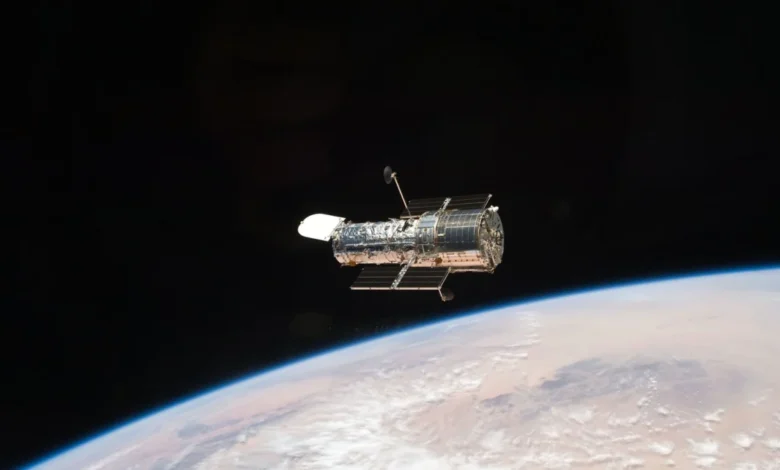
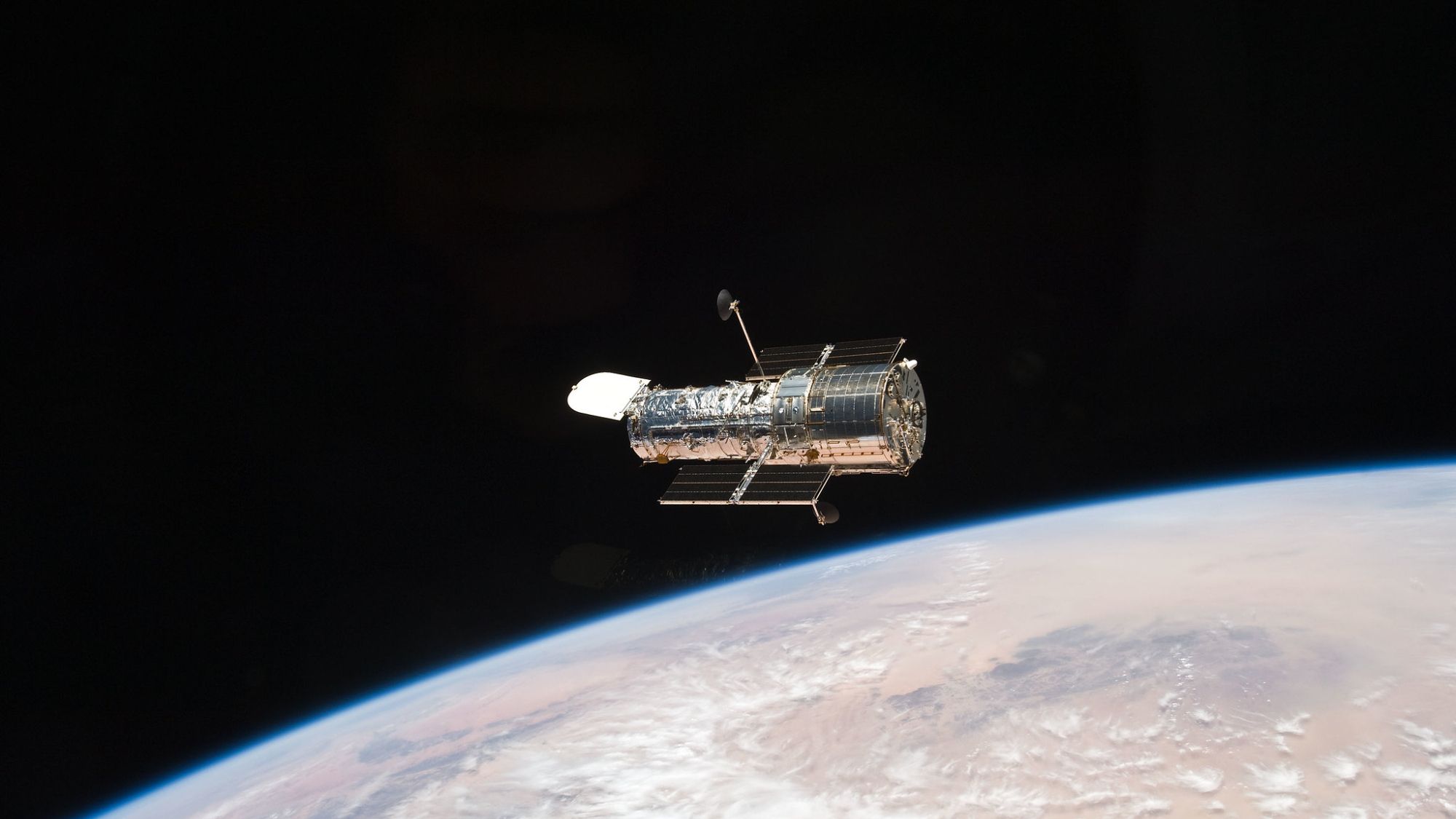
The National Aeronautics and Space Administration (NASA) has officially reopened discussions regarding a potential rescue and servicing mission for the aging Hubble Space Telescope. Operating for over three decades, the legendary observatory currently faces an unpowered atmospheric reentry projected for the mid-2030s due to continuous orbital decay. To mitigate this loss, the space agency issued a formal request for information (RFI) targeting commercial in-space servicing capabilities. This initiative invites private aerospace companies to propose innovative technological solutions capable of boosting Hubble’s orbital altitude, upgrading its scientific instruments, or executing a safe, controlled disposal strategy once its operational lifespan finally concludes.
Launched in April 1990 as a collaborative venture between NASA and the European Space Agency (ESA), Hubble revolutionized humanity’s understanding of the cosmos. Plagued initially by a flawed primary mirror, the telescope was successfully repaired during a daring space shuttle servicing mission in 1993. That triumphant intervention set a precedent for human-tended maintenance, allowing astronauts to visit the observatory on five separate occasions. The final human maintenance mission, STS-125, took place in May 2009, leaving Hubble equipped with state-of-the-art cameras and spectrographs designed to probe the deep universe.
Over its remarkable operational lifetime, Hubble has yielded monumental scientific breakthroughs. Among its most profound achievements is the definitive confirmation that the expansion of the universe is accelerating, driven by an enigmatic force known as dark energy—a discovery that earned the 2011 Nobel Prize in Physics. Furthermore, Hubble observations have contributed to the publication of more than 23,000 peer-reviewed scientific papers. The telescope has charted the life cycles of stars, mapped planetary weather systems within our solar system, and peered deep into the early universe to uncover some of the earliest known galaxies. Beyond its quantitative scientific yield, Hubble has captured the public imagination through stunning visual imagery, most notably the Eagle Nebula’s "Pillars of Creation," forever altering how global audiences perceive the night sky.
Despite the deployment of its successor, the James Webb Space Telescope (JWST), demand for Hubble’s unique capabilities remains exceptionally high. Astronomical institutions and independent researchers routinely request roughly seven times more observation time than is physically available each year. This persistent demand underscores why space agency leadership is eager to preserve the platform. However, Earth’s upper atmosphere constantly exerts drag on satellites in low Earth orbit. Without periodic reboosts, orbital decay is inevitable. Current trajectory models indicate that Hubble will naturally reenter Earth’s atmosphere between 2033 and 2034, meaning any potential robotic or crewed intervention must be executed around 2032 to maximize safety margins.
The current push to save the telescope reflects a dramatic evolution in agency strategy, particularly following shifts in leadership. In 2022, tech billionaire and commercial astronaut Jared Isaacman proposed a privately funded mission utilizing SpaceX hardware to reboost Hubble without drawing on taxpayer funds. At the time, NASA declined the proposal, citing technical risks and potential hazards to the healthy, functioning observatory. However, following his appointment as NASA administrator in December 2025, Isaacman signaled a renewed openness to the concept. In an official agency statement released in late October, Isaacman emphasized that Hubble’s immense scientific return justifies exploring every reasonable opportunity to keep the observatory operational, especially if commercial partnerships can achieve this at a fraction of the cost of launching a brand-new flagship observatory.
In a subsequent statement shared on social media, Isaacman noted that while a low-cost orbital rescue had been previously evaluated, the current budgetary and technological landscape makes the effort worthwhile. "That was then. Still worth the effort—Hubble deserves it," Isaacman remarked, underlining a growing institutional appetite for public-private partnerships in orbital maintenance.
The strategy of relying on commercial partners for orbital upkeep is not entirely unprecedented, though it comes with inherent risks. Earlier this year, NASA partnered with Katalyst Space Technologies on a $30 million mission intended to boost the orbit of the Neil Gehrels Swift Observatory, another aging science satellite threatened by atmospheric drag. Driven by an accelerated solar cycle that heated and expanded Earth’s atmosphere—thereby increasing orbital drag—the rapid-response rescue mission launched successfully during the summer. Unfortunately, subsequent control issues prevented the Katalyst LINK spacecraft from successfully rendezvousing with Swift. Consequently, the observatory is slated to reenter Earth’s atmosphere, bringing a successful 22-year mission to a close far beyond its original two-year design life.
The failure of the Swift rescue mission highlights the technical complexities inherent in autonomously servicing uncrewed spacecraft that were never originally designed for automated docking or refueling. Hubble presents similar engineering challenges. Although astronauts previously outfitted the telescope with handrails and standardized attachment fixtures to facilitate spacewalks, those mechanisms were built for human gloved hands operating from a space shuttle payload bay, not automated robotic manipulators deployed by commercial cargo vehicles.
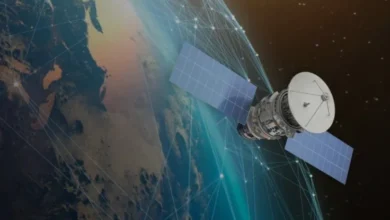
Nevertheless, the private space sector has advanced significantly since Hubble’s last servicing mission in 2009. Modern rendezvous, proximity operations, and docking (RPOD) technologies, alongside advanced robotic manipulation systems developed for commercial satellite life-extension programs, offer entirely new pathways for orbital intervention. The RFI issued by NASA specifically allows for a wide array of industrial proposals, ranging from simple propulsion modules designed to clamp onto Hubble and push it into a higher, safer orbit, to comprehensive technological overhauls that could upgrade its guidance systems or power distribution units.
Should commercial proposals prove economically unfeasible or technologically too risky, the RFI also serves as a necessary planning tool for the controlled decommissioning of the observatory. Bringing Hubble down in a targeted, controlled manner over an uninhabited ocean sector ensures that heavy structural components and the massive primary mirror assembly do not pose a hazard to populations on the ground. Whether the ultimate fate of the telescope involves an extended lease on life courtesy of commercial ingenuity or a dignified end to its historic mission, NASA’s renewed focus ensures that the final chapter of the Hubble Space Telescope will be managed with the deliberate care worthy of one of humanity’s greatest scientific instruments.