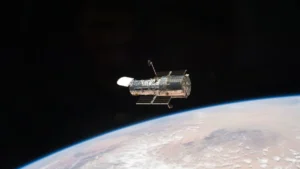
The low Earth orbit (LEO) environment is facing an escalating crisis that threatens the future of global space infrastructure. With more than 36,500 tracked debris objects currently circling the planet, the margin for error in orbital management has shrunk dramatically. Every year, hundreds of satellites reach the end of their operational lifespans. While the majority are successfully guided out of orbit through controlled deorbit maneuvers, a significant number experience sudden, premature failures before decommissioning protocols can be executed.
Even when satellites are properly powered down at the end of their missions, they are not out of danger. Over time, subtle external forces—such as solar radiation pressure, atmospheric drag, residual magnetic moments, and gravitational gradients—act upon the dormant hardware. These forces can cause dead spacecraft to begin spinning or tumbling uncontrollably. Once a defunct satellite starts to tumble, capturing it via Active Debris Removal (ADR) missions becomes exponentially more difficult, hazardous, and expensive. Space safety experts warn that without robust mitigation strategies, critical bands of low Earth orbit risk becoming completely unusable, potentially triggering a cascading chain reaction of collisions known as the Kessler Syndrome.
To address this mounting threat, aerospace engineers and regulatory bodies are shifting their focus toward proactive end-of-life management. Among the most promising innovations is a passive magnetic damping device developed by Airbus Research and Development known as the Detumbler. Designed to stabilize defunct satellites before they spiral out of control, this palm-sized piece of technology represents a major paradigm shift in orbital debris mitigation, offering a reliable, low-cost, and fully autonomous solution to the space industry.
The Mechanics of Orbital Tumbling and the Limitations of Legacy Solutions
Understanding why satellites tumble requires looking closely at the physics of the vacuum of space. When a spacecraft operates normally, on-board attitude control systems, reaction wheels, and magnetorquers work in tandem to maintain orientation. Once a satellite dies and its power systems shut down, these active controls cease to function.
Historically, engineers relied on natural phenomena to mitigate post-mission spin. Without power, the only natural force capable of limiting tumbling rates in a dead spacecraft is the eddy currents generated when the Earth’s magnetic field interacts with the rotating metallic structure of the satellite. To enhance this effect, mission operators sometimes short-circuit the satellite’s magnetorquers at the end of its life.
However, this traditional approach has severe limitations. The resulting resistive torque is proportional to the low magnetic field squared. The induced dipole moment is proportional to the local magnetic field strength ($B$), and the resulting magnetic torque is the cross product of the dipole moment and the magnetic field ($M times B$). Consequently, the restorative forces are extremely weak—often too weak to counteract spontaneous tumbling induced by minor asymmetries in external disturbances.
A historical example underscores this vulnerability. In 2017, fully 12 years after its decommissioning, the oceanography satellite Topex-Poseidon had reached a spin rate of 34 degrees per second, accumulating approximately 40,000 Nms of angular momentum. Left unchecked, such spinning hulks become dangerous spinning targets that defy safe capture by robotic removal arms or net-based ADR mechanisms.
The Airbus Detumbler: A Passive Magnetic Brake
To overcome the weak physics of standard eddy-current damping, Airbus R&D developed the Detumbler. Weighing approximately 200 grams (0.440 pounds), the device operates on a fundamentally different principle that dramatically increases braking efficiency.
The Detumbler features an internal magnetized rotor designed to remain aligned with the Earth’s magnetic field. As the host satellite begins to tumble, the Detumbler’s conductive housing rotates around this magnetized rotor. This relative motion induces powerful eddy currents that act as an induction brake, systematically dissipating the satellite’s kinetic energy.

Crucially, because the device relies on permanent magnets rather than purely induced dipoles, the braking torque is proportional to the magnetic field ($B$) rather than its square ($B^2$). This design allows the Detumbler to achieve efficiencies many orders of magnitude higher than conventional legacy methods. Furthermore, the entire process occurs completely passively, requiring zero electrical power, computer processing, or intervention from attitude-control actuators. It continues to function reliably long after the host satellite has suffered total electrical failure.
Designed for broad compatibility, the palm-sized unit can be integrated easily into existing platform designs with little to no modification, provided it is mounted at a safe distance from onboard magnetometers. It is engineered to handle platforms ranging from approximately 150 kilograms (330 pounds) to 1.5 metric tons (3,300 pounds), successfully eliminating tumbling rates caused by average external disturbances of up to 5 micro-Newton-meters ($mutextNm$). Smaller platforms can be fully detumbled within weeks, while larger spacecraft at the upper end of the mass range achieve steady-state stability within a year.
Regulatory Push and Industry Adoption
The introduction of the Detumbler arrives at a critical juncture for space governance. The European Space Agency’s (ESA) stringent Space Safety Program guidelines now mandate detumbling capabilities for all low Earth orbit missions exceeding 500 kilograms (1,100 pounds). ESA’s benchmarks require spacecraft to reduce tumbling rates from an initial 3 degrees per second down to 0.75 degrees per second in less than a year. The Airbus Detumbler exceeds these requirements, positioning itself as a leading compliance tool for operators aiming to align with modern orbital safety standards.
Beyond regulatory compliance, the commercial sector is beginning to recognize the economic necessity of orbital stabilization. Active Debris Removal is widely seen as commercially unviable if removal vehicles must spend precious fuel and time wrestling with fast-spinning, unpredictable targets. By ensuring that dead satellites remain stable and stationary relative to their orbital paths, devices like the Detumbler dramatically lower the technical complexity, risk, and financial cost of future cleanup operations.
Market validation has already begun. MDA Space has officially selected the Detumbler for its first MDA AURORA™ low Earth orbit satellite constellation order. This deployment marks a historic milestone: the first commercial, large-scale integration of passive detumbling technology in orbital history. Industry analysts view the move as a bellwether for future mega-constellation deployments, suggesting that sustainable design principles are rapidly transitioning from voluntary corporate social responsibility initiatives into standard procurement criteria.
Implications for the Future of Low Earth Orbit
The broader implications of the Detumbler extend well into the coming decades as commercial utilization of low Earth orbit accelerates. With thousands of new satellites launched annually by private enterprises and sovereign space agencies alike, the physical capacity of orbital pathways is finite.
Airbus positions the Detumbler as a cornerstone of its sustainable space vision, directly supporting international Zero Debris targets and emerging European Union Space Traffic Management (STM) regulations. By addressing the root cause of uncooperative debris—post-mission tumbling—the technology helps preserve the long-term viability of shared orbital altitudes.
For satellite operators, the calculus has evolved. Integrating passive stabilization mechanisms is no longer viewed merely as an environmental checkbox, but as a fundamental business imperative to protect long-term market access and mitigate the risk of catastrophic asset loss. As the aerospace community prepares for an era of unprecedented orbital congestion, innovations that transform chaotic orbital hazards into manageable, stable objects will prove essential to keeping the path to the stars open for generations to come.
Organizations seeking to upgrade their next-generation satellite platforms to meet upcoming regulatory frameworks and sustainability mandates can contact Airbus Space Electronics directly via email at [email protected] for procurement and technical integration details.