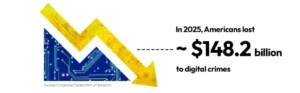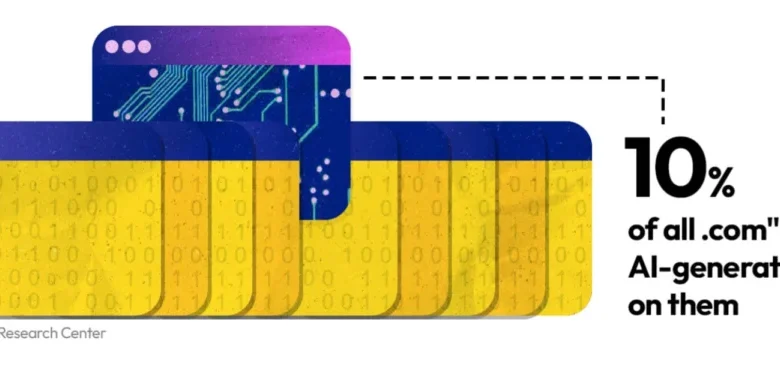
The digital landscape is currently navigating an unprecedented crisis of authenticity. According to data published by the Pew Research Center in late 2026, approximately one-third of all newly published web content is generated by artificial intelligence. This shift has fundamentally altered the economics of misinformation, enabling bad actors to deploy "pink slime"—low-quality, AI-generated news sites—at a scale that now eclipses legitimate local journalism. As these sophisticated tools become more accessible, the barrier to entry for digital fraud has plummeted, leaving internet users to navigate a environment where the traditional hallmarks of a trustworthy source are increasingly obsolete.
The Proliferation of Synthetic Deception
The rise of high-quality, deceptive content was once the exclusive domain of state-sponsored actors and well-funded intelligence groups. Today, that exclusivity has vanished. The democratization of generative AI models, particularly those hosted on open-source platforms without strict safety guardrails, has created a "Wild West" environment for digital fraud.
Donnie Hasseltine, Chief Information Security Officer at Arkstone Defense, notes that the shift is not merely quantitative but qualitative. "What we are seeing is the mass production of credibility," Hasseltine explains. By utilizing localized data and scraped information, scammers can build websites that mimic the editorial style, tone, and visual branding of established news outlets or government agencies.

This trend is exacerbated by a broader decline in content moderation across major social media platforms. As companies prioritize engagement metrics—which favor emotionally charged or controversial content—the structural incentives for maintaining a clean, fact-based feed have weakened. Zohaib Ahmed, CEO of Resemble.AI, emphasizes that modern bad actors are no longer restricted by the limitations of mainstream AI interfaces like ChatGPT or Claude. By training private, unaligned models on stolen datasets, these actors can produce massive volumes of persuasive, hyper-realistic content that bypasses traditional automated detection systems.
A Chronology of Digital Fraud Evolution
To understand the current threat level, one must look at the progression of online exploitation:
- 2010–2015: The Era of Manual Phishing. Scams were largely defined by obvious grammatical errors, "Nigerian Prince" email templates, and crude, poorly designed websites. Users could identify threats by looking for blatant typos or missing SSL certificates.
- 2016–2020: The Rise of Typosquatting. As users became more savvy, scammers pivoted to "typosquatting," registering domain names that were near-identical to high-traffic sites (e.g., swapping an ‘l’ for an ‘i’). This period also saw the birth of coordinated inauthentic behavior on social media.
- 2021–2024: The Sophistication Gap. With the introduction of commercial large language models (LLMs), scammers began automating the creation of blog posts, social media captions, and video scripts.
- 2025–2026: The AI-Native Era. We are now in a period where "scam kits" are sold on the dark web for a few hundred dollars. These kits provide everything a bad actor needs to launch a full-scale fraud operation, including pre-built, responsive websites, deepfake video generation for customer service calls, and automated bot networks that provide fake engagement to bolster the site’s legitimacy.
The Failure of Traditional Verification Signals
For decades, internet users were taught to look for "https://" in the URL bar and the presence of a padlock icon to signify a secure connection. While these remain important, they are no longer sufficient evidence of a site’s integrity. A secure connection simply means the data transmission between the user and the server is encrypted; it does not mean the server itself is operated by an honest entity.
Eyal Elazar of Riskified points out that scammers now routinely obtain SSL certificates for their malicious domains. "The padlock icon has been weaponized," Elazar notes. "It provides a false sense of security to users who believe ‘secure’ is synonymous with ‘trustworthy’."

Furthermore, visual cues that once signaled a hoax—pixelated images, robotic-sounding text, or poor formatting—are effectively a thing of the past. Modern generative AI is capable of producing flawless, high-resolution imagery and sophisticated, human-like prose. When coupled with the purchase of "verified" checkmarks on social media platforms that no longer require identity proof, the digital environment has become a minefield for the average consumer.
Strategies for Digital Self-Defense
As the technology behind deception improves, the strategies for verification must become more proactive. Experts recommend a multi-layered approach to vetting online entities:
1. The SIFT Method (Stop, Investigate, Find, Trace)
Developed by digital literacy expert Mike Caufield, the SIFT method remains the gold standard for navigating online claims.
- Stop: Before reacting to a post, especially one that triggers an emotional response, pause.
- Investigate the Source: Don’t just look at the account; look for what others say about the account. Perform a "lateral reading" search by opening a new tab and searching the name of the website or influencer alongside the word "scam," "controversy," or "fake."
- Find Better Coverage: If a news story is truly significant, it will be reported by multiple, established outlets. If only one obscure site is reporting a "bombshell" story, it is likely misinformation.
- Trace Claims to the Original: If an article cites a study or an official report, click the link to verify the source directly. Misinformation peddlers frequently misrepresent or pull data out of context to support their narratives.
2. The Zoning Approach
The News Literacy Project advocates for "zoning" content based on its intended purpose. Users should ask: Is this content meant to inform, persuade, entertain, or sell? By identifying the intent of the content creator, users can better calibrate their level of skepticism. An advertisement for a product, even if it looks like a news article, is still an advertisement and should be treated as such.

3. Technical Safeguards
While not infallible, browser extensions that flag potential threats and AI-detection tools can serve as a first line of defense. However, these tools are locked in an arms race with the very AI models they attempt to detect. They should be used as a supplement to, not a replacement for, critical thinking.
The Human Cost of Automated Misinformation
The implications of this shift extend far beyond individual financial loss. When citizens can no longer trust the veracity of the information they encounter, the health of the public discourse suffers. According to Chuck Salter, CEO of the News Literacy Project, the most vulnerable demographic is the younger generation, who—despite being "digital natives"—are often less equipped to identify "zoned" content because they have spent their entire lives in the frictionless, algorithmically-driven environment of social media.
The loss of critical thinking skills is a byproduct of the "attention economy." Platforms are designed to reduce friction; they want you to click, share, and stay. They do not want you to pause, investigate, and leave the app to perform a background check.
Conclusion: A Call for Digital Skepticism
The reality of 2026 is that the internet is no longer a neutral space for information exchange. It is a highly competitive, often hostile environment where credibility is a manufactured product. The burden of verification has shifted entirely onto the user.

To survive in this environment, users must adopt a default position of "healthy skepticism." Never trust a screenshot—they are easily forged. Be wary of content that demands an emotional reaction or requires you to leave a moderated platform for an unknown, off-site link. Finally, rely on established, non-partisan fact-checking organizations to verify viral claims. In an age where AI can generate the appearance of truth in seconds, the only true defense is the slow, deliberate work of human verification.
Related posts: