GitHub has dramatically broadened the horizons of its industry-defining assistant, shifting its primary utility from individual code completion to enterprise-grade, multi-agent orchestration. Announced during the company’s annual GitHub Universe conference, the platform’s latest evolution introduces a redesigned Copilot application alongside a groundbreaking "Copilot Projects" capability. Together, these tools are engineered to allow distributed engineering teams to coordinate multiple autonomous AI agents, seamlessly share cross-tool and cross-repository development context, and govern complex software engineering workflows from a unified management dashboard.
This strategic pivot arrives at a critical juncture for enterprise technology. As software complexity surges and development backlogs grow, corporate IT leadership faces mounting pressure to accelerate application delivery without compromising security or architectural integrity. While early iterations of GitHub Copilot were celebrated for boosting localized productivity—helping individual developers write boilerplate code, debug syntax errors, and generate rudimentary pull requests—the new architecture aims to fundamentally transform the software development lifecycle (SDLC) by scaling AI intervention across entire development teams and multi-repository infrastructures.
The Evolution of Developer Tooling: From Individual Assistant to Centralized Workspace
Historically, AI coding assistants have functioned as sophisticated autocomplete engines or interactive chat companions residing within local Integrated Development Environments (IDEs). Developers would manually query the model, copy-paste snippets, or instruct isolated agent sessions to execute granular tasks within a single codebase. While effective for localized optimizations, this siloed approach often left engineering teams grappling with fragmented context and excessive context-switching between project management boards, design documents, and local testing environments.
The redesigned GitHub Copilot application bridges this operational gap by functioning as an overarching, cloud-connected central workspace. Rather than limiting interactions to direct code manipulation, the revamped app empowers developers to draft and refine functional specifications, participate deeply in architectural design discussions, and continuously analyze real-time application telemetry alongside traditional coding routines.
Furthermore, the updated interface integrates natively with a wide array of external enterprise tools and repositories. This deep connectivity allows development teams to supply AI agents with a holistic understanding of systemic project objectives, business logic, and historical documentation, rather than forcing engineers to write minute, step-by-step instructions for every isolated task.
Introducing Copilot Projects: Multi-Repository Orchestration and Parallel Automation
At the heart of GitHub’s latest release is Copilot Projects, a feature designed to handle complex, large-scale engineering initiatives that span multiple disparate repositories. By taking a macro-level approach to software development, Copilot Projects allows engineering managers and senior developers to assign broad, overarching goals directly to the AI infrastructure.
The mechanics of this system rely on multi-source context ingestion. Developers can feed the platform a rich tapestry of project data, including source code from various repositories, user experience design mockups, transcripts or notes from architectural review meetings, and even communication threads from team collaboration platforms like Slack. Once ingested, Copilot analyzes the multifaceted requirements and intelligently partitions the workload across multiple autonomous agents running concurrently in parallel sessions.
These background agents execute their assigned tasks independently, tracking their own progress against project milestones. Once completed, the agents automatically package their modifications and submit standardized pull requests back to the relevant repositories for human review and validation.
Productivity Enhancements and the Shifting Role of the Developer
Industry analysts and engineering leaders have responded positively to the potential productivity gains offered by this multi-agent model. Amit Kumar Jena, AI development head at IT consulting firm Kanerika, notes that the revamped app fundamentally streamlines daily engineering workflows. By minimizing the friction associated with jumping between disparate project management software, debugging utilities, and code repositories, developers can reclaim valuable time.
According to Jena, this paradigm shift gradually redefines the day-to-day responsibilities of software engineers. Instead of spending the majority of their shifts manually writing, modifying, and refactoring code line-by-line, developers will increasingly transition into supervisory roles. Their core functions will evolve toward defining functional tasks, supplying high-quality context to autonomous agents, and rigorously reviewing, validating, and stress-testing agent-generated output.
For Chief Information Officers (CIOs) and enterprise technology executives, the transition toward a unified agentic environment presents a compelling opportunity to standardize AI adoption. Pareekh Jain, principal analyst at Pareekh Consulting, explains that consolidating AI-assisted development onto a single platform makes it significantly easier for corporate leadership to establish consistent governance frameworks, oversee agent behavior, and monitor enterprise-wide utilization metrics.
Additionally, Abhishek Satapathy, principal analyst at Avasant, highlights that this centralization helps organizations combat "agent and tool sprawl"—a common administrative headache where different teams adopt disparate, unvetted AI utilities that complicate security audits and inflate software licensing expenditures.
Managing Enterprise Risks, Security, and Governance
Despite the promise of unprecedented automation, the autonomy granted to multi-agent systems introduces distinct administrative and security challenges. Because the revamped Copilot application permits agents to independently execute development tasks and alter critical codebases, enterprises must rapidly extend their existing security controls and governance policies to encompass these autonomous workflows.
Kanerika’s Amit Kumar Jena emphasizes that CIOs cannot afford to deploy agentic workflows without rigorous guardrails. Organizations must implement strict access controls, limiting specific AI agents to authorized repositories, enforcing rigorous branch protection rules, and making human approval an absolute prerequisite before any agent-generated pull request can be merged into production branches.
Furthermore, transparency remains a paramount concern. Enterprises must capture comprehensive audit logs of all agent activities and integrate these records directly into their Security Information and Event Management (SIEM) systems. Without granular visibility into which agents are accessing sensitive repositories and modifying core application logic, organizations risk introducing severe compliance vulnerabilities as they scale their autonomous development programs.
Coordination Challenges, Testing Bottlenecks, and Financial Realities
While Copilot Projects offers a powerful mechanism for clearing accumulated technical debt and accelerating delivery cycles, analysts caution that parallel agent execution introduces notable trade-offs in coordination, integration testing, and operational expenditure.
On the positive side, running parallel agents is exceptionally well-suited for repetitive, large-scale application modernization efforts. Tasks such as rolling out routine dependency updates, adapting to sweeping API deprecations, replacing legacy software development kits (SDKs), or upgrading enterprise Java and .NET versions across dozens of microservices can be largely automated, saving thousands of human engineering hours.
However, coordinating these simultaneous changes across shared repositories is fraught with risk. Abhishek Satapathy points out that multiple agents operating concurrently may inadvertently modify the exact same files, base their updates on conflicting or outdated API contracts, or introduce incompatible architectural assumptions. Resolving these downstream integration conflicts can quickly negate the time saved by parallel execution.
Satapathy references a 2026 arXiv study titled CooperBench: Why Coding Agents Cannot Be Your Teammates Yet, which evaluated multi-agent collaboration dynamics. The research revealed that AI agents experienced approximately 30% lower success rates when collaborating collectively on complex tasks compared to when they completed the identical assignments individually. While the study did not directly evaluate GitHub’s specific Copilot Projects implementation, it serves as a stark empirical warning regarding the coordination hurdles enterprises will likely face when deploying fleets of uncoordinated agents to shared codebases.
Code review and quality assurance represent another critical bottleneck. Jena notes that spinning up ten parallel agent sessions could easily yield ten simultaneous pull requests. Reviewing, testing, and integrating this volume of code places immense pressure on Continuous Integration (CI) pipelines, increases merge conflicts, and heavily increases the time human engineers must spend validating output.
Financial management is an additional consideration. Poorly defined project prompts or ambiguous architectural goals can trap agents in repetitive execution loops, resulting in excessive rework and skyrocketing AI credit consumption. To mitigate these financial risks, CIOs are advised to establish strict AI credit limits for individual projects and assign dedicated human owners responsible for monitoring agent progress and terminating runaway sessions when necessary.
Advanced Code Review Tiers and New Enterprise Packaging
To address the growing complexity of validating AI-generated code, GitHub is expanding Copilot’s review capabilities by introducing a new "Max" tier. Unlike conventional AI code review tools that rely on a single large language model, the Max tier deploys multiple independent review agents powered by models from diverse underlying providers.
Once the individual review agents complete their analysis, a specialized aggregation agent steps in to synthesize their findings, resolve discrepancies between model opinions, and verify analytical accuracy before presenting developers with a unified, comprehensive review report.
While this multi-model consensus approach significantly improves the probability of detecting subtle defects—particularly in high-risk areas like cryptographic authentication logic, shared internal libraries, and security-sensitive application components—analysts stress that it is not infallible. Satapathy notes that human developers will still be required to validate critical alerts, run automated test suites, and maintain ultimate sign-off authority for high-risk deployments.
The advanced scrutiny provided by these multi-agent reviews also carries financial implications. GitHub’s pricing guidelines indicate that lightweight reviews consume an average of $0.25 in AI credits, whereas balanced reviews cost approximately $1.50, and comprehensive Max tier reviews can scale up to $10 per execution. Consequently, enterprise leaders must establish clear internal policies determining which code modifications warrant deeper, high-cost scrutiny.
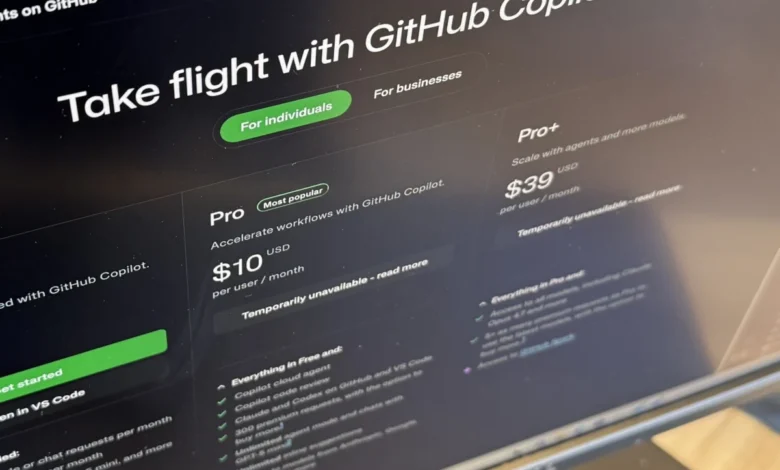
In tandem with these technical updates, GitHub is restructuring how enterprises procure and consume Copilot services. By bundling Copilot directly into standard GitHub Enterprise subscriptions and transitioning toward a consumption-based AI credit model, the company aims to simplify enterprise adoption. This new purchasing structure allows organizations to seamlessly extend Copilot access across larger engineering divisions without managing separate, disjointed per-user add-on licenses, ensuring that enterprises pay strictly for their realized, measurable AI consumption.