Amazon Web Services Bridges Operational Databases and Data Lakes with New DuckDB-Powered Capabilities for Aurora PostgreSQL

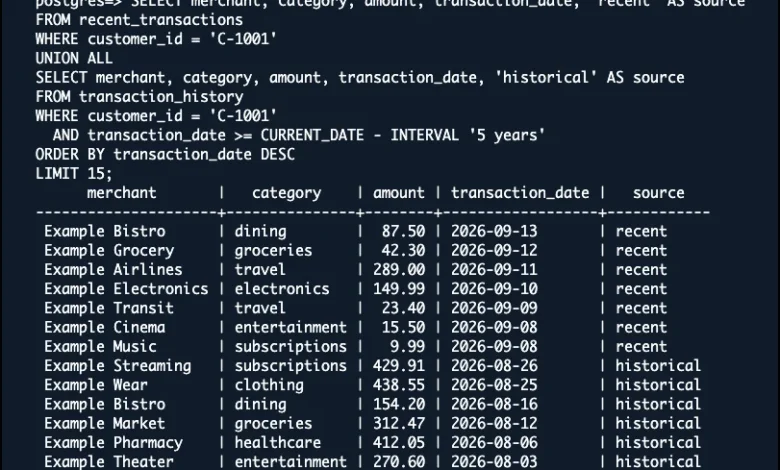
Amazon Web Services (AWS) has officially introduced a transformative capability for Amazon Aurora PostgreSQL, allowing organizations to query operational data directly alongside data stored in data lakes using Apache Iceberg and Apache Parquet formats. By embedding the high-performance analytical capabilities of DuckDB directly into the Aurora PostgreSQL database engine, AWS has fundamentally altered how enterprises manage, access, and analyze distributed datasets. This advancement eliminates the traditional requirement for complex Extract, Transform, and Load (ETL) pipelines, bridging the historic divide between fast, transactional operational datastores and cost-effective, large-scale analytical data repositories.
Background Context and Industry Evolution
For decades, enterprise data architecture has suffered from a fundamental segregation. On one side stood relational operational databases—such as PostgreSQL—optimized for low-latency, transactional workloads like processing customer orders, tracking live user sessions, and executing real-time financial trades. On the other side stood data lakes and cloud object stores—such as Amazon S3—designed for massive scale, housing years of historical data formatted as Parquet, ORC, or structured via table formats like Apache Iceberg.
To bridge this gap, organizations routinely engineered complex reverse-ETL pipelines, data warehouses, and synchronization jobs. These systems constantly duplicated data across environments, driving up cloud infrastructure expenditures, introducing maintenance overhead, and creating synchronization latency. Furthermore, as modern application development shifts toward artificial intelligence agents and real-time operational analytics, the demand for instantaneous access to both live, uncommitted transactions and historical archives has intensified. Pre-replicating or predicting every dataset an AI agent might conceivably need has become practically impossible, necessitating a unified query interface.
The integration of DuckDB technology into Aurora PostgreSQL addresses this architectural friction point. Following Amazon’s integration of the DuckLabs team—the maintainers behind the popular open-source analytical database DuckDB—AWS has begun embedding DuckDB’s renowned vector-processing efficiency directly into its core managed services.
Chronology and Technical Implementation
The development and rollout of this capability represent a significant engineering milestone for the AWS database and analytics teams.
- Late 2024 to 2025: Following the strategic integration of the DuckLabs team into Amazon, engineering efforts commenced to fuse DuckDB’s analytical vector-processing engine with Aurora’s distributed transactional storage architecture.
- September 2026: AWS formally announced the public availability of direct Iceberg and Parquet querying capabilities for Amazon Aurora PostgreSQL.
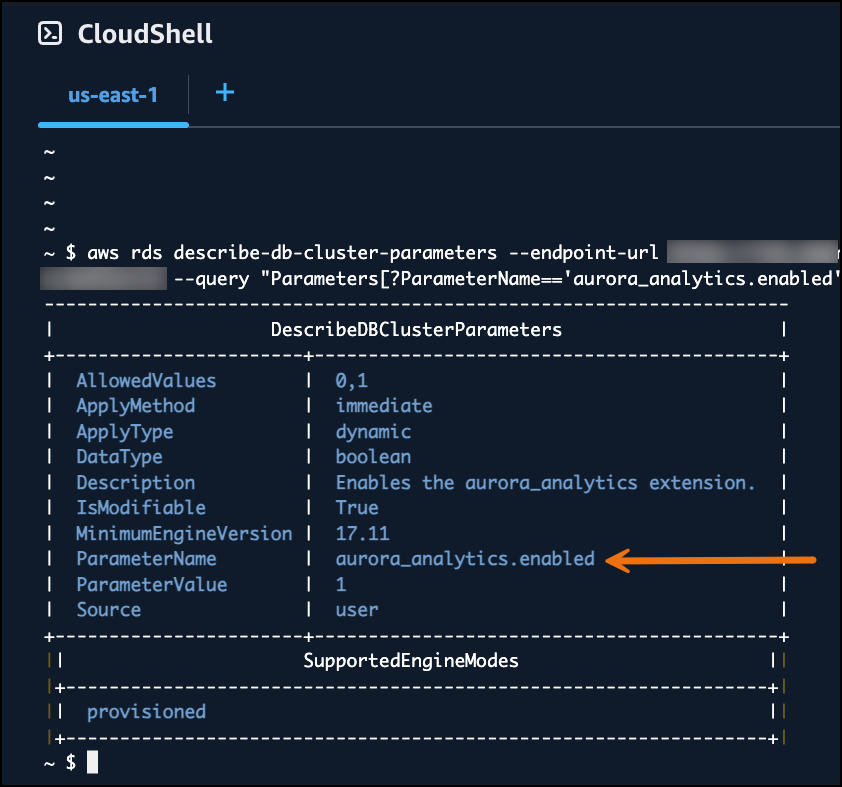
- Supported Versions: The feature is natively supported across Aurora PostgreSQL major versions 17 (specifically starting with version 17.11) and 18 (starting with version 18.6).
- Global Deployment: The capability launched simultaneously across all commercial AWS Regions and AWS GovCloud (US) Regions at no additional software licensing cost.
Implementing the feature requires a streamlined administrative process. Database administrators first create an Aurora PostgreSQL cluster, attach an AWS Identity and Access Management (IAM) role provisioned with the necessary permissions for Amazon S3 and the AWS Glue Data Catalog, and enable the aurora_analytics extension via a simple SQL command (CREATE EXTENSION aurora_analytics;).
Once the extension is active, users can define foreign tables pointing directly to Apache Parquet files or Apache Iceberg tables residing in Amazon S3 or S3 Tables. Thanks to automated schema inference, administrators can point foreign tables directly to data lake files without manually defining column definitions. For larger implementations, the IMPORT FOREIGN SCHEMA command allows bulk-creation of foreign tables across an entire AWS Glue Data Catalog database.
Furthermore, the system supports Iceberg REST Catalog (IRC)-compatible catalogs through AWS Glue Data Catalog federation. Enterprises can register external catalogs once with AWS Glue, allowing a single SQL query to seamlessly join data stored inside Aurora with Iceberg tables distributed across multiple disparate catalog systems.
Architectural Mechanics and Performance Optimizations
Under the hood, the architecture relies on localized query processing within the Aurora node, preventing unnecessary network hops or data duplication. When a query is executed, DuckDB handles the heavy lifting of analytical scans over the data lake files, while Aurora processes the operational transactional data.
To maintain high performance as data scales into petabytes, Aurora applies advanced query optimization techniques:

- Predicate Pushdown: Filtering conditions are pushed down directly to the data lake storage layer, ensuring that only relevant rows are retrieved.
- Column Pruning: Queries read exclusively the columns required for computation, minimizing I/O overhead.
- Intelligent Caching: Frequently accessed data lake segments are cached locally within the Aurora instance, drastically accelerating response times for repetitive analytical queries.
- Diagnostic Monitoring: Database engineers can inspect execution efficiency on a per-query basis using the
aurora_analytics_stat_statements()function, which reports precise metrics including rows scanned, bytes read from Amazon S3, and cache hit ratios.
For use cases requiring ultra-low, single-digit-millisecond latency, engineers can materialize data from the data lake directly into native Aurora PostgreSQL tables using standard commands such as CREATE TABLE AS SELECT or MERGE INTO. These materialized tables can subsequently be queried on any read replica within the cluster, effectively offloading heavy analytical scans from primary operational writers.
Official Responses and Industry Perspectives
While AWS representatives highlighted the efficiency and developer-centric nature of the release, independent database architects and data engineers have weighed in on its strategic significance.
Industry analysts note that this move signals a broader trend toward convergence in data management. For years, the market debated whether data warehouses, operational databases, and data lakes would merge into a single paradigm or remain rigidly specialized. By enabling operational engines to directly query open data lake formats without data movement, cloud providers are validating the "lakehouse" architecture at the transactional database layer.
"Organizations are no longer willing to tolerate the operational tax of maintaining synchronous ETL pipelines just to give applications a complete historical view," noted a prominent cloud data architect. "By bringing DuckDB’s analytical engine directly into Aurora, AWS is shifting the burden of data integration away from developer-built pipelines and into the database kernel itself."
Economic Impact and Cost Analysis
From a financial perspective, the integration offers a compelling value proposition. AWS has structured the pricing model to incur no additional software charges for utilizing the aurora_analytics extension. Customers pay exclusively for the incremental Aurora compute consumed during query execution and standard Amazon S3 request and storage costs associated with reading data lake files.
By eliminating the compute and storage overhead typically consumed by reverse-ETL tools, intermediate staging databases, and redundant storage volumes, enterprises can realize substantial cost savings. Organizations no longer need to provision separate analytical infrastructure simply to run cross-system aggregations that combine real-time transactional metrics with long-term historical archives.
Broader Implications for Application Development and AI
The long-term implications of this architectural shift extend far beyond traditional business intelligence reporting, directly impacting the deployment of artificial intelligence and machine learning systems.
Modern enterprise AI applications increasingly rely on retrieval-augmented generation (RAG) and autonomous agents that must reason simultaneously over live operational state (such as current inventory levels or active user sessions) and deep historical context (such as multi-year customer purchase patterns). Historically, feeding both data types to an AI agent required complex orchestration layers, vector databases, and custom ETL scripts to pull data from disparate silos.
With Aurora PostgreSQL now serving as a single, unified query interface for both live operational tables and petabyte-scale Iceberg data lakes, developers can construct sophisticated AI agents with significantly reduced architectural complexity. Agents can query live database tables and historical S3 datasets within a single SQL statement, ensuring that automated decision-making processes operate on the most accurate, comprehensive, and up-to-date information available.
As enterprises continue to digitize operations and demand greater agility from their data infrastructure, capabilities that dissolve barriers between transactional stores and analytical lakes are expected to become standard requirements across enterprise software development.