Vietnam Joins the Artemis Accords as the 78th Signatory in Landmark Expansion of Global Space Cooperation

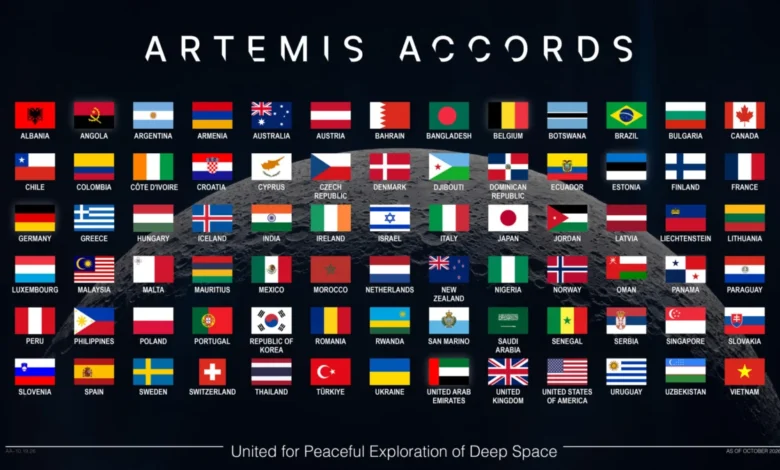
The Socialist Republic of Vietnam has officially become the 78th nation to join the Artemis Accords, marking a significant milestone in the country’s burgeoning aerospace ambitions and reinforcing its deepening strategic alignment with the United States. The signing ceremony, which took place during the Vietnam International Digital Week in the coastal city of Ha Long, saw Minister of Science and Technology Huỳnh Thành Đạt formalize the nation’s commitment to a set of non-binding, multilateral principles designed to govern the peaceful and transparent exploration of the Moon, Mars, and beyond. The event was attended by U.S. Ambassador to Vietnam Jennifer Wicks, signaling the growing breadth of the Comprehensive Strategic Partnership between the two nations, a relationship that has evolved from post-war reconciliation to high-tech cooperation over the last three decades.
A New Chapter in U.S.-Vietnam Technological Ties
The inclusion of Vietnam in the Artemis Accords is not an isolated event but rather the culmination of years of institutional collaboration. Since the formalization of the U.S.-Vietnam Comprehensive Strategic Partnership, the two countries have sought to expand their cooperation beyond traditional defense and economic sectors into the high-frontier of space exploration.
NASA Deputy Administrator Matt Anderson, in a recorded address for the ceremony, emphasized the strategic timing of the accession. “Vietnam is joining at an important point in the development of its own space program,” Anderson stated. “NASA and the Vietnam National Space Center have built momentum in satellite innovation, land-use research, and radar-based Earth observation. Joining the Artemis Accords opens a new chapter in that relationship. We’ve aligned on the principles. The opportunities are in front of us, and now we can build on that foundation together.”
This partnership is grounded in tangible projects. Earlier this year, NASA collaborated with the Vietnamese-German University to provide technical support for the Soil Moisture Active Passive (SMAP) mission. By integrating Vietnamese academic resources into global Earth science initiatives, both nations are establishing a framework where regional expertise contributes to global climate monitoring and agricultural data analysis.
Chronology of Vietnam’s Aerospace Development
Vietnam’s path to the Artemis Accords has been marked by a deliberate, incremental approach to developing domestic aerospace capabilities. The following timeline outlines the evolution of the nation’s space sector:
- 2006: The government of Vietnam approves the "Strategy for Research and Application of Space Technology until 2020," setting the stage for domestic satellite development.
- 2011: The Vietnam National Space Center (VNSC) is officially inaugurated in Hanoi, serving as the central hub for space research, satellite assembly, and workforce training.
- 2013: Launch of the VNREDSat-1, the first Vietnamese Earth observation satellite, marking the nation’s entry into independent orbital data collection.
- 2020: NASA and the U.S. Department of State introduce the Artemis Accords, establishing a coalition of founding nations to govern lunar exploration.
- 2024: NASA collaborates with the Vietnamese-German University on the SMAP mission, signaling closer operational ties with the U.S. space agency.
- Late 2024: Vietnam formally signs the Artemis Accords at the Vietnam International Digital Week, joining a global coalition of 78 nations.
The LOTUSat Program and Domestic Infrastructure
Central to Vietnam’s space ambitions is the LOTUSat program. This initiative represents a pivot toward indigenous manufacturing and high-resolution Earth observation. The LOTUSat-1 and LOTUSat-2 satellites are designed to utilize advanced radar technology, allowing for reliable data collection even in the heavy cloud cover frequently experienced in Southeast Asia.
These satellites are primarily focused on three areas: disaster response, agricultural management, and weather monitoring. Given that Vietnam is one of the countries most vulnerable to the impacts of climate change, including rising sea levels and intensified typhoon activity, the ability to process high-resolution satellite imagery is a matter of national security and economic stability. By aligning with the Artemis Accords, Vietnam gains access to international best practices in data sharing, which is expected to enhance the efficacy of its domestic disaster mitigation efforts.
Principles of the Artemis Accords
The Artemis Accords are not a treaty in the legal sense but are a set of practical, political commitments that build upon the 1967 Outer Space Treaty. For Vietnam, signing the Accords entails a formal commitment to the following core tenets:
- Peaceful Purposes: All activities must be conducted for the benefit of all humanity.
- Transparency: Signatories agree to provide broad, public descriptions of their space policies and exploration plans.
- Interoperability: Nations agree to utilize open standards and compatible systems to ensure that space infrastructure can support a variety of missions.
- Emergency Assistance: A commitment to providing aid to astronauts in distress, consistent with the 1968 Rescue Agreement.
- Scientific Data Sharing: The commitment to share the results of scientific research openly and transparently.
- Debris Mitigation: A pledge to safely dispose of space debris and limit the creation of harmful orbital waste.
- Heritage Preservation: The protection of historically significant sites on the Moon and other celestial bodies.
These principles are designed to create a "rules-based order" in space, effectively preventing the anarchic exploitation of lunar resources and ensuring that future lunar bases and mining operations remain sustainable and safe for all participants.
Strategic Implications and Global Context
The accession of Vietnam to this coalition serves a dual purpose: it advances Vietnam’s domestic scientific goals while simultaneously bolstering the U.S.-led initiative to define the norms of space exploration in the 21st century. As lunar exploration shifts from the one-off missions of the Apollo era to the establishment of permanent outposts, the geopolitical importance of having a diverse group of signatories—including rising economies in Southeast Asia—cannot be overstated.
Analysts note that the Accords act as a "soft power" mechanism, bringing nations into a shared regulatory framework that discourages the unilateral claiming of lunar territory. By participating, Vietnam aligns itself with a group of like-minded nations that advocate for a "free and open Indo-Pacific," a term frequently used in U.S. diplomatic circles to describe a regional order based on international law rather than regional hegemony.
Furthermore, the partnership provides Vietnam with increased access to international academic networks and satellite data sets. For a country with a rapidly growing digital economy, the ability to integrate space-based insights into telecommunications, maritime navigation, and environmental monitoring provides a significant competitive edge.
Looking Ahead: The Future of Space Governance
With 78 nations now signed on, the Artemis Accords represent the largest and most inclusive coalition in the history of space exploration. However, the true test of the Accords will lie in their implementation as missions to the lunar South Pole and beyond begin in earnest.
As NASA continues to work toward the Artemis II and III missions, the involvement of nations like Vietnam will be critical in ensuring that the data harvested from these missions is distributed equitably. The inclusion of new signatories suggests that the Accords are becoming the de facto global standard for civil space exploration, effectively marginalizing non-cooperative actors who might seek to bypass international norms.
The signing in Ha Long is more than a diplomatic photo opportunity; it is an acknowledgment that space is no longer the exclusive province of superpowers. As Vietnam continues to develop its National Space Center and refine its satellite capabilities, the country is positioning itself to be a key player in the regional space ecosystem. By formally adopting the principles of transparency and peaceful use, Vietnam has signaled that its technological trajectory is firmly linked to the international community’s vision for a stable, prosperous, and sustainable future in space.
As the international space community looks toward the next decade of lunar exploration, the growth of the Artemis Accords will likely continue, with more nations seeking to formalize their roles in the next great era of discovery. For Vietnam, the path is clear: the country is not merely an observer of the new space race but an active participant in defining the rules of the road for the next century of human activity beyond Earth’s atmosphere.
For further details regarding the ongoing expansion of the Artemis Accords and the specific technical commitments required of signatory nations, interested parties are encouraged to visit the official NASA portal at https://www.nasa.gov/artemis-accords.