Amazon Web Services Integrates OpenAI Agents API into Bedrock to Expand Enterprise AI Capabilities

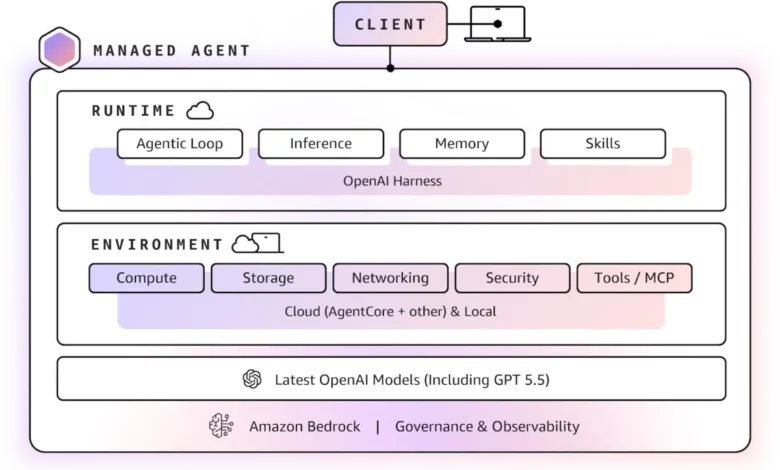
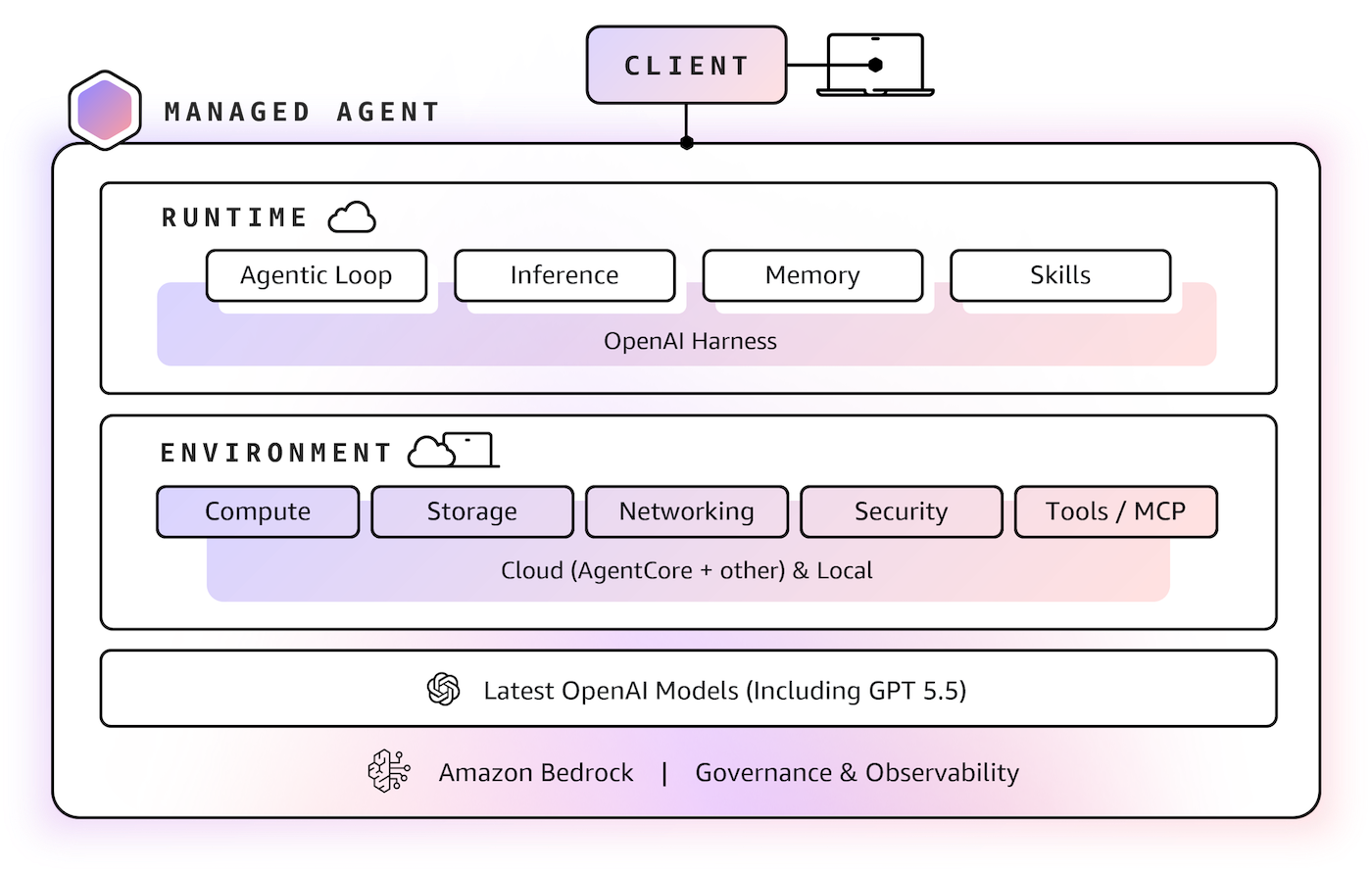
Amazon Web Services has officially announced the public preview of Amazon Bedrock Managed Agents powered by OpenAI, marking a significant milestone in cloud-based artificial intelligence infrastructure. Built upon a customized adaptation of OpenAI’s widely utilized Agents API, this new offering is engineered to be fully AWS-native. By deeply embedding these advanced AI capabilities directly into the AWS ecosystem, enterprise organizations can now leverage OpenAI models while maintaining rigorous control over their established security identities, permissions, and compliance frameworks.
The integration addresses a long-standing challenge for large enterprises: deploying cutting-edge frontier models without compromising internal governance structures or data security protocols. As artificial intelligence transitions from exploratory projects to core operational workflows, cloud providers face mounting pressure to deliver flexible, secure, and natively managed execution environments. This release represents a strategic convergence of OpenAI’s conversational and autonomous reasoning capabilities with Amazon’s robust enterprise cloud infrastructure, providing a unified pathway for developers to build, test, and scale sophisticated AI agents.
Architecture and Execution Environments
The newly introduced Amazon Bedrock Managed Agents framework offers developers and system architects unprecedented flexibility in how they deploy and manage their AI workloads. Organizations can choose between two distinct execution environments depending on their operational requirements, security postures, and existing infrastructure footprints.
The first option involves self-hosted compute environments. This setup allows engineering teams to utilize their existing local development machines, private containers, or alternative on-premises and cloud compute environments to run the agent logic. This is particularly advantageous for development and staging phases, where engineers require granular control over debugging tools and local execution parameters.
The second, more automated option is the Amazon Bedrock AgentCore Runtime. This fully managed runtime service handles session management, scaling, and execution within the customer’s secure AWS account. Coupled with configurable storage options managed natively through AWS, the AgentCore Runtime abstracts away the operational overhead of provisioning underlying infrastructure. This enables engineering teams to focus entirely on agent logic, prompt engineering, and workflow optimization rather than cluster management and resource allocation.
Underpinning this architecture is a seamless integration with AWS Identity and Access Management (IAM), AWS CloudTrail, and other foundational governance tools. Agents operating within this ecosystem inherit the precise permission boundaries assigned to them, ensuring that autonomous AI workflows can only access authorized databases, APIs, and enterprise applications.
Background Context and Strategic Implications
The introduction of OpenAI-powered managed agents on AWS arrives at a pivotal moment in the enterprise artificial intelligence market. Over the past several years, organizations have rapidly adopted generative AI, moving from basic text-generation models to autonomous agents capable of executing multi-step workflows, querying databases, and interacting with third-party software tools on behalf of users.
Historically, deploying advanced AI agents required stitching together disparate APIs, managing external authentication tokens, and building custom middleware to bridge the gap between third-party AI models and corporate data lakes. These architectures often introduced compliance vulnerabilities, latency issues, and administrative overhead. By integrating OpenAI’s Agents API directly into the Amazon Bedrock environment, AWS is effectively streamlining the enterprise deployment pipeline.
Industry analysts note that this move reflects a broader industry trend toward ecosystem interoperability. Rather than locking customers into a single proprietary model provider, major cloud platforms are increasingly recognizing the need to support a diverse array of frontier models. Amazon Bedrock has steadily expanded its catalog to include models from Anthropic, Cohere, Meta, Mistral AI, and now deeper integrations with OpenAI technologies, positioning itself as a model-agnostic hub for enterprise AI development.

The implications for enterprise software development are profound. Organizations that have standardized their cloud infrastructure on AWS can now incorporate OpenAI’s reasoning capabilities into their applications without altering their underlying security architectures. This significantly reduces the friction typically associated with multi-vendor technology stacks, accelerating time-to-market for enterprise-grade AI solutions.
Service Lifecycle Management and Operational Updates
Alongside the Bedrock Managed Agents announcement, AWS has detailed upcoming adjustments to its broader product lifecycle, outlining service availability changes, maintenance schedules, and end-of-support timelines designed to help organizations plan their long-term infrastructure migrations.
Cloud infrastructure management requires constant vigilance regarding service deprecations and platform modernizations. In its latest update to the AWS Product Lifecycle Changes documentation, the company outlined specific milestones for services transitioning into maintenance, sunset, and end-of-support phases. These updates are intended to provide enterprise customers with adequate lead time to evaluate alternative services, migrate dependent workloads, and prevent unexpected disruptions to mission-critical operations.
For services entering the maintenance phase, access for new customers will be restricted starting October 29, 2026. Existing customers utilizing these services are encouraged to review migration pathways provided in the official AWS documentation. Meanwhile, services reaching their end-of-support dates are systematically being phased out in favor of modernized, highly scalable cloud-native counterparts.
AWS representatives emphasize that these lifecycle transitions are a natural part of cloud evolution, allowing the platform to redirect engineering resources toward high-growth areas such as generative AI, serverless computing, and advanced security automation. Customers navigating these transitions are advised to consult the AWS Product Lifecycle Changes portal or reach out directly to AWS Support for tailored migration guidance.
Community Engagement, Events, and Ecosystem Growth
To support developers, system administrators, and technology leaders in navigating these rapid advancements, AWS continues to expand its global portfolio of educational events, developer workshops, and community programs.
Upcoming engagements include the highly anticipated AWS re:Invent conference, alongside regional AWS Community Days and specialized startup events. These gatherings serve as vital forums for builders to exchange best practices, explore emerging architectural patterns, and receive hands-on training with new tools like Amazon Bedrock Managed Agents.
Additionally, the AWS Builder Center provides a continuous, digital collaboration space where developers can share open-source solutions, access technical documentation, and engage directly with AWS product teams. As cloud architectures become increasingly complex—driven largely by the integration of autonomous AI agents and large language models—these community-driven resources play an essential role in bridging knowledge gaps and fostering technical proficiency across the global developer ecosystem.
Industry observers anticipate that further updates regarding enterprise AI deployments, model availability, and developer tooling will be a primary focus at upcoming industry conferences, as AWS continues to refine its platform to meet the evolving demands of enterprise digital transformation.
Related posts: