Amazon S3 Tables Expands Apache Iceberg Capabilities with Full Support for V3 Specification and Advanced Data Types

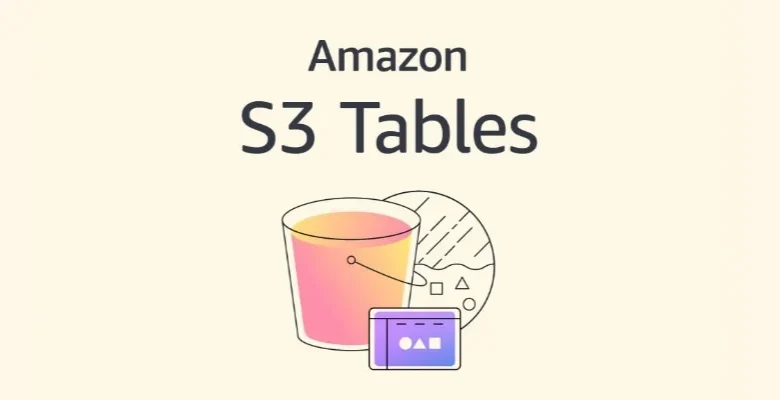
Amazon Web Services has announced that Amazon S3 Tables now provide comprehensive support for all data types and advanced capabilities outlined in the Apache Iceberg V3 specification. This major enhancement addresses long-standing performance bottlenecks and data management complexities that enterprise analytics teams have encountered while scaling petabyte-sized data lakes. By integrating features such as deletion vectors, built-in row lineage, and native support for semi-structured and geospatial data, AWS aims to streamline data governance, accelerate query performance, and reduce storage infrastructure overhead for organizations managing massive analytical workloads.
The evolution of modern data architectures has increasingly leaned toward open table formats, with Apache Iceberg establishing itself as an industry standard. Designed to bring database-like reliability and performance to object storage systems like Amazon S3, Iceberg enables organizations to manage vast collections of Parquet files while supporting sophisticated operations like ACID transactions, schema evolution, hidden partitioning, and time-travel queries. However, as data volumes have expanded into the tens of billions of rows, organizations utilizing the older V2 specification frequently encountered operational friction. Common pain points included the overhead of positional delete files slowing down query speeds during compliance removals, the necessity of continuously parsing JSON strings for semi-structured event data, and the inefficiencies of encoding geospatial coordinates or nanosecond-precision timestamps as generic strings or integers.
To understand the trajectory of this release, it is helpful to examine the timeline of cloud-scale analytics and open table formats. Over the past decade, cloud data lakes transitioned from raw, unstructured file repositories into structured, transactional environments. The introduction and rapid adoption of Apache Iceberg marked a pivotal shift, allowing enterprises to decouple storage from compute while maintaining strict data integrity. As data complexity grew—driven by IoT telemetry, real-time clickstream events, and strict global privacy regulations requiring granular record deletion—the limitations of V2 became apparent. The development of the Iceberg V3 specification was initiated by the open-source community to resolve these exact scalability bottlenecks. By implementing native variant types and compact binary deletion mechanics, V3 bridges the gap between traditional data warehouse performance and the cost-effectiveness of cloud object storage.
The newly introduced capabilities within Amazon S3 Tables introduce several distinct structural enhancements designed to optimize storage and query efficiency. Among the most notable additions is the implementation of deletion vectors. Under the previous V2 standard, executing a compliance delete on a large table—such as removing fifty thousand user records from a two-billion-row dataset—generated thousands of small positional delete files. These files required frequent background compaction jobs to prevent query degradation. V3 replaces this mechanism with a compact binary format that writes a single deletion vector file, drastically minimizing metadata overhead and accelerating compaction cycles.
Furthermore, the integration of row lineage introduces automated system columns, specifically _row_id and _last_updated_sequence_number, to every record. This addition transforms how downstream data pipelines operate. Instead of scanning an entire table to detect modifications, ETL processes can query these sequence numbers directly to isolate changed rows, establishing a reliable checkpointing mechanism for incremental data updates.
The inclusion of the variant data type represents another critical advancement for modern event-driven architectures. Organizations tracking web and mobile telemetry frequently ingest semi-structured payloads with varying schemas, such as disparate structures for page views, user searches, and financial transactions. Previously, these events were ingested as raw JSON strings, requiring compute engines to parse the string data dynamically during every query read operation. The V3 variant type shreds semi-structured data into hidden columnar formats during the write phase while collecting detailed statistical metadata. When queries are executed, the engine utilizes these statistics to perform efficient file pruning, substantially reducing input/output operations and accelerating analytical processing times.
Industry analysts and data engineering leaders have noted that the implications of this release extend far beyond incremental performance gains. In statements reflecting the broader sentiment of enterprise data architects, industry observers emphasize that managing compliance mandates—such as the General Data Protection Regulation (GDPR) and the California Consumer Privacy Act (CCPA)—will become significantly more efficient. The ability to execute rapid, low-overhead row deletions without degrading analytical query performance removes a notorious operational tax that organizations previously paid for maintaining data privacy compliance. Similarly, native handling of geospatial and nanosecond-precision time data eliminates custom serialization logic, allowing financial services, logistics, and retail enterprises to build cleaner, more maintainable data pipelines.
AWS has engineered the migration path from V2 to V3 to be seamless and non-disruptive. Organizations can upgrade existing tables in place using a simple metadata property change (ALTER TABLE ... SET TBLPROPERTIES ('format-version' = '3')) without requiring an expensive rewrite of underlying data files. Backwards compatibility is maintained during the transition, allowing legacy V2 readers to access the data until systems are fully modernized. Once upgraded, subsequent data modifications automatically leverage deletion vectors and initialize row lineage tracking, while S3 Tables continues to manage automated background maintenance, compaction, and replication tasks.
Interoperability across the broader AWS analytics ecosystem is a core pillar of this deployment. Amazon S3 Tables work in tandem with services such as Amazon EMR for Spark-based data processing, AWS Glue for data integration and catalog management, and Amazon Redshift for high-performance warehousing. Both S3 Tables and the AWS Glue Data Catalog support the Apache Iceberg REST Catalog API, ensuring that multi-engine environments can read and write V3 tables without vendor lock-in or translation barriers.
The availability of Apache Iceberg V3 support across all AWS Regions where S3 Tables operate marks a critical milestone for cloud analytics infrastructure. By absorbing the complexity of file compaction, metadata management, and storage tiering into a fully managed service, AWS allows data engineering teams to focus on delivering business insights rather than tuning low-level storage mechanics. As enterprises continue to scale their data operations to meet the demands of real-time analytics and rigorous compliance frameworks, the adoption of open, standardized specifications like Iceberg V3 within purpose-built storage layers like Amazon S3 Tables establishes a resilient foundation for the next generation of cloud-based data management.
Related posts: