The Arc of Agentic Maturity: From Glue Code to Systems Engineering
In the early stages of the generative AI boom—roughly 2022 to early 2023—the industry was characterized by a "tectonic shift" in development patterns. Initial efforts relied on ad-hoc prompts stitched together with minimal "glue code." Developers treated LLMs as black-box functions, inputting natural language and expecting coherent output, with little concern for systemic reliability.
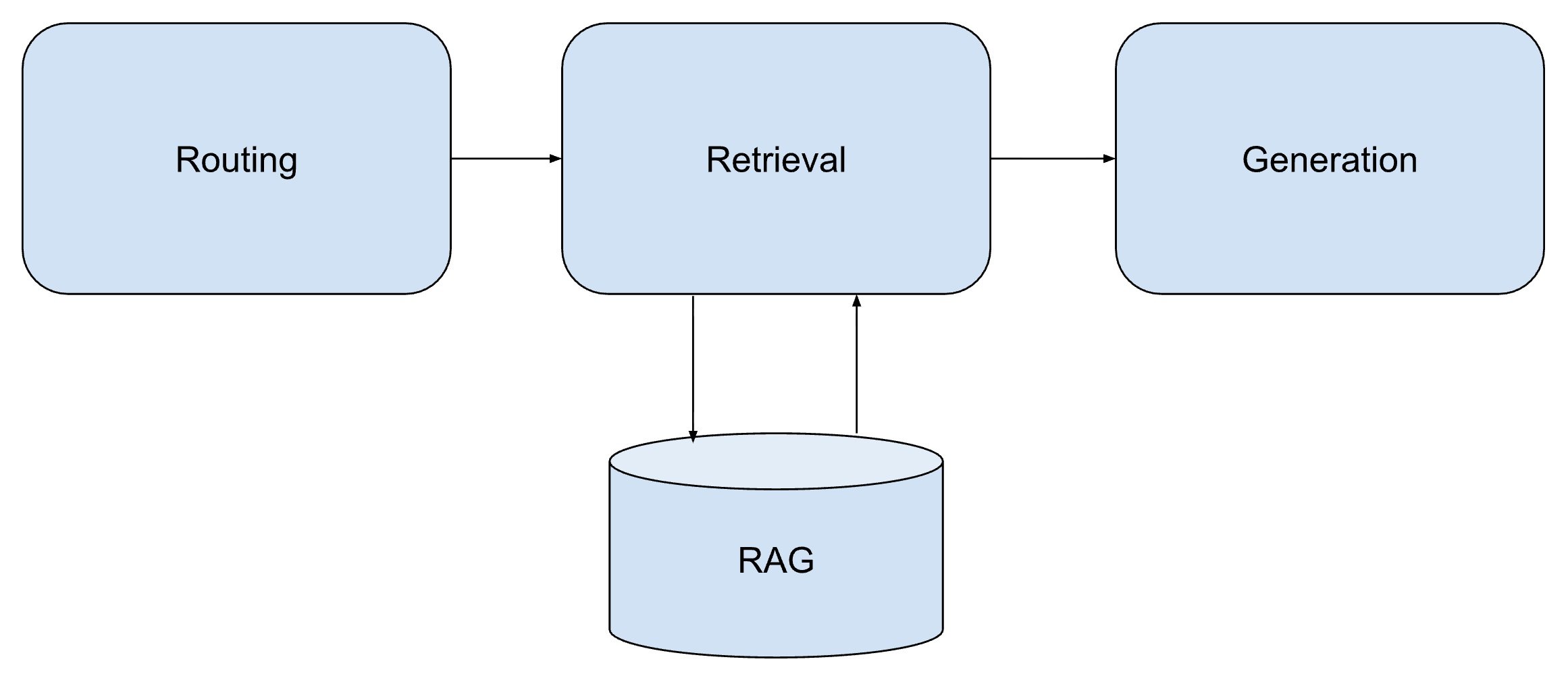
This period was defined by the emergence of "chains." These linear workflows allowed for rapid time-to-market but suffered from inherent fragility. If a single step in a sequence failed—such as a RAG (Retrieval-Augmented Generation) query returning irrelevant data—the entire chain would collapse. There were no built-in mechanisms for error detection or recovery, leading to the "best-effort" era where developers spent months iterating on prompts just to close the final 20% of the quality gap required for production readiness.
Chronology of Architectural Paradigms
The industry’s path toward robust agentic systems has unfolded across three distinct, overlapping phases:
- The Chain Phase (2022–2023): Focused on linear, prompt-driven choreography. Frameworks like the early iterations of LangChain provided the initial scaffolding. These were efficient for simple, single-purpose tasks but proved insufficient for complex enterprise logic.
- The Graph Phase (2023–2024): Developers began moving toward graph-based structures to introduce branching, parallel processing, and conditional logic. By treating the workflow as a graph, developers could explicitly define state transitions and control flow, enabling the first wave of multi-agent systems.
- The Code-Execution Phase (2024–Present): The current frontier involves using code as a primary reasoning primitive. By generating and executing code in sandboxed environments, agents can solve problems deterministically, allowing for verifiable outputs rather than probabilistic text generation.
Graph-Based Orchestration and the Multi-Agent Shift
As businesses moved beyond basic chatbot functionality, the limitations of linear chains became a bottleneck for enterprise scalability. The industry responded by adopting graph-based harnesses. In this paradigm, nodes represent distinct tasks, and edges govern the control flow. This structural change allowed for the development of complex, multi-agent systems where a primary orchestrator delegates tasks to specialized sub-agents.
At major organizations like LinkedIn, this transition was essential for building internal tools like the "Hiring Assistant." The complexity of recruiter workflows—which involve searching databases, filtering applicants, and drafting personalized outreach—could not be handled by a single monolithic prompt. By utilizing graph-based frameworks such as LangGraph, engineers could implement "human-in-the-loop" (HITL) checkpoints, ensuring that agents sought approval before taking high-stakes actions.
The implementation of these systems often required new communication protocols. Because agents operate asynchronously, the industry has moved toward standards like A2A (Agent-to-Agent) and ACP (Agent Communication Protocol). These protocols facilitate standardized, reliable interactions between agents, mirroring the evolution of microservices in traditional distributed systems.
Code as a First-Class Primitive: The Quest for Determinism
The most significant recent breakthrough in agentic AI is the move toward code-generation frameworks. Instead of asking a model to "think" in natural language, developers are now prompting agents to write and execute code in Python or SQL. This is a critical evolution for two primary reasons:
- Determinism: While natural language is inherently probabilistic, code execution is binary. A script either compiles and runs correctly, or it throws an error. This allows for immediate, verifiable feedback loops.
- Auditability: In regulated industries, the ability to trace exactly how an agent arrived at a decision is paramount. Code-based agents provide a clear trail of logic, making it easier to meet compliance and governance requirements.
For example, internal tools designed for data analytics now allow users to query platform metrics in natural language. The agent translates these queries into SQL, runs the code against governed data, validates the output against strict security policies, and iterates if the logic fails to produce a compliant result. This reduces the need for constant manual prompt-tuning and results in a significantly more reliable output.
Supporting Data and Industry Implications
The cost of this evolution is not insignificant. Research suggests that while "chains" offer the lowest latency and compute overhead, they are often inadequate for high-accuracy tasks. Conversely, "coding harnesses" incur higher costs due to iterative reasoning loops and validation cycles. However, for industries where the cost of error is high—such as financial analysis, legal review, and infrastructure automation—the investment in these robust architectures is yielding a higher ROI.
Key metrics that organizations are now prioritizing include:
- Time-to-resolution: Measuring how quickly an agent can complete a complex task without human intervention.
- Success rate of code execution: Tracking the ratio of successfully compiled vs. failed agent-generated scripts.
- Human-in-the-loop intervention rate: Monitoring how often an agent requires manual oversight, with the goal of increasing autonomy safely over time.
Expert Analysis: The Rise of the System Architect
The shift toward these architectures has fundamentally altered the role of the developer. The "Prompt Designer," once the primary figure in AI development, is being replaced by the "System Architect."
"We are moving from a world where artisanal prompt crafting is the bottleneck to a world where software engineering rigors dictate success," notes an industry expert in the Agentic AI Architecture series. This transition is essential for moving AI out of the sandbox. The goal is to treat agentic systems not as magical, unpredictable entities, but as standard software infrastructure that requires robust testing, observability, and clearly defined failure modes.
Best Practices for Enterprise Deployment
For organizations looking to implement or scale agentic systems, the following principles have become the industry standard:
- Prioritize the Simplest Abstraction: Do not use a complex coding harness if a simple chain can reliably perform the task. Over-engineering leads to unnecessary latency, compute costs, and maintenance burdens.
- Explicit State Management: In graph-based systems, ensuring that state is persisted and observable is critical for debugging and for enabling long-running, multi-step tasks.
- Verification Layers: Every agent output, particularly in code-generation workflows, must pass through a validation layer. This should include checks for privacy, data governance, and logic accuracy.
- Cognitive Memory: Modern agents should be designed to learn from user interactions. Treating memory as an independent "agent" that can store and retrieve context ensures that the AI becomes more personalized and useful over time.
Future Outlook: Toward Engineered Reliability
The evolution from simple prompt chains to complex, code-centric execution engines marks the maturation of the AI industry. We are witnessing the integration of probabilistic intelligence into deterministic frameworks, creating a new category of software that is more powerful than traditional automation yet more reliable than early-generation AI models.
As these architectures become the standard, the focus will likely shift toward improving the efficiency of these reasoning loops. Innovations in token management, model compression, and specialized hardware will continue to reduce the compute costs associated with sophisticated agents. Ultimately, the winners in this space will be the organizations that best balance architectural sophistication with the fundamental requirement of "capability per dollar," ensuring that their AI systems provide tangible business value through robust, verifiable, and scalable performance. The era of the "magic" AI experiment is ending; the era of AI-powered engineering has begun.