Meta-Experiment: AI Engineers Itself Using LangChain4j, Revealing New Paradigms in Autonomous Code Development


In a groundbreaking meta-experiment, a large language model (LLM) was tasked with an unprecedented challenge: to construct a functional version of itself – a multi-agent system capable of writing, testing, and debugging code with human-like proficiency – leveraging only the documentation of the LangChain4j framework. This ambitious project not only showcased the remarkable legibility and robust orchestration capabilities of LangChain4j’s API but also delivered an end-to-end autonomous debugging system, signaling a significant leap in the evolution of AI-driven software engineering. The experiment further served as a critical stress test for LangChain4j’s newly introduced monitoring tools, providing invaluable insights into the intricate workings of self-building AI. The resulting agentic coder project is now publicly available in a dedicated repository, inviting further exploration and development from the open-source community.
The Dawn of Self-Building AI in Software Development
The realm of software development has been increasingly reshaped by artificial intelligence, moving from simple code completion tools to sophisticated assistants capable of generating entire functions and even refactoring complex systems. This trajectory highlights a broader trend towards automating more intricate aspects of the software development lifecycle. The emergence of agentic AI, characterized by systems that can perceive, reason, plan, and act autonomously, represents the next frontier in this evolution. Frameworks like LangChain, and its Java-specific counterpart LangChain4j, are at the forefront of enabling developers to build these advanced multi-agent architectures, abstracting away much of the complexity involved in orchestrating multiple LLM calls, tool use, and memory management.
Historically, AI’s role in software engineering has progressed through several stages. Early tools focused on syntax highlighting and basic error checking. The 2010s saw the rise of intelligent IDEs incorporating static analysis and refactoring suggestions. More recently, the advent of powerful generative AI models has pushed the boundaries, allowing AIs to write code from natural language prompts, generate unit tests, and even explain complex code snippets. However, the idea of an AI designing and implementing a multi-agent system that mirrors its own internal cognitive processes for coding is a monumental step, hinting at a future where AI systems can autonomously improve and adapt their own development capabilities. This meta-experiment, therefore, isn’t just about building another code assistant; it’s about an AI demonstrating a conceptual understanding of its own operational paradigm and translating that into a concrete, executable system.
"Vibe Coding" an Agentic System: The Initial Design Phase
The genesis of this self-building agentic coder began with a concise yet profound prompt issued to a powerful code assistant: "Study the API and capabilities of the LangChain4j agentic framework from its documentation and source code, and design an agentic coder based on it that is a clone of yourself." This instruction challenged the LLM to introspect its own operational model – how it approaches a coding task, breaks it down, and executes it – and then replicate that model within the LangChain4j framework.
Following several minutes of processing and internal deliberation, the AI assistant made a strategic architectural decision. It identified LangChain4j’s "supervisor pattern" as the most suitable design for the task. This pattern, known for its ability to orchestrate and manage multiple specialized sub-agents, provided the flexibility required for a complex coding workflow. The LLM subsequently laid out an initial architecture, defining a SupervisorCoderSystem interface. This supervisor agent was described as "A multi-agent coding assistant that can explore codebases, plan implementations, write/edit code, and run builds/tests," tasked with orchestrating a suite of specialized sub-agents.
The proposed sub-agents included:
- ExplorerAgent: Responsible for navigating and understanding existing codebases.
- PlannerAgent: Formulating a strategic plan for implementing requested changes or fixes.
- ImplementerAgent: Executing the plan by writing or editing code.
- ExecutorAgent: Compiling, running, and testing the generated code.
Each of these agents was meticulously designed with its own system and user messages, defining its specific role and interaction protocols. Crucially, the code assistant also intelligently provisioned the necessary tools for each agent. The ExplorerAgent was equipped with a file system explorer, allowing it to delve into project structures. The ImplementerAgent received a robust code editor, enabling precise modifications. The ExecutorAgent was provided with the capability to compile and run code, a fundamental requirement for validating changes.
The initial results of this autonomous design phase were remarkably insightful. The architecture proposed by the LLM closely mirrored the operational patterns observed in highly capable "professional" code assistants. These commercial tools typically follow a similar sequence of understanding the context, planning a solution, implementing it, and then verifying it. This intrinsic alignment suggested that the LLM possessed a high-level, abstract understanding of its own internal problem-solving mechanisms and could effectively translate this understanding into a concrete, modular, and agentic system using a framework it had just "learned" from documentation. This demonstrated not only LangChain4j’s intuitive design but also the LLM’s advanced reasoning and self-modeling capabilities.
Putting the Agentic Coder to Work: A Real-World Debugging Challenge

To rigorously test the capabilities of the newly designed agentic coder, a practical and challenging task was devised: identify and fix bugs in a pre-written, intentionally flawed Java Calculator class. The code assistant itself generated the Calculator class, which contained four subtly buggy methods: sum, average, max, and factorial. These bugs ranged from off-by-one errors in loops to incorrect handling of edge cases like empty lists or negative inputs, and type casting issues affecting division.
Following the creation of the buggy code, the LLM then generated a comprehensive test setup. This involved cloning the folder containing the Calculator class into a temporary directory and invoking the LangChain4j agentic coder against this isolated environment. The prompt given to the agentic coder was explicit: "The tests are currently failing because Calculator.java has bugs. Fix all identified bugs so that all tests in CalculatorTest.java pass." This setup mimicked a real-world debugging scenario, requiring the agentic system to independently diagnose problems, propose solutions, implement them, and verify their correctness.
The Initial Setback: A Tool-Calling Loop
For the execution, OpenAI’s gpt-4o model was initially chosen for both the supervisor and the coding agents, primarily because of its default integration within LangChain4j and its robust tool-calling support. However, the initial attempt met with an unexpected roadblock. After several minutes of processing, the system reported an AgentInvocationException with a RuntimeException indicating that it had "exceeded 100 sequential tool invocations." This error signaled that the LLM had become trapped in a recursive tool-calling loop, repeatedly invoking tools without making progress towards a solution. LangChain4j’s default maxToolCallingRoundTrips() limit, set at a sensible 100, had successfully prevented an infinite loop and excessive resource consumption.
This failure, while frustrating, provided a crucial learning point. It highlighted the challenges inherent in complex agentic systems, particularly with less advanced or poorly prompted LLMs, where the agent might struggle to interpret tool outputs or determine the next logical step, leading to repetitive or unproductive actions. It also underscored the importance of configurable safeguards within agentic frameworks.
A Model Upgrade and Triumphant Resolution
Recognizing this common issue with LLMs, especially concerning older or less advanced models, the experiment proceeded with a change of models. The more modern and capable gpt-5-mini was selected for the subsequent run. This decision proved pivotal. After another few minutes of intensive work, the system successfully resolved all the bugs. The output was clear and detailed: "All tests in CalculatorTest.java pass (11/11). If you want, I can show the updated Calculator.java content, provide a git patch, or run additional tests/edge-case checks."
The agentic coder provided a comprehensive summary of its actions:
sum(List<Integer>): Switched to a for-each loop to preventIndexOutOfBoundsExceptionand correctly handle empty lists.average(List<Integer>): Ensured floating-point division by casting one operand todoubleand explicitly returned 0 for empty lists.max(List<Integer>): Correctly initialized the maximum value from the first element of the list (instead of 0) to handle lists containing only negative numbers, and explicitly threw anIllegalArgumentExceptionfor empty lists.factorial(int): Validatedn >= 0and corrected the loop condition toi <= n(inclusive) to accurately compute the factorial.
The system further confirmed the successful compilation and testing of the project, stating "BUILD SUCCESS, tests run: 11, failures: 0, errors: 0, skipped: 0." The modified Calculator.java code reflected all these precise and effective corrections, demonstrating a complete understanding of the problem and the ability to implement robust solutions.
Monitoring the Black Box: LangChain4j’s Observability Tools
A critical aspect of working with autonomous AI systems, especially those that build themselves, is understanding their internal decision-making processes and execution flow. To address this, version 1.12.2-beta22 of langchain4j-agentic introduced enhanced monitoring capabilities. By simply having the root agent interface (e.g., SupervisorCoderSystem) extend the MonitoredAgent interface, developers gain access to detailed execution tracing.
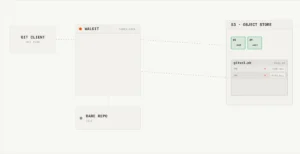
This feature allowed the researchers to generate a comprehensive report of agent invocations, alongside a visual representation of the system’s topology. This "observability UI" provided a clear, step-by-step account of how the Supervisor agent orchestrated its sub-agents, when tools were invoked, and the sequence of operations. Such insights are invaluable for debugging, optimizing, and ensuring the reliability of complex agentic architectures, transforming what might otherwise be a black box into a transparent, understandable system.
/filters:no_upscale()/articles/self-building-agent-langchain4j/en/resources/227figure-1-1784640363505.jpg)
Redesigning for Efficiency: From Autonomous Supervisor to Deterministic Workflow
While the supervisor pattern offers significant autonomy and dynamic flexibility, this freedom often comes with an inherent overhead. The LLM acting as a supervisor must constantly reason about which agent to invoke next, what arguments to pass, and how to integrate the results, leading to multiple LLM calls for coordination alone. To explore a more efficient and predictable alternative, the code assistant was prompted to redesign the agentic coder using a "workflow-based approach." The instruction specified: "Keeping the supervisor-based implementation, add a second one implementing a similar behaviour, but this time in a more deterministic way, using only the workflow patterns provided by the LangChain4j agentic framework. In particular generate a sequence of actions to be taken reusing the existing agents where possible, and adding review loops when necessary."
The LLM responded by crafting a more deterministic architecture: a SequenceAgent orchestrating a strict, predefined sequence of five steps. The first four steps mirrored the functions of the previous agents (Explorer, Planner, Implementer, Executor), while the fifth introduced a dedicated SummarizerAgent. This new agent explicitly took over the summarization responsibility that the supervisor had previously handled implicitly. A key innovation in this workflow-based design was the inclusion of iterative loop structures within the planning and execution phases, allowing for refinement and self-correction before progressing to the next stage.
For instance, the ExecutionLoop was composed of three sub-agents: an ExecutorAgent, an EvaluatorAgent, and a RefactorAgent. These agents were designed to be iteratively invoked until a predefined EvaluationScore (set at 80% accuracy) was met, or a maxIterations limit (capped at 5 to prevent excessive LLM calls and token usage) was reached. This approach ensured that the system would persist in refining its solution until it met a satisfactory quality threshold, introducing a controlled form of iterative improvement.
Running the same buggy Calculator test against this workflow-based implementation yielded similarly successful results. The system fixed all bugs and made all tests pass, producing a comprehensive summary that detailed each step of the workflow, from the initial request and exploration to the final execution and evaluation. This output included a detailed breakdown of commands executed, build status, test results, and a "Final Evaluation Score" of 0.8, confirming successful resolution.
Remarkably, despite the increased complexity in terms of the number of agents and edges in its execution trace, the workflow-based debugging session was approximately three times faster than the supervisor-based implementation – completing the task in two minutes compared to over six minutes. This significant speed improvement was attributed directly to the elimination of the LLM-induced coordination overhead inherent in the supervisor pattern. By relying on a deterministic, predefined sequence of actions, the workflow avoided the constant need for the LLM to reason about the next step, thus drastically reducing the number of LLM calls and overall execution time.
Broader Implications and Future Outlook
This meta-experiment carries profound implications for the future of software development, AI research, and the broader technological landscape.
Implications for Software Development:
- Accelerated Development Cycles: The ability of AI agents to autonomously design, implement, test, and debug code segments promises to significantly accelerate software development cycles. Developers could focus on higher-level architectural design and strategic problem-solving, delegating routine coding tasks, bug fixes, and even complex feature implementations to AI agents.
- Democratization of Complex AI Systems: LangChain4j’s legibility, demonstrated by an LLM’s ability to use its documentation to build a sophisticated agentic system, suggests that such frameworks can democratize the creation of complex AI applications. This could enable a wider range of developers, even those without deep AI expertise, to build powerful agentic solutions.
- Shift in Developer Roles: The role of human developers may evolve from direct code generation to one of supervision, refinement, and strategic orchestration of AI agents. This necessitates new skill sets centered around prompt engineering, agent configuration, and interpreting AI outputs.
- Enhanced Code Quality and Reliability: Iterative loops for planning and execution, as seen in the workflow pattern, suggest that AI agents can achieve higher code quality by continuously evaluating and refactoring their own work until predefined quality thresholds are met.
Implications for AI Research and Development:
- Validation of Agentic Frameworks: The experiment serves as a strong validation for agentic frameworks like LangChain4j, proving their capability to facilitate the creation of highly autonomous and effective multi-agent systems. The robust monitoring tools further enhance trust and transparency in these complex systems.
- Advancements in AI Self-Modeling: An AI designing a "clone" of itself, even at a conceptual level, hints at nascent forms of self-awareness or self-modeling in LLMs. This capability could be crucial for developing more adaptive, self-improving AI systems in the future.
- Importance of Model Capabilities: The stark difference in performance between
gpt-4oandgpt-5-miniunderscores the critical role of underlying LLM capabilities. More advanced models with better reasoning and tool-use reliability are essential for robust agentic systems. - AI Safety and Control: As AI agents become more autonomous, the importance of robust monitoring, configurable limits (like
maxToolCallingRoundTrips), and transparent execution traces becomes paramount for ensuring safety, preventing unintended behaviors, and maintaining human oversight.
The Fundamental Trade-off: Autonomy vs. Efficiency
The experiment highlighted a crucial design trade-off in agentic systems:
- Workflow Pattern (Efficiency, Speed, Predictability): This approach is characterized by a rigid, deterministic sequence of steps. It is ideal for tasks that can be broken down into well-defined, sequential stages where efficiency and predictable outcomes are paramount. By minimizing LLM-induced coordination overhead, it achieves significantly faster execution times, as demonstrated by the threefold speed increase. This pattern is well-suited for repetitive, well-understood tasks that benefit from iterative refinement within controlled loops.
- Supervisor Pattern (Autonomy, Dynamic Flexibility): Offering greater freedom, the supervisor agent dynamically orchestrates sub-agents, autonomously generating invocations and arguments on the fly. This flexibility is invaluable for open-ended, complex tasks where the path to a solution is not entirely predictable. However, this dynamic coordination introduces overhead from repeated LLM calls for decision-making, resulting in slower execution. It is best suited for exploratory tasks or those requiring high adaptability to unforeseen circumstances.
In conclusion, this pioneering experiment successfully demonstrated the remarkable capabilities of LangChain4j in enabling an LLM to autonomously design and implement a sophisticated agentic coder. The system’s ability to fix bugs in a real-world scenario, coupled with the insights gained from LangChain4j’s observability tools, underscores the framework’s power and the growing sophistication of AI in software engineering. Furthermore, the experiment elucidated a critical architectural trade-off between the dynamic autonomy of supervisor-based systems and the predictable efficiency of workflow-based approaches, providing invaluable guidance for future agentic AI development. As AI continues to evolve, experiments like this pave the way for a new era of self-improving and self-managing software systems, fundamentally altering how we conceive and construct digital solutions.