QCon AI New York 2026 Opens Registration, Focusing on Production-Ready AI Systems for Senior Engineers

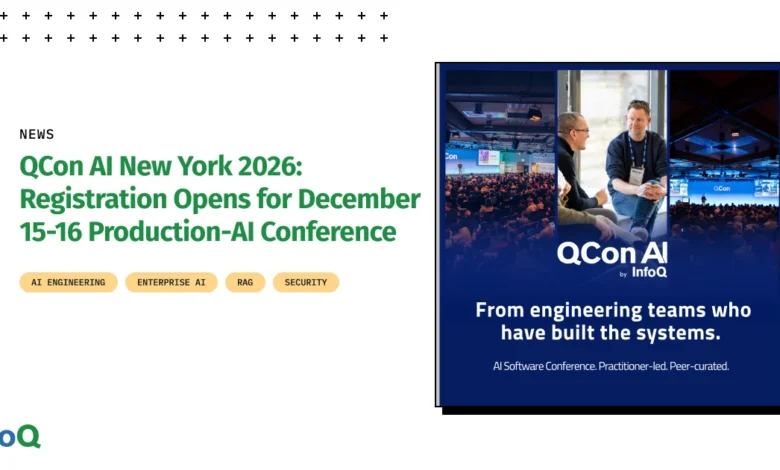
Registration has officially opened for QCon AI New York 2026, scheduled for December 15-16. This highly anticipated event marks a significant return to the New York metropolitan area, hosted at The Westin Jersey City Newport, conveniently located just one PATH stop from Lower Manhattan. The two-day conference is meticulously designed to cater to a very specific and critical segment of the technology community: senior software engineers, architects, and engineering leaders who are actively involved in owning and operating artificial intelligence (AI) systems that are already running in production environments. This distinct focus differentiates it from conferences aimed at organizations still contemplating AI adoption, emphasizing the practical challenges and solutions inherent in real-world AI deployment.
The Evolution of QCon and Its Commitment to Practitioner-Led Content
For over two decades, QCon has established itself as a premier global conference series, renowned for its commitment to delivering practitioner-driven content for senior software engineers and architects. Originating from the insights of InfoQ, a leading knowledge-sharing platform for software developers, QCon conferences have consistently prioritized sharing real-world experiences, best practices, and lessons learned from the trenches of software development. The series has built a formidable reputation by curating agendas free from vendor pitches or sponsored talks, ensuring that attendees receive unbiased, technically deep, and immediately applicable information. This ethos is particularly vital in rapidly evolving fields like artificial intelligence, where theoretical knowledge often diverges significantly from the complexities of practical implementation.
The introduction of dedicated QCon AI events, with QCon AI Boston earlier in 2026 preceding the New York iteration, underscores the growing maturity of AI technologies and the pressing need for specialized knowledge concerning their operationalization. As AI transitions from a nascent research domain to a cornerstone of enterprise infrastructure, the challenges shift from merely building models to deploying, maintaining, scaling, securing, and continuously improving them in live, production environments. QCon AI New York 2026 is positioned to address these exact challenges, providing a crucial forum for experienced professionals to exchange insights and collectively advance the state of the art in production AI.
Addressing the Critical Gaps in AI Deployment
The AI industry has witnessed an unprecedented surge in innovation and investment over the past decade. From machine learning models powering recommendation engines to large language models (LLMs) transforming human-computer interaction, AI’s potential is undeniable. However, the journey from a successful proof-of-concept or demo to a robust, scalable, and reliable production system is fraught with complexities. Industry reports consistently highlight that a significant percentage of AI projects fail to make it past the pilot phase, often due to issues related to deployment, integration, monitoring, and maintenance. According to a recent survey by Deloitte, only about 14% of organizations that have adopted AI are deploying it at scale across their operations. This "AI adoption gap" emphasizes the critical need for expertise in MLOps (Machine Learning Operations), AI governance, security, and performance optimization – precisely the domains QCon AI New York aims to explore.
The conference program is structured around six core areas of production AI, each meticulously chosen to tackle specific pain points that arise once an AI feature transcends the experimental phase and must withstand the rigors of real-world traffic and user demands. While the specific titles of these tracks are yet to be fully disclosed, they are anticipated to encompass crucial topics such as:
- MLOps and LLMOps: Strategies for automating the lifecycle of AI models, from data ingestion and model training to deployment, monitoring, and retraining, with a specific focus on the unique challenges presented by large language models.
- Scalable AI Infrastructure: Designing and managing the underlying computational and data infrastructure required to support high-performance, high-availability AI systems.
- AI Security and Governance: Implementing robust security measures for AI models and data, addressing vulnerabilities like adversarial attacks, and ensuring compliance with ethical guidelines and regulatory frameworks.
- Responsible AI and Ethics in Production: Practical approaches to ensuring fairness, transparency, and accountability in deployed AI systems, including bias detection and mitigation strategies.
- Model Performance and Optimization: Techniques for continuously evaluating, debugging, and optimizing the performance of AI models in production, including strategies for handling model drift and data shift.
- Data Strategies for Production AI: Best practices for data management, feature engineering, data pipelines, and synthetic data generation that directly impact the reliability and effectiveness of AI systems in production.
By segmenting the program into these focused areas, QCon AI New York 2026 ensures that attendees can delve deeply into the specific challenges relevant to their roles, gaining actionable insights that go beyond theoretical discussions.
A Program Committee of Industry Luminaries
The credibility and depth of QCon AI New York 2026 are significantly bolstered by its distinguished program committee, comprising leading practitioners with extensive experience in operationalizing AI. The program is expertly chaired by Eder Ignatowicz, a Senior Principal Software Engineer and Architect at Red Hat AI. Ignatowicz’s background at Red Hat, a company at the forefront of open-source enterprise solutions, provides invaluable insight into building and integrating AI systems within complex corporate environments. His prior experience chairing QCon AI Boston earlier this year further ensures continuity and a consistent vision for delivering high-quality, relevant content.
He is joined by Faye Zhang, a Staff Software Engineer and GenAI search tech lead at Google. Zhang’s role at Google, a pioneer in AI research and application, particularly in generative AI and search technologies, offers a perspective rooted in scaling cutting-edge AI to global audiences. Her expertise is crucial in navigating the complexities of large-scale AI deployments and the rapid advancements in generative AI. Completing this formidable trio is Wes Reisz, Technical Principal Consultant at Thoughtworks and the acclaimed creator and co-host of The InfoQ Podcast. Reisz brings a wealth of experience in software architecture, enterprise transformation, and technology leadership, coupled with a keen understanding of emerging trends and effective knowledge dissemination through his influential podcast.
The committee’s rigorous session selection process is a cornerstone of QCon’s quality assurance. Every proposed session undergoes scrutiny against two fundamental criteria: first, whether the speaker possesses firsthand experience in running the systems and models in a production environment; and second, whether they are prepared to candidly discuss not only what worked but, crucially, what didn’t work. This emphasis on failures and lessons learned is invaluable for attendees, offering a realistic and practical understanding of the hurdles involved in AI deployment. Sessions are chosen exclusively by this practitioner committee and are invite-only, reinforcing the commitment to unbiased, experience-driven content by eliminating sponsored talks or product pitches. This approach ensures that the main schedule remains focused purely on technical insights and shared knowledge, fostering an environment of genuine learning and collaboration.
Chronology and Key Dates for Prospective Attendees
The journey towards QCon AI New York 2026 began with its official registration opening, providing early registrants with the opportunity to secure their attendance and potentially benefit from early-bird pricing. This event is the second of two QCon AI conferences scheduled for the 2026 calendar, building upon the success and insights gathered from QCon AI Boston earlier in the year.
Prospective attendees are encouraged to monitor the official conference website for timely updates as the program solidifies:
- August: The first wave of confirmed sessions is expected to be announced, offering an initial glimpse into the compelling topics and expert speakers.
- October: A preliminary schedule will be released, allowing attendees to start planning their personalized conference experience and identify sessions of particular interest.
- Early November: The complete program, detailing all sessions, speakers, and timings, will be published, providing a comprehensive overview of the two-day event.
This structured release of information allows attendees to make informed decisions and maximize their learning experience at the conference.
Beyond the Talks: Fostering Collaborative Learning and Networking
While the scheduled talks form the backbone of QCon AI New York, the event is meticulously designed to facilitate extensive interaction and discussion among attendees, speakers, and other engineers actively engaged with production AI systems. Dedicated networking opportunities are integrated into the conference schedule, recognizing that some of the most profound learning often occurs through informal peer-to-peer exchanges.
These discussions are expected to revolve around pressing topics that are central to the operationalization of AI, including:
- Agent Boundaries: Exploring the challenges and best practices in defining the scope, responsibilities, and interaction protocols for autonomous AI agents within complex systems.
- Evaluations (Evals): Deep diving into methodologies and metrics for rigorously evaluating the performance, reliability, and safety of AI models in production, moving beyond standard academic benchmarks.
- Security: Addressing advanced threats to AI systems, from data poisoning and model inversion attacks to ensuring the integrity and confidentiality of AI-driven processes.
- Cost Controls: Strategies for optimizing the computational resources and infrastructure costs associated with deploying and maintaining AI models at scale, a critical concern for many organizations.
Such focused discussions are invaluable for sharing practical solutions, troubleshooting common problems, and identifying emerging best practices in a rapidly evolving field. The in-person format provides an unparalleled opportunity for these types of deep, candid conversations that are often difficult to replicate in virtual settings.
Broader Impact and Strategic Importance
QCon AI New York 2026 holds significant implications for the broader AI industry and the professional development of senior technical leaders. By providing a dedicated platform for sharing production-grade insights, the conference plays a crucial role in accelerating the adoption and maturation of AI technologies across various sectors. It helps bridge the gap between academic research and industrial application, fostering a more robust and resilient AI ecosystem.
For individual engineers and architects, attending QCon AI New York offers a unique opportunity to:
- Stay Ahead of the Curve: Gain exposure to the latest techniques, tools, and architectural patterns for production AI from those actively implementing them.
- Solve Real-World Problems: Acquire practical solutions to common challenges encountered when deploying and managing AI systems at scale.
- Expand Professional Networks: Connect with a curated community of peers and industry leaders, fostering collaborations and knowledge exchange.
- Validate Strategies: Benchmark their organization’s AI practices against industry best practices and learn from the successes and failures of others.
The choice of New York as the host city further underscores the event’s strategic importance. As a global financial and technology hub, the New York metropolitan area boasts a vibrant ecosystem of startups, established enterprises, and research institutions heavily invested in AI. Hosting QCon AI in this location facilitates access for a diverse group of practitioners and reinforces the region’s role as a nexus for technological innovation.
In conclusion, QCon AI New York 2026 is poised to be a pivotal event for the AI community. By adhering to its long-standing tradition of practitioner-led, unbiased content, and focusing intensely on the complexities of production AI, the conference offers an indispensable resource for senior technical professionals dedicated to transforming theoretical AI potential into tangible, real-world impact. Further information regarding the program, speakers, and registration details can be found at newyork.qcon.ai.