The End of an Era: Snook’s Dream Cars Museum to Close as Skilled Labor Shortage Impacts Automotive Heritage

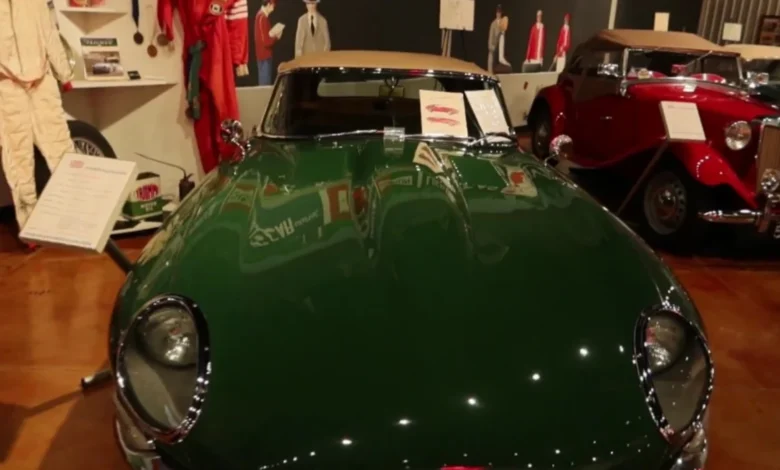
After 24 years of preserving automotive history in Bowling Green, Ohio, the renowned Snook’s Dream Cars museum has announced it will permanently close its doors in October 2026. This decision marks the conclusion of a significant chapter for car enthusiasts, as the facility—a "living museum" home to a diverse fleet of vehicles spanning the 1930s through the 1970s—succumbs to a growing industry-wide challenge: the disappearance of the specialized mechanical expertise required to maintain vintage, analog machinery.
The museum’s closure is not merely the shuttering of a local attraction; it serves as a bellwether for the broader collector car industry. As modern automotive technology shifts toward electrification, computer-aided diagnostics, and software-defined performance, the traditional "grease-under-the-fingernails" craftsmanship necessary to keep a carbureted, non-computerized engine running is becoming a dying art.
A Legacy Built on Preservation and Performance
Founded by the late Bill Snook and his son Jeff, the museum was the culmination of a lifelong obsession with automotive engineering. The partnership between the two began over six decades ago when they collaborated on the restoration of a Ford Model A, an experience that ignited a passion for the mechanics of a bygone era.
Over the past two decades, the museum evolved into a premier destination for enthusiasts of British, Japanese, and American automotive design. Unlike traditional galleries where vehicles are kept as static, preserved statues, Snook’s Dream Cars operated on a philosophy of functional engagement. The collection, which includes rare examples from Triumph, Datsun, Ford, and Packard, was maintained in road-ready condition. Jeff Snook frequently drove the vehicles through Bowling Green, ensuring the engines remained lubricated and the mechanical components functioned as intended.
"I consider this a living museum," Snook stated, emphasizing the importance of mobility in the preservation process. The museum’s curated displays—including a high-fidelity replica of a 1960s racetrack—offered visitors an immersive historical narrative that extended beyond the aesthetic, grounding the vehicles in the cultural contexts of their respective decades.
The Catalyst: A Crisis of Expertise
The catalyst for the museum’s closure was the retirement of lead mechanic Terry Stetler. For years, Stetler served as the technical backbone of the collection, possessing the nuanced skills required to tune carburetors, calibrate vintage ignitions, and source parts for vehicles long out of production. In the specialized world of classic car restoration, finding a mechanic with such proficiency is increasingly rare.
According to Jeff Snook, the inability to replace a technician of Stetler’s caliber necessitated the closure. In an interview with the Toledo Blade, Snook articulated the harsh reality facing owners of pre-digital vehicles: "I think it’s harder and harder to keep old cars on the road without qualified, skilled, professional mechanics." He noted that the contemporary automotive education system is heavily skewed toward modern electronics, often leaving the next generation of mechanics without the fundamental knowledge required to service internal combustion engines built in the mid-20th century.
The Broader Skills Gap in the Automotive Sector
The challenges faced by Snook’s Dream Cars reflect a wider systemic issue within the restoration industry. As the workforce ages, the institutional knowledge required to service analog vehicles is not being replaced at an equivalent rate.
In February 2026, Emily-Sianne Cox, manager at the U.K.-based restoration firm Clayton Classics, highlighted this issue during a sector analysis for The Financial Times. Cox noted that while there is a robust and growing demand for high-end classic car restoration, the industry faces a critical bottleneck: a lack of specialists capable of executing the work. The "analog" nature of these vehicles means that repairs cannot be solved by plugging in a diagnostic laptop; they require manual fabrication, precise physical adjustments, and an intuitive understanding of mechanical physics that only comes through years of apprenticeship.
For many museums and private collectors, the cost of outsourcing such specialized labor to the few remaining boutique workshops is becoming prohibitively expensive, leading to a potential stagnation in the preservation of automotive history.
Chronology of the Collection’s Transition
The winding down of the museum is being conducted with a commitment to ensuring the longevity of the individual vehicles. Rather than letting the collection languish, Jeff Snook has partnered with the collector-car marketplace Hagerty to auction off the fleet. This move serves two purposes: it provides a structured exit for the museum, and it ensures that each vehicle is placed in the hands of enthusiasts who may have the resources and the drive to continue their maintenance.
The auction process, currently underway, features high-profile lots that underscore the diversity of the Snook collection:
- 1971 Datsun 240Z 5-Speed: A hallmark of Japanese sports car engineering.
- 1957 Chevrolet Bel Air Convertible: A cultural icon of American automotive design.
- Kaiser Darrin Roadster Pedal Car: A rare piece of automotive memorabilia.
These auctions serve as the final phase of the museum’s existence, transitioning the collection from public display to private stewardship.
Implications for the Future of Automotive Museums
The closure of Snook’s Dream Cars raises fundamental questions about the future of the automotive museum model. If the accessibility of skilled labor continues to decline, how can organizations ensure that their collections remain functional?
Some industry analysts suggest that we are reaching a turning point where museums will be forced to transition into static exhibits, as the maintenance costs for running vehicles will eventually exceed the budgetary capabilities of smaller, independent institutions. Conversely, others argue that this crisis will drive a new premium on technical education. There are calls for specialized vocational programs that focus on "heritage mechanics," specifically training younger technicians in the art of carbureted engines and vintage transmission systems.
However, for the Bowling Green community and the wider classic car enthusiast circuit, the loss of Snook’s Dream Cars is an emotional blow. The museum was a tangible link to the industrial ingenuity of the 20th century. By allowing the public to see these cars in motion, the Snooks provided a sensory experience—the sound of an engine, the smell of aged upholstery, the sight of chrome in sunlight—that static displays simply cannot replicate.
Conclusion
The retirement of Jeff Snook and the subsequent closure of his museum represent a quiet, yet significant, shift in how we value and preserve our mechanical past. While the cars themselves will survive in new garages and collections, the "living museum" concept—a facility that refuses to allow history to become a museum piece—is a fragile one.
As the automotive world races toward an electrified, autonomous future, the Snook’s Dream Cars saga serves as a poignant reminder that history is not just about the artifacts we keep; it is about the living, breathing skills required to keep them relevant. When the final gavel falls at the Hagerty auction in 2026, it will mark the end of an institution, but it will also leave behind a challenge for the automotive community: to find a way to pass the torch of mechanical craftsmanship to a generation increasingly distant from the technology of the past.