The Psychology of Interactive Horror
The genre of survival horror functions by stripping the player of agency, resources, and environmental control. Unlike action-oriented titles, horror games rely on psychological pacing—the "lull" between high-intensity encounters that builds cortisol levels. Researchers in the field of ludology, such as Dr. Celia Hodent, have often noted that the cognitive load placed on a player during a horror sequence mirrors real-world fight-or-flight responses. When the PC Gamer team engaged in this analysis, the criteria were not based on mechanical skill—such as high-precision aiming or speed-running capability—but rather on "environmental awareness" and "emotional regulation."
To survive a scenario analogous to Silent Hill, an individual must demonstrate three key pillars of resilience: situational assessment (the ability to identify threats before they are lethal), resource management (prioritizing utility over aggression), and psychological compartmentalization (the capacity to perform complex tasks while under extreme duress).
Chronology of the Assessment
The evaluation process took place over several weeks, prompted by the renewed public interest in the Silent Hill franchise following the announcement of multiple new projects, including Townfall, which is being developed by No Code in partnership with Konami.
- Phase I: Baseline Definition: The team established a set of parameters based on the core loops of the survival horror genre: scarcity, navigation, and threat mitigation.
- Phase II: Peer Observation: Team members observed each other’s gameplay tendencies during high-stress scenarios in various genre-adjacent titles, such as Resident Evil Village, Amnesia: The Bunker, and Alien: Isolation.
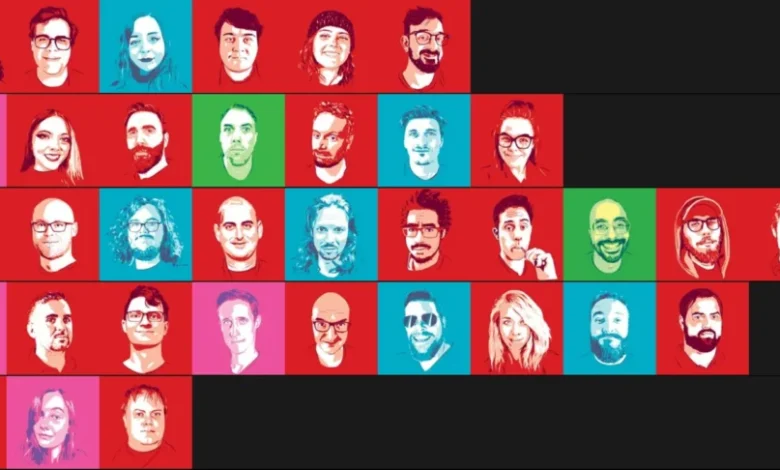
- Phase III: The Tiering Process: Staff were categorized into tiers ranging from "Apex Survivors" (those with high tactical awareness and low panic responses) to "Immediate Casualties" (those whose high-aggression or high-anxiety tendencies would likely lead to rapid elimination).
- Phase IV: Final Review: The internal consensus was formalized into a visual representation—a tier list—designed to facilitate discussion on the nature of fear and tactical performance in digital spaces.
Supporting Data and Demographic Trends
Gaming analytics suggest that player behavior in horror games is highly predictive of personality types. According to a 2022 survey by the Entertainment Software Association, roughly 34% of gamers identify "survival" as their primary interest in gameplay, yet only 12% show a high proficiency in resource conservation.
The PC Gamer internal data reflects these broader trends. Staff members with backgrounds in strategy gaming and simulation titles consistently ranked higher on the survival tier list. This is attributed to their experience with "optimal pathing"—the ability to calculate the lowest-risk route through an environment. Conversely, staff members who primarily cover competitive shooters often struggled with the restrictive, high-tension environments of horror, as their "aggressive bias" led to premature resource exhaustion.
Comparative Analysis of Survival Archetypes
The breakdown of the team reveals distinct archetypes that exist within the gaming population at large:
- The Tactical Thinker: Individuals who treat survival games as puzzles. They excel at mapping, inventory management, and long-term planning. In the context of the team, these individuals are the ones most likely to reach the end of a title without requiring excessive hand-holding or walkthrough assistance.
- The Reactive Combatant: Players who rely on fast reflexes. While effective in standard action games, these individuals often suffer in horror games where combat is intentionally clunky or disadvantageous. Their reliance on reflexive action often leads them into traps or ambushes.
- The Evaluative Observer: These individuals prefer to observe the horror rather than engage with it. While they may have the highest appreciation for the game’s atmosphere and lore, their hesitation in high-stakes moments makes them vulnerable to time-sensitive threats.
Official Context: The Silent Hill: Townfall Factor
The selection of Silent Hill: Townfall as the benchmark for this study is significant. Developed by No Code, the studio behind Stories Untold and Observation, Townfall is expected to lean heavily into psychological dread rather than traditional combat. This shifts the requirement for "survival" away from reflex and toward environmental interpretation.
Konami’s revitalization of the Silent Hill brand represents a shift in the industry toward narrative-heavy horror. For the PC Gamer team, this meant that the survival criteria had to be updated to account for "narrative navigation"—the ability to decipher complex, non-linear clues while under intense environmental pressure. This is a higher-level cognitive task than simply dodging an enemy, making the evaluation a true test of mental agility.
Implications for the Industry and Gaming Culture
The exercise of "tiering" staff members based on survival proficiency highlights a growing trend in gaming journalism: the move toward personal, experience-based storytelling. By placing themselves into the narrative framework of the games they cover, journalists are bridging the gap between objective criticism and subjective experience.
From an industry perspective, this analysis underscores the effectiveness of "emergent gameplay." Modern horror games are no longer just static stories; they are systems designed to test the player’s agency. When players compare their survival strategies, they are engaging with the game’s design on a deeper level. Whether a player survives a game is a metric of how well the developer communicated the game’s internal logic to the player.
Furthermore, this analysis provides insight into how players perceive themselves. The "survivor" identity is a powerful one in gaming culture. It transforms the player from a passive consumer of content into an active participant in a high-stakes scenario. The PC Gamer team’s effort to categorize their own survival potential serves as a meta-commentary on the genre: if the developers have done their job correctly, the player should feel that survival is not only possible but earned through discipline and intellect.
Final Assessment and Conclusions
The conclusion drawn from the team-wide assessment is that survival in a horror environment is rarely about luck. It is a product of preparation, emotional control, and the ability to process information while in a state of physiological stress. While the exercise was lighthearted in its execution, the implications are grounded in the fundamental design principles of the genre.
As the industry prepares for the release of new, high-profile horror titles, players would do well to evaluate their own "survival tier." Are you a Tactical Thinker, or are you prone to the panic-induced errors of the Reactive Combatant? By understanding one’s own tendencies, a player can better navigate the complex and often terrifying worlds that modern horror gaming provides. The PC Gamer team’s list serves as a reminder that in the world of survival horror, the most important tool in your inventory is your own mind. The ability to remain calm, observant, and calculated under pressure is the ultimate determinant of success in the dark, fog-filled streets of a digital town.
Related posts: