Côte d’Ivoire Becomes the 75th Signatory of the Artemis Accords to Advance Peaceful Lunar Exploration

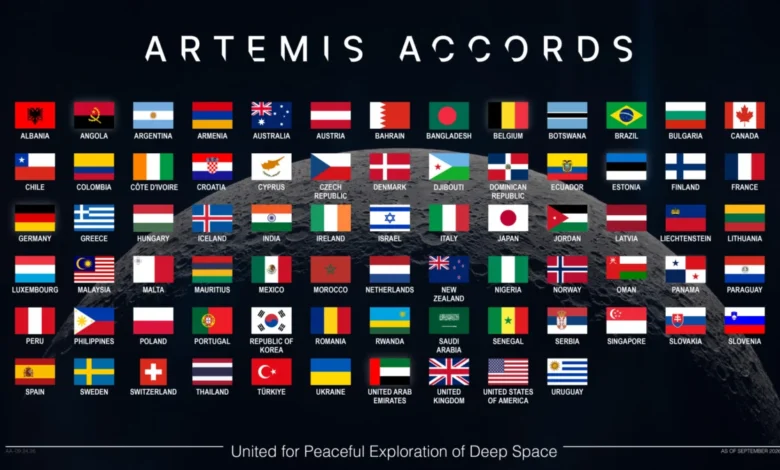
In a significant diplomatic and scientific milestone, Côte d’Ivoire has officially become the 75th nation to sign the Artemis Accords, cementing its commitment to the international framework governing responsible, transparent, and peaceful exploration of the Moon and beyond. The signing ceremony, which took place in the nation’s economic hub of Abidjan, serves as a pivotal moment for West African participation in the burgeoning global space economy. The event was held during the Africa Space Expo (ASPEX) 2026, an international forum dedicated to fostering technological integration and scientific collaboration across the African continent.
The agreement was signed by Adama Diawara, the Minister of Higher Education and Scientific Research of Côte d’Ivoire, with Junaid Munir, Chargé d’affaires from the U.S. Department of State, serving as the official witness. This commitment underscores a strategic pivot for the Ivorian government, which has been steadily building its domestic space capabilities to address socioeconomic challenges ranging from climate monitoring to telecommunications infrastructure.
A Foundation Built on Earth Observation
The partnership between Côte d’Ivoire and the United States did not emerge in a vacuum. Since 2019, the National Office of Technical Development of Côte d’Ivoire and NASA have cultivated a robust relationship centered on Earth observation and geodesy. Geodesy—the scientific discipline focused on measuring the Earth’s geometric shape, orientation in space, and gravitational field—has been a cornerstone of this collaboration.
By utilizing satellite-based measurement techniques, the two nations have made significant strides in understanding the complex interactions within Earth’s systems. These data points are not merely academic; they provide essential intelligence for agricultural planning, urban development, and disaster risk management in a region increasingly affected by climate volatility. The success of these initial collaborations provided the necessary technical and diplomatic scaffolding for Côte d’Ivoire to establish the Space Agency of Côte d’Ivoire in 2025. This agency now acts as the centralized authority for coordinating national efforts in space weather, satellite navigation, and astronomy, positioning the country as an emerging leader in regional space policy.
The Artemis Accords: A Global Framework
The Artemis Accords, established in 2020 by NASA and the U.S. Department of State in conjunction with seven founding nations, were created as a direct response to the rapid proliferation of lunar interest. As both state actors and private enterprises accelerate their plans for lunar missions, the need for a shared set of norms became paramount. The Accords are rooted in the 1967 Outer Space Treaty and aim to provide practical, non-binding principles to ensure that the "Golden Age" of space exploration remains safe and sustainable.
The core principles of the Accords include:
- Peaceful Exploration: All activities conducted under the Accords must be for peaceful purposes.
- Transparency: Signatories agree to publicly share scientific data and mission plans, fostering an environment of trust.
- Interoperability: To ensure safety and efficiency, nations commit to using common technical standards for spacecraft and ground systems.
- Emergency Assistance: A commitment to provide aid to personnel in distress during space missions.
- Registration of Space Objects: Ensuring that all missions are registered to maintain clear accountability.
- Release of Scientific Data: Promoting the open exchange of findings to benefit all of humanity.
- Protection of Heritage: Preserving historically significant sites on the lunar surface.
- Debris Mitigation: Developing sustainable practices to minimize the creation of harmful orbital debris.
Official Perspectives and Regional Ambitions
During the signing ceremony, NASA Deputy Administrator Matt Anderson emphasized the transition from terrestrial cooperation to extraterrestrial collaboration. "The United States and Côte d’Ivoire already cooperate on Earth," Anderson noted. "Today, we expand that partnership beyond it. Joining the Artemis Accords opens new opportunities for our scientists, engineers, and institutions to work together as humanity returns to the Moon and prepares for what comes next. We’ve aligned on the principles. The opportunities are in front of us. And now we can get to work."
For Ivorian officials, this milestone is about more than just lunar exploration; it is about capacity building. Tidiane Outtara, Director General of the Space Agency of Côte d’Ivoire, highlighted the broader significance of the event. "This is a great achievement, and important for Côte d’Ivoire’s ambitions and for the rest of the African Union members," Outtara stated. By aligning with the Artemis framework, Côte d’Ivoire aims to leverage international mentorship to accelerate its own domestic aerospace workforce, ensuring that the next generation of Ivorian scientists is equipped to participate in the global space economy.
A Chronology of Progress
The journey toward this signing reflects a deliberate, multi-year strategy by the Ivorian government to integrate into the global space community:
- 2019: Initiation of the bilateral partnership between the National Office of Technical Development and NASA, focusing on geodetic networks.
- 2020: The U.S. and seven partner nations launch the Artemis Accords, setting the international stage for lunar governance.
- 2023–2024: Increased technical exchanges between Ivorian researchers and international counterparts, focusing on satellite navigation and remote sensing for agricultural monitoring.
- 2025: Formal establishment of the Space Agency of Côte d’Ivoire, signaling a formal shift toward a unified national space policy.
- 2026: Côte d’Ivoire hosts the Africa Space Expo (ASPEX), culminating in the official signing of the Artemis Accords as the 75th signatory.
Implications for the African Continent
The inclusion of Côte d’Ivoire in the Artemis Accords serves as a catalyst for other African nations to consider their own roles in the space domain. As the African Union continues to develop its African Space Agency (AfSA), the experiences of Côte d’Ivoire provide a template for how emerging space nations can participate in international coalitions without sacrificing national autonomy.
The implications for the African continent are multifaceted. First, participation in the Accords provides access to high-level technical training and potential data-sharing agreements that are essential for modernizing domestic infrastructure. Second, the Accords emphasize the importance of international standards, which can help African nations streamline their regulatory environments to attract private investment in the aerospace sector. Finally, the focus on peaceful exploration serves as a diplomatic anchor, ensuring that the continent remains a stakeholder in the global governance of space.
The Road Ahead: Challenges and Opportunities
While the signing of the Accords is a significant political achievement, the real challenge lies in implementation. The Ivorian government will need to sustain investment in scientific education and aerospace engineering to reap the full benefits of this partnership. There is also the logistical hurdle of scaling current geodetic and observation projects to meet the high standards required for integration into the broader Artemis mission architecture.
However, the international community views the addition of Côte d’Ivoire as a vital expansion of the Accords’ inclusivity. The Artemis mission is designed not just as a national project, but as a global endeavor. By incorporating a diverse array of perspectives and geographic regions, the Accords gain legitimacy and durability. As humanity prepares to return to the Moon—and eventually look toward Mars—the cooperation established in Abidjan will serve as a building block for a more interconnected and collaborative future in space.
For Côte d’Ivoire, the path forward involves leveraging this newfound diplomatic status to foster academic research, promote STEM education, and eventually contribute unique scientific data to the global pool of lunar and planetary knowledge. As the nation prepares for this next chapter, the Artemis Accords offer a clear, transparent pathway to ensure that space exploration remains a benefit for all, regardless of the distance from the launchpad. For further details on the evolving framework and the list of participating nations, interested parties may consult the official NASA documentation at https://www.nasa.gov/artemis-accords.