The indri lemur employs human-like vocal techniques to project its haunting songs across the rainforests of Madagascar

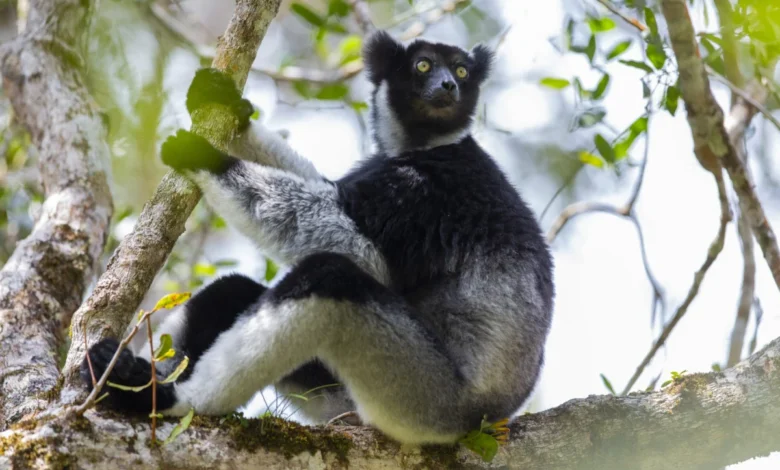
The indri (Indri indri), a charismatic primate endemic to the island of Madagascar, has long captivated biologists with its resonant, siren-like vocalizations. Often described as haunting or ethereal, these songs are not merely random bursts of noise but highly structured acoustic displays. Recent research published in the journal PLOS Computational Biology has unveiled a remarkable parallel between the vocal mechanics of these lemurs and those of trained human opera singers. By utilizing a technique known as formant tuning, the indri modulates its vocal tract geometry to amplify its songs, allowing the sound to travel through the dense, acoustically challenging environment of the Malagasy rainforest.
The Mechanics of the Indri Song
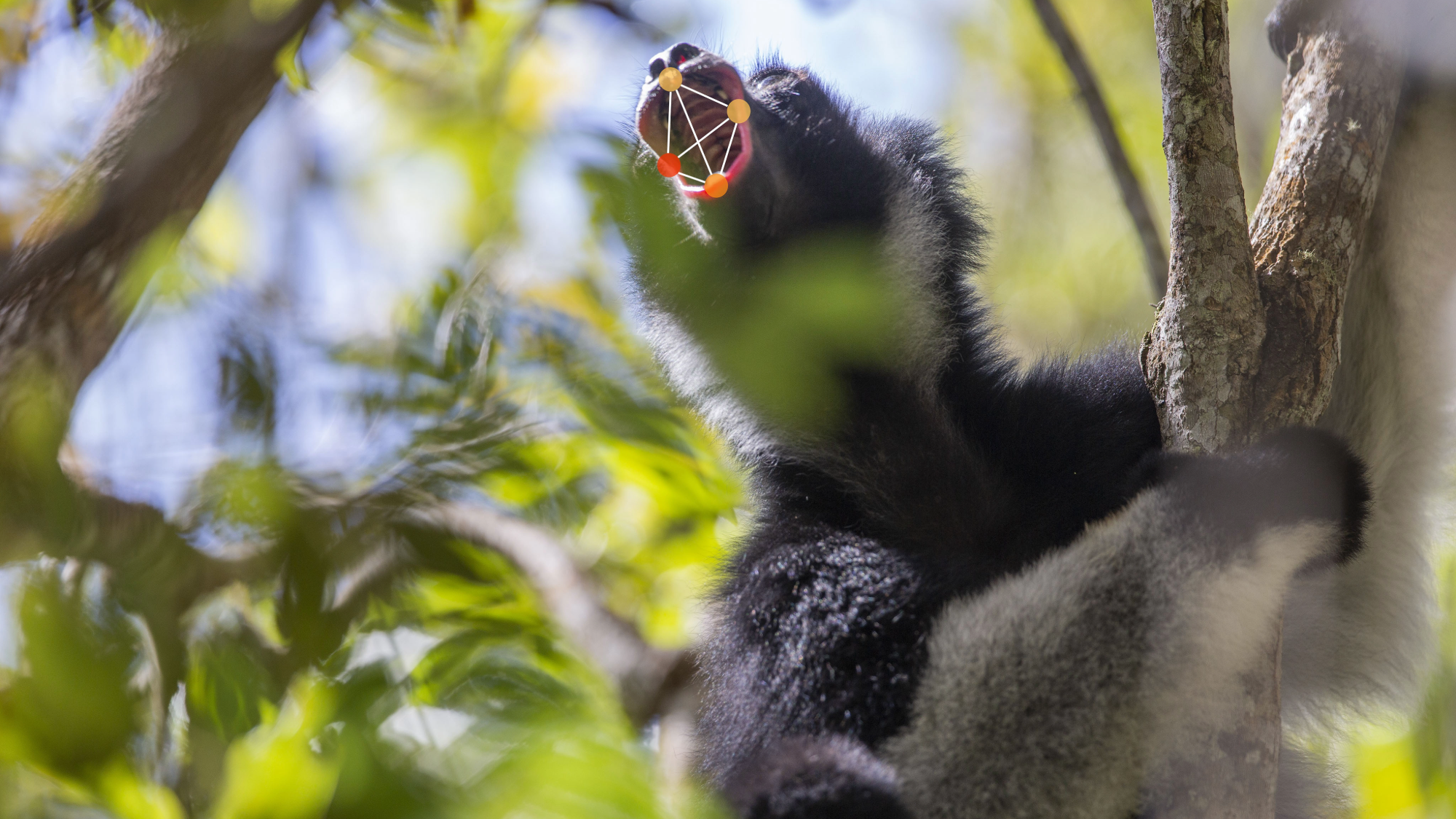
The research team, comprised of primatologists and computational biologists from the University of Warwick and the University of Turin, conducted a detailed analysis of 83 video recordings featuring 19 wild indri subjects. The methodology utilized advanced markerless motion-tracking software, a technological leap that allowed researchers to quantify facial muscle movements with high precision. By mapping the precise coordinates of the upper and lower lips throughout the duration of a song, the study established a direct, frame-by-frame correlation between the widening of the oral aperture and the frequency of the vocal output.
The data reveals that as the indri prepares to hit a high-frequency note, it instinctively widens its mouth. This physical adjustment is essential for achieving what acousticians call formant tuning. In human operatic tradition, singers adjust the shape of their vocal tract—specifically the position of the tongue, jaw, and lips—to align the resonant frequencies of the vocal tract with the harmonics of the notes they are producing. This synchronization allows the sound waves to reinforce one another, significantly increasing the volume and carrying power of the voice without requiring additional physical exertion. The indri appears to have independently evolved a similar mechanism to ensure that its social communication can penetrate the dense foliage and high humidity of its native canopy.
Chronology of Vocal Evolution and Discovery
The study of indri vocalization is part of a broader, decade-long effort to understand the evolution of rhythmic and musical capabilities in non-human primates. In 2021, researchers identified the indri as the only known "singing" lemur capable of maintaining a strict rhythmic beat, a trait previously thought to be exclusive to humans and certain avian species.
The current research builds upon this foundation by shifting the focus from the timing of the song to the biological mechanism of sound production. While the initial discovery of indri song dates back to early 20th-century field studies, it was not until the introduction of high-resolution digital videography and machine-learning-based motion tracking in the last five years that scientists could effectively parse the physical movements of the vocal tract in a wild setting. This technological progression has transformed the way primatologists observe animal behavior, moving from subjective observation to quantitative, reproducible data.
Supporting Data and Comparative Analysis
The acoustic range of an indri is vast, with songs often lasting several minutes and involving complex exchanges between group members. These vocalizations serve multiple critical functions: they act as a territorial "keep-out" signal to neighboring family groups and serve as a social bonding mechanism that reinforces the cohesion of the troop.
Statistically, the study found that the relationship between mouth opening and frequency was consistent across all observed individuals, regardless of age or sex. The correlation coefficient between jaw opening and pitch was notably high, suggesting that this behavior is a hard-wired, innate component of the indri’s vocal repertoire rather than a learned behavior passed down through cultural transmission. This consistency provides a clear indicator that the indri’s vocal apparatus has been shaped by selective pressures favoring long-distance communication in a tropical environment where visual signaling is frequently obstructed by vegetation.

Official Perspectives and Expert Commentary
Chiara De Gregorio, a lead researcher at the University of Warwick, emphasized the significance of these findings in a statement released following the publication of the study. "Every time the pitch of an indri’s song rose, we could see its mouth opening wider, frame by frame," De Gregorio noted. She highlighted that this level of fine-tuned coordination between voice and body is a hallmark of trained human performance, making its presence in a wild lemur species a profound discovery for evolutionary biology.
Filippo Carugati, a naturalist at the University of Turin who captured the high-definition footage used in the study, underscored the limitations of traditional bioacoustics. "Applying markerless pose estimation to footage recorded in the wild allowed us to look not just at the sounds indris make, but at the physical movements behind them," Carugati explained. He noted that without this technology, the subtle adjustments in the oral cavity—which are often too fast for the human eye to track accurately—would have remained hidden from scientific scrutiny.
Evolutionary Implications and Convergent Evolution
The most striking aspect of the research is the implication for the theory of convergent evolution. Humans and indris last shared a common ancestor approximately 74 million years ago. Despite this vast evolutionary distance, both species have developed similar physiological adaptations to solve the same problem: how to project complex, high-frequency sound across significant distances.
This suggests that the constraints of physics—specifically the way sound waves interact with physical structures like the vocal tract—have dictated the evolution of vocal production in both lineages. Because the indri and humans operate in different environments, the similarity in their "singing" technique provides a unique case study in how evolution finds parallel solutions to the challenges of communication. It challenges the anthropocentric view that complex vocal control is unique to the human lineage, suggesting instead that the foundation for "singing" may be more widespread in the primate order than previously suspected.
Broader Environmental Impact and Conservation
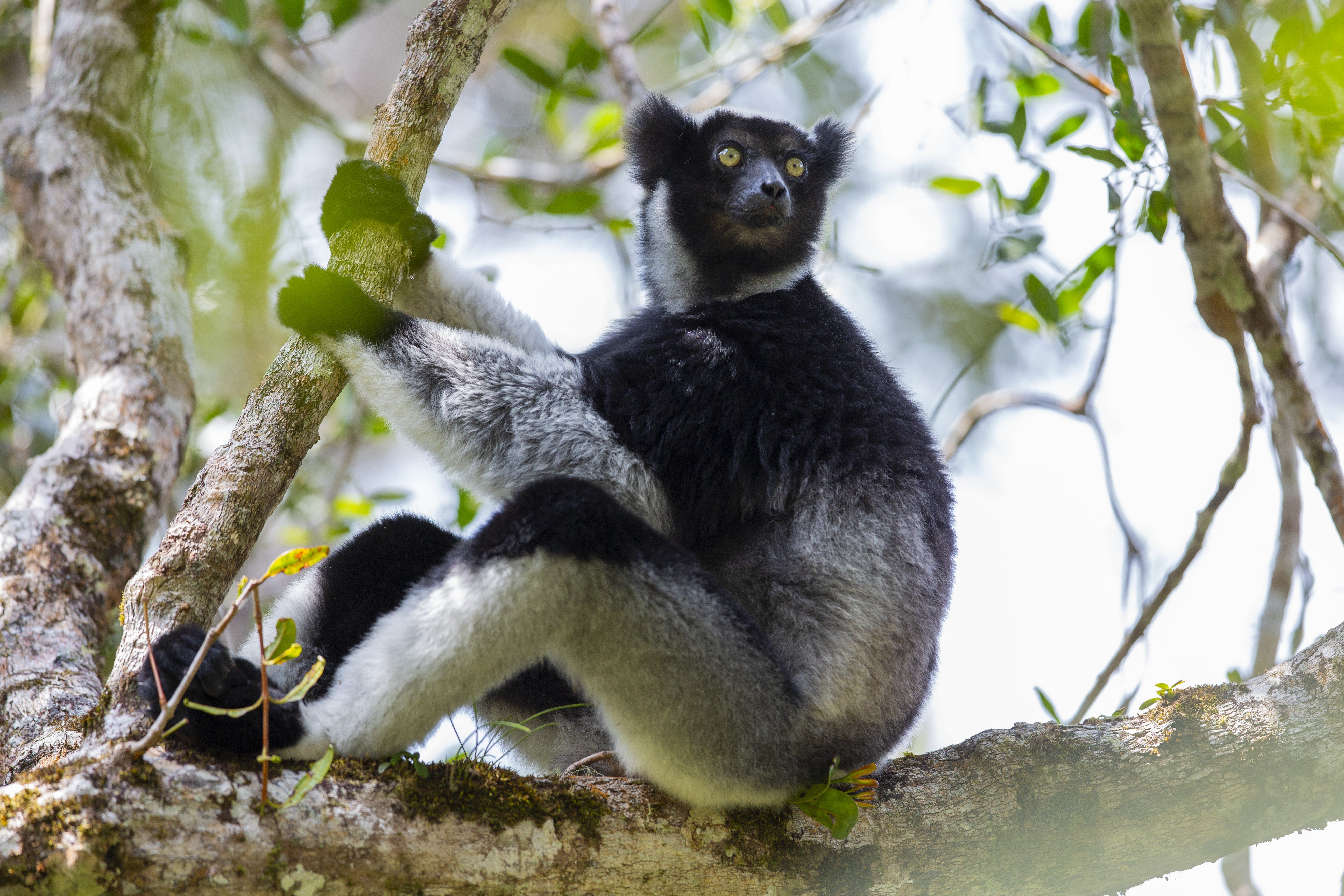
The ability of the indri to communicate over long distances is not merely a biological curiosity; it is a vital survival mechanism. Madagascar’s rainforests are under increasing pressure from deforestation and habitat fragmentation. If an indri group’s song cannot reach its intended recipient—whether that is a rival troop or a missing group member—the social structure of the colony can destabilize.
The findings of this study provide conservationists with new metrics for assessing the health of wild populations. By monitoring the "acoustic integrity" of these songs, researchers may be able to determine whether environmental stress or habitat degradation is affecting the indri’s ability to communicate. As the species is currently classified as critically endangered, understanding every nuance of its social behavior—including its sophisticated vocal repertoire—is essential for developing effective protection strategies.
Future Research Directions
Looking ahead, the team plans to expand their research to include other lemur species to determine if this formant tuning behavior is present in less "musical" primates. By comparing the vocal tracts of different lemur species, scientists hope to pinpoint the exact anatomical adaptations that allow the indri to achieve its unique vocal range. Furthermore, the integration of artificial intelligence into field research is expected to grow, potentially allowing for the real-time monitoring of vocal behavior in the wild, which could provide early warnings of environmental or social distress within the troop.
The study of the indri serves as a reminder of the complexity hidden within the natural world. What was once viewed as a simple, primal call in the Malagasy canopy has been revealed as a sophisticated, biomechanical performance that mirrors the refined artistry of the human opera stage. As technology continues to bridge the gap between human observation and animal behavior, we are likely to discover that the "songs" of the animal kingdom are far more structured and intentional than we ever dared to imagine.