Former PlayStation Executives Shuhei Yoshida and Adam Boyes Recreate Iconic 2013 Used Game Troll at Tokyo Game Show


More than a decade after delivering one of the most memorable marketing jabs in video game history, former PlayStation executives Shuhei Yoshida and Adam Boyes have reunited to recreate their legendary "used game instructional video" at the Tokyo Game Show. However, the nostalgic recreation carried a distinctly bittersweet twist, featuring empty hands instead of a physical game disc—a subtle yet pointed nod to the rapidly shifting landscape of modern gaming and Sony’s controversial pivot toward an entirely digital future.
The image, shared widely on social media during the Tokyo Game Show, immediately reignited discussions surrounding the death of physical media, game preservation, and the evolving consumer rights of modern players.
The Origins of a Legendary Troll: 2013 and the Console War
To understand the cultural resonance of Yoshida and Boyes’ recent photograph, one must look back to the tumultuous era leading up to the release of the eighth-generation video game consoles in 2013. During that year’s Electronic Entertainment Expo (E3), Microsoft found itself at the center of a monumental public relations disaster. The technology giant announced restrictive digital rights management (DRM) policies for the upcoming Xbox One, which included mandatory online check-ins and strict limitations on how users could lend, trade, or sell physical game discs.
The gaming community erupted in fierce backlash, viewing the policies as an unprecedented assault on consumer ownership and the robust secondhand market. Sensing an immediate vulnerability, Sony capitalized on the consumer outrage with swift, tactical precision.
Enter the "Official PlayStation Used Game Instructional Video." Clocking in at a mere 22 seconds, the clip featured Shuhei Yoshida, then-president of PlayStation worldwide studios, and Adam Boyes, then-vice president of publisher and developer relations. In the video, Boyes asks Yoshida how to share games on the PlayStation 4. Yoshida wordlessly hands Boyes a physical copy of Killzone: Shadow Fall. Boyes looks at it, looks back at Yoshida, and the video ends.

The message was unambiguous, elegant, and devastatingly effective: PlayStation 4 owners could freely lend, trade, sell, or keep their physical game discs without bureaucratic friction or digital verification hurdles. The short sketch amassed over 21 million views, became a foundational meme of the modern gaming community, and cemented Yoshida and Boyes as fan-favorite executive figures.
A Modern Twist: The Reality of 2028 and the End of Discs
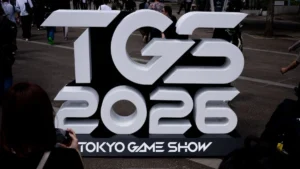
Fast-forward thirteen years to the Tokyo Game Show, where Yoshida and Boyes met once again. In a photo posted by Yoshida to social media, the duo posed in the exact same stance as their 2013 viral video. Yet, there was a stark and glaring omission: neither executive held a physical disc.
While the recreation was likely intended as a lighthearted nod to their past viral success, fans and industry commentators immediately interpreted the empty-handed pose as a poignant commentary on Sony’s current trajectory. The digital transition that Microsoft attempted prematurely in 2013 has, ironically, become the industry standard adopted by Sony itself over a decade later.
Earlier this summer, Sony shocked the gaming community by announcing that it would officially cease the manufacturing of physical discs for new PlayStation games starting in January 2028. Moving with uncharacteristic speed, the company immediately began the process of repurposing its final remaining disc-manufacturing facility, demonstrating that corporate leadership views the physical format not as a legacy option to be phased out slowly, but as an obsolete medium to be discarded rapidly.
The announcement triggered months of sustained backlash. Gamers who value physical media, steelbooks, box art, and true ownership of their software libraries expressed profound frustration. Protests under banners such as the "PlayStation Blackout" were organized across social media platforms, though corporate leadership remained steadfast in its commitment to a digital-first infrastructure.
Industry Implications and the Fallout for Retailers
The definitive shift toward all-digital consoles carries profound economic implications for the wider gaming ecosystem, extending far beyond consumer sentiment. Video game analysts and retail experts have warned that Sony’s decision to phase out physical discs acts as a severe blow to traditional brick-and-mortar game retailers.

For decades, specialized game stores relied heavily on the trade-in and secondhand market for physical discs to maintain profit margins. Without new physical software releases, the viability of specialized game retail chains comes under immediate threat. Furthermore, the transition to digital-only storefronts eliminates consumer pricing competition. Unlike physical discs, which can be discounted by third-party retailers, supermarkets, and secondhand shops, digital games remain bound to proprietary platform storefronts, where the manufacturer dictates pricing indefinitely.
From a preservation standpoint, industry historians and archivists have repeatedly raised alarms regarding the long-term fragility of digital libraries. Physical discs, despite their vulnerabilities, represent a tangible asset that remains playable independent of corporate server statuses, licensing agreements, or digital storefront shutdowns.
The Evolution of Leadership and Legacy
The reunion of Shuhei Yoshida and Adam Boyes also highlights the changing guard within the gaming industry. Both executives have transitioned away from day-to-day corporate management roles at Sony, allowing them a unique vantage point—and perhaps a degree of rhetorical freedom—regarding the modern strategic decisions made by their former employer.
When Yoshida and Boyes championed physical game-sharing in 2013, they did so as active architects of a console generation defined by the physical medium. Their recent recreation at the Tokyo Game Show serves as a striking visual bookend to an era.
Whether intended as an ironic critique or a simple nostalgic tribute, the image captures a generational anxiety within the gaming populace. As the industry marches toward a future devoid of plastic cases and shiny discs, the empty hands of two former executives serve as an accidental monument to what has been lost in the name of digital progress.
Related posts: