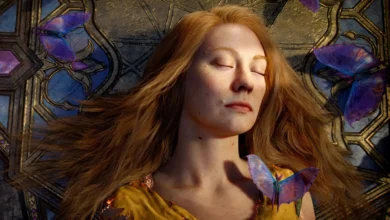
When players delved into 007 First Light earlier this year, many, like myself, experienced a peculiar narrative arc concerning James Bond’s fellow 00 trainees, Cressida Bright and Lennox Monroe. IO Interactive invested considerable effort in developing these characters, successfully immersing players in the inherently unusual concept of James Bond having peers and, in essence, flatmates. However, just as players began to connect with these burgeoning personalities, they were abruptly removed from the narrative. Following MI6’s ill-fated operation to eliminate the rogue agent 009 in Slovakia, Bond primarily finds himself allied with his mentor, Greenway. While this progression is competently executed, the pacing felt unusually abrupt during gameplay, a sensation now explained by revelations from the game’s lead writer, Michael Vogt.
Initially, First Light was conceived with a broader focus, intending for Bond’s associates to play a significantly more substantial role in the unfolding story. This fundamental shift in design philosophy appears to be the root cause of the narrative’s peculiar cadence.
The Genesis of an Ensemble Piece
Speaking with Eurogamer, Michael Vogt, the lead writer for 007 First Light, shed light on the game’s initial conceptualization and the reasons behind its eventual divergence. "During the training sequence, we make a false promise," Vogt admitted. "Basically, we’re saying ‘This is going to be an ensemble piece, all the 00s working together, as they do in Slovakia’." This initial vision painted a picture of a collaborative effort among Bond’s contemporaries, a stark contrast to the solitary path he ultimately treads.
The intention was to present a narrative where players would experience the camaraderie and collective efforts of MI6’s burgeoning agent pool. This approach would have offered a unique perspective on the world of espionage, moving beyond the singular focus on Bond and exploring the dynamics within a team of highly trained individuals. The training sequences, which introduced Bright and Monroe, were designed to foster a sense of anticipation for their joint operations.
A Dramatic U-Turn: The Slovakia Operation and Its Aftermath
The pivotal moment in the narrative, and indeed in the game’s development direction, was the mission in Slovakia. The original plan, as described by Vogt, involved a scenario where the 00 agents would be actively engaged in joint operations. However, the game’s narrative took a drastic turn with the catastrophic outcome of this mission. "And then we pull the rug out from under you when most of them die," Vogt explained, highlighting the dramatic shift in the game’s tone and scope.

This devastating event, which saw the demise of most of Bond’s fellow trainees, served a dual purpose: it eliminated the ensemble cast and, crucially, positioned James Bond as the sole survivor. This survival was not by chance; Bond’s ability to withstand the explosion that claimed his peers cemented his status and provided a stark catalyst for his character development. "Serendipitously, [Bond’s], the last man standing. He could have died in that explosion but he doesn’t, and so he emerges as the top agent." This narrative pivot was instrumental in establishing Bond’s ascendancy within MI6 and setting the stage for his future solo endeavors.
The Strategic Rationale for a Singular Focus
The decision to pivot from an ensemble narrative to a singular focus on Bond was driven by a strategic aim to accelerate his character arc. Vogt elaborated on this decision, stating, "But in my very first pitch I think we were actually toying with the idea of making it an ensemble piece, that you had the different agents working together." This indicates that the ensemble concept was a significant consideration early in the development process.
However, the developers ultimately recognized that a more concentrated narrative on Bond’s personal journey would be more impactful for the game’s thematic goals. "Logically, this makes sense," Vogt continued, explaining the reasoning behind the shift. "You’re not going to put a newly trained agent out in the field on their own until you’re certain they can handle it, which given Bond’s roguish tendencies would probably take a while." This implies that Bond’s inherent personality traits and need for guidance would necessitate a period of supervised development.
The developers concluded that the ensemble approach, while intriguing, might dilute the impact of Bond’s individual growth. By streamlining the narrative, they could more effectively explore the psychological and emotional toll of espionage on a young, albeit exceptionally capable, agent. This allowed for a more potent portrayal of Bond’s maturation.
Kicking Off Bond’s Character Development
The narrative sacrifice of the ensemble cast was directly tied to the overarching goal of initiating Bond’s character development. Vogt articulated this connection: "The story beat that it serves is of course that it goes from all fun and games for him—he’s a young kid, he’s on an adventure, and he’s out globetrotting and playing secret agent—but after that explosion, he wakes up to the harsh reality." This transition from a youthful, almost carefree adventuring spirit to a hardened operative grappling with the grim realities of his profession is central to Bond’s early narrative.
The impact of the Slovakia operation was designed to be profound, forcing Bond to confront the inherent dangers and the often-fatal consequences of his chosen career. This experience served as a crucible, forging him into the more somber and experienced agent that MI6 requires.

The Shadow of Survivor’s Guilt
A significant emotional undercurrent introduced by this narrative shift is the concept of survivor’s guilt. "When M says that [00] life expectancy is very short, it’s like ‘Oh, right’," Vogt explained, highlighting Bond’s dawning realization of the precariousness of his profession. This acknowledgment is compounded by the emotional weight of being the sole survivor of a mission that claimed the lives of his peers.
"He gets it, and he matures from that, of course, and also from the guilt—maybe the survivor’s guilt—of being the one who made it." This internal struggle is a powerful driver of Bond’s development, adding a layer of psychological depth to his character. It transforms him from a mere action hero into a more complex individual wrestling with the moral and emotional ramifications of his survival. This element of guilt adds a nuanced layer to his character that might have been less pronounced in a purely ensemble narrative.
The Lingering Echoes of the Original Vision
While the shift in narrative focus was strategically sound for Bond’s character development, the lingering presence of the initially developed ensemble cast is palpable. Vogt acknowledges this, stating, "Vogt can’t recall when exactly this change was made, but it would explain why Cressida and Monroe feel so much like companions who are going to accompany Bond through the entire game." This sentiment underscores the effectiveness of IO Interactive’s character writing, even if those characters’ roles were ultimately curtailed.
The fact that these characters felt so integral and well-realized suggests that the ensemble concept had significant traction during development. Their abrupt departure, while narratively justified, leaves a sense of what might have been. For at least a portion of the game’s development cycle, the intention was indeed for them to be integral to Bond’s journey throughout. This detail provides valuable insight into the iterative nature of game development and the challenging decisions involved in shaping a compelling narrative. The evolution of 007 First Light from a potential ensemble piece to a focused character study of James Bond illustrates the complex interplay between creative vision, player experience, and the practicalities of game production.
Related posts: