Apple Watch Series 12 Hands-On: Faster Chips, Upgraded Health Sensors, and Ceramic Shield 2 Protection

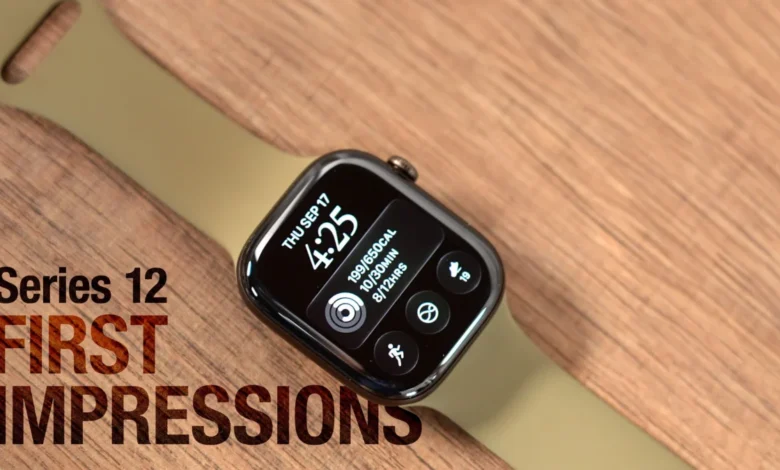
The official release of the Apple Watch Series 12 on Friday, September 18, 2026, marks another iterative yet significant step forward in Apple’s wearable technology portfolio. While the latest generation maintains the familiar aesthetic profile of its predecessor, the Series 11, a closer inspection reveals a substantial overhaul of internal architecture, health tracking capabilities, and material durability. Priced starting at $399 and available in familiar 42mm and 46mm sizing options, the Series 12 focuses heavily on precision health sensing, processing efficiency, and targeted cosmetic refreshes rather than a complete industrial redesign.
Main Facts and Hardware Overview
Externally, the casual observer would be hard-pressed to differentiate the Apple Watch Series 12 from the previous year’s model. The display dimensions, chassis geometry, and overall form factor remain unchanged. However, Apple has introduced a fresh palette of finishes across its diverse lineup of casing materials.
For the aluminum models, consumers can now choose from a contemporary light gold shade—distinctly warmer and more refined than the rose gold offered previously—alongside dark bronze, classic black, and space gray. Apple has also refreshed its luxury tiers: ceramic models are now available in pearl white and night blue, while the polished titanium variants debut in radiant gold and natural finishes.
Perhaps the most notable structural upgrade to the exterior is the implementation of Ceramic Shield 2 on the aluminum models. Replacing the traditional Ion-X glass, this proprietary material is touted by Apple as being 60 percent tougher, providing enhanced resistance against daily wear, scuffs, and impacts.
While the front glass and chassis lines mirror the past two generations, the rear casing of the Series 12 has undergone a complete redesign to accommodate a next-generation array of optical and electrical sensors. According to Cupertino’s engineering teams, this restructured sensor array positions the Apple Watch Series 12 as the most accurate heart rate monitoring wearable currently available on the consumer market.
Chronology and Context: The 2026 Product Lifecycle
The path to the Series 12’s release began earlier in the month during Apple’s high-profile "Surprise and Shine" keynote event on Wednesday, September 9, 2026. Broadcast globally from Apple Park, the keynote served as the stage for the company’s most ambitious hardware drops of the year. Alongside the Apple Watch Series 12 and the rugged Apple Watch Ultra 4, the event commanded industry-wide attention with the debut of the highly anticipated foldable iPhone Duo and the flagship iPhone 18 Pro and Pro Max lineup.
Industry analysts and supply chain watchers, including Bloomberg’s Mark Gurman, had correctly anticipated in the weeks leading up to the keynote that the Series 12 would forego a major physical redesign. Initial rumors circulating earlier in the year had hinted at the potential integration of Touch ID into the wearable chassis; however, those hardware changes failed to materialize. Instead, Apple elected to concentrate its engineering resources on internal optimization, paving the way for advanced biometric tracking and accelerated computational power.
Advanced Health Sensing and Processing Power
At the heart of the Apple Watch Series 12 lies the new S11 system-in-package (SiP), which succeeds the S10 chip found in the Series 10 and Series 11. Built on a more efficient node, the S11 not only provides a noticeable speed boost across watchOS navigation but also drives a newly minted Health Sensing System.
This upgraded hardware pairing fundamentally alters how the device captures vital statistics. The Series 12 now samples heart rate data at an aggressive frequency of once every five seconds. Furthermore, heart rate variability (HRV) is measured as often as every five minutes, offering a granular, continuous data stream that far surpasses previous consumer health devices.
Despite the exponentially higher sampling rate, preliminary testing indicates that these continuous background calculations do not impose a heavy toll on battery longevity. The Apple Watch Series 12 maintains its official rating for all-day battery life. Additionally, Apple has improved charging speeds for this generation. Users can now secure up to 12 hours of normal daily usage from a brief 15-minute charge, though achieving this accelerated rate requires utilizing the specific high-output charger bundled directly inside the Series 12 box. Legacy Apple Watch chargers remain compatible, but will default to standard charging speeds.
The New Readiness Score Metric
The wealth of continuous data harvested by the Health Sensing System feeds directly into a prominent new software feature: the readiness score. Designed to help users balance physical exertion with necessary recovery, the readiness score provides a daily, holistic evaluation of whether an individual should push forward with intense training or pivot toward a rest day.
The algorithm calculates this score by synthesizing a wide array of biometric metrics, including recent physical activity levels, baseline vitals, and sleep quality. Crucially, the system is dynamic; the score continuously adjusts as the day unfolds based on ongoing strain and rest intervals. To ensure accuracy, the feature requires approximately one week of continuous data collection by the Series 12 before it begins generating reliable, personalized readiness insights.
Beyond immediate health metrics, the S11 chip is engineered to support upcoming software capabilities, including advanced audio intelligence tools like Live Rewind and Siri Recap. Apple has confirmed that these artificial intelligence features will roll out via a software update later in the year, unlocking further utility from the upgraded silicon.
Broader Impact and Market Implications
The launch of the Apple Watch Series 12 reinforces Apple’s strategic shift toward health-centric ecosystems and continuous biometric monitoring. By refining sensor accuracy and introducing predictive recovery metrics like the readiness score, Apple continues to blur the line between consumer fitness tracker and medical-grade preventive health tool.
Market analysts note that while the lack of a visual redesign may deter owners of the recent Series 10 or Series 11 models from upgrading, the comprehensive sensor overhaul makes the Series 12 an exceptionally compelling proposition for users holding onto older generations, such as the Series 8 or Series 9. With its aggressive pricing tier starting at $399 for the 42mm configuration, Apple has positioned the Series 12 as a stable, highly capable cornerstone of its autumn 2026 hardware ecosystem, ensuring its dominance in the global smartwatch market remains unchallenged.