From Hobbyist Garages to the Frontiers of Aerospace: The Specialized Role of NASA’s Subscale Flight Research Laboratory

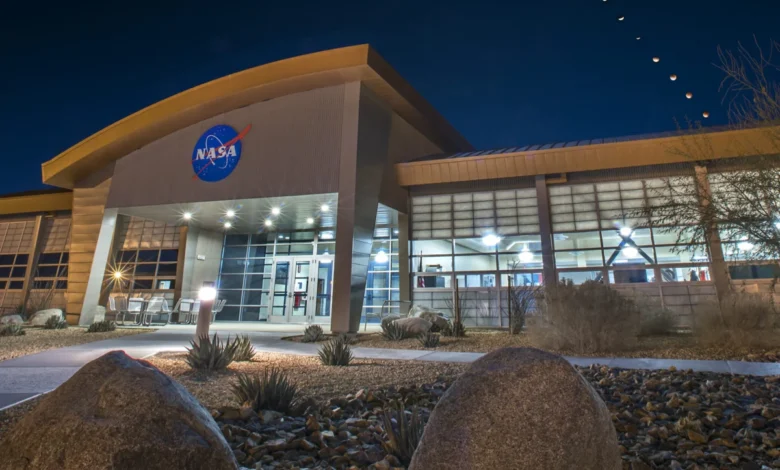
Long before they were shaping the future of space exploration and advanced aeronautics, Derek Abramson, Justin Hall, and Justin Link were honing their craft in the unassuming environments of garages and local flying fields. By building, crashing, and iterating on radio-controlled aircraft, these three individuals developed an intuitive understanding of aerodynamics that would eventually become a cornerstone of NASA’s mission-critical research. Today, they form the core of the Dale Reed Subscale Flight Research Laboratory at NASA’s Armstrong Flight Research Center in Edwards, California, where they transform childhood fascination into high-stakes engineering reality.
The Strategic Value of Subscale Research
The Dale Reed Subscale Flight Research Laboratory serves a unique and vital function within NASA’s broader aeronautics and space research portfolio. By utilizing small, remotely piloted, and autonomous aircraft, the team provides an agile testing environment for technologies that are too experimental, risky, or cost-prohibitive to test on full-scale flight hardware.
This approach allows NASA to bridge the gap between computer-aided design (CAD) simulations and expensive, full-scale prototype testing. Whether evaluating navigation systems for lunar and Martian landings or testing novel wing geometries for sustainable aviation, the laboratory acts as a low-cost, high-velocity incubator. In an era where aerospace development cycles are under constant pressure to accelerate, the ability to rapidly design, fabricate, and flight-test a subscale model can save millions of dollars and shave months, if not years, off the development lifecycle.
A Chronology of Expertise
The journey of the Armstrong team is a testament to the value of hands-on experience. While each member brings a unique professional background, their collective history reflects a lifelong commitment to flight.
- Pre-NASA Era (1990s–2010s): All three members spent their formative years participating in the hobbyist aviation circuit. This period involved thousands of flight hours in non-regulated environments, fostering a "tinker-first" mentality that prioritizes rapid problem-solving over rigid, slow-moving bureaucratic processes.
- The Professional Transition (2010–2015): As the drone industry matured, the gap between hobbyist capabilities and professional aerospace requirements began to close. Abramson, Hall, and Link were recruited individually based on their reputations within the community, bringing their specialized knowledge of composite materials, flight dynamics, and rapid prototyping into the federal workspace.
- Integration at Armstrong (2015–Present): Over the last decade, the team has successfully integrated their hobbyist-honed skills with NASA’s rigorous safety and research protocols. They have successfully transitioned from building "toys" to managing a sophisticated fleet of research vehicles that serve as testbeds for next-generation flight control systems.
Profiles in Innovation
The synergy within the team is a result of highly specialized roles. Derek Abramson, the laboratory’s chief engineer, provides the technical oversight and management structure necessary to operate within the stringent confines of NASA. His background—spanning service in the U.S. Navy as an avionics technician on EA-6B and F-18 aircraft, followed by work on the B-1 and CV-22 Osprey—provides a level of operational discipline that ensures the laboratory’s research aligns with broader agency objectives.
Justin Hall, serving as the chief pilot, is the bridge between the digital control station and the physical aircraft. His reputation for creative problem-solving under pressure is a direct byproduct of his years on the competitive hobby circuit. His ability to diagnose flight anomalies in real-time has been instrumental in maintaining the safety and longevity of the lab’s fleet.
Justin Link brings a focus on fabrication and materials science. His lineage is deeply embedded in aviation history, with family service records stretching back to the U.S. Army Air Corps and the Air Force. Link’s specialty—designing and fabricating research vehicles—allows the lab to build custom airframes tailored to specific mission parameters. His experience with large-scale drones and composite manufacturing has been vital in keeping the lab at the cutting edge of modern aerospace materials.
Data-Driven Development: Why Subscale Matters
The implications of the team’s work extend far beyond the Edwards facility. In the current aerospace climate, the transition to autonomous systems requires an unprecedented amount of testing. Industry data suggests that flight testing remains the "bottleneck" of aerospace development, accounting for nearly 40% of the total time from concept to flight-readiness.
By utilizing subscale aircraft, NASA Armstrong can perform "hardware-in-the-loop" testing that is significantly more representative than wind tunnel testing alone. For instance, in missions related to planetary exploration, subscale vehicles can simulate the atmospheric density and gravity variations of other worlds, providing data that helps validate autonomous landing algorithms before they are ever loaded onto a multi-billion-dollar mission-critical spacecraft.
Institutional Support and Official Recognition
While the team operates in the "garage" spirit, they are deeply embedded in the formal NASA structure. The laboratory is named in honor of Dale Reed, a legendary NASA engineer who pioneered the use of subscale models to test groundbreaking flight vehicles like the M2-F1 lifting body. The current team views their work as a continuation of that legacy.
NASA officials have frequently noted that the success of the Armstrong lab is not just about the hardware, but the unique "culture of flight" that Abramson, Hall, and Link have cultivated. By maintaining their hobbyist ties, they remain connected to the broader aviation community, allowing them to track emerging trends in drone technology, battery efficiency, and radio-link reliability—technologies that often migrate from the hobby market into professional applications.
Future Implications for Aerospace Exploration
The work being performed at the Dale Reed Subscale Flight Research Laboratory is poised to play an increasingly critical role as NASA shifts its focus toward long-term lunar habitation and potential crewed missions to Mars. As flight vehicles become more autonomous and reliant on complex software, the need for safe, repeatable, and low-cost testing will only grow.
Furthermore, the team’s influence is helping to redefine the "NASA engineer" archetype. By demonstrating that high-level innovation can stem from the same hands-on, iterative approaches used by hobbyists, they are encouraging a new generation of aerospace workers to value practical craftsmanship alongside theoretical engineering.
Conclusion: A Legacy of Flight
The collaboration between Derek Abramson, Justin Hall, and Justin Link is more than just a functional partnership; it is a manifestation of the "passion for flight" that has defined the aerospace industry for over a century. As they continue to push the boundaries of what is possible with subscale aircraft, they ensure that NASA remains at the forefront of aviation innovation. Whether they are in a hangar at Armstrong or a local airfield on a weekend, their work remains focused on the same goal: to take the lessons learned in the air and apply them to the challenges of the future.
As space exploration becomes increasingly complex, the humble, agile, and cost-effective methods championed by the Dale Reed Laboratory team will likely remain one of the agency’s most valuable assets. Their journey from hobbyists to key NASA contributors underscores a fundamental truth in engineering: sometimes the most sophisticated solutions are found by those who aren’t afraid to get their hands dirty and build the future, one model at a time.