Blizzard Entertainment Rules Out World of Warcraft 2, Citing Engine Evolution and Financial Risk Following BlizzCon 2026 Announcements

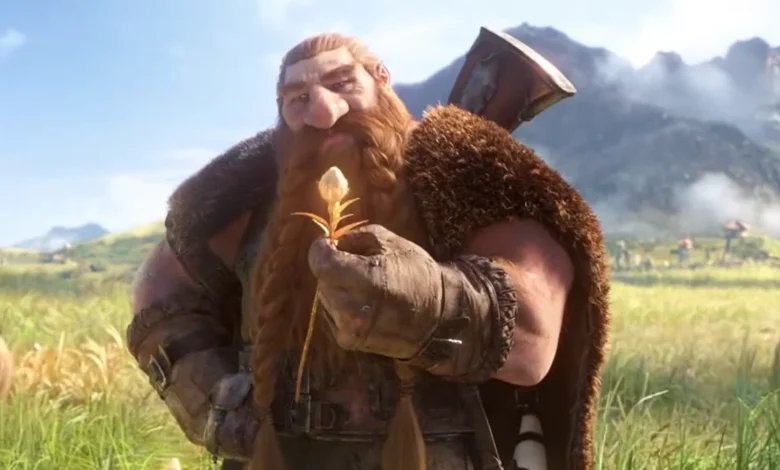
Blizzard Entertainment has officially closed the door on the prospect of developing a traditional sequel to its massively multiplayer online role-playing game flagship, World of Warcraft. During recent media briefings following the BlizzCon 2026 convention, company executives and lead developers addressed long-standing speculation regarding a hypothetical "World of Warcraft 2," explaining that the immense technical and financial hurdles of rebuilding the franchise from scratch far outweigh any potential benefits. Instead, the developer is focusing its resources on modernizing existing infrastructure, continuing the current expansion roadmap, and introducing alternate-reality content like the newly announced World of Warcraft: Forever.
The decision comes at a time of sweeping transparency for Blizzard, which shocked industry observers at BlizzCon 2026 by outlining far-future release timelines, including Diablo 5 slated for 2029 and a new open-source-style StarCraft shooter targeted for 2030. While these announcements point toward a diversified future for the publisher, the spotlight on World of Warcraft remained firmly anchored to the past—and how that past can be creatively re-engineered rather than abandoned.
The Genesis of World of Warcraft: Forever and the "Classic Plus" Phenomenon
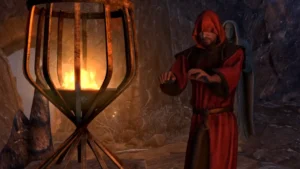
At BlizzCon 2026, Blizzard formally introduced World of Warcraft: Forever, a project colloquially referred to by the community as "Classic Plus." Rather than serving as a straightforward re-release of the 2004 launch version—as previous Classic iterations have done—Forever represents a divergence into an alternate-reality timeline.
According to executive producer Holly Longdale, the project gives developers the freedom to explore uncharted narrative territory. "The future is untold," Longdale told the audience during the convention’s keynote address. "We may see stories that could have happened, and some that didn’t happen at all."
World of Warcraft: Forever aims to reinvent vanilla-era gameplay by introducing a wealth of new content. Features slated for the project include:
- Brand-new zones and expanded iterations of classic regions.
- Additional dungeons, raids, and battlegrounds.
- A completely new playable race, the Skyborne.
- Expanded race and class combinations alongside new skill trees and talents.
- Approximately 100 new quests, expanded profession pathways, reputation rewards, and account-wide perks.
- Overhauled graphics featuring an in-game standard-definition (SD) and high-definition (HD) character toggle, allowing players to seamlessly switch between nostalgic and modern visual fidelity on the fly.
Despite the sweeping nature of these updates, Blizzard insists the project is a reimagining rather than a sequel. This distinction is vital for understanding the company’s long-term product strategy.
Why a Traditional Sequel Fails the Cost-Benefit Analysis
The rationale behind bypassing a direct sequel is rooted in decades of technological iteration. Principal designer Kris Zierhut elaborated on this stance during an interview with industry media, emphasizing that the game’s underlying architecture has been continuously refined since its inception nearly 25 years ago.
"One of the things that’s singularly great about WoW is we have this game and this world and this design that has been continuously developed for the last 25 years," Zierhut explained. "And we keep making it better. We made the graphics better, we made the rendering better, we made the lighting better; all that new stuff we showed on stage today."
Furthermore, Zierhut pointed out that foundational systems—such as engine efficiency, server infrastructure handling player movement, and the backend management of complex spell combat mechanics—have undergone continuous optimization. "We have this incredible engine and server infrastructure driving the game that is second to none. Why would you throw that away and start over?" he added.
From a narrative perspective, Blizzard sees little narrative justification for a reset. Modern World of Warcraft is currently navigating the midpoint of its ambitious "Worldsoul Saga" expansion trilogy, a multi-chapter storyline culminating in imminent conflicts with legendary figures of the franchise’s lore, such as cosmic-scale titan battles teased at the recent convention. Zierhut noted that the current story remains vibrant and deeply engaging to the player base, questioning what a hypothetical "WoW 2" could realistically offer that World of Warcraft: Forever and modern retail expansions do not already provide.
Historical Context and Industry Precedents
The challenges of launching a successor to a generational MMO are immense. World of Warcraft launched in November 2004, growing from a massive virtual world into a sprawling digital ecosystem comprising ten major expansions, millions of active subscribers over its lifetime, and a deeply entrenched cultural footprint.
Building a successor of equivalent scope would require years of development and hundreds of millions of dollars in capital expenditure. Moreover, the industry is littered with cautionary tales regarding forced player migration. Blizzard itself experienced a turbulent transition when moving its player base from Overwatch to Overwatch 2—a bumpy shift marked by shifting monetization models, cancelled player-versus-environment promises, and community friction.
Blizzard’s corporate history also serves as a warning against sprawling, unproven development cycles. In the early 2010s, the company spent years developing a massively multiplayer online game codenamed "Project Titan," intended to be the spiritual successor to World of Warcraft. After years of development and substantial financial investment, Blizzard ultimately scrapped the project in 2014. Portions of Titan’s salvaged assets and conceptual DNA were eventually repurposed to create Overwatch, a move that proved fortuitous but underscored the extreme financial and operational risks inherent in discarding established intellectual property to chase unproven concepts.
Economic Pressures and Corporate Realities
Beyond design philosophy and historical precedent, current macroeconomic conditions within the gaming industry heavily discourage high-risk gambles. Blizzard’s parent company, Microsoft, alongside its Xbox division, has faced intense scrutiny regarding operational efficiency and profitability. Recent restructuring efforts have included significant workforce reductions, such as plans to cut thousands of jobs across various subsidiary studios, including Double Fine, Compulsion Games, Ninja Theory, and divisions within Activision Blizzard.
In an economic climate where corporate leadership is increasingly risk-averse and laser-focused on stabilizing core revenue streams, allocating hundreds of millions of dollars toward a high-risk World of Warcraft sequel makes little business sense. Blizzard currently maintains an active, profitable portfolio that includes modern World of Warcraft, World of Warcraft Classic, Hearthstone, Overwatch, Diablo IV, and upcoming pipelines for Diablo 5 and the new StarCraft shooter.
Spreading engineering talent and financial capital across these ongoing live-service pillars while simultaneously building a brand-new MMO engine from the ground up would stretch company resources to a breaking point.
Strategic Implications for the Future of Azeroth
By rejecting a sequel in favor of iterative evolution and projects like World of Warcraft: Forever, Blizzard has chosen a path of stabilization and targeted reinvention.
For players, this means the legacy of their time, achievements, and characters built over two decades remains intact within a continuously upgraded technical framework. Rather than forcing millions of users to abandon their long-term digital investments for a blank slate, Blizzard is leveraging its existing assets to capture both nostalgic purists and modern expansion enthusiasts.
Ultimately, World of Warcraft: Forever demonstrates that Blizzard believes the best way forward for Azeroth is not to destroy and rebuild, but to continuously renovate. As the studio balances its upcoming slate of distant franchise releases—ranging from StarCraft to Diablo—preserving and expanding the world that defined the modern MMORPG genre remains its most pragmatic and secure path forward.