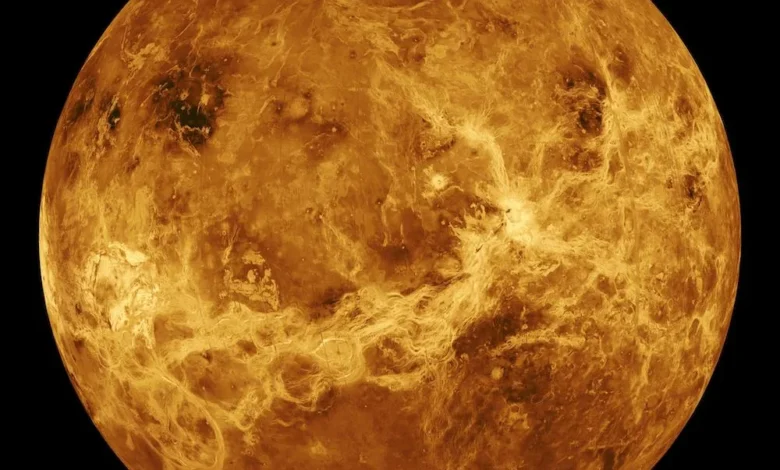
For generations, astronomers have referred to Venus as Earth’s "sister planet." Sharing a near-identical diameter, mass, and bulk composition, the two worlds seemed destined to be cosmic twins. Yet, as our exploration of the solar system progressed, the narrative diverged sharply. While Earth evolved into a temperate, life-sustaining sanctuary, Venus transformed into a blistering, high-pressure wasteland. Among the many questions regarding their disparate evolutionary paths, one has remained particularly persistent: why does Earth possess a large, stabilizing moon while Venus remains completely solitary?
A new study published in The Astrophysical Journal, led by planetary astrophysicist Stephen R. Kane of the University of California, Riverside, suggests that the answer may not lie in a missing cosmic collision, but in the fundamental physics of the planet itself. The research, titled "Tidal Demise: The Evolution and Fate of a Hypothetical Venus Moon," utilizes complex orbital modeling to demonstrate that if Venus ever hosted a moon, it was likely doomed by the planet’s own rotational dynamics and gravitational influence.
The Mechanics of a Vanishing Satellite
To understand why Venus lacks a moon, the research team developed a high-fidelity computer model capable of simulating the gravitational interactions between a terrestrial planet and a natural satellite. The researchers calibrated this model using the Earth-Moon system as a baseline, ensuring it could accurately replicate the orbital migration observed in our own neighborhood.
On Earth, the relationship between the planet and its moon is one of mutual energy exchange. Earth’s rapid rotation—a 24-hour cycle—transfers angular momentum to the Moon, causing it to spiral away from our planet at a rate of approximately 3.8 centimeters per year. This process acts as a stabilizing force for Earth’s axial tilt and rotation.
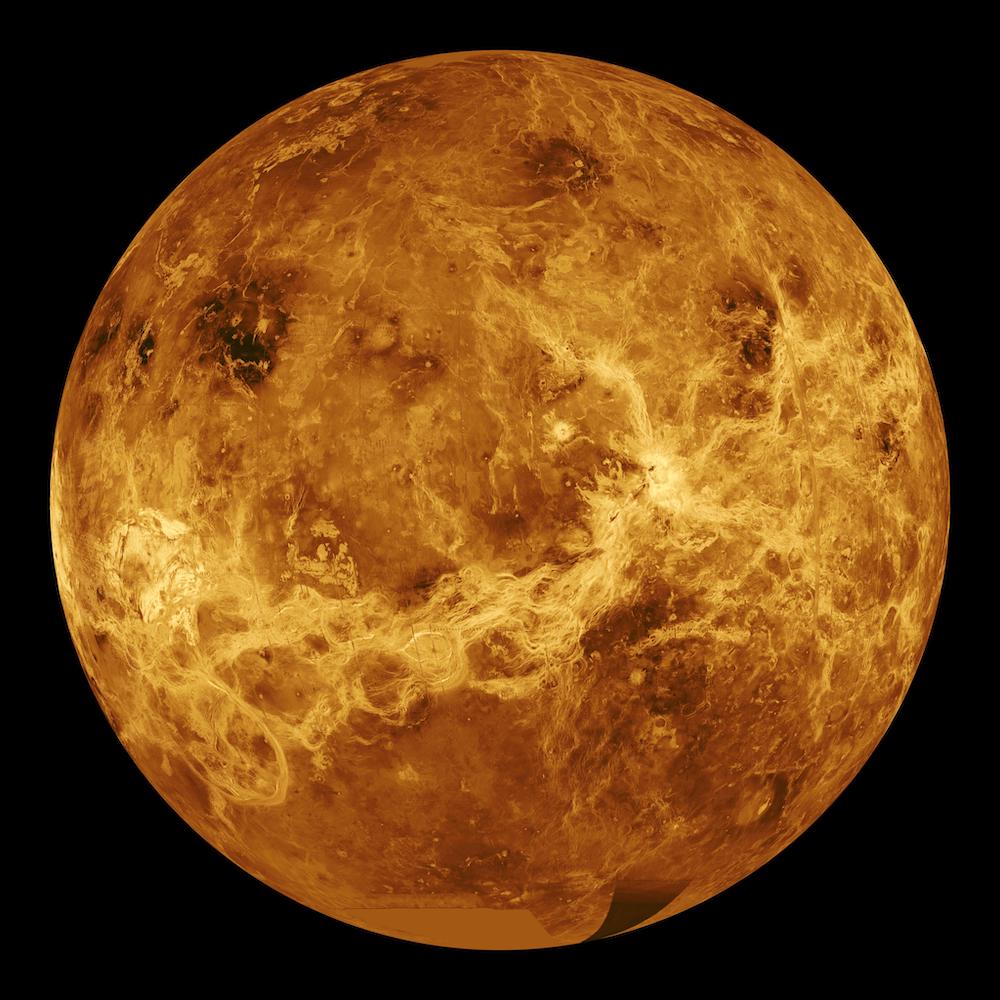
Venus, however, operates under vastly different constraints. It rotates at a glacial pace, completing one full rotation every 243 Earth days, and it does so in a retrograde motion—the opposite direction of its orbital path around the Sun. Because of this slow rotation and the significant gravitational influence of the Sun, the tidal forces acting on a hypothetical Venusian moon would function in reverse. Rather than spiraling outward, any moon orbiting Venus would be drawn inward, spiraling steadily toward the planet’s surface until it eventually collided with the atmosphere.
Chronology of a Theoretical Impact
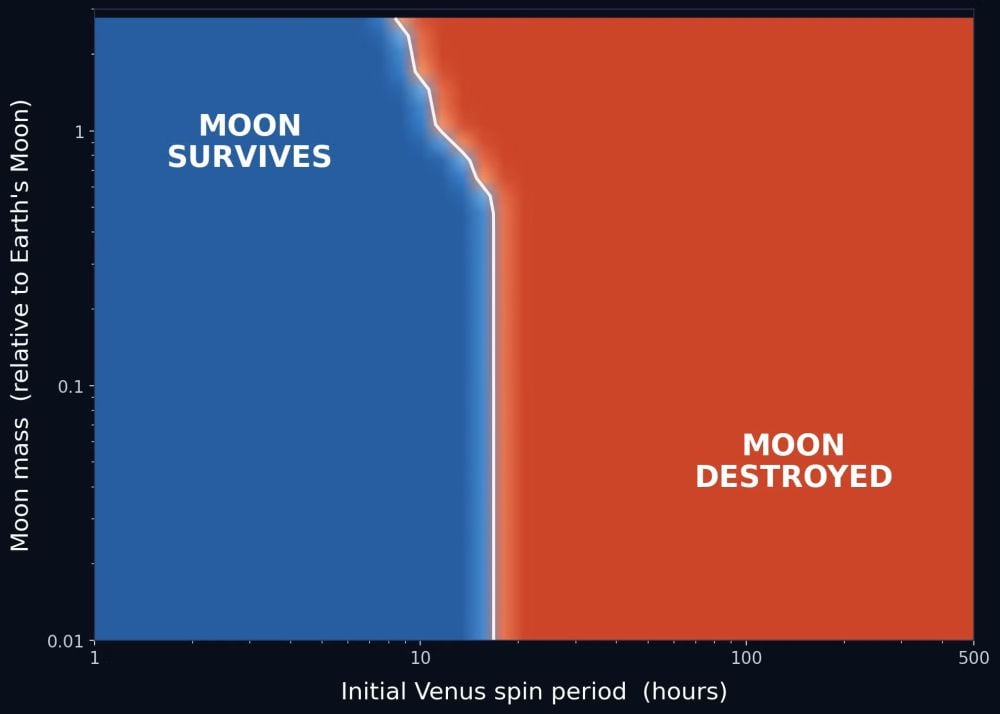
The simulation varied the mass of the hypothetical moon from 0.5 to 10 times the mass of Earth’s Moon, testing various starting conditions for Venus’s rotational speed. Historically, scientists have hypothesized that Venus may have once rotated much faster, potentially following a giant impact event similar to the one believed to have created Earth’s Moon.
The findings were remarkably consistent across nearly all scenarios. In the vast majority of simulations, the hypothetical moon was unable to maintain a stable orbit. The gravitational drag and tidal dissipation caused the satellite to decay rapidly. The researchers found that the more massive the moon, the shorter its lifespan before an inevitable "tidal demise."
"My study shows Venus didn’t require a catastrophe to arrive at what we can see today," said Dr. Kane. "It turns out the gravity of the planet itself, combined with the rate at which it spins, naturally caused the moon to collapse on top of it."
This discovery challenges the long-held assumption that the absence of a moon on Venus must be explained by the absence of a "Moon-forming" impact event. Instead, it suggests that even if such an event occurred and successfully created a moon, the planet’s subsequent rotational evolution would have rendered that satellite ephemeral.
Implications for Early Venusian Habitability
The question of whether Venus ever possessed a moon has profound implications for its historical climate. If Venus once hosted a large satellite, it would have acted as a stabilizing force, preventing the chaotic fluctuations in obliquity (axial tilt) that often plague planets without moons. A stable tilt is a critical component for maintaining a consistent climate and could have potentially allowed for the existence of liquid water on the surface during the planet’s first billion years.
However, the eventual collision of a moon with its host planet would have been a catastrophic event. According to the study, the destruction of a satellite at the Roche limit—the distance within which a celestial body, held together only by its own gravity, will disintegrate due to a second celestial body’s tidal forces—would have delivered a massive pulse of energy to the Venusian surface and atmosphere.
Such an impact would have likely triggered intense global volcanic activity and released a staggering amount of thermal energy. Researchers posit that this event could have been the catalyst for the loss of any surface water, triggering the runaway greenhouse effect that defines the Venus we observe today.
Evidence Beneath the Surface
Detecting geological evidence of an ancient lunar collision is a significant challenge. The surface of Venus is geologically young, with extensive evidence of past volcanic resurfacing that has erased much of the planet’s ancient cratering record. However, scientists are not without hope.
On Earth, seismic evidence of the massive impact that formed our Moon remains buried deep within the mantle. Similar deep-seated geological or seismic signatures might exist on Venus, preserved beneath the basaltic plains. Current and upcoming missions are expected to provide the data necessary to test this hypothesis.
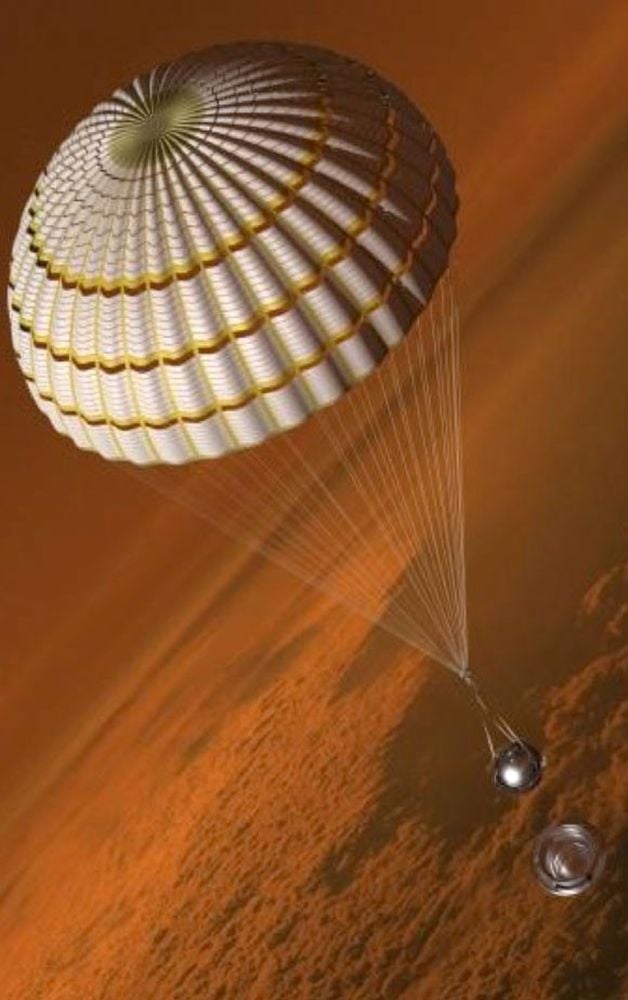
NASA’s DAVINCI (Deep Atmosphere Venus Investigation of Noble gases, Chemistry, and Imaging) mission, which includes an atmospheric entry probe, and the VERITAS (Venus Emissivity, Radio science, InSAR, Topography, and Spectroscopy) mission, which will map the surface in high resolution, are poised to offer unprecedented insights. While these missions are not designed specifically to hunt for moon-impact craters, the data they collect regarding the planet’s tectonic and volcanic history will be essential in determining if a global restructuring event occurred in the deep past.
A Broader Context for Exoplanetary Science
The implications of Dr. Kane’s research extend far beyond our own solar system. As astronomers continue to discover "Venus Zone" exoplanets—terrestrial worlds orbiting close to their host stars—understanding the long-term stability of their satellite systems becomes paramount.
The study concludes that slowly rotating terrestrial planets in the inner regions of planetary systems are generally unlikely to retain large satellites. This lack of a moon significantly affects a planet’s obliquity stability and its long-term capacity to support life. Consequently, the "Venusian scenario"—a planet losing its moon to tidal forces—may be a common evolutionary pathway for many exoplanets across the galaxy.
"The absence of a Venusian moon has long been noted as one of the fascinating puzzles of comparative planetology," the authors noted. By clarifying the physical constraints of satellite survival, this research provides a new lens through which to view the habitability of worlds orbiting distant stars.
While we may never definitively prove that Venus once had a moon, the research provides a compelling narrative of how a planet’s rotation and gravity can fundamentally dictate its destiny. Whether through the slow, steady decay of an orbit or a final, violent impact, the history of Venus remains a cautionary tale of how easily a world can diverge from the path of habitability. As we look toward the next decade of Venus exploration, the scientific community remains focused on deciphering these ancient secrets, one orbital simulation at a time.
Related posts: