NASA’s Nancy Grace Roman Space Telescope Poised for a Historic Two-Decade Journey After Massive Fuel Surplus Extends Lifespan

NASA’s newly launched Nancy Grace Roman Space Telescope has been granted an extraordinary lease on life, with mission planners confirming that the observatory now possesses enough propellant to sustain scientific operations for at least 22 years. This dramatic extension—more than doubling the mission’s original baseline design expectations—is the combined result of a lighter-than-expected spacecraft structure, a precise launch executed by SpaceX, and exceptionally efficient trajectory burns.
Originally slated for a primary mission lasting five years with a hopeful five-year extension, the spacecraft’s unprecedented fuel surplus fundamentally transforms its scientific potential. Instead of retiring in the mid-2030s, the Roman Space Telescope could continue probing the mysteries of the universe until at least 2048, allowing it to generate groundbreaking astronomical data for nearly a quarter of a century.
The Road to the Launchpad and Structural Weight Savings
The journey toward this monumental milestone began years before the spacecraft ever reached the launchpad at Cape Canaveral, Florida. During the early phases of spacecraft design and engineering, mission architects had to establish strict mass budgets to ensure the rocket could successfully lift the observatory out of Earth’s gravity well.
When engineers map out a deep-space mission, they must plan for worst-case mass scenarios. At the onset of the Roman Space Telescope’s development, the maximum allowable mass was capped at 21,605 pounds (9,800 kilograms). Propellant tanks are subsequently sized and filled to accommodate these maximum projections, ensuring that controllers will never find themselves short on fuel during critical orbital maneuvers.
However, as the spacecraft was built, integrated, and rigorously tested at NASA’s Goddard Space Flight Center in Greenbelt, Maryland, engineers discovered that the final assembly came in significantly lighter than anticipated. The fully integrated observatory weighed in at 17,760 pounds (8,065 kilograms)—nearly 4,000 pounds under the original structural budget.
This unexpected mass reduction provided mission controllers with a valuable margin. Because the spacecraft was much lighter than budgeted, engineers were able to fill the propellant tanks to their absolute physical capacity rather than stopping at the volume required for a standard 10-year lifespan. This initial decision immediately expanded the mission’s projected operational longevity to 14 years before the vehicle even cleared the atmosphere.
A Picture-Perfect Liftoff and Historic Trajectory Execution
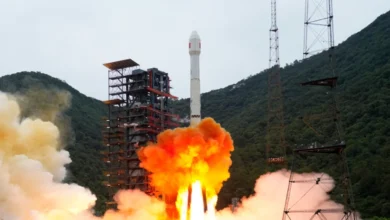
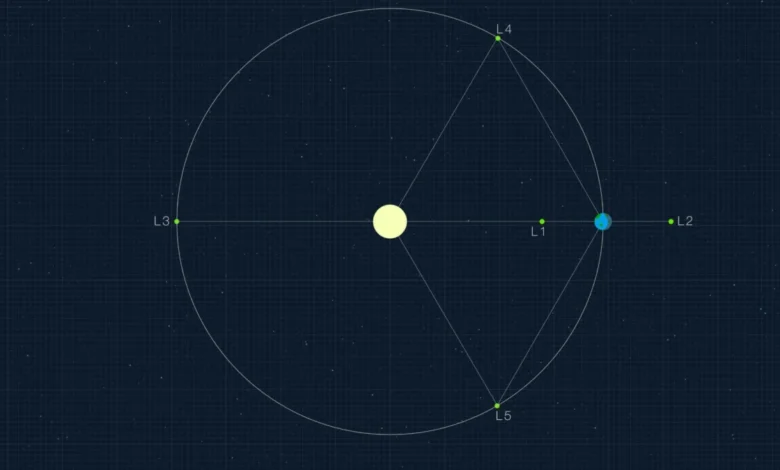
The Nancy Grace Roman Space Telescope lifted off on August 30 aboard a SpaceX launch vehicle, embarking on a clear morning journey that marked the beginning of a new era in astrophysics. The launch itself was described by mission leadership as picture-perfect, placing the observatory precisely onto its intended path toward its ultimate destination: the second Lagrange point (L2).
L2 is a gravitational sweet spot located roughly one million miles (1.5 million kilometers) away from Earth in the direction opposite the sun. It has become a favored parking orbit for premier space observatories, including the James Webb Space Telescope (JWST). Operating at L2 allows spacecraft to maintain a stable thermal environment and an unobstructed view of the deep cosmos, shielded by Earth and the sun from intense thermal radiation.
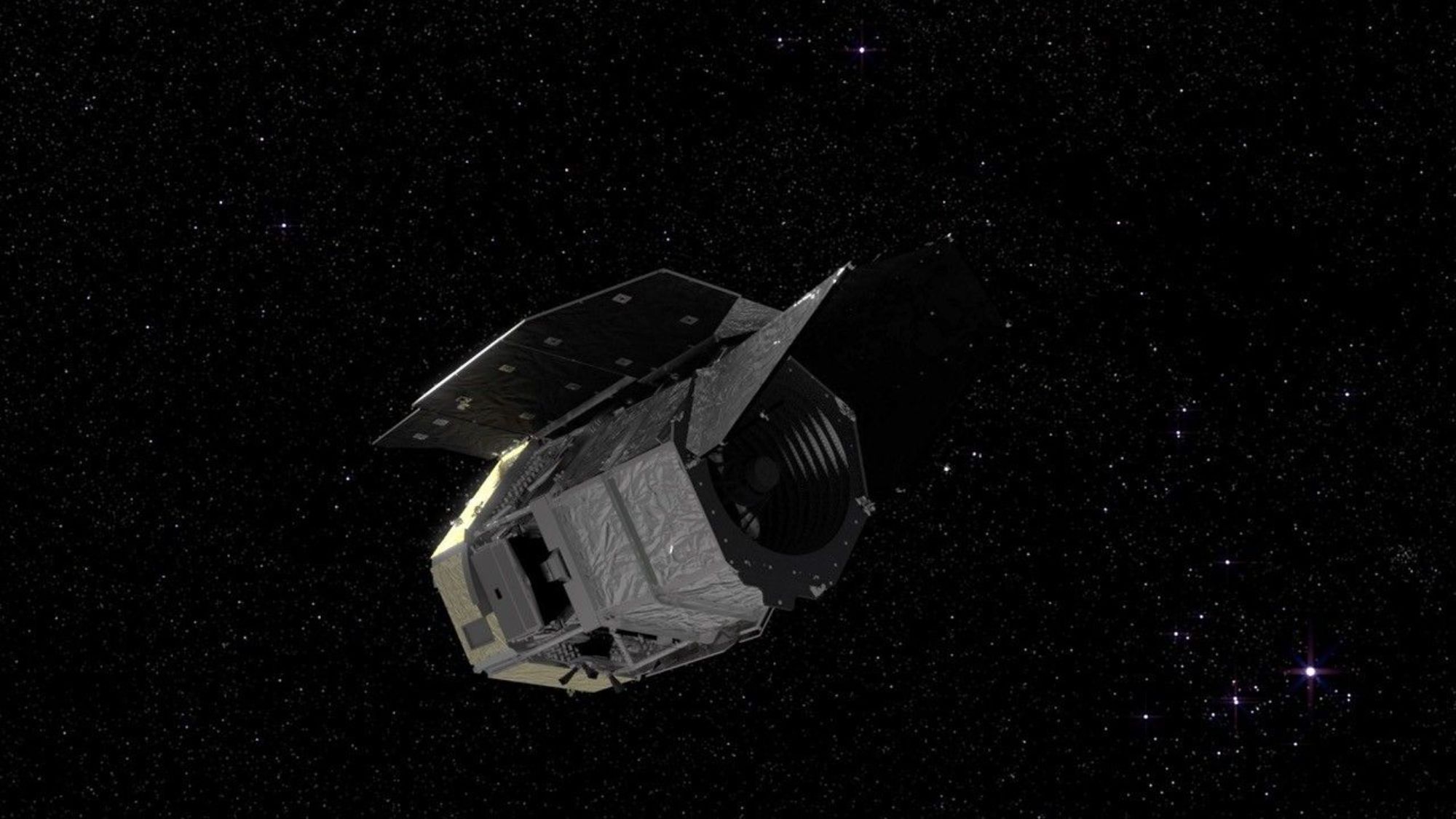
Just one day after liftoff, on August 31, the Roman Space Telescope faced its first critical test: a major engine burn designed to inject the observatory onto its precise transfer trajectory toward L2. Mission controllers held their breath as the thrusters fired for approximately three minutes.
The execution exceeded all mathematical models. The maneuver was conducted with an astonishing 99% accuracy, proving remarkably more efficient than predicted. While mission planners had budgeted 441 pounds (200 kilograms) of fuel for the initial injection burn, the actual maneuver consumed a mere 40 pounds (18 kilograms)—less than 10% of the allocated amount.
This single, highly efficient burn preserved enough fuel to extend the telescope’s operational life by an additional four years, bringing its projected lifespan to 18 years.
Compound Savings and Future Orbital Adjustments
The compounding benefits of precision spaceflight engineering do not stop there. Because the initial trajectory insertion required so little corrective energy, the subsequent trajectory correction maneuver—scheduled to insert the spacecraft into its final halo orbit around L2 in early December—will also require significantly less fuel than initially calculated.
NASA propulsion experts estimate that this second major efficiency gain will add another four years to the telescope’s operational timeline, pushing the total potential lifespan to an astounding 22 years.
Once the Roman Space Telescope officially settles into its permanent orbital station at L2, station-keeping requirements will drop to a nominal level. The spacecraft will only need minor thruster burns once every 28 days to maintain its stable position relative to the Earth and sun. These routine maintenance maneuvers consume a negligible fraction of propellant, meaning that barring any unforeseen hardware failures or component degradation, the observatory’s scientific instruments can remain active for decades.
Official Reactions and Institutional Praise
The unprecedented efficiency of the launch and transit phases drew high praise from leadership across NASA and its partner institutions.
"As a result of exquisite planning by our orbital dynamics team, brilliant execution by the operations team, and a precise launch from SpaceX, Roman has fuel for at least 22 years of potential science operations," said Jamie Dunn, center director at NASA’s Goddard Space Flight Center, in an official agency statement.
Alison Rao, who leads the Roman propulsion systems team at NASA Goddard, elaborated on the meticulous tracking procedures that made the milestone possible.
"A spacecraft’s mass changes throughout the design and build process, so we base the propellant on a set maximum value so we won’t come up short," Rao explained. "We track the propellant needed based on actual mass throughout integration and testing as well, to make sure we have wiggle room. Since Roman’s mass was lower than we budgeted for, we were able to fill the propellant tanks to their capacity rather than only filling them as much as we needed to for the 10-year requirement."
Scientific Implications: Unlocking the Secrets of Dark Energy and Exoplanets
The decision by NASA to name the observatory after Nancy Grace Roman, the agency’s first chief astronomer widely remembered as the "Mother of Hubble," carries symbolic weight as the telescope prepares to revolutionize our understanding of the universe. With a lifespan extended well into the 2040s, the mission now has the structural and logistical endurance to fulfill and exceed its ambitious scientific mandate.
The Roman Space Telescope is primarily designed to address two of the most profound mysteries in modern astrophysics: dark energy and exoplanet demographics. Dark energy is the mysterious, repulsive force driving the accelerated expansion of the universe, making up roughly 68% of total cosmic composition. By conducting wide-field imaging and spectroscopic surveys covering vast swaths of the sky, Roman will map the distribution of galaxies and galaxy clusters across cosmic time, helping physicists determine whether dark energy is a constant property of space or a dynamic field that changes over eons.
In addition to cosmology, the telescope will serve as a premier exoplanet hunter. Equipped with a wide-field instrument boasting a field of view 100 times greater than the Hubble Space Telescope’s infrared instrument, Roman will survey the central bulge of our Milky Way galaxy to discover thousands of distant planets via gravitational microlensing. Furthermore, a specialized technological demonstration instrument aboard the spacecraft—a coronagraphic instrument—will attempt to directly image giant exoplanets, paving the way for future flagship missions designed to search for habitable worlds.
Broader Impact on Astrophysics and Long-Term Research
The extension of the Roman Space Telescope’s mission profile arrives at a crucial juncture for international space exploration. As space agencies increasingly focus on long-term, high-yield infrastructure in deep space, missions designed for multi-decade operations maximize the return on taxpayer investment.
With a projected timeline running through 2048, the Roman Space Telescope will operate in tandem with other advanced observatories, potentially overlapping with future successor missions currently in conceptual development. The wealth of archival data generated by its wide-field surveys will feed astronomical research well into the middle of the 21st century, providing graduate students, astrophysicists, and planetary scientists with an unprecedented volume of high-resolution data to analyze.
As the spacecraft continues its quiet, highly efficient cruise toward the second Lagrange point ahead of its December orbital insertion, the global scientific community watches with growing anticipation. What began as a projected decade-long exploration of the cosmos has evolved, through engineering precision and stellar orbital mechanics, into a multi-generational quest to decode the fundamental laws of the universe.