Level-5 President and CEO Akihiro Hino Confirms Generative AI Usage in Digital Showcase Following Fan Backlash

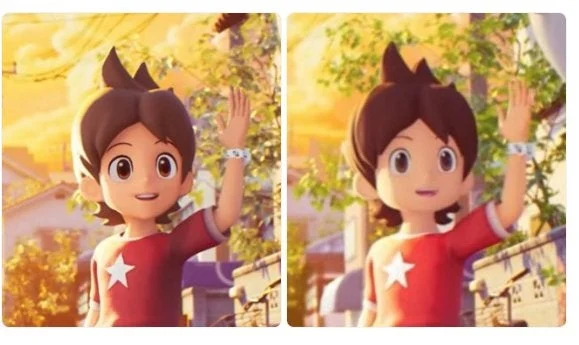
The modern video game industry finds itself at a persistent and delicate crossroads between technological innovation and consumer sentiment. This tension was vividly demonstrated recently when prominent Japanese game developer Level-5 hosted its highly anticipated digital showcase. Designed to generate excitement for major franchise returns including Professor Layton, Decapolice, and Yo-Kai Watch, the event instead ignited a heated controversy across social media platforms. Sharp-eyed fans quickly identified what they suspected to be undisclosed generative artificial intelligence within the presentation materials, sparking immediate debate over the ethical boundaries of AI in creative media. In response to the rising tide of public criticism, Level-5 President and Chief Executive Officer Akihiro Hino issued a formal statement acknowledging the studio’s use of generative AI tools for the event’s broadcast footage, while simultaneously moving to reassure the gaming community regarding the core development of the studio’s upcoming intellectual properties.
The Digital Showcase and Immediate Community Backlash
The controversy originated directly from Level-5’s broadcast event, which had initially been heralded by the gaming community as a triumphant comeback for several beloved franchises. Fans who had waited years for updates on titles like Professor Layton and the New World of Steam tuned in with high expectations. However, rather than focusing purely on the gameplay reveals and narrative teases, viewers quickly noticed unusual visual artifacts, inconsistent character renderings, and stylized transitional elements that bore the distinct hallmarks of current-generation AI video and image generation tools.
Within hours of the broadcast concluding, community spaces on platforms such as X (formerly Twitter), Reddit, and various gaming forums were flooded with criticism. Fans expressed deep disappointment, arguing that the reliance on generative AI undermined the artistic integrity and hand-crafted charm that had defined Level-5’s titles for decades. One prominent user voiced a sentiment shared by many, stating that while the announcement of the studio’s major franchise revivals was initially exhilarating, the visible presence of blatant generative AI across the promotional material created an immediate sense of alienation and distrust.
Official Response and Clarification from Leadership
Confronted with mounting discontent, Akihiro Hino took to social media to address the community directly. Translating the official Japanese statements, Hino confirmed that generative AI had indeed been incorporated into the production of the showcase footage. He explained that the primary motivation behind utilizing the technology was an aspiration to make the presentation more dynamic, visually striking, and spectacular for viewers tuning in from around the globe.
However, Hino also acknowledged the validity of the audience’s discomfort and offered an unreserved apology for the anxiety the visuals caused. He clarified that the experiment with cutting-edge AI processing was intended solely to elevate the presentation quality of the event itself, rather than to signal a wholesale shift in how the studio’s games are designed.
To alleviate fears that Level-5 was abandoning traditional development practices, Hino emphasized a clear distinction between promotional broadcast assets and the actual video games currently in production. He explicitly stated that all core creative elements—including narrative scenarios, character designs, and fundamental world-building settings—continue to be crafted entirely by human artists, writers, and designers.

The Technological Strategy: Efficiency Versus Creative Authenticity
Hino elaborated on how Level-5 intends to integrate emerging technologies into its workflow moving forward. The studio’s strategic exploration of artificial intelligence is fundamentally centered on operational efficiency rather than the wholesale generation of creative content. Specifically, Hino pointed to the digitization and translation of human-made creative works into digital assets, such as accurately converting original human-drawn artwork into polygonal models, as the primary utility for AI within their pipelines.
Furthermore, Hino contextualized the use of experimental technologies within the broader operational challenges facing the studio. Level-5 has publicly committed to streamlining its internal development cycles, aiming to reduce the traditional timeline for major game production from an arduous five years down to a more sustainable two-year window. In an industry grappling ballooning budgets, escalating development costs, and extended production schedules, studios are increasingly pressured to explore technological solutions that can accelerate output. Hino admitted, however, that in their enthusiasm to craft a flashy, high-impact presentation for the showcase, the studio experimented with AI across a wider variety of applications than intended, resulting in a miscalculation of how the audience would receive it. He pledged that Level-5 would treat the backlash as a valuable learning experience for future public presentations.
Industry-Wide Context: The Push Toward AI in Gaming
Level-5’s recent experience is far from an isolated incident. The broader interactive entertainment sector is currently undergoing a massive structural shift toward the adoption of artificial intelligence at various stages of business operations and game development. Major publishers worldwide are actively integrating AI-driven systems into their pipelines, driven by the promise of reduced costs and accelerated timelines.
Recent industry reports and corporate announcements highlight this pervasive trend:
- Krafton: The publisher behind PUBG and InZOI has formally declared itself an "AI-first" company, positioning machine learning and artificial intelligence at the very center of its problem-solving and game design methodologies.
- Square Enix: Following previous corporate investments in experimental technologies like NFTs and the metaverse, Square Enix shifted its focus toward generative AI, explicitly stating a corporate goal to utilize AI to handle up to 70 percent of its quality assurance (QA) processes by 2027.
- Electronic Arts (EA): Leadership at EA has publicly asserted that artificial intelligence sits at the very core of its current and future business strategy, utilizing machine learning tools to optimize everything from player analytics to asset generation.
- Broader Market Adoption: Industry surveys, such as data compiled by the organizers of the Tokyo Game Show, indicate that over half of Japanese game development companies are already utilizing some form of AI in their development pipelines, reflecting a national and international race to remain competitive in a rapidly evolving technological landscape.
Implications and Future Outlook
The incident involving Level-5 underscores a profound philosophical divide in modern entertainment between corporate efficiency and consumer expectations. While corporate leadership views artificial intelligence as an essential tool to combat soaring development costs and lengthy production schedules, consumers and creative professionals frequently view the technology through a lens of authenticity, artistic ownership, and labor ethics.
For Level-5, the immediate challenge lies in rebuilding and maintaining trust with a passionate fanbase that holds the studio’s classic franchises—such as Professor Layton and Yo-Kai Watch—in high regard. By drawing a firm line between promotional event assets and human-authored game content, Hino has attempted to draw a boundary that reassures players that the soul of their favorite games remains untouched by algorithms.
As the video game industry continues to navigate the uncharted waters of generative artificial intelligence, the response to Level-5’s showcase serves as a cautionary tale for publishers worldwide. Transparent communication, careful management of audience expectations, and a clear respect for human craftsmanship will remain critical factors in determining how successfully new technologies are integrated into the creative arts. Level-5’s commitment to treating this controversy as a learning opportunity will be tested when the studio hosts its next public presentation, where the gaming community will undoubtedly be watching closely for any sign of change in the studio’s approach.