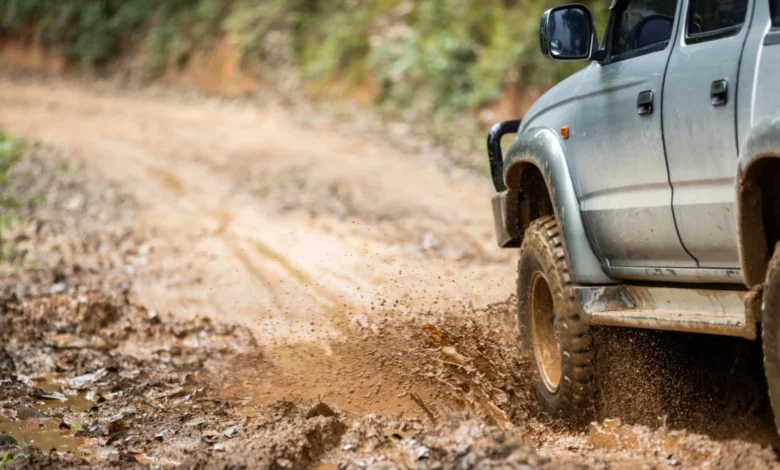
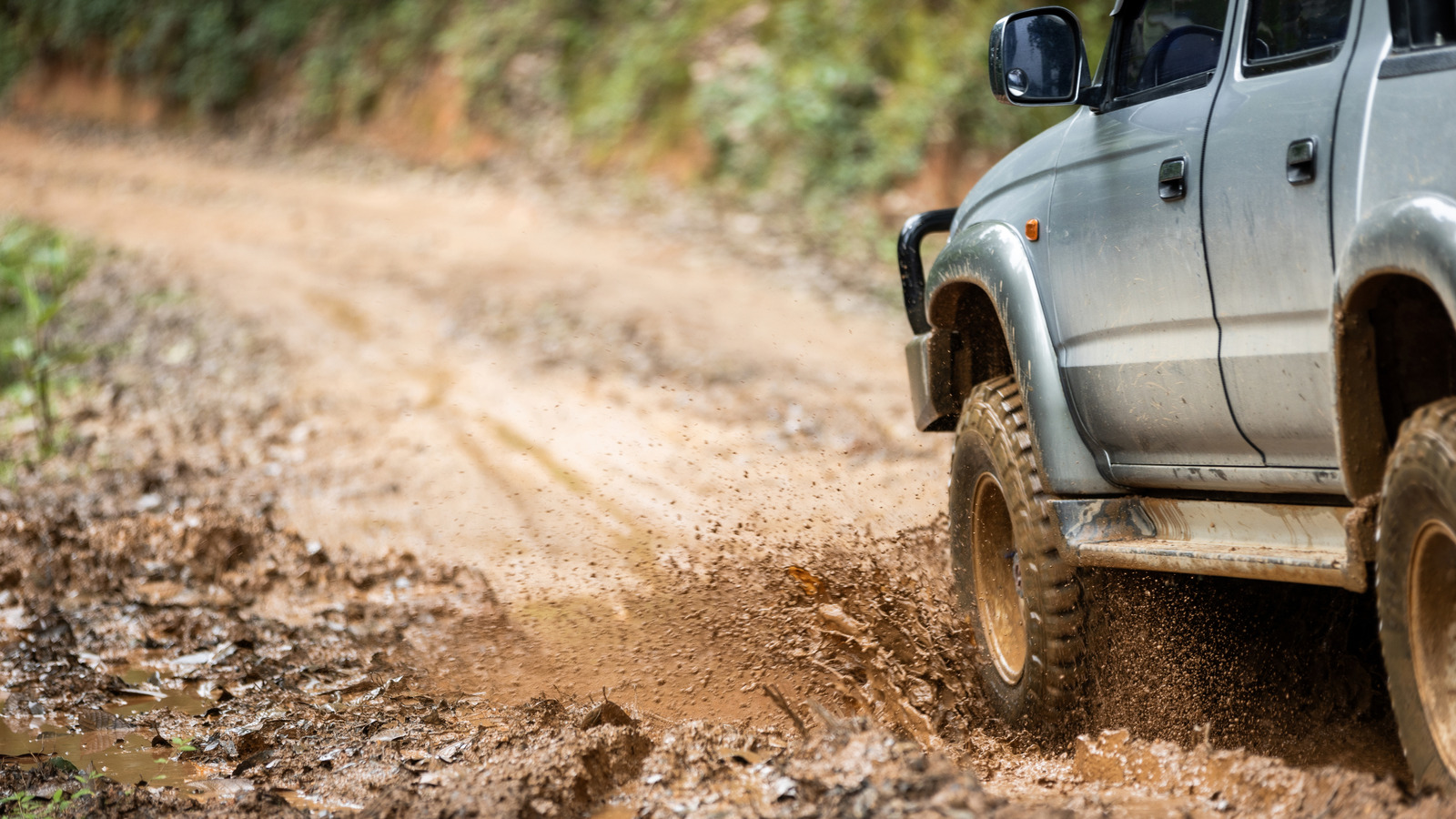
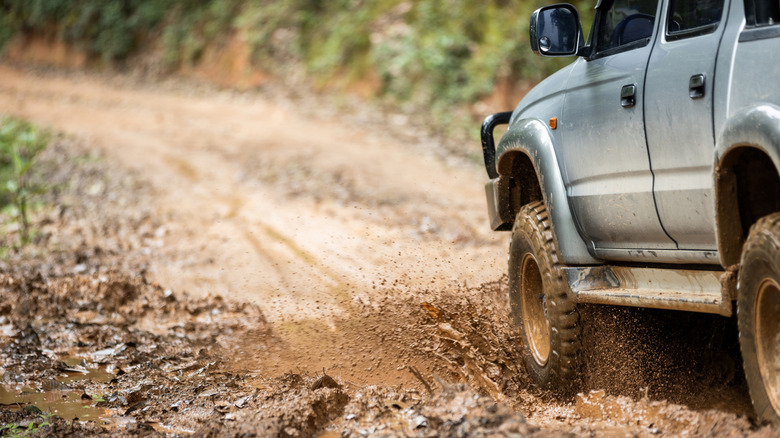
The automotive landscape in the United States has undergone a significant transformation, with Sport Utility Vehicles (SUVs) now dominating sales figures. Data indicates that over half of all new vehicles sold in the past year were SUVs, making them the most popular vehicle type in 48 out of 50 American states. This surge in popularity is often attributed to factors such as a commanding seating position, increased interior space, and a perception of robust performance, with some models even exceeding 1,000 horsepower. However, the widespread adoption of SUVs has fostered a common misconception: that all models within this category are inherently capable of tackling challenging off-road terrain. While the allure of extra ground clearance and the promise of adventure are strong, market research from Capital One reveals that 98% of SUV and crossover buyers engage in off-roading only once a year at most, suggesting that for most owners, true off-road capability is rarely utilized.
Despite this infrequent use, the expectation that an SUV could handle rough paths persists. The reality, however, is far more nuanced. Not every SUV is engineered for the rigors of unpaved trails, steep ascents, or rocky obstacles. In fact, many popular models, some even boasting significant luxury or advanced technology, are ill-suited for such environments. Attempting to navigate demanding off-road conditions in these vehicles can lead to substantial financial penalties through accelerated depreciation, costly repairs, and potential safety hazards. This article delves into a selection of SUVs that, for various technical and economic reasons, are best kept on paved roads.
The Luxury Paradox: When Off-Road Capability Meets Economic Risk
The top tier of the SUV market features vehicles that, on paper, possess certain attributes seemingly conducive to off-roading. However, their primary design brief revolves around unparalleled luxury, comfort, and status, rendering off-road excursions economically imprudent.
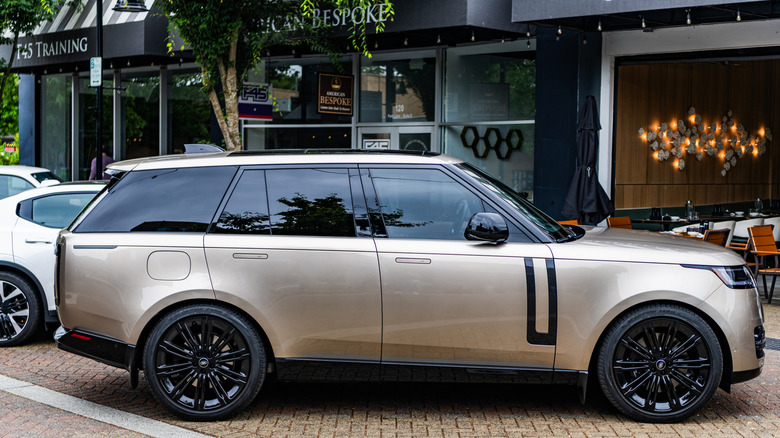
Land Rover Range Rover
The Land Rover Range Rover, an icon often associated with rugged exploration, paradoxically finds itself on this list, not due to a lack of intrinsic capability but because of the severe economic implications of pushing it beyond its intended luxury confines. Modern Range Rovers, such as the 2026 P530, are equipped with sophisticated air suspension systems that have been a hallmark since 1994, offering a commendable 8.6 inches of ground clearance. Its 523-horsepower twin-turbo V8 powertrain enables an impressive towing capacity of up to 8,200 pounds, making it theoretically capable of traversing challenging landscapes with ease, perhaps even towing a travel trailer into remote wilderness.
The critical deterrent, however, lies in its luxury vehicle status. Maintenance costs for a Range Rover are already significantly high, with CarEdge estimating expenditures upwards of $6,500 over the first five years of ownership, coupled with a roughly 24% chance of needing major repairs. Engaging in off-roading dramatically escalates the risk of damage—from scrapes on rocker panels to wear on the sophisticated air suspension components. Given that Range Rovers already suffer from considerable depreciation, losing an estimated 74% of their value after five years, any additional wear and tear from off-road adventures would further erode resale value, making it an economically unsound decision to take it off-pavement.
Rolls-Royce Cullinan
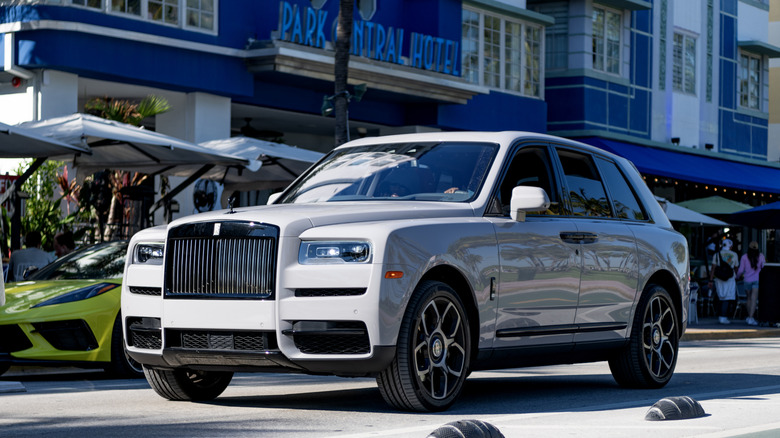
Elevating the concept of luxury SUV to its zenith, the Rolls-Royce Cullinan embodies opulence and exclusivity. Like the Range Rover, it possesses features that might suggest off-road prowess, including an adaptive suspension system that can raise the vehicle to nine inches of ground clearance in its off-road setting. However, the Cullinan’s true purpose is to deliver an unrivaled, serene driving experience, prioritizing comfort and prestige above all else.
While its depreciation rate of 40-45% over five years is better than the Range Rover’s, the sheer cost of the vehicle—and consequently, any repairs—makes off-roading an extreme financial gamble. A single scratch from a loose rock on a rough trail could easily translate into hundreds of thousands of dollars in lost resale value, not to mention the exorbitant cost of specialized bodywork and paint repair. Rolls-Royce vehicles are purchased for the image they project, an image of pristine luxury. A damaged or excessively worn Cullinan would severely undermine this appeal, drastically reducing its market value. For an owner, preserving the vehicle’s immaculate condition is paramount, making off-road excursions entirely contradictory to its economic and aesthetic purpose.
Lamborghini Urus
Lamborghini’s second SUV, the Urus, has been a phenomenal commercial success, accounting for 60% of the brand’s sales in 2023. It presents a more aggressive, performance-oriented aesthetic than its luxury counterparts. While its adaptive air suspension allows for a ground clearance ranging from a minimum of 6.2 inches to a substantial 9.8 inches, suggesting some versatility, the Urus is fundamentally a high-performance sports car in SUV form.
The primary limitation for off-roading stems from its high-performance, low-profile tires. These tires, optimized for grip and responsiveness on smooth pavement, feature inflexible sidewalls and a stiff tread pattern that are highly susceptible to damage from sharp rocks, potholes, or uneven surfaces encountered off-road. Furthermore, similar to the Cullinan, the cost of repair for any damage sustained—whether cosmetic or mechanical—can quickly run into tens of thousands of dollars. While technically capable of navigating some unpaved paths, the economic risk of damaging such an exclusive and high-value vehicle outweighs any potential off-road benefit, making it a pavement-bound supercar.
Crossover Compromises: Urban Design vs. Wilderness Demands
Many contemporary SUVs, particularly compact and mid-size crossovers, are designed primarily for urban and suburban environments. Their engineering prioritizes fuel efficiency, on-road comfort, and family utility over rugged off-road capability.
Maserati Levante
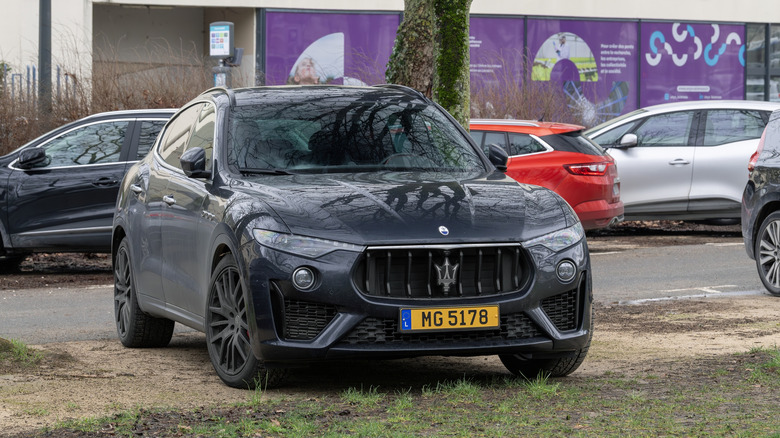
The Maserati Levante, discontinued in 2024, is another luxury SUV where off-roading is ill-advised. While used models may appear to offer a bargain due to initial depreciation, their design compromises for performance and style clash with off-road demands. A standard Levante trim offers approximately eight inches of ground clearance, which is already somewhat low for challenging terrain. Compounding this issue are its low-profile tires, which, like those on the Urus, have short sidewalls and are highly vulnerable to damage from bumps and sharp objects. A flat tire or undercarriage scrape, potentially costing upwards of $3,500 for paint and panel repair, is a distinct possibility on rough trails.
Mechanically, the Levante’s All-Wheel Drive (AWD) system, while adequate for light trails and adverse weather, lacks a dedicated low-range transfer case. This critical component is essential for rock crawling and safely ascending steep obstacles in a controlled manner, where precise torque delivery at low speeds is required. Without it, the Levante cannot reliably navigate genuinely rugged terrain, making serious off-roading a risky proposition.
Honda CR-V
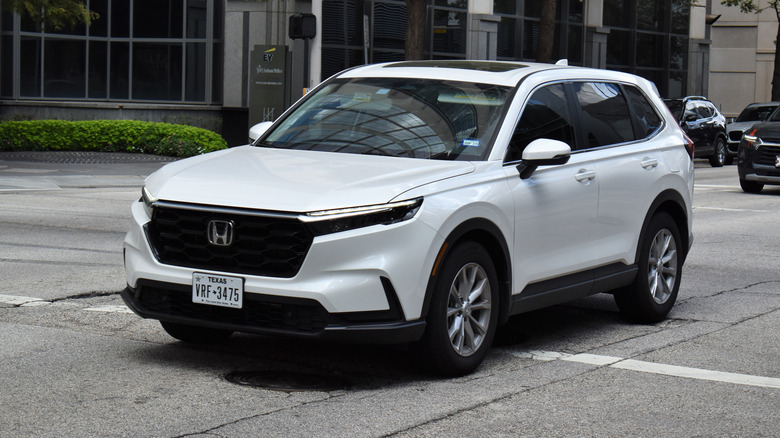
The Honda CR-V stands as America’s best-selling SUV for the first half of 2026, lauded for its reliability and practicality. While it’s a sturdy vehicle with a reputation for longevity, its design is firmly rooted in family utility, not off-road adventure. The 2026 model offers FWD and AWD drivetrains, with ground clearances of 7.8 inches and 8.2 inches, respectively. These figures are low, leaving the undercarriage vulnerable to scrapes from rocks and debris.
A significant concern is the CR-V’s plastic underbody shield, which offers minimal protection compared to the metal or aluminum skid plates found on true off-road vehicles. Even the newly introduced TrailSport trim, marketed as the CR-V’s toughest, features only a "skid garnish"—a decorative silver trim piece rather than a functional protective plate. While the TrailSport does include 18-inch wheels with all-terrain tires for improved grip, the fundamental limitations of its low unibody design and reactive AWD system mean it remains unsuitable for anything beyond very light, well-maintained trails.
Mazda CX-5
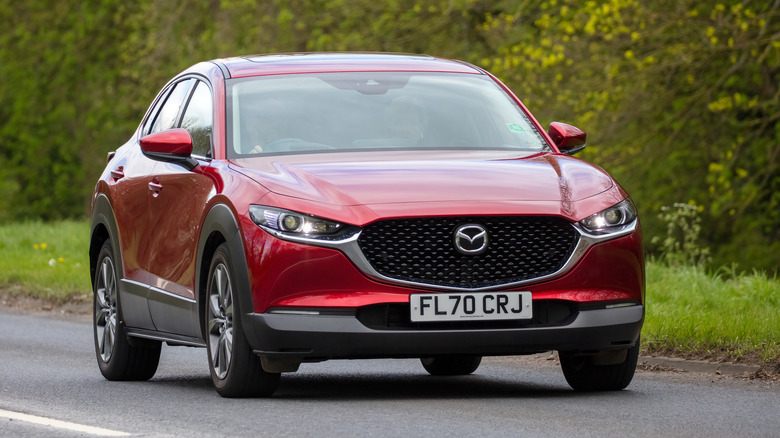
The Mazda CX-5, Mazda’s global best-seller, shares many characteristics with the CR-V in terms of its suitability for off-roading. Its ground clearance, ranging from 7.6 to 7.9 inches depending on trim and drivetrain, is slightly lower than the CR-V’s, further increasing the risk of undercarriage damage on uneven surfaces.
The CX-5’s i-ACTIV AWD system is more proactive than some reactive AWD systems, using 27 sensors to anticipate and shift torque before slippage occurs. This is highly effective for improving traction on wet roads or during highway acceleration. However, like the CR-V, it lacks a low-range transfer case, which is a significant drawback for slow, controlled navigation over obstacles. Mazda itself acknowledges that in challenging terrain where diagonally opposite wheels might lose contact, even its torque coupling system may not be sufficient. While capable on light trails or snowy paths, the CX-5’s design and drivetrain are not engineered for the demands of serious off-roading, where sustained traction and precise power delivery are paramount.
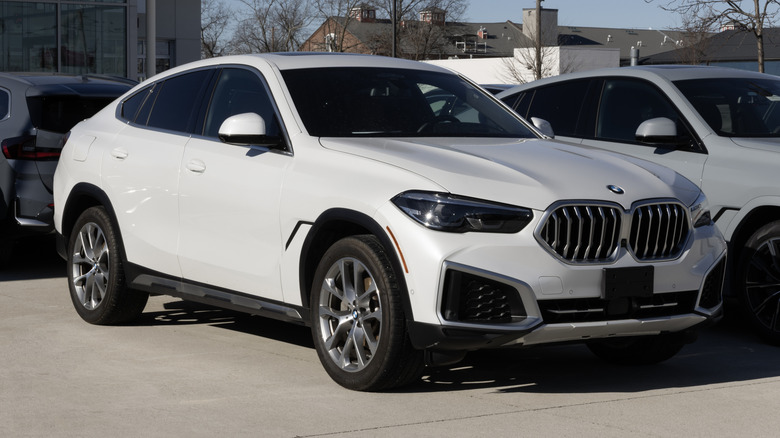
BMW X6
The BMW X6, conceived as a sportier, coupe-like variant of the X5, sacrifices some practicality for its distinctive aesthetic. This design philosophy also impacts its off-road capability. While it shares platforms and powertrains with the more traditional X5, the X6’s sleeker profile results in a slightly lower ground clearance (8.1 inches for the 2026 model compared to the X5’s 8.3 inches).
This seemingly small difference has tangible implications for critical off-road metrics, particularly approach angles. The X6 has an approach angle of 21.7 degrees, significantly shallower than the X5’s 25.2 degrees. This means the X6 is more prone to scraping its front bumper or undercarriage when attempting to climb steep inclines or large rocks head-on. Despite potentially better departure angles, the combination of a lower body frame and a compromised approach angle makes the X6 less suitable for the precise navigation required on rocky paths, increasing the likelihood of expensive bodywork damage.
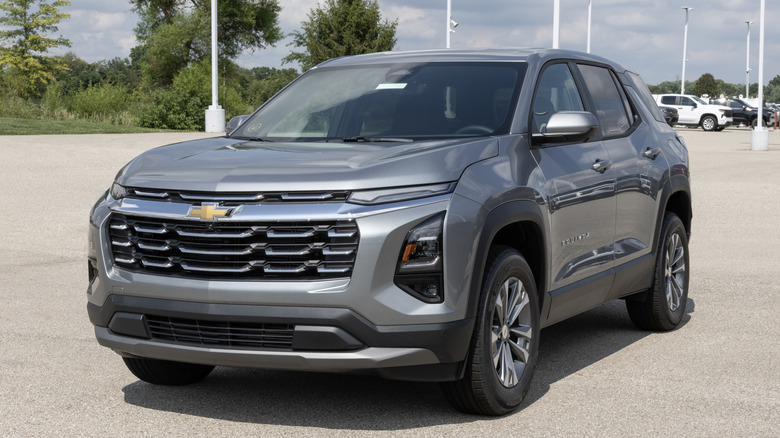
Chevrolet Equinox
The Chevrolet Equinox, with a 2026 ground clearance of 8.05 inches, appears to offer a reasonable height. However, its history and design philosophy indicate it is not built for off-road stresses. Consumer Reports and owner feedback frequently highlight issues with the Equinox’s handling, particularly when navigating bends, high peaks, and low troughs. This lack of confident handling is a critical deficiency for off-road driving, where precise control and stability are paramount.
Furthermore, the Equinox’s maximum towing capacity—a subtle but telling indicator of a vehicle’s structural integrity and powertrain robustness—is remarkably low. FWD models can tow only 800 lbs, with AWD versions reaching 1,500 lbs. This pales in comparison to many compact SUVs that can safely tow between 5,000 and 7,000 lbs, clearly signaling that the Equinox was not engineered to withstand the significant strains associated with off-roading or heavy utility.
Volkswagen Tiguan
Among the lowest-slung SUVs on this list, the 2026 Volkswagen Tiguan offers a mere seven inches of ground clearance in its standard configuration. This figure is notably less than even other compact crossovers like the Mazda CX-5. Such a low stance immediately suggests that off-road capability was not a design priority for Volkswagen.
Further reinforcing this inference is the Tiguan’s 4Motion AWD system. While it dynamically distributes torque based on various factors and offers drive modes for snow, on-road, off-road, and custom off-road settings, it critically lacks low-range gearing. This omission severely limits its ability to tackle challenging obstacles where controlled, high-torque, low-speed power delivery is essential. While the Tiguan might suffice on moderate, well-maintained gravel paths, venturing into rougher terrain would likely lead to frequent underbody scraping and a lack of reliable traction. Owners considering frequent off-roading would need extensive modifications, including a lift kit, but even then, the fundamental drivetrain limitations would persist.
Kia Sportage
The Kia Sportage, particularly in its lower trims, presents similar limitations to the Volkswagen Tiguan, with its lowest trim offering a mere 7.1 inches of ground clearance. While the SX-Prestige trim boosts this to 8.3 inches, the overall design still compromises off-road robustness.
A significant vulnerability for non-X-Pro Sportage trims is the inadequate underbody protection. The front and rear "skid plates" are made of plastic, offering only light-duty protection against impacts. In contrast, genuine off-road vehicles feature robust steel or aluminum skid plates designed to shield critical components like the oil pan, steering gear, and transmission from significant impacts. The Sportage’s exposed MacPherson struts in the front and multi-link system in the rear mean that vital suspension components, including lower control arms, multi-link arms, and sway bar links, are left vulnerable to damage from rocks and debris. Even the X-Pro trims, with their increased clearance, are hindered by the absence of solid underbody protection, as highlighted by reviews from TheCarConnection, discouraging serious rock-climbing ambitions.
Ford Escape
Rounding out this list, the Ford Escape, with 2026 model ground clearance ranging from 7.5 to 8.2 inches (and as low as 6.9 inches for its hybrid trim), is another compact SUV not designed for demanding off-road conditions. Its AWD system is primarily reactive, engaging only when wheel slip is detected, likely to optimize fuel economy.
This reactive AWD system, while providing adequate traction in typical slippery conditions like rain, snow, or gravel, falls short in true off-roading scenarios. It lacks crucial features such as a locking rear differential or a two-speed transfer case. These components are vital for directing power precisely to specific wheels when navigating uneven, loose terrain or when one or more wheels lose traction. Without them, the Escape cannot reliably extricate itself from challenging situations. While it might handle a bumpy, unpaved road to a campsite, attempting serious off-roading would almost certainly result in damage to the vehicle’s underbody or drivetrain.
Electric Vehicles and Off-Roading: The Tesla Model X Conundrum
Electric Vehicles (EVs) introduce a unique set of considerations for off-roading, particularly concerning battery protection and weight distribution.
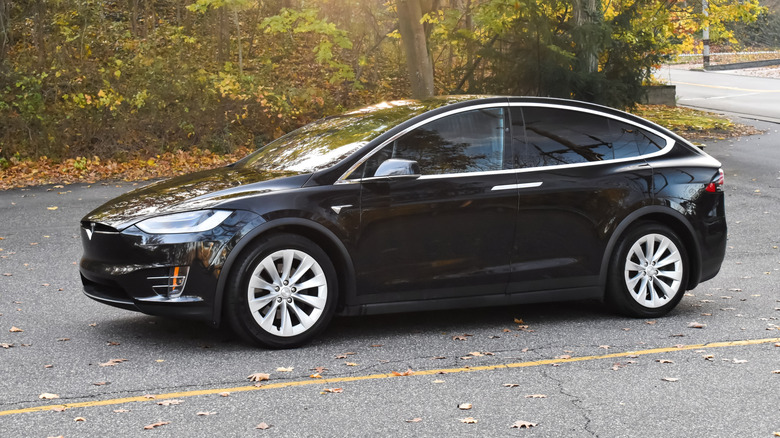
Tesla Model X
The Tesla Model X, especially its Plaid trim with a staggering 1,020 horsepower from its tri-motor powertrain, showcases immense power. However, raw horsepower does not automatically translate to off-road prowess. The Model X’s adaptive air suspension allows for adjustable ground clearance, with settings at 5.7, 6.6, and 8.1 inches. While the maximum setting offers decent clearance, the critical vulnerability lies in its battery pack.
The Model X’s battery is integrated into the floor of the chassis, a design choice that maximizes range and enhances stability by lowering the center of gravity. However, this placement makes the battery highly susceptible to impacts from rocks and uneven terrain during off-roading. Although the battery pack is protected by a reinforced enclosure, a significant impact to the underbody could still cause damage. While rare, damage to EV batteries can lead to thermal runaway and fire, presenting a severe safety risk. Therefore, despite its power, the Model X is best kept on paved or very well-maintained unpaved surfaces to mitigate the risk of catastrophic battery damage. In contrast, purpose-built electric off-roaders like the Rivian R1S or GMC Hummer EV feature significantly more robust underbody protection and often higher ground clearance, specifically designed to shield their batteries in extreme conditions.
Key Limitations Summarized: Why These SUVs Fall Short
The common threads running through these vehicles’ unsuitability for off-roading are primarily rooted in their design priorities, which favor on-road performance, luxury, or urban utility over rugged durability.
- Low Ground Clearance: Many models, particularly crossovers like the Tiguan (7 inches) and lower trims of the Sportage (7.1 inches), simply do not have enough vertical distance from the ground to clear obstacles without scraping the undercarriage. Even higher clearances like the Equinox’s 8.05 inches are often insufficient for truly challenging terrain.
- Inadequate Drivetrains: Most vehicles on this list rely on All-Wheel Drive (AWD) systems that are reactive (engaging only upon slip) or primarily designed for enhanced traction on slippery roads. They lack the crucial low-range transfer cases and locking differentials found in dedicated 4WD systems, which are essential for precise, high-torque, low-speed control over rocks and steep grades.
- Vulnerable Underbody Protection: Many crossovers feature plastic skid plates or "skid garnishes" that offer cosmetic appeal rather than robust protection. Critical components like oil pans, transmissions, suspension arms, and EV battery packs are left exposed to damage from impacts, leading to expensive repairs.
- Street-Oriented Tires: Luxury and urban SUVs often come equipped with low-profile, performance-oriented tires with stiff sidewalls. While excellent for handling on pavement, these tires are highly prone to punctures and sidewall damage on rough, uneven surfaces.
- Economic Disincentives: For luxury models like the Range Rover, Cullinan, and Urus, the primary deterrent is the immense financial risk. Off-roading significantly increases the likelihood of cosmetic and mechanical damage, which can lead to catastrophic depreciation and exorbitantly high repair costs, undermining the very value proposition of these high-end vehicles.
- Compromised Geometry: Vehicles like the BMW X6, with its sportier design, often have compromised approach and departure angles, making them prone to scraping bumpers or underpinnings when attempting to ascend or descend obstacles.
In conclusion, while the SUV market continues to flourish, it is crucial for consumers to understand that the term "SUV" encompasses a vast spectrum of vehicles with vastly different capabilities. For those genuinely seeking off-road adventure, investing in a purpose-built vehicle with robust 4WD systems, adequate ground clearance, durable underbody protection, and appropriate tires is not just a matter of performance, but also of economic prudence and safety. Attempting to force a vehicle designed for the urban jungle or luxury cruising into the wilderness is a recipe for disappointment, damage, and significant financial strain.
Related posts: