IPhone Ultra Launch Faces Renewed Delay Speculation Amidst Production Hurdles, Shrouding Apple’s Entry into Foldable Market.

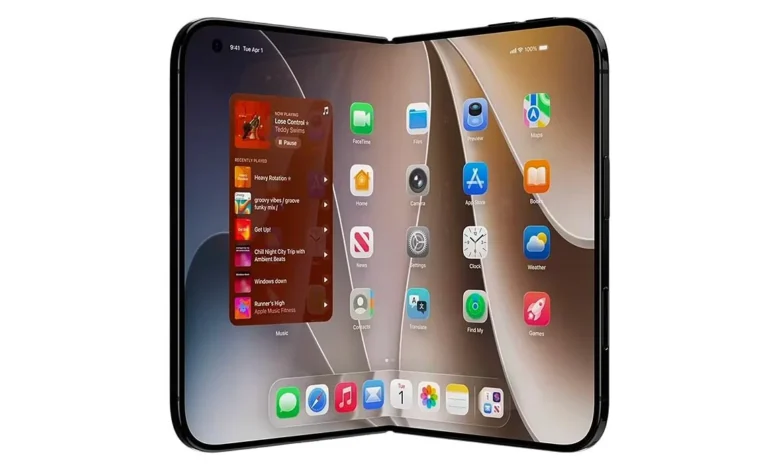
In the latest development surrounding one of the most anticipated technological releases, a new report suggests that the Apple iPhone Ultra, the tech giant’s rumored foray into the foldable smartphone segment, may indeed face a delay in its retail availability. This information emerges amidst a turbulent period of conflicting reports that have kept industry observers and potential consumers on tenterhooks, oscillating between assurances of an on-schedule launch and warnings of a postponed debut. The current narrative, detailed in a report originating from Digitimes and subsequently covered by Notebookcheck, points to ongoing production challenges at Foxconn, Apple’s principal manufacturing partner, as the primary cause for the potential holdup.
The "Will It, Won’t It?" Saga: A Chronology of Conflicting Reports
The journey of the iPhone Ultra from mere speculation to a tangible, albeit unconfirmed, product has been marked by a consistent stream of contradictory leaks and analyst predictions. The earliest whispers, emerging late last year and gaining traction into early 2024, frequently suggested that Apple’s first foldable device might not see the light of day until 2025. These initial reports often cited the inherent complexities of foldable technology, Apple’s meticulous development cycles, and the company’s historical tendency to enter nascent markets only when it believes the technology is sufficiently mature and refined. Concerns over component supply chains, patent filings, and the formidable engineering challenges posed by durable hinge mechanisms and robust flexible displays fueled these early delay prognostications.
However, the narrative took a turn earlier this year when a flurry of counter-reports began to surface, confidently asserting that the iPhone Ultra was, in fact, on track for its expected 2024 launch. These optimistic assessments often drew from perceived accelerations in Apple’s supply chain activities or hints from component manufacturers ramping up production for new form factors. The tech community found itself in a perpetual state of uncertainty, with each new report seemingly contradicting the last, making it exceedingly difficult to ascertain the true status of the device’s development and impending release.
The latest report reignites the initial fears of a delay, adding another layer of complexity to the unfolding saga. While most recent rumors have maintained a consensus that the iPhone Ultra will be unveiled as scheduled in September, likely alongside the highly anticipated iPhone 18 Pro and iPhone 18 Pro Max, the critical distinction now lies in its retail availability. The central question has shifted from whether the device will be announced to whether it will be purchasable in stores concurrently with its conventional smartphone brethren. This distinction is crucial for Apple’s holiday sales quarter, a period traditionally vital for its financial performance.
Deep Dive into Production Challenges: Hinge and Screen Durability
The current report zeroes in on specific hurdles encountered during the manufacturing process, primarily related to the device’s hinge mechanism and the overall durability of its folding screen. Foxconn, renowned for its massive scale and efficiency in assembling Apple’s intricate devices, is reportedly grappling with "final adjustments" to the production process, indicating that the challenges are not merely minor kinks but require significant engineering and manufacturing fine-tuning.
The issues identified – hinge integrity and screen durability – are not unique to Apple’s potential foldable device; rather, they represent the most common and significant stumbling blocks for every manufacturer venturing into the foldable smartphone market. Early iterations of foldable phones from competitors like Samsung and Motorola famously faced high-profile durability concerns. The original Samsung Galaxy Fold, for instance, experienced widely reported screen failures shortly after its initial review units were distributed, leading to a significant redesign and delayed launch. Similarly, some early Motorola Razr models faced criticism regarding screen creasing and hinge longevity. These historical precedents underscore the immense technical complexity involved in creating a foldable device that meets consumer expectations for durability and reliability, especially given the premium price point these devices command.
Apple’s brand identity is inextricably linked to delivering products with exceptional build quality and a seamless user experience. Any compromise on the durability of the iPhone Ultra’s hinge or screen would not only tarnish this reputation but also likely lead to widespread consumer dissatisfaction and potential warranty claims. Therefore, it is logical that Apple, in collaboration with Foxconn, would prioritize resolving these production challenges, even if it necessitates delaying the product’s market introduction. The precise nature of these "issues" remains undisclosed, but they could range from difficulties in achieving sufficient cycle-life testing for the hinge (i.e., how many folds it can withstand), challenges in preventing micro-creases or bubbles on the flexible display, or even complexities related to the dust and water resistance of a moving part like the hinge. The report unfortunately does not specify how long it might take to sort out these production issues, leaving the timeline for market availability largely ambiguous.
The Foldable Market Landscape and Apple’s Strategic Positioning
Apple’s potential entry into the foldable smartphone market is a highly anticipated event, poised to significantly disrupt a segment currently dominated by rivals. The global foldable phone market, while still a niche compared to traditional smartphones, has been experiencing robust growth. According to reports from IDC and Counterpoint Research, shipments of foldable smartphones are projected to grow substantially in the coming years, potentially reaching tens of millions of units annually by the mid-2020s. This growth is driven by technological advancements, decreasing prices, and increasing consumer awareness of the form factor’s benefits, such as larger screen real estate in a compact design.
Key players in this evolving market include Samsung, which has established itself as the market leader with its Galaxy Z Fold and Z Flip series; Huawei, particularly strong in the Chinese market; Xiaomi, Google with its Pixel Fold, and OnePlus, all vying for market share. Each competitor has brought its own unique design philosophies and technological innovations to the table. Samsung, for example, has iterated significantly on its hinge design and display technology, making its latest foldables considerably more robust than their predecessors.
Apple’s strategy has historically been to observe emerging product categories, allowing others to bear the initial risks and refine the technology, before entering with a highly polished, often superior, offering. This approach was evident with the original iPhone, which arrived years after early smartphones, or the Apple Watch, which was launched after several Android-based smartwatches. The "Ultra" moniker itself signals Apple’s intention to position this device at the absolute pinnacle of its product line, likely featuring cutting-edge technology, premium materials, and an unprecedented price point. This aligns with Apple’s recent strategy for its Apple Watch Ultra and the M1 Ultra chip, designating them as top-tier, high-performance offerings. An iPhone Ultra would not just be a foldable phone; it would be the foldable phone, aiming to redefine the category through Apple’s signature blend of hardware, software, and ecosystem integration.
Apple’s History with New Product Categories and Delays
The prospect of a delay for the iPhone Ultra is not entirely unprecedented in Apple’s history, especially when dealing with entirely new product categories or significant technological leaps. While the company is known for its rigorous planning and execution, high-profile products have occasionally faced staggered launches or outright delays.

A notable example is the original iPhone, which, while announced in January 2007, did not ship until June of that year, a significant gap at the time. More recently, the HomePod smart speaker, unveiled in June 2017, was delayed from its initial December 2017 target to February 2018. Perhaps the most relevant recent comparison is the Apple Vision Pro, an entirely new computing platform. Announced in June 2023, the Vision Pro was explicitly slated for a "early 2024" release, giving Apple a several-month window to finalize production, software, and distribution, ultimately launching in February 2024. This pattern suggests that Apple is willing to delay a product’s market availability to ensure it meets its stringent quality standards and is ready for mass production, particularly for devices that represent a new frontier for the company. Such delays, while potentially disappointing for eager consumers, often result in a more refined product at launch, mitigating early adopter issues.
Financial and Market Implications of a Delay
Should the iPhone Ultra’s retail availability be pushed beyond the traditional September/October launch window, the financial and market implications for Apple could be significant, particularly impacting its crucial holiday sales quarter. Q4 (Apple’s Q1 fiscal year) is historically Apple’s strongest quarter, heavily influenced by new iPhone sales. Missing this window for a marquee, high-margin product like the iPhone Ultra could lead to a downward revision of revenue forecasts.
From an investor perspective, any delay for a highly anticipated product can initially cause a slight dip in stock performance due to uncertainty, though Apple’s robust financial health and diverse product portfolio usually buffer against prolonged negative impacts. However, a delayed launch also presents an opportunity for competitors. While Apple’s brand loyalty is unparalleled, a delay could give Samsung and other foldable manufacturers more time to consolidate their market position, refine their offerings, and potentially capture a larger share of early adopters who might otherwise wait for Apple’s device.
Conversely, a delay could also be viewed as a strategic advantage. It allows Apple more time to perfect the device, iron out any remaining kinks, and avoid the negative publicity that often accompanies rushed product launches with inherent flaws. By ensuring a flawless user experience from day one, Apple could ultimately solidify its leadership in the premium smartphone segment, even if it means sacrificing some initial sales volume. The company has historically demonstrated that long-term product quality and user satisfaction trump short-term market entry pressures.
Consumer Expectations and Premium Pricing
The original article correctly highlights the "very high price tag" associated with the iPhone Ultra. Foldable smartphones, across the board, command a significant premium over their traditional counterparts, with prices often starting well above $1,000 and frequently exceeding $1,500 or even $2,000 for top-tier models. Given Apple’s premium positioning and the "Ultra" branding, it is reasonable to expect the iPhone Ultra to be among the most expensive smartphones on the market.
Consumer anticipation for an Apple foldable has been building for years. The company’s faithful user base is accustomed to paying a premium for Apple’s ecosystem and perceived quality. However, a prolonged delay could test the patience of these consumers. While many would likely wait, some might be tempted by increasingly refined and competitive foldable options from rivals. Moreover, the higher the price tag, the greater the expectation for perfection. Any perceived flaws or a rushed product would be magnified under the scrutiny of a discerning, premium-paying clientele. The current advice to "keep saving up" remains pertinent, as the financial commitment for an iPhone Ultra is expected to be substantial, regardless of its launch timing.
Official Silence and Industry Standard
It is important to reiterate that neither Apple nor Foxconn has officially commented on the existence of an iPhone Ultra, let alone any production issues or launch delays. This silence is entirely consistent with Apple’s long-standing policy of not discussing unreleased products or supply chain specifics. All information currently circulating in the public domain stems from supply chain leaks, analyst reports, and interpretations of intellectual property filings. While these sources often prove reliable over time, they remain unofficial until confirmed by the company itself. This veil of secrecy, while frustrating for those eager for definitive answers, is a core part of Apple’s product launch strategy, designed to build anticipation and control the narrative leading up to official announcements.
Looking Ahead: What to Watch For
As the technology world approaches Apple’s traditional September event, all eyes will be on Cupertino. While an official unveiling of the iPhone Ultra alongside the iPhone 18 Pro and Pro Max seems increasingly likely based on consistent rumors, the crucial detail will be the explicit announcement regarding its availability. Any mention of a staggered launch, a "coming soon" rather than an immediate pre-order, or a specified later date would effectively confirm the current delay rumors. Conversely, a simultaneous launch would put an end to months of speculation.
Beyond the September event, the flow of information from supply chain sources will continue to be a key indicator. Any subsequent reports confirming the resolution of production issues or providing a more concrete revised timeline will be closely watched. Until more definitive information emerges, industry observers and consumers alike are left navigating a labyrinth of conflicting reports, advised to exercise caution and temper expectations.
Conclusion
The potential delay of the Apple iPhone Ultra underscores the immense technical and logistical challenges inherent in bringing a truly revolutionary foldable smartphone to market. While the "will it, won’t it" saga has created considerable uncertainty, the underlying issues – particularly concerning hinge integrity and display durability – are critical for Apple to address to uphold its reputation for premium quality. Regardless of when it ultimately arrives, the iPhone Ultra is poised to be a transformative device, reshaping the competitive landscape of the foldable market and setting new benchmarks for innovation. For now, the waiting game continues, with patience remaining a virtue for those anticipating Apple’s entry into this exciting new frontier.