The Elusive Quest for Non-Smart Televisions in an Increasingly Connected World

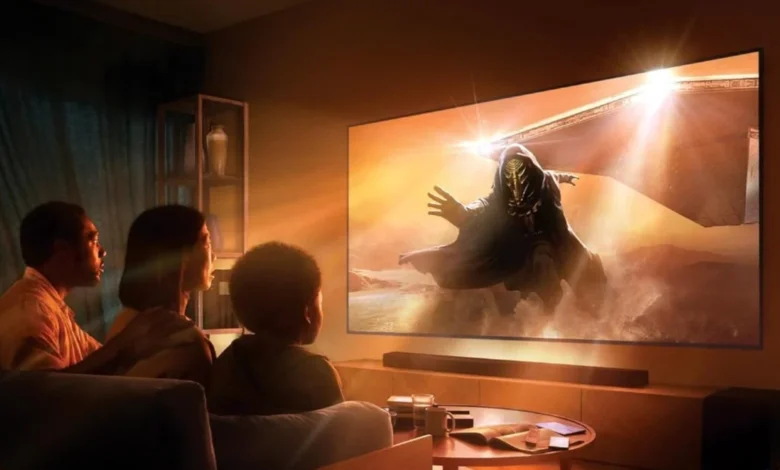
For years, the technology industry has relentlessly pursued a vision of pervasive smart integration, embedding internet connectivity and computer-based functionality into nearly every appliance imaginable, from televisions to toasters. While this push has largely been met with broad consumer adoption, particularly in televisions where streaming applications have become a primary function, a distinct and growing subculture of consumers maintains a preference for more basic, non-smart appliances. These individuals often seek to avoid software bloat, prioritize digital detachment, or simply prefer to centralize their smart functionalities through dedicated external devices like streaming boxes, utilizing their television purely as a display for physical media players or gaming consoles. However, the unfortunate reality for this segment of the market is that the production of non-smart televisions has significantly dwindled, making the search for such devices a challenging endeavor.
The Rise of Smart Integration and its Market Dominance
The evolution of television technology over the past two decades has been marked by a profound shift from passive display devices to interactive entertainment hubs. The advent of high-speed internet, coupled with the proliferation of streaming services like Netflix, Hulu, and Amazon Prime Video, created fertile ground for the integration of smart features directly into televisions. Manufacturers quickly recognized the potential to offer an all-in-one entertainment experience, reducing the need for multiple external devices and simplifying the user interface. By the early 2010s, "smart TV" began to transition from a niche feature to a standard offering, propelled by the convenience of integrated apps, voice controls, and seamless access to a vast array of digital content.
This rapid adoption was further fueled by manufacturers’ strategic interests. Smart TVs provide avenues for recurring revenue through advertising, data collection, and partnerships with content providers. The operating systems powering these devices, such as Android TV, Tizen (Samsung), webOS (LG), and Roku TV, became integral components of the television ecosystem, offering app stores, personalized recommendations, and sophisticated user interfaces. Consequently, the market quickly pivoted, with non-smart TVs—once the standard—relegated to the fringes. Models that were once popular, like the Insignia N10 Series or the Scepter U515CV-U, have been completely phased out, reflecting a broader industry consensus that "smart" is the default.
Why Consumers Seek Simplicity: The Case for Non-Smart TVs
Despite the overwhelming industry push towards smart integration, a discernible segment of consumers actively seeks out non-smart televisions for a variety of compelling reasons. Foremost among these is the desire to minimize "software bloat." Modern smart TV operating systems, while offering extensive features, often come with pre-installed applications that cannot be removed, background processes, and frequent software updates that can impact performance or introduce unwanted changes. For users who prefer to use a dedicated streaming stick (e.g., Roku, Apple TV, Chromecast) or a gaming console for all their internet-connected entertainment, a smart TV’s built-in functionalities can feel redundant and unnecessary, potentially leading to slower interface response times or system instability.
Privacy and security concerns also rank high for many. Smart TVs, by their very nature, are connected devices that collect user data, including viewing habits, app usage, and sometimes even voice commands. This data is often used for targeted advertising or to improve services, but it raises significant privacy implications for individuals wary of corporate surveillance or potential data breaches. Disconnecting a television from the internet entirely, or opting for a device with no inherent connectivity, offers a tangible layer of security and privacy that smart TVs cannot fully provide.
Furthermore, some consumers embrace a philosophy of "digital minimalism," choosing to "unplug" from constant connectivity. For these individuals, an entertainment system that remains detached from the internet represents a conscious decision to reduce screen time, minimize distractions, and foster a more intentional engagement with media. This can extend to a preference for physical media formats like DVDs, Blu-rays, or even retro gaming consoles, where internet connectivity is irrelevant or undesirable.
Beyond philosophical and privacy considerations, practical factors also play a role. Non-smart TVs are often perceived as more reliable and longer-lasting due to their simpler internal architecture, with fewer components prone to software glitches or obsolescence. They also typically come at a lower price point, making them attractive for budget-conscious buyers, secondary rooms, or specific applications like digital signage in businesses where complex smart features are not required. The simplicity of operation, often involving fewer menus and settings, also appeals to users who prioritize ease of use over advanced functionalities.
Navigating a Niche Market: Current Non-Smart TV Landscape
The shrinking market for televisions without smart capabilities means that finding suitable options requires diligent research and a willingness to explore less conventional avenues. While mainstream retailers predominantly stock smart models, a few manufacturers still cater to this niche, often targeting specific use cases such as business displays, hospitality environments, or consumers seeking compact, no-frills solutions. Some models that initially come with smart capabilities may also offer an option to deactivate them during the initial setup, providing a hybrid solution for those seeking the choice.
The available options generally fall into three categories: budget-oriented, truly non-smart consumer models; business-grade displays designed for commercial use; and high-end smart TVs that offer a "basic" or "non-smart" mode. Each category presents its own set of advantages and compromises in terms of features, price, and overall user experience.
Spotlight on Available Models
For consumers determined to avoid smart functionalities, several brands offer viable alternatives, each with its own specific characteristics and target audience.
Westinghouse HD Series and DVD Combo
Westinghouse, a brand with a century-long history, stands out as one of the few still producing modern, consumer-targeted televisions without smart capabilities. This commitment to basic functionality makes their offerings particularly relevant for the "unplugged" market.
The brand features two primary models in this category. The standard Westinghouse HD Series comes in two smaller sizes, ideal for kitchens, bedrooms, or secondary viewing areas. The 24-inch 16:9 LED screen offers a 720p resolution and typically retails around $115.99. A slightly larger 32-inch 16:9 720p TV is available for approximately $149.99. Both models boast a comprehensive array of connection ports, including HDMI, USB, VGA, composite, optical, and coaxial, ensuring compatibility with a wide range of external devices, from DVD players to gaming consoles and older computers. They also feature 2.0 channel stereo audio.
A unique offering from Westinghouse is a variant that integrates a built-in DVD player directly into the television. This all-in-one solution, also available in 24-inch and 32-inch 720p sizes, caters specifically to those who value physical media and desire a compact, self-contained entertainment system without the need for additional external components. This feature is particularly appealing for children’s rooms, RVs, or small apartments where space is at a premium.
Customer feedback for both Westinghouse models on platforms like Amazon generally indicates satisfaction, with an average rating of 4.0 out of 5 stars. Users frequently praise the picture quality, ease of use, and overall value for money. The reliability of these basic units is often highlighted as a significant advantage. However, a recurring complaint across reviews pertains to the sound quality of the built-in speakers, which are often described as weak and quiet. This suggests that pairing these televisions with an external soundbar or dedicated speaker system would significantly enhance the audio experience, a common recommendation for many budget-friendly TVs regardless of smart features.
Impecca LED TV Series
Impecca, a brand known for its budget-oriented electronics, also maintains a presence in the non-smart TV market, offering several models aimed squarely at consumers seeking economical and straightforward displays.
Their lineup includes a 24-inch TL2400H 16:9 720p LED display, featuring a 60Hz refresh rate, an 8.5ms response time, Dolby Vision support (a notable inclusion for a non-smart, budget TV), and two 6W speakers. This model typically sells for around $169.97. An earlier variant, the TL2404, included a built-in DVD player, mirroring Westinghouse’s offering, but appears to be discontinued or out of stock at major retailers, indicating the fluctuating nature of this niche market.
Stepping up in size, Impecca offers a 32-inch TL3202H 16:9 (with 4:3 support) 720p LED television. This model also features a 60Hz refresh rate, an 8.5ms response time, an ATSC tuner for over-the-air digital broadcasts, Dolby Audio, and slightly more powerful two 8W speakers, priced at approximately $199.97.
The largest and arguably most popular non-smart option from Impecca is the 43-inch TL4302F. This 16:9 (with 4:3 support) 1080p LED display marks a significant jump in resolution and screen size. It includes an ATSC tuner and Dolby Audio, a 60Hz refresh rate, and a faster 5.0ms response time. Pricing for this model varies across retailers, typically ranging from $344.97 on Amazon to $372.31 at Lowe’s.
While Impecca’s offerings are competitive on price, their user ratings are generally lower and less numerous than Westinghouse’s. The 43-inch model, despite being a more popular choice, holds a 3.8 out of 5 on Amazon from a limited number of reviews. Similar to Westinghouse, customers generally express satisfaction with the screen and picture quality, considering the price point. However, the consistent complaint revolves around the sound quality from the integrated speakers, reinforcing the common need for external audio solutions with budget TVs.
Business-Grade Alternatives: Samsung BEC-H Series
For consumers seeking higher performance and reliability from a major brand, business-grade displays offer a compelling, albeit less conventional, route to a non-smart TV experience. Samsung, often ranked highly for customer satisfaction in the TV market, produces the BEC-H Series specifically as digital signage displays, which inherently lack traditional smart TV functionalities.
The Samsung BEC-H Series comprises 16:9 4K UHD televisions available in a wide array of sizes: 43-inch ($372.90), 50-inch ($536.90), 55-inch ($699.99), 65-inch ($777.41), 70-inch ($875.00), 75-inch ($999.99), and 85-inch ($1,679.00). These models are equipped with modern display technologies such as a 60Hz refresh rate, HDR10 support, 250 nit brightness, and Samsung’s PurColor picture enhancement, delivering a significantly superior visual experience compared to the budget consumer models.
It’s important to note that while these are not traditional smart TVs, they do incorporate a Samsung Crystal UHD 4K Processor, which enables AI upscaling, and a heavily cut-back version of the Tizen OS. Crucially, while they can connect to the internet, users are given the explicit option to skip this during setup, effectively allowing the TV to function as a non-smart display. This makes them a strong contender for users who want high-quality visuals without the pervasive smart features.
User feedback, though limited with only 46 Amazon reviews averaging 3.6 stars, largely supports their efficacy as non-smart displays. Many users appreciate the bright, high-quality image and the low-reflective screen, alongside the sturdy design. Negative reviews frequently cite issues with defective products upon arrival or problems related to the signage app functionality, rather than the core display performance in a home setting. The ability to bypass internet connectivity for privacy reasons is also a frequently praised aspect.
Professional Displays: Panasonic CQE2U Series
Similar to Samsung’s business line, the Panasonic CQE2U Series offers high-performance displays primarily intended for commercial and educational environments. While they feature Wi-Fi connectivity and a streamlined Android OS, they are not smart TVs in the conventional sense, lacking the extensive app ecosystems and consumer-focused features found in typical smart televisions.
These professional-grade displays come in a range of large formats and carry a premium price tag: 43-inch (TH-43CQE2U) at $883.00, 50-inch (TH-50CQE2U) at $945.99, 65-inch (TH-65CQE2U) at $1,416.00, 75-inch (TH-75CQE2U) at $2,304.00, 86-inch (TH-86CQE2U) at $4,386.99, and a massive 98-inch (TH-98CQE2U) at $10,098.00. All models are UHD 4K IPS panels, offering excellent viewing angles and vibrant colors, with brightness levels ranging from 400 to 500 nits.
Beyond their robust display capabilities, the CQE2U Series includes features like a built-in TV tuner and Sports Mode, indicating a degree of versatility. Connectivity options are comprehensive, including USB-C and four HDMI 2.2 video inputs, providing ample bandwidth for modern external devices. The higher price point is justified by the professional-grade construction, enhanced durability, and advanced display technology.
However, the specialized nature of these displays means they are primarily sold through commercial distributors like CDW and B&H Photo rather than mainstream consumer electronics retailers. This distribution model significantly limits the availability of consumer user feedback, making it challenging for potential buyers to gauge real-world performance outside of professional reviews. Nevertheless, for those seeking a high-quality, large-format display from a reputable brand with minimal smart functionality, the Panasonic CQE2U Series presents a robust option.
The Hybrid Approach: Sony Bravia’s Basic TV Mode
For consumers who desire the reliability and cutting-edge technology of a top-tier brand but still wish to control their smart experience, Sony offers an elegant solution within its high-end Bravia line. Consumer Reports consistently ranks Sony among the most reliable TV brands, alongside LG and Samsung, making their approach particularly appealing.
Sony’s Bravia TVs are inherently smart, integrating Google TV functionality. However, a key differentiator is the setup process. Upon initial activation, a Bravia TV explicitly prompts the user to choose between "Set Up Google TV" or "Set Up Basic TV." Opting for "Set Up Basic TV" deactivates the smart functionalities, allowing the television to operate purely as a display, relying on external sources for content. This provides the best of both worlds: access to Sony’s advanced display technology and picture processing, coupled with the user’s choice to bypass integrated smart features.
This hybrid approach opens up a vast selection of screen types, sizes, and price points within the Bravia lineup. Consumers can choose from standard LED models like the Sony Bravia 3, advanced Mini-LED options such as the Bravia 9, or premium OLED displays like the Bravia XR8B. Sizes range from 43 to a colossal 100 inches, ensuring a solution for nearly any viewing environment. These televisions come packed with the latest technological advancements, including Dolby Vision, Dolby Atmos, AI upscaling, and Motionflow, delivering an unparalleled visual and auditory experience.
User reviews for Sony Bravia TVs are generally excellent, often hovering between 4 and 5 stars on Amazon, with widespread praise for image quality, brightness, and overall aesthetic design. While some users occasionally report issues with reliability, such as intermittent freezing, it remains unclear whether these issues persist when the TV is operated in "Basic TV" mode, suggesting they might be tied to the smart functionalities. For discerning consumers unwilling to compromise on picture quality or brand reputation, the Sony Bravia line with its "Basic TV" option offers a sophisticated and flexible pathway to a non-smart viewing experience.
Challenges and Outlook for Non-Smart TVs
The journey to acquire a non-smart television in today’s market is fraught with challenges. The options are limited, often requiring consumers to choose between budget models with basic features and potentially compromised audio, or expensive business-grade displays that may offer internet connectivity that needs to be explicitly bypassed. The sweet spot of mid-range, feature-rich non-smart TVs from major brands has largely disappeared, forcing consumers to make compromises.
Industry trends suggest that the complete cessation of non-smart TV production for the mainstream consumer market is likely. The economic incentives for manufacturers to integrate smart features—including data collection, advertising revenue, and ecosystem lock-in—are too substantial to ignore. However, the enduring demand from a segment of the population, driven by privacy concerns, a desire for simplicity, or specific use cases, ensures that a niche market will persist. This demand may continue to be met by specialized budget brands, repurposed commercial displays, or hybrid models that offer a "basic" mode, as exemplified by Sony.
The future of non-smart televisions will likely remain tethered to these alternatives. While dedicated non-smart models may continue to dwindle, the option to disable smart features on high-end televisions could become a more prevalent solution, offering consumers the best of both worlds: advanced display technology without unwanted connectivity. This evolving landscape underscores a broader consumer struggle for control over technology in an era of pervasive integration, highlighting the persistent value of simplicity and privacy in a hyper-connected world.