Australia Emerges as Global Hotspot for Falling Space Debris as Metallic Spheres Recovered in Queensland

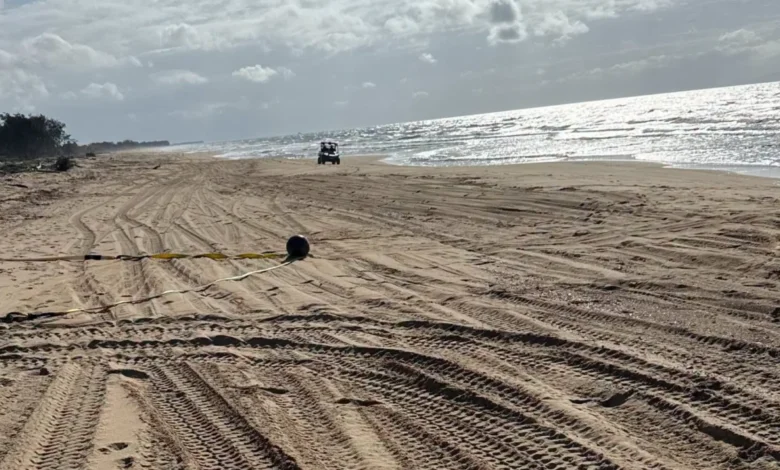
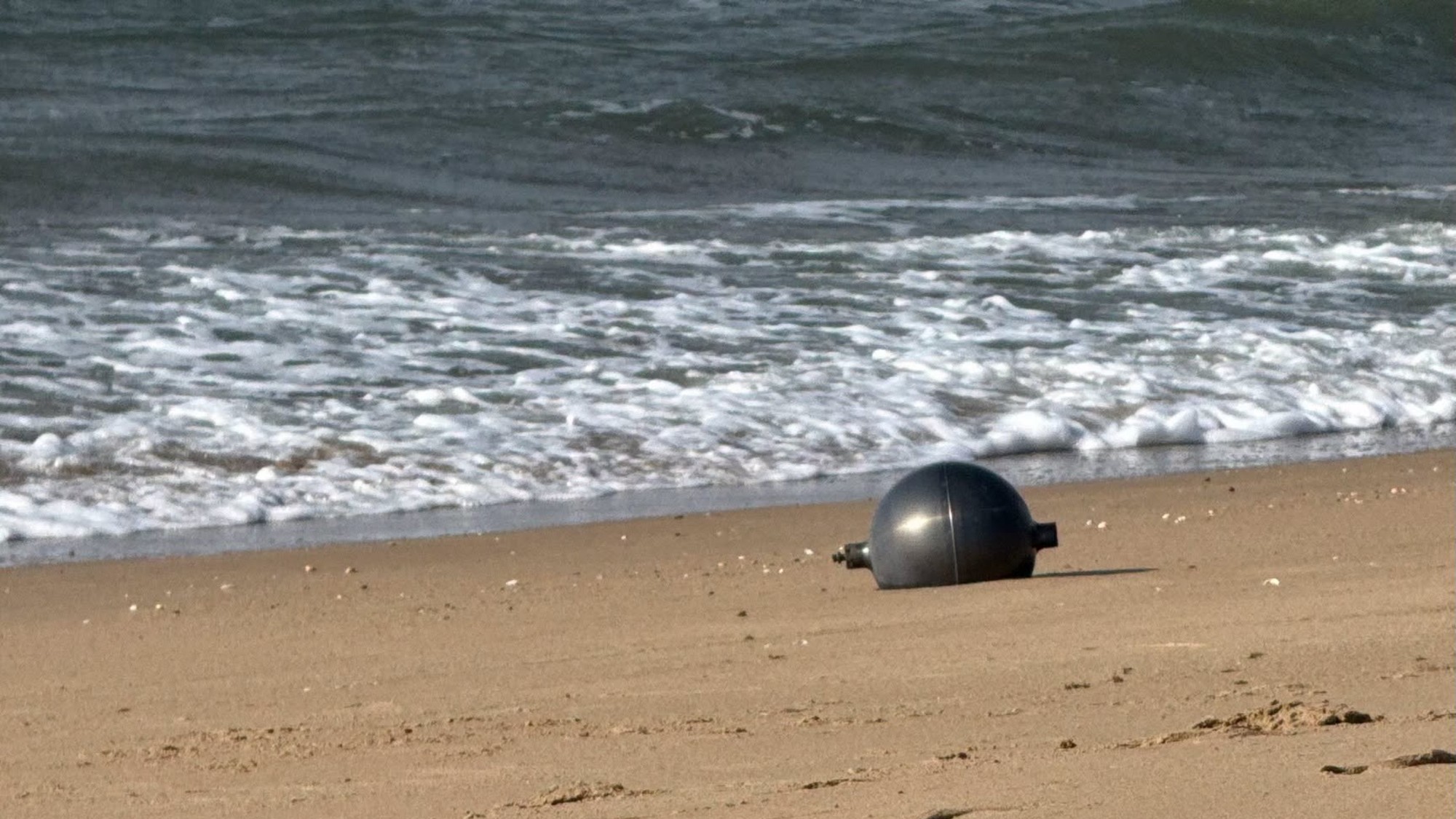
The seaside community of Forrest Beach, located near Ingham in Queensland, has become the latest focal point for international space agencies following the discovery of several mysterious metallic spheres. In early July 2026, the Australian Space Agency (ASA) confirmed that these objects, colloquially identified as "space balls," are likely pressure vessels originating from a foreign space launch vehicle. The incident has reignited a global conversation regarding the increasing frequency of uncontrolled reentries and the legal responsibilities of spacefaring nations when their hardware returns to Earth in populated or coastal regions.
Upon the discovery of the six spherical pieces of debris, the Queensland Fire Department and local scientific teams moved quickly to secure the area. Recognizing the potential for hazardous residues—often associated with rocket propellants like hydrazine or high-pressure gasses—authorities established a 165-foot (50-meter) exclusion zone around the impact sites. While no immediate injuries were reported, the presence of such substantial hardware in a residential and tourist area highlights the growing challenges of managing a crowded orbital environment.
The Science of Survival: Why Pressure Vessels Endure Reentry
The recovery of these specific objects is not a matter of chance but a result of their engineering. According to Marlon Sorge, executive director of the Aerospace Corporation’s Center for Orbital and Reentry Debris Studies (CORDS), pressure vessels are among the most likely components of a spacecraft to survive the harrowing descent through Earth’s atmosphere.
Most spacecraft components are designed to "demise"—or burn up—upon reentry due to the intense friction and heat generated by the atmosphere. However, certain materials and structures are inherently resistant to these forces. "Very often they will be made of something like titanium, which is really good at surviving," Sorge noted. Titanium has a melting point of approximately 1,668 degrees Celsius (3,034 degrees Fahrenheit), allowing it to maintain structural integrity even as the surrounding aluminum or composite airframe of a rocket melts away.
Furthermore, the spherical shape of these vessels aids their survival. Unlike dense, irregular chunks of metal that plummet at high velocities, these hollow spheres often have a lower ballistic coefficient. This allows them to decelerate higher in the atmosphere, essentially "floating down" more gently than solid components. This aerodynamic property increases the likelihood that they will reach the surface intact rather than vaporizing or shattering.
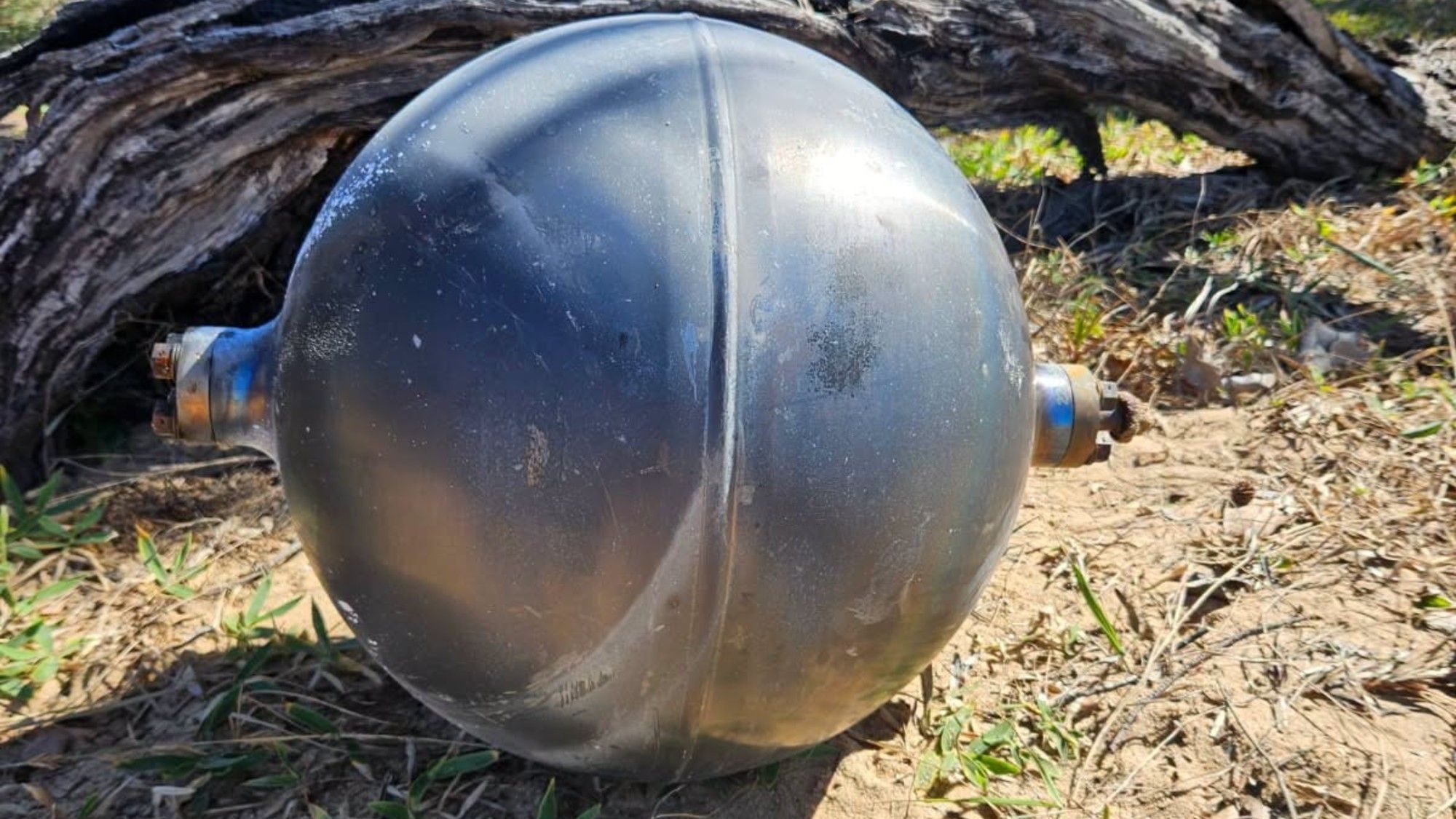
In addition to titanium, many modern rockets utilize Composite Overwrapped Pressure Vessels (COPVs). These consist of a thin metal liner wrapped in high-strength carbon fiber or Kevlar. While the outer wrapping may char or partially erode, the pressurized core often remains recognizable, as seen in the Forrest Beach discovery.
A Growing Chronology: Australia as the World’s "Fall Guy"
Australia’s vast landmass and its position beneath various high-inclination orbital paths have made it a recurring landing site for space junk. The July 2026 incident is the latest in a long-standing "unwanted legacy" of being the destination for orbital remains.
The history of significant debris events in Australia includes:
- 1979: The Skylab Incident: Perhaps the most famous reentry in history, the United States’ first space station, Skylab, made an uncontrolled reentry over Western Australia. Large chunks of the station scattered across the Shire of Esperance. In a lighthearted diplomatic move, the local council issued NASA a $400 fine for littering, which was eventually paid by a radio host decades later.
- 2022: SpaceX Dragon Trunk: A large, jagged piece of a SpaceX Dragon capsule’s trunk was discovered jutting out of the ground in a sheep paddock in the Snowy Mountains of New South Wales. The debris was linked to the Crew-1 mission.
- 2023: Indian Polar Satellite Launch Vehicle (PSLV): A massive, barnacle-encrusted cylinder washed up on a beach near Green Head in Western Australia. It was later identified by the Indian Space Research Organisation (ISRO) as a third-stage component of a PSLV rocket.
- 2025: Chinese Jielong-3 Rocket: In October 2025, smoldering wreckage was found in the Australian Outback, believed to be a section of a Chinese Jielong-3 (Smart Dragon-3) rocket body.
- 2026: The Forrest Beach "Space Balls": The current investigation into the six metallic spheres found in Queensland.
This timeline suggests that as launch cadences increase globally, the statistical probability of debris landing on Australian soil—or within its territorial waters—continues to rise.
Orbital Mechanics and the Uncertainty of Reentry
To the casual observer, it may seem improbable that debris from the same rocket could land in vastly different regions, such as Australia and Canada. However, Michelle Hanlon, executive director of the Center for Air and Space Law at the University of Mississippi, explains that this is a fundamental reality of orbital mechanics.
"Objects in low Earth orbit pass over much of the planet as the Earth rotates underneath them," Hanlon said. When a reentry is uncontrolled, the spacecraft is at the mercy of atmospheric drag. Fluctuations in solar activity can expand or contract the Earth’s upper atmosphere, meaning the exact moment "atmospheric drag finally wins" can shift the impact point by thousands of miles.
Because approximately 70% of the Earth’s surface is covered by water, the majority of space debris sinks to the bottom of the ocean unnoticed. The objects found in Australia represent the small fraction of hardware that either lands on soil or is carried to shore by ocean currents.
International Law and the Responsibility of Launching States
The discovery of space debris is not merely a scientific curiosity; it is a matter of international law governed by several United Nations treaties. The most relevant are the 1968 Rescue Agreement and the 1972 Liability Convention.
Under these frameworks, the "launching state"—the country that launched the object or from whose territory it was launched—retains ownership of the debris regardless of where it lands. If Australia identifies the origin of the Forrest Beach spheres, the Australian Government is obligated to notify the launching authority. Upon request, the debris must be returned to the country of origin.
More importantly, the Liability Convention establishes that a launching state is "absolutely liable" to pay compensation for damage caused by its space objects on the surface of the Earth. While no damage was reported in the recent Queensland discovery, previous events, such as the 1978 reentry of the Soviet satellite Kosmos 954 over Canada, resulted in multi-million dollar settlements for cleanup and recovery.
The challenge, however, lies in identification. Many components lack serial numbers or "Made In" stamps that can survive the heat of reentry. "Better information-sharing and better tracking would be far more useful than a ‘Made in’ stamp," Hanlon argued, emphasizing that traceability through launch records and design matching is the current standard for identification.
Public Safety and the ASA Protocol
As these incidents become more frequent, the Australian Space Agency has formalized safety protocols for the public. The agency emphasizes that while the risk of being struck by falling debris is statistically low—estimated at less than one in several trillion for any specific individual—the objects themselves can be dangerous upon landing.
The ASA recommends a three-step approach for anyone who discovers suspected space junk:
- Do Not Touch or Disturb: Debris may contain toxic chemicals or high-pressure systems that could fail if handled.
- Maintain Distance: Establish a safety perimeter to prevent accidental exposure.
- Report Immediately: Contact local authorities or the Australian Space Agency to allow professional recovery teams to handle the object.
The Future of "Space Sustainability"
The Forrest Beach incident serves as a sobering reminder that the "New Space" era—characterized by massive satellite constellations and frequent commercial launches—requires a corresponding evolution in end-of-life disposal.
Marlon Sorge and other experts argue that the solution lies in "controlled reentry." By reserving enough fuel to perform a final deorbit burn, launch providers can ensure that their hardware reenters over the "Spacecraft Cemetery" in the South Pacific Ocean (Point Nemo), the point furthest from any human habitation.
"The real challenge is that this is still an area that we don’t completely understand," Sorge admitted. "We get surprises now and again because we know only so much."
As the space sector grows, the responsibility for what goes up must include a definitive, safe plan for what comes down. The "space balls" of Queensland are more than just metallic curiosities; they are physical evidence of the need for a more sustainable and accountable approach to the final frontier. In an ironic twist of pop-culture timing, as Australia serves as the set for the filming of "Spaceballs: The New One," the reality of falling space hardware has proven that truth can be just as strange—and frequent—as fiction.
Related posts: