Artemis 2 Pilot Victor Glover Advocates for Equatorial Landing Sites Over Lunar South Pole to Reduce Mission Risk and Complexity

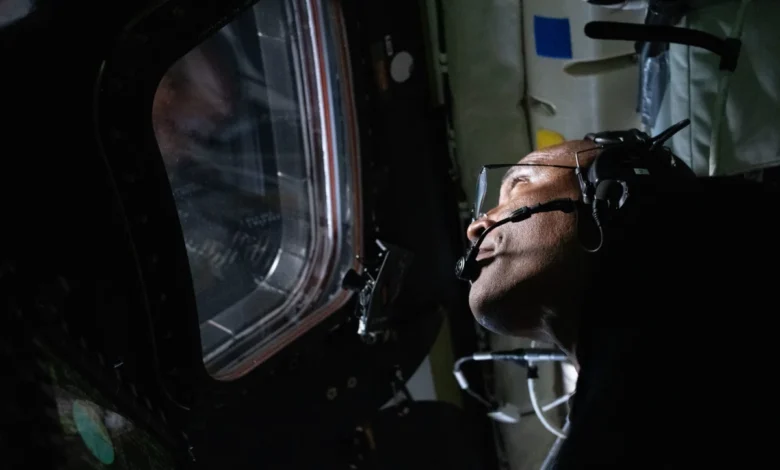
The pilot of the upcoming Artemis 2 mission, NASA astronaut Victor Glover, has sparked a significant internal and public debate regarding the agency’s strategic approach to returning humans to the lunar surface. Speaking at the NASA Exploration Science Forum held at the Ames Research Center on July 21, Glover made a direct appeal to NASA leadership to reconsider the current mandate of landing the first Artemis crewed missions at the lunar south pole. Instead, Glover suggested that the agency should prioritize "familiar" equatorial regions for the initial landings to ensure mission safety, simplify logistics, and accelerate the timeline for a successful return to the Moon.
Glover, who is slated to fly around the Moon on Artemis 2, emphasized that the complexities of the lunar south pole—ranging from treacherous lighting conditions to restrictive orbital dynamics—might pose unnecessary risks for the first human landing in over half a century. His "go fast, go familiar" philosophy suggests a stepwise approach that mirrors the incremental testing protocols used in traditional aerospace flight programs. By returning first to the equatorial regions explored during the Apollo era, Glover argues that NASA can retire critical risks before attempting the more scientifically lucrative but operationally hazardous polar regions.
The Case for Familiarity: Safety and Operational Simplicity
At the heart of Glover’s argument is the concept of operational "familiarity." During an extended discussion with conference attendees, he highlighted that the lunar equator offers a more forgiving environment for both spacecraft and crew. The Apollo missions of the 1960s and 70s targeted equatorial sites primarily because the sun remains high in the sky, providing clear visibility and predictable thermal conditions.
"If you want to go fast, go familiar," Glover stated during the forum. "We want to get to the surface. If we want to land soon, familiar, daylight, equator."
One of the most pressing concerns cited by Glover involves the medical and emergency contingencies associated with the current south pole mission architecture. NASA’s baseline plan for landing at the south pole relies heavily on the Near-Rectilinear Halo Orbit (NRHO). This highly elliptical orbit is designed to provide constant communication with Earth and serve as the staging ground for the Lunar Gateway station. However, the physics of the NRHO dictate that the landing craft and the orbiting Orion capsule (or Gateway) are only in optimal positions for rendezvous at specific intervals.
Glover illustrated this risk with a stark hypothetical scenario: an astronaut suffering a medical emergency, such as a burst appendix, shortly after landing. Under the current polar architecture, the crew could be forced to wait up to a week on the lunar surface before the orbital mechanics allow for a departure and subsequent docking with the return vehicle.
"If it ruptures on landing day, you’re stuck for a week," Glover warned. "That’s a big deal to me, and I don’t like that plan. The equator gives me the opportunity to save that person."
Technical Challenges of the Lunar South Pole
The lunar south pole has been the primary target for the Artemis program due to its immense scientific potential, specifically the presence of water ice within permanently shadowed regions (PSRs). This ice is considered a "holy grail" for deep-space exploration, as it could theoretically be harvested for life support and converted into rocket propellant (hydrogen and oxygen) for missions to Mars.
However, the environment at the pole is vastly different from the Apollo landing sites. Because the sun is very low on the horizon, the landscape is dominated by extremely long, high-contrast shadows. These shadows can obscure craters, boulders, and other landing hazards, making autonomous and manual navigation significantly more difficult. Furthermore, the low sun angle creates a persistent glare that can interfere with sensors and the astronauts’ vision during extravehicular activities (EVAs).
Glover compared the difficulty of navigating the south pole to the common terrestrial experience of driving into a blinding sunset, but with the added complexity of a pressurized space suit and a hostile vacuum environment. "You think driving home into the sunset is challenging? Imagine being on another celestial body and going from this room to low sun angle in a suit," he noted.
A Stepwise Evolution of Mission Architecture
The Artemis program is currently structured as a series of increasingly complex missions. Artemis 1, completed in late 2022, was an uncrewed test of the Space Launch System (SLS) rocket and the Orion spacecraft. Artemis 2 will take a four-person crew—including Glover, Commander Reid Wiseman, Mission Specialist Christina Koch, and CSA Mission Specialist Jeremy Hansen—on a lunar flyback mission. Artemis 3 is currently slated to be the first mission to land humans on the surface.
Glover’s proposal suggests a shift in this chronology. He advocates for a process of "accepting risk more and more, but also retiring it right." By landing Artemis 3 at an equatorial site, NASA could test the Human Landing System (HLS), the new xEMU spacesuits, and surface communication arrays in a more stable environment. Once these systems are flight-proven on the surface, the agency could then transition to the south pole for Artemis 4 or 5.
"I think we need to be realistic and work our way to the south pole, and maybe not try to go there first," Glover added.
NASA’s Shifting Strategy and Official Responses
While NASA has maintained the south pole as its official target, recent statements from agency officials suggest that the mission architecture is becoming more flexible. Amit Kshatriya, NASA’s associate administrator for the Moon to Mars Program Office, acknowledged during the Lunar and Planetary Science Conference in March that the agency is "opening up the performance specification" for early missions.
Kshatriya noted that NASA is giving commercial landing providers, such as SpaceX and Blue Origin, more freedom to propose alternative approaches to reach the surface. This includes considering different staging orbits that might bypass the constraints of the NRHO for the initial landings.
"We’re not yet giving up on the south pole, and I don’t think we will," Kshatriya said. "We need to challenge ourselves and we need to go to some place we’ve never been."
However, the logistical reality is already forcing changes. NASA recently announced it would not require the Lunar Gateway for the Artemis 3 mission, a move intended to simplify the mission profile. Furthermore, SpaceX has indicated that its Starship HLS might utilize a low lunar orbit (LLO) for docking with Orion, rather than the NRHO. This change could potentially address some of the emergency return concerns raised by Glover, as LLO allows for more frequent departure windows than the highly elliptical NRHO.
Jacob Bleacher, chief exploration scientist in NASA’s Human Spaceflight Mission Directorate, reiterated during the Ames forum that while the target remains the south pole, the specific landing sites are not yet set in stone. "We don’t know exactly what the lander capabilities will be as they’re developing, so we’re keeping that trade space open," Bleacher said.
Scientific vs. Operational Priorities
The debate highlighted by Glover’s comments underscores a fundamental tension in space exploration: the balance between scientific discovery and operational safety.
From a scientific perspective, the south pole is irreplaceable. The Volatiles Investigating Polar Exploration Rover (VIPER) and various robotic landers under the Commercial Lunar Payload Services (CLPS) initiative are already being deployed to characterize the ice deposits there. Delaying a human presence at the pole could slow down the development of In-Situ Resource Utilization (ISRU) technologies, which NASA views as essential for the long-term sustainability of the "Moon to Mars" vision.
From an operational perspective, however, the Artemis program faces immense pressure to succeed without a catastrophic failure. The political and public support for the program relies on the successful and safe return of the crew. An equatorial landing, while scientifically "redundant" in the eyes of some researchers, would provide a high-probability success path for the first human landing of the 21st century.
Historical Context: The Apollo Precedent
The Apollo program followed a similar incremental path. Apollo 7 and 9 were Earth-orbit tests; Apollo 8 and 10 were lunar-orbit tests. When it came time for Apollo 11 to land, NASA selected the Sea of Tranquility—a flat, equatorial region—precisely because it was the "safest" possible option. It wasn’t until the later "J-missions" (Apollo 15, 16, and 17) that NASA began targeting more complex geological sites like the Hadley-Apennine mountains or the Taurus-Littrow valley.
Glover’s suggestion is essentially a call to return to the Apollo flight-test philosophy: master the basics of landing and surface operations in a controlled environment before venturing into the "dark and cold" of the lunar poles.
Broader Implications for the Artemis Timeline
The Artemis 3 mission is currently targeted for late 2025 or 2026, though many industry analysts expect delays into 2027 or beyond due to the developmental status of the Starship HLS and the new spacesuits. If NASA were to pivot to an equatorial landing site, it could potentially simplify the software and navigation requirements for the HLS, as the landing sensors would not have to contend with the extreme shadows of the pole.
However, such a change would also require a re-evaluation of the scientific payload and the mission objectives. Much of the current Artemis training and equipment development is specifically tailored for the cryogenic temperatures and lighting of the south pole.
Glover admitted that his views are currently in the minority and have not yet shifted the agency’s formal policy. "That’s just me, and nobody’s asking me those questions," he said. Nevertheless, he expressed a desire to discuss these concerns directly with NASA leadership, including NASA Administrator Bill Nelson and other top officials.
"I think the way we’re attacking it is going to have some challenges," Glover concluded. "So, if [leadership] listens to this… we should talk."
As the Artemis 2 crew prepares for their historic mission around the Moon, the internal dialogue regarding the destination of Artemis 3 continues to evolve. Whether NASA sticks to its ambitious south pole goal or heeds the pilot’s call for a "familiar" equatorial return will likely depend on the progress of hardware development over the next 24 months and the agency’s final assessment of acceptable risk in the pursuit of a sustainable lunar presence.
Related posts: