US Space Force Triples National Security Launch Contract Ceiling to $17 Billion Amid Surge in Satellite Mission Demand

In a decisive move to accommodate an unprecedented expansion in military space operations, the U.S. Space Force has officially more than tripled the contract ceiling for its primary commercial-style launch vehicle program. According to a formal notice issued on July 17, the Department of the Air Force has raised the maximum cumulative value of the National Security Space Launch (NSSL) Phase 3 Lane 1 contract from its original $5.6 billion to a staggering $17 billion. This budgetary adjustment reflects a paradigm shift in how the Pentagon procures launch services, transitioning from a reliance on a few heavy-lift providers to a broader, more agile pool of commercial competitors capable of rapid, high-volume deployments.
The $11.4 billion increase to the contract ceiling is designed to cover an anticipated surge in task orders through fiscal year 2029. The Space Force’s Space Systems Command (SSC), which oversees these procurements, indicated that the original estimates formed in early 2024 no longer align with the rapidly evolving requirements of the U.S. military’s orbital architecture. As the Department of Defense (DoD) pivots toward proliferated constellations—networks consisting of hundreds of smaller satellites rather than a handful of massive, expensive platforms—the demand for frequent, cost-effective launches has outpaced previous projections.
The Strategic Architecture of Phase 3 Lane 1
The NSSL Phase 3 program is divided into two distinct pathways, or "lanes," designed to balance mission assurance with commercial flexibility. Lane 1 represents a departure from traditional military procurement by adopting a "commercial-style" approach. It is intended for missions that do not require the rigorous, high-level certification and specialized mission-assurance procedures typically reserved for the nation’s most sensitive and expensive reconnaissance or communication satellites.
By utilizing Lane 1, the Space Force can leverage the burgeoning private space sector to launch lower-risk payloads, such as those belonging to the Space Development Agency’s (SDA) Proliferated Warfighter Space Architecture (PWSA). This strategy allows the military to act more like a commercial customer, benefiting from the economies of scale and rapid launch cadences provided by companies like SpaceX and Rocket Lab.
The contract vehicle is an Indefinite-Delivery, Indefinite-Quantity (IDIQ) arrangement. This structure does not guarantee a specific amount of money to any single company; rather, it establishes a pool of pre-qualified vendors who are eligible to compete for individual task orders as they arise. The increase in the ceiling to $17 billion signifies the total "buying power" the Space Force now possesses within this vendor pool over the next five years.
A Growing Roster of Launch Providers
The current Lane 1 vendor pool consists of seven companies, ranging from established industry giants to ambitious startups. These providers include SpaceX, United Launch Alliance (ULA), Blue Origin, Rocket Lab, Stoke Space, Impulse Space, and Relativity Space.

The inclusion of companies like Stoke Space and Relativity Space highlights the Space Force’s commitment to fostering a diverse industrial base. While some of these companies have not yet reached orbit with their heavy-lift or reusable platforms, the Lane 1 structure allows them to enter the contract pool and compete for missions once their vehicles have demonstrated sufficient technical maturity and flight readiness. This "on-ramping" process is a key feature of Phase 3, ensuring that the military can integrate new technology and more efficient launch vehicles as soon as they become commercially viable.
For example, Rocket Lab is currently developing its Neutron rocket, a medium-lift vehicle designed to compete directly with SpaceX’s Falcon 9. Relativity Space is working on the Terran R, a fully reusable, 3D-printed launch vehicle. By including these companies in the $17 billion ceiling, the Space Force is effectively signaling to the private investment market that there is a long-term, high-value government demand for these emerging capabilities.
Chronology of the NSSL Evolution
The expansion of the Lane 1 ceiling is the latest milestone in a multi-year effort to reform national security space launch. To understand the significance of the $17 billion figure, one must look at the trajectory of the NSSL program over the last decade.
- The Phase 2 Era (2020-2024): The previous phase of the program was characterized by a "duopoly" between SpaceX and ULA. These two providers split the entirety of the military’s high-priority launches. While successful, this model was criticized for its high barriers to entry for new companies and its reliance on a limited number of launch platforms.
- The Phase 3 Strategy Development (2023): Recognizing the need for more frequent launches to support the SDA’s satellite constellations, Space Systems Command developed the dual-lane strategy. The goal was to maintain the high-reliability standards of Phase 2 for critical missions (Lane 2) while opening up a high-volume commercial lane (Lane 1).
- The June 2024 Award: In June 2024, the Space Force officially awarded the first round of Lane 1 contracts to the seven aforementioned companies. At that time, the ceiling was set at $5.6 billion.
- The July 2024 Adjustment: Only weeks after the initial award, the Space Force realized that the $5.6 billion ceiling was insufficient to meet the projected launch manifest. The decision to triple the ceiling to $17 billion was driven by updated mission requirements from various DoD branches and intelligence agencies.
Driving Factors: The Proliferated Warfighter Space Architecture
The primary driver behind this massive budgetary increase is the Space Development Agency’s shift toward a "proliferated" orbital model. Unlike traditional military satellites that cost billions of dollars and take a decade to build, the PWSA relies on "Tranches" of smaller, cheaper satellites launched every two years.
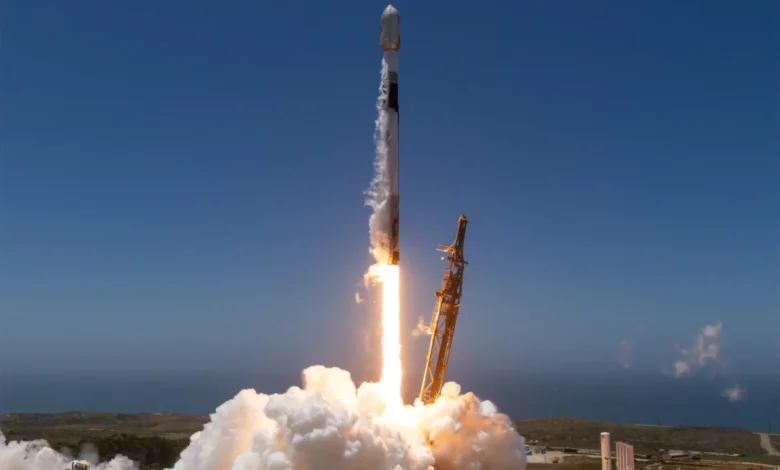
These satellites provide global persistent communication, missile warning, and missile tracking capabilities. Because the constellation requires hundreds of satellites to be operational simultaneously, the SDA needs a constant "conveyor belt" of launches. The Space Force’s July 16 launch of 21 SDA data transport satellites aboard a SpaceX Falcon 9 from Vandenberg Space Force Base is a prime example of the type of mission that Lane 1 is designed to facilitate.
As the SDA moves from Tranche 1 to Tranche 2 and beyond, the number of required launches is expected to grow exponentially. Furthermore, other entities, such as the National Reconnaissance Office (NRO), are also exploring smaller satellite bus designs that could be launched via Lane 1 providers.
Implications for Lane 2 and Heavy-Lift Requirements
The surge in demand is not limited to the commercial-style Lane 1. In April 2024, Space Systems Command revealed that it had identified 25 additional missions for Phase 3 Lane 2—the pathway reserved for the military’s most complex, heavy-lift, and high-priority satellites. This brings the total projected Lane 2 missions to 79 over the five-year period, up from the original estimate of 54.

Lane 2 is currently limited to providers whose launch systems are fully certified for National Security Space Launch, a status currently held only by SpaceX and ULA, with Blue Origin working toward certification for its New Glenn rocket. The fact that both Lane 1 and Lane 2 are seeing significant increases in projected activity underscores a broader trend: the "space domain" is becoming increasingly contested, necessitating a more robust and resilient presence in orbit.
Economic and Industry Impact
The $17 billion ceiling is a major victory for the commercial space industry. By providing a clear and substantial budgetary path, the Space Force is reducing the financial risk for companies developing new launch vehicles. This government backing is often a prerequisite for private equity and venture capital firms to continue funding the capital-intensive development of orbital rockets.
Industry analysts suggest that this move will also drive down costs through increased competition. With seven companies vying for task orders, the Space Force can leverage competitive bidding to secure lower prices per launch, potentially saving taxpayers billions in the long run compared to the older, non-competitive procurement models.
Furthermore, the expansion supports the domestic industrial base. By diversifying its provider pool, the U.S. government ensures that a failure or delay in one company’s launch schedule—such as the recent temporary grounding of the Falcon 9—does not result in a total standstill of national security space access. This "assured access to space" is a cornerstone of U.S. national defense strategy.
Future Outlook: A New Era of Orbital Logistics
As the Space Force prepares for the remainder of the decade, the $17 billion Lane 1 contract will serve as the engine for a new era of orbital logistics. The focus is no longer just on getting a satellite to space, but on doing so with "tactically responsive" speed. The ability to replace a de-orbited or damaged satellite within days or weeks, rather than months or years, is a capability the Pentagon is aggressively pursuing.
The increased ceiling also provides the flexibility to incorporate revolutionary technologies, such as in-space refueling and orbital transfer vehicles (OTVs). Companies like Impulse Space, which specializes in "last-mile" delivery in orbit, are now positioned to compete for task orders that involve moving satellites between different orbital planes—a critical requirement for maintaining a resilient constellation.
In conclusion, the tripling of the NSSL Phase 3 Lane 1 contract ceiling to $17 billion is more than a mere administrative update; it is a strategic reinforcement of the United States’ commitment to maintaining dominance in the space domain. By aligning its budget with the realities of modern satellite technology and the growing capabilities of the private sector, the Space Force is ensuring that it remains agile, competitive, and ready to meet the challenges of an increasingly crowded and contested high ground.