Marvel’s Wolverine has arrived as a critical disappointment for Sony and Insomniac Games


The long-awaited release of Marvel’s Wolverine has failed to meet the lofty expectations set for it as a premier PlayStation 5 exclusive, casting a shadow over Insomniac Games’ recent track record and adding to a growing list of public relations challenges for Sony Interactive Entertainment. While the title is technically competent, industry consensus suggests that the game lacks the "X-factor" required to sustain its position as a pillar of the current console generation, ultimately delivering an experience that feels repetitive and undercooked.
The reception of Marvel’s Wolverine arrives at a precarious moment for Sony. The platform holder is currently navigating a period of internal and external volatility, marked by the struggles of its live-service strategy, the potential decline of high-profile acquisitions like Bungie, and public backlash regarding its long-term hardware roadmap. For a company that has built its brand identity on "prestige" single-player exclusives, the lukewarm reception of such a high-profile Marvel project represents a significant strategic setback.

A Timeline of Development and Hype
Insomniac Games, the developer behind the critically acclaimed Spider-Man franchise, was tasked with bringing the iconic mutant to the PS5 with the same level of polish and ambition. Announced with significant fanfare, the project was positioned as a cornerstone of Sony’s mid-generation software lineup. However, the development cycle—much like the final product—has been marked by a disconnect between the studio’s ambitious vision and the mechanical execution of the gameplay.
The lead-up to the launch saw the title touted as a mature, visceral departure from the more whimsical nature of Insomniac’s Spider-Man games. Fans anticipated a deep, character-driven narrative paired with fluid, high-impact combat. Instead, early reviews paint a picture of a game that excels in its performance and narrative presentation—specifically Liam McIntyre’s portrayal of Logan—but falls flat in its fundamental gameplay loops.
Critical Consensus and Gameplay Analysis
The critical response has been starkly divided, though a common thread exists regarding the game’s repetitive nature. GamesRadar, awarding the title a 3/5, noted that while the game’s "mid-game" is vibrant and engaging, the experience is largely comprised of "boxy corridors" and "shallow combat luges" that rely too heavily on scripted cutscenes.

This sentiment was echoed by IGN, which gave the game a 6/10. While reviewer Simon Cardy praised the character depth, he concluded that the combat systems "wear thin well before the conclusion." This critique is particularly damaging for an action-oriented title, where the primary interaction—combat—is expected to evolve alongside the player’s progression.
Conversely, some outlets offered more favorable, albeit qualified, praise. Shacknews and DualShockers provided scores of 8/10 and 8.5/10, respectively, highlighting the strength of the narrative and the emotional weight of Logan’s journey. However, even these positive reviews conceded that the mechanical variety did not match the quality of the studio’s previous work on the Spider-Man series, leaving the game feeling like an iteration on a formula that no longer fits the character.
The Broader Strategic Context for Sony
The failure of Marvel’s Wolverine to secure universal acclaim cannot be viewed in isolation. It is part of a larger, more concerning trend for Sony Interactive Entertainment. The company has recently faced significant friction regarding its shift toward live-service models. The decision to invest heavily in the live-service space has yielded mixed results, most notably the decline of Bungie’s Destiny 2 and reports that the studio is attempting to offload significant portions of its headquarters as it struggles with internal restructuring.

Furthermore, Sony’s relationship with industry auteurs has shown signs of strain. The recent breakdown in the partnership with Hideo Kojima regarding his upcoming project, Physint—which is now being published by Microsoft’s Xbox division—was widely viewed as a major strategic blunder. Reports suggest that the partnership dissolved due to missed deadlines and budget overruns, but the optics of losing a high-profile creator to a direct competitor have damaged Sony’s reputation as the "home" for creative visionaries.
Compounding these issues is the company’s stated plan to phase out physical disc production by 2028. This move has drawn ire from gaming preservationists and a significant segment of the consumer base, who view the shift toward a strictly digital ecosystem as an erosion of consumer rights and long-term ownership. When combined with a flagship release like Wolverine that fails to capture the zeitgeist, the narrative surrounding the PlayStation brand has shifted from one of dominance to one of vulnerability.
Comparative Performance and Market Implications
When analyzing the gameplay design, reviewers frequently compared Wolverine to the Batman: Arkham series and the Insomniac Spider-Man titles. The consensus is that Wolverine lacks the "balletic joy" and mechanical complexity that made those titles defining entries in the superhero genre. As noted by The Guardian, Logan often feels like "hired muscle" rather than a nuanced protagonist, and the repetitive nature of the combat leaves players feeling disengaged by the time they reach the final act.
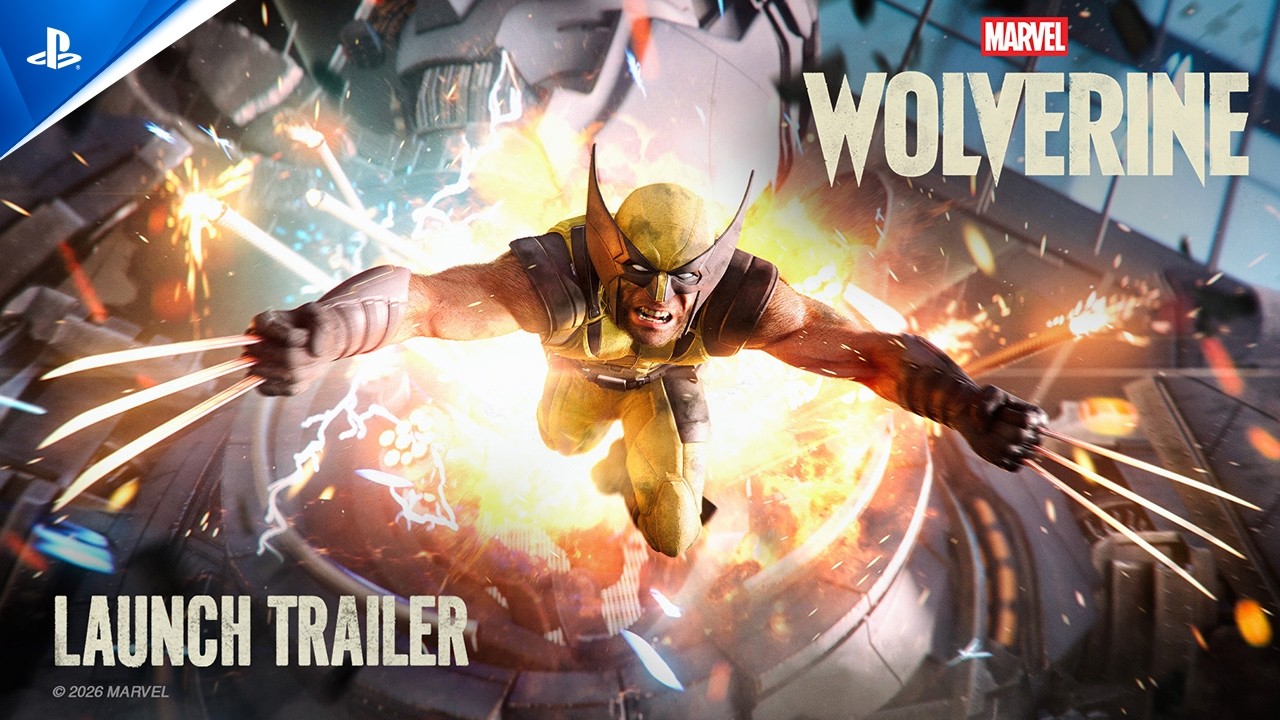
Giant Bomb’s assessment, which provided a score of 2.5/5, offered a scathing critique of the game’s structural design, describing it as a "patchwork quilt of ideas" from other PlayStation titles that fail to coalesce into a cohesive whole. By attempting to force a character with a limited toolset into a template designed for high-mobility, open-world heroes like Spider-Man, the developers created a game that frequently fights its own design logic.
Economic and Industry Outlook
The financial implications of a middling reception for a major IP like Wolverine are substantial. Sony relies on its exclusive titles to drive console hardware sales. If these titles are no longer viewed as "must-play" experiences, the value proposition of the PlayStation 5 hardware is weakened, particularly as competition from Xbox’s Game Pass and PC storefronts continues to grow.
While the game is not a failure in terms of production value or narrative ambition, it is a failure of expectation management. Sony needed a definitive hit to maintain its market momentum; instead, it has released a title that serves as a cautionary tale about the limits of established formulas.

As Insomniac Games moves forward, the studio will likely face questions about its creative process and the efficacy of its "house style" when applied to more aggressive, grounded characters. For Sony, the task is now to rebuild consumer trust, both through its software pipeline and its broader corporate strategy. The lukewarm reception of Marvel’s Wolverine suggests that the brand’s "prestige" era may be facing a period of necessary recalibration, as the company grapples with the realities of an increasingly critical and discerning gaming audience.
In the immediate term, the game will remain a point of discussion for its technical achievements, but it will also be remembered as the moment the "Sony magic" began to show visible cracks. Whether this is a temporary stumble or a sign of a deeper malaise within the PlayStation ecosystem remains to be seen, but the data suggests that for the first time in this generation, Sony’s reliance on high-budget, safe-bet exclusives is failing to yield the returns, both critical and cultural, that the company requires.
Related posts: