Skyroot Aerospace Achieves Historic Milestone with First Successful Orbital Launch of Vikram-1 Rocket

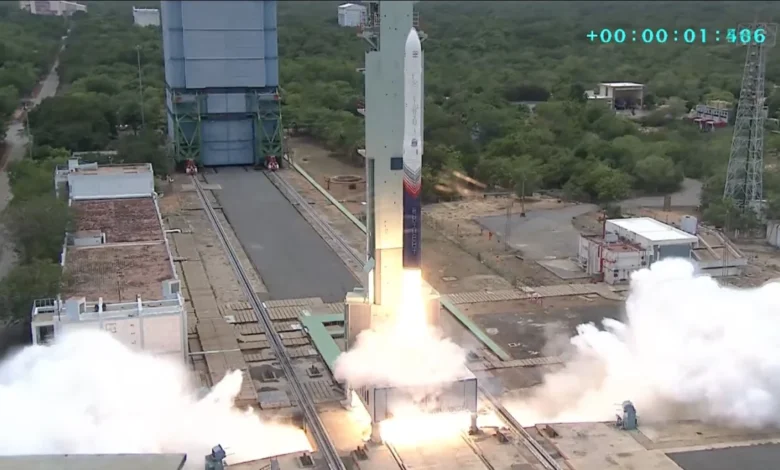
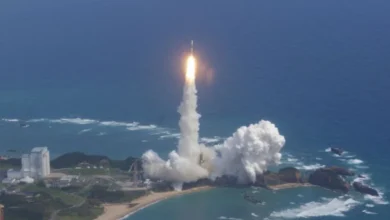
In a definitive moment for the global aerospace industry and a transformative leap for India’s private space sector, Skyroot Aerospace successfully conducted the inaugural orbital flight of its Vikram-1 rocket on July 18. Lifting off from the Satish Dhawan Space Centre (SDSC) in Sriharikota, the mission—aptly titled "Mission Aagaman," or "Arrival" in Sanskrit—marked the first time a privately developed Indian launch vehicle has successfully reached Earth orbit. This achievement places India in an elite group of nations with domestic private companies capable of orbital delivery, signaling a paradigm shift in how the South Asian NewSpace ecosystem operates alongside its storied national space agency, the Indian Space Research Organisation (ISRO).
The Vikram-1 rocket took flight at 2:35 a.m. Eastern Time (12:05 p.m. Indian Standard Time) after a brief 35-minute delay caused by a technical anomaly detected at the T-minus 5-minute mark. Despite the tension inherent in first-flight countdowns, the launch team resolved the issue swiftly, allowing the 20-meter-tall, multi-stage vehicle to ascend into the clear skies over the Bay of Bengal. The successful deployment of its payloads into a 450-kilometer low Earth orbit (LEO) roughly 15 minutes after liftoff confirms Skyroot’s status as a frontrunner in the competitive small-satellite launch market.
Mission Chronology and Technical Execution
The flight profile of Mission Aagaman was a complex demonstration of indigenous engineering. The Vikram-1 is a four-stage launch vehicle, utilizing three solid-fuel stages and a final liquid-propellant stage designed for precise orbital insertion.
The countdown resumed after the brief technical hold, and at T-0, the first stage ignited, generating the necessary thrust to clear the launch tower. The first three stages, powered by the company’s proprietary "Kalam" series of solid-fuel motors, performed within nominal parameters. These stages are characterized by their high-strength carbon-fiber construction, which significantly reduces the vehicle’s mass while maintaining structural integrity under extreme atmospheric pressure.
Following the separation of the third stage, the rocket’s fourth stage—the Orbit Adjustment Module (OAM)—took over. This liquid-propellant kick stage is the "brain" of the delivery system, capable of multiple restarts to ensure payloads are placed into specific, targeted orbits. The OAM fired for approximately six minutes, performing the critical maneuvers required to circularize the orbit at the planned 450-kilometer altitude. Approximately 15 minutes after the initial ignition at Sriharikota, Skyroot mission control confirmed that the payloads had been successfully separated, and the upper stage had achieved its intended orbital velocity.
Payload Overview: A Shared Success
While the primary objective of Mission Aagaman was the validation of the Vikram-1 launch vehicle, the mission also served as a critical transport opportunity for several nascent space entities. The rocket carried two primary cubesats and several hosted payloads:

- Skyroot’s Internal Satellite: A technology demonstrator designed to test various subsystems for future Skyroot missions.
- Grahaa Space Cubesat: Built by an Indian startup, this satellite is part of a planned constellation for near real-time Earth observation and video streaming.
- Hosted Payloads: The mission included experimental hardware from Dcubed (Germany) and Cosmoserve Space, allowing these companies to flight-test components in the harsh environment of space.
- Symbolic Cargo: In a nod to the public support for the mission, the rocket carried thousands of digital postcards signed by citizens across India, including a message from Prime Minister Narendra Modi, symbolizing the "arrival" of the private sector in India’s space journey.
Strategic Context: The Liberalization of Indian Space
The success of Vikram-1 is the culmination of years of policy reform initiated by the Indian government. In 2020, the government opened the space sector to private enterprises, establishing the Indian National Space Promotion and Authorization Centre (IN-SPACe) as a single-window regulator to facilitate private participation.
Before this reform, the Indian space program was almost exclusively the domain of ISRO. While ISRO remains a global leader in cost-effective space exploration—evidenced by the Chandrayaan and Mangalyaan missions—the burgeoning demand for small satellite launches necessitated a more agile, commercial approach. Skyroot Aerospace, founded in 2018 by former ISRO scientists Pawan Kumar Chandana and Naga Bharath Daka, became the first company to sign a Memorandum of Understanding with ISRO to access its facilities and technical expertise.
"India is proud to be the fastest-growing space tech ecosystem in the world," stated Pawan Kumar Chandana shortly after the launch. "Achieving orbit on the very first attempt is a feat very few have accomplished globally. It validates our design philosophy and our team’s relentless pursuit of excellence over the last six years."
Technical Specifications and Future Iterations
The Vikram-1 is designed to cater specifically to the "small-sat" market, which has seen explosive growth due to the proliferation of telecommunications and Earth-imaging constellations. The current iteration of the rocket can deliver up to 350 kilograms to low Earth orbit. However, Skyroot has already detailed plans for expansion:
- Vikram-1U: An upgraded variant featuring strap-on solid boosters that will increase payload capacity to 550 kilograms.
- Vikram-2 and Vikram-3: Larger vehicles currently in development, aimed at the medium-lift market with capacities exceeding 1,000 kilograms.
- 3D Printing Integration: Skyroot has made extensive use of 3D printing for its liquid engines, including the "Raman" engine used in the OAM stage, which reduces part count and manufacturing time by over 80%.
In May, Skyroot raised $60 million in a funding round led by Temasek, bringing its total capital raised to over $100 million. This financial runway is intended to scale production, allowing the company to move from experimental flights to a regular commercial cadence. Ashwin Mahavadi, Skyroot’s Senior Vice President for Business and Strategy, indicated that the company aims to conduct at least two more Vikram-1 launches before the end of the year to solidify its reliability rating.
Reactions from the Global Space Community
The successful orbital insertion drew immediate praise from across the aerospace sector. Prime Minister Narendra Modi, who has been a vocal proponent of the "Atmanirbhar Bharat" (Self-Reliant India) initiative, reportedly called the Skyroot founders minutes after the mission’s success. Government officials characterized the launch as a "Sputnik moment" for India’s private industry, proving that Indian startups can compete with global heavyweights like SpaceX, Rocket Lab, and Firefly Aerospace.
Industry analysts suggest that Skyroot’s success will likely trigger a surge in investment into other Indian space startups, such as Agnikul Cosmos, which is developing the Agnibaan rocket, and Pixxel, a hyperspectral imaging company. By demonstrating that the regulatory framework provided by IN-SPACe and the logistical support from ISRO can result in a successful orbital mission, Skyroot has de-risked the Indian space market for international venture capital.

Analysis: Implications for the Small-Sat Market
The global small satellite launch market is currently valued at approximately $5 billion and is expected to triple by 2030. Historically, this market has been dominated by "rideshare" missions on large rockets like the SpaceX Falcon 9. However, rideshare missions often force small satellite operators to accept orbits that are not ideal for their specific mission profiles and subject them to the scheduling whims of the primary (larger) payload.
Dedicated small launchers like Vikram-1 offer "taxi" services rather than "bus" services. They provide bespoke orbital insertion, allowing companies to choose their exact altitude and inclination. Skyroot’s competitive advantage lies in its cost structure; by leveraging India’s lower manufacturing costs and its highly skilled but affordable engineering talent, Skyroot aims to offer launch prices significantly lower than its Western counterparts.
Furthermore, the Vikram-1’s use of solid-fuel stages offers a "launch-on-demand" capability. Unlike liquid-fueled rockets that require complex cryogenic loading processes, solid-fuel rockets can be stored in a semi-ready state and launched with minimal notice—a feature highly attractive to defense and emergency response agencies.
Conclusion and Outlook
The success of Mission Aagaman is more than just a technical milestone; it is a proof of concept for a new era of Indian industry. As the Vikram-1 upper stage continues its journey around the Earth, it carries with it the aspirations of a nation looking to capture a 10% share of the global space economy by the end of the decade, up from its current 2%.
Skyroot Aerospace now faces the challenge of "the second flight." In the aerospace world, repeating a success is often more difficult than achieving it the first time, as companies must transition from a hand-crafted experimental mindset to a standardized manufacturing process. Nevertheless, with a successful orbital flight under its belt and a significant capital reserve, Skyroot has firmly established itself as a pivotal player in the 21st-century space race. The "arrival" of the Indian private sector is no longer a projection—it is a reality orbiting 450 kilometers above.
Related posts: