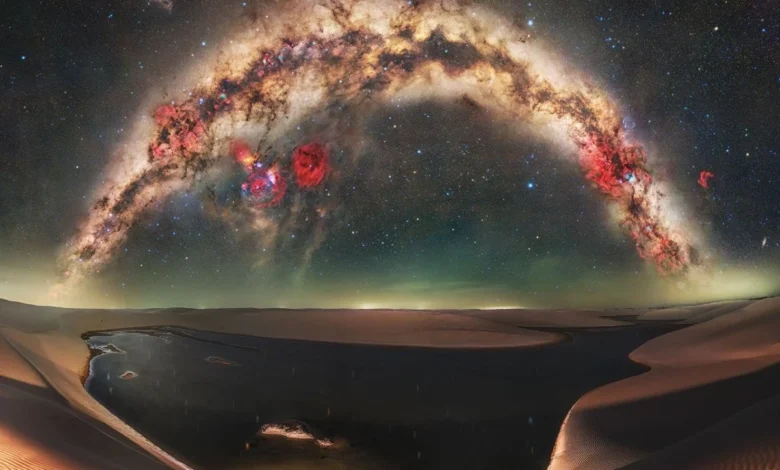
The intersection of terrestrial beauty and celestial mechanics is captured with startling clarity in the latest feature from NASA’s Astronomy Picture of the Day (APOD). Released on November 26, 2026, the image depicts the Milky Way galaxy arching gracefully over the stark, white sand dunes and obsidian-hued lagoons of Lençóis Maranhenses National Park in Brazil. Captured by astrophotographer Ignacio Fernández, the photograph serves as a high-fidelity reminder of the intricate relationship between Earth’s unique geological formations and the vast, rotating structure of our home galaxy.
Geographical and Astronomical Context
Lençóis Maranhenses, located in the state of Maranhão in northeastern Brazil, is a landscape defined by paradox. Despite its appearance as a desert, the region is subject to a heavy rainy season, which fills the valleys between expansive white sand dunes with crystal-clear rainwater. These seasonal lagoons, combined with the extreme isolation from urban light pollution, make the park one of the premier locations on the planet for night-sky observation.
Situated at a latitude of approximately 2 degrees south, the park offers observers in the Southern Hemisphere an unparalleled view of the galactic core. From this vantage point, the Milky Way appears significantly more prominent than it does in higher northern latitudes, where the galactic center remains lower on the horizon. In July, when this composite image was captured, the orientation of the Earth’s rotation allows for a prolonged view of the most dense, dust-filled regions of the galaxy’s disk.
Technical Analysis of the Visual Artifact
While the image presents a breathtaking arc of starlight, it is essential to distinguish between the aesthetic composition and the physical reality of the sky. The distinct "rainbow" arch of the Milky Way is an optical phenomenon created by the use of a wide-angle lens. In reality, the Milky Way is a flat, rotating disk; it does not curve over the horizon in a semi-circular fashion.
The wide-angle perspective distorts the linear nature of the galactic plane, wrapping it across the frame. When the photographer, Ignacio Fernández, aligned the arc of the galaxy with the physical contour of the dark lagoon, he created a visual symmetry—often described as a "cosmic eye." This intentional framing demonstrates the intersection of technical astrophotography and artistic composition, where the goal is not merely to document the stars but to contextualize them within the human experience of the landscape.
Chronology of the Observation
The data collection for this project took place throughout the night during the peak viewing season in July 2026. Because the Earth is constantly rotating, the position of the Milky Way changes relative to the horizon on a nightly and seasonal basis.
- July 2026: The primary image acquisition phase. Astrophotographers targeting this region must account for the specific phase of the moon, as the brightness of the lunar surface can wash out the faint light of nebulae and dust lanes.
- Post-Processing: Following the field work, the individual exposures—each calibrated to capture different light spectrums—are stacked and stitched. This process removes digital noise and enhances the visibility of dark dust lanes and colorful nebulae that are otherwise difficult to perceive with the naked eye.
- November 26, 2026: Official publication of the composite image by the NASA Astronomy Picture of the Day editorial team, led by astronomers such as Robert Nemiroff and Jerry Bonnell.
Understanding Galactic Features
The image highlights several key components of the Milky Way that are often obscured by atmospheric interference or light pollution. The dark, sprawling patches visible within the arch are "dust lanes"—vast regions of interstellar dust that absorb visible light. These areas are, ironically, the nurseries of future stars. By blocking the light from behind them, these lanes provide a stark contrast to the brilliant, glowing gases of various nebulae.
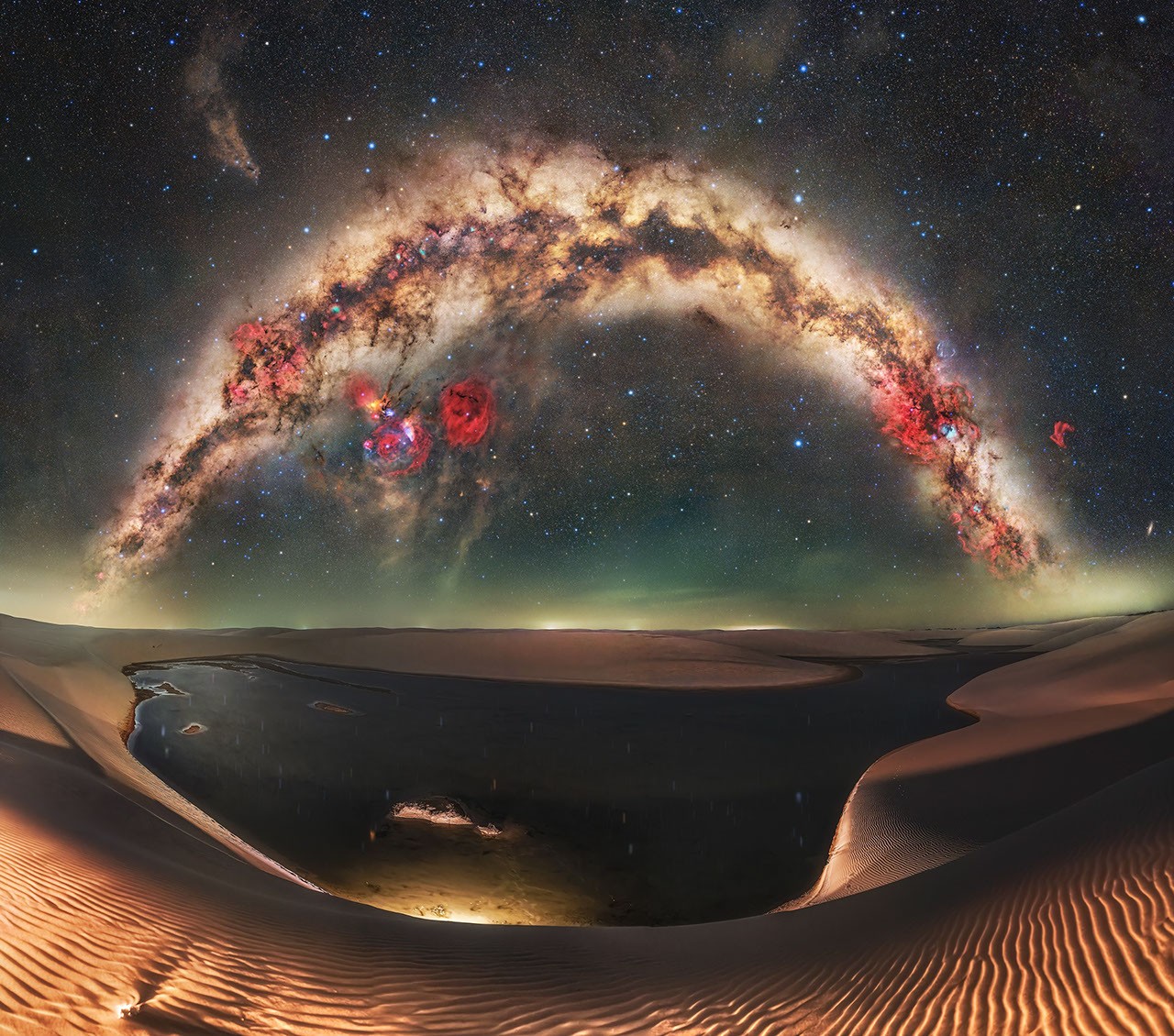
Nebulae, which appear as splashes of color in long-exposure photographs, are massive clouds of ionized gas and dust. In this image, the subtle hues are the result of hydrogen, oxygen, and sulfur emissions, which are captured by specialized sensors that are far more sensitive to these wavelengths than the human retina.
The Role of APOD in Public Outreach
The Astronomy Picture of the Day is a long-standing service provided by NASA and the Michigan Technological University. Since its inception, the project has aimed to bridge the gap between complex astrophysical data and the general public. By pairing every image with a professional explanation written by astronomers, the initiative ensures that the public receives accurate, educational context.
The inclusion of Lençóis Maranhenses in the APOD archive highlights the importance of "dark sky" preservation. As global urbanization continues to increase, the number of places where the Milky Way is visible to the naked eye is rapidly declining. Scientists and conservationists alike emphasize that these sites are not just aesthetic treasures; they are critical "laboratories" for the next generation of astronomers.
Scientific Implications and Public Reaction
The reaction from the astronomical community to this specific image has been one of appreciation for both the technical skill required for such a shot and the choice of location. By utilizing a high-latitude site like Lençóis Maranhenses, the photographer provides a glimpse into the southern sky that is often underrepresented in mainstream media.
From a scientific perspective, the image serves as an excellent reference point for discussing the "Great Rift"—the massive dust cloud that appears to split the Milky Way in two. When viewers see this "eye" in the sky, they are looking directly toward the center of our galaxy, a region obscured by thousands of light-years of dust. This perspective helps the public understand that our vantage point within the galaxy is essentially an "edge-on" view, which is why the Milky Way appears as a band rather than a sphere.
Broader Impact of Astrophotography
The impact of professional-grade astrophotography on public interest in space science cannot be understated. High-resolution, artistic representations of the cosmos drive engagement with NASA’s broader mission objectives, such as the study of dark matter and galactic evolution. When a viewer connects emotionally with an image of the Milky Way over a local landscape, the abstract concept of a galaxy becomes a tangible reality.
Furthermore, the collaboration between NASA and academic institutions like Michigan Tech ensures that the information provided with these images remains consistent with the latest findings in astrophysics. This synthesis of art and science remains a vital tool for scientific literacy.
As we look toward the future, images like the one featured on November 26, 2026, remind us that we are part of a larger, dynamic system. The "eye" looking back from the lagoon is a reflection of our own position in the cosmos—a fragile, beautiful, and fleeting perspective on a galaxy that has been evolving for over 13 billion years. Whether viewed as an artistic achievement or a scientific document, the Milky Way over Lençóis Maranhenses stands as a testament to the enduring human fascination with the night sky.