The Ultimate Guide to Crypto Self-Custody: Securing Your Digital Assets in an Era of Exchange Volatility

When an individual purchases digital assets on a centralized cryptocurrency exchange, the platform typically retains possession of those funds on the user’s behalf. While an interactive dashboard or application interface displays an active balance, the cryptographic private keys that mathematically govern the coins remain under the ownership and operational control of the trading platform. This architecture creates an inherent counterparty risk: if an exchange collapses, suffers a catastrophic security breach, or abruptly freezes user withdrawals, account holders can find themselves entirely locked out of their capital.
The catastrophic collapse of FTX in November 2022 served as a watershed moment for the digital asset industry, leaving millions of global users unable to access their funds and transforming the industry’s historical adage—"not your keys, not your coins"—into an urgent rallying cry. In response to recurring systemic failures across centralized platforms, a growing segment of the digital asset community has gravitated toward self-custody: the practice of maintaining direct, independent control over one’s cryptocurrency without relying on a third-party intermediary. This comprehensive overview examines the mechanics of self-custody, the operational frameworks involved, the inherent vulnerabilities, and the shifting regulatory and technological landscapes shaping the future of digital asset ownership.
Understanding the Mechanics of Self-Custody
At its core, self-custody means that an individual—and exclusively that individual—retains absolute control over the private keys associated with their cryptocurrency holdings. To understand why this distinction matters, it is necessary to examine how public blockchains operate. Unlike traditional fiat currency stored inside a physical wallet or a bank vault, cryptocurrency coins do not physically reside within a software application. Instead, all transaction data and balances are permanently inscribed on a decentralized public ledger known as a blockchain.
A private key functions as an intensely long, cryptographically generated secret number that mathematically proves an individual’s authorization to spend or transfer specific funds on the ledger. Whosoever holds the private key exercises absolute dominion over the associated digital assets.
In a custodial model, such as that utilized by major centralized exchanges, the corporate entity generates and maintains these private keys on behalf of its customers. Users authenticate their accounts via conventional usernames, passwords, and two-factor authentication, trusting the organization to maintain internal solvency, robust cybersecurity defenses, and continuous liquidity for withdrawals. Conversely, in a self-custodial or non-custodial framework, these private keys are mathematically generated and stored locally on the user’s personal hardware or device. Transactions are executed exclusively when the owner explicitly authorizes them using their unique credentials.
The Role and Protection of Seed Phrases
When a user initializes a self-custodial wallet, the software or hardware device automatically generates a seed phrase—frequently referred to as a recovery phrase—typically comprising a sequence of 12 to 24 randomized English words. The seed phrase acts as a human-readable, universally standardized backup format for the underlying master private key. Anyone who gains possession of this seed phrase can seamlessly recreate the exact wallet infrastructure on an entirely separate device and drain the associated funds.
Consequently, the seed phrase represents the single most critical security vector in self-custody. Established cybersecurity and digital asset management guides consistently advise users to transcribe their seed phrases physically onto paper or stamp them into durable metal plates. These backups must be stored in secure, offline environments—such as a home safe or safety deposit box—and must never be entered into internet-connected websites, photographed, stored in cloud-based document repositories, or shared with anyone under any circumstances.
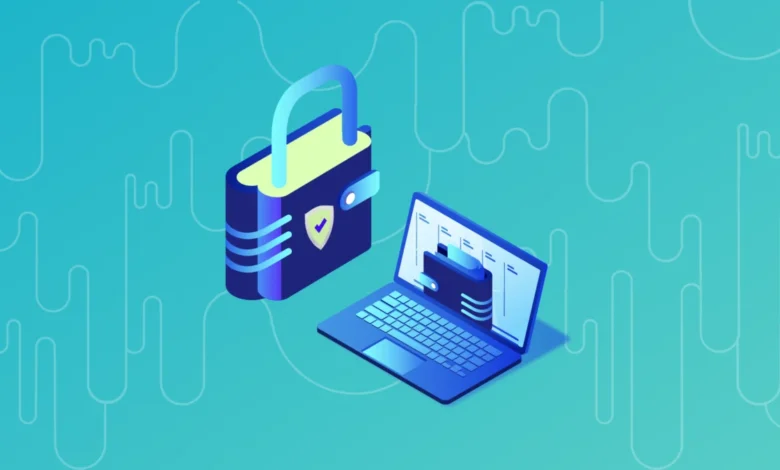
Self-custodial wallets generally manifest in two primary forms: software wallets (hot wallets), which are applications connected to the internet via desktop computers or mobile phones, and hardware wallets (cold wallets), which are physical electronic devices designed to isolate private keys entirely from online environments.
Comparing Custodial and Self-Custodial Models
The debate between custodial services and self-custody centers on a fundamental trade-off between user-friendly convenience and absolute financial sovereignty.
Centralized custodial platforms offer a streamlined, forgiving user experience. If a customer forgets their login credentials, standard password reset protocols can restore access. Furthermore, the exchange absorbs the complex responsibility of maintaining server security, shielding infrastructure from distributed denial-of-service attacks, and complying with institutional asset protection standards. However, this convenience comes at the cost of counterparty risk. Users must inherently trust that the corporation will remain solvent, resist internal mismanagement, honor withdrawal requests, and protect customer funds from regulatory seizures or corporate bankruptcy proceedings.
Self-custody completely eliminates counterparty risk. By holding one’s own keys, no corporate entity, financial institution, or government agency can arbitrarily freeze funds, restrict transactions, or deny access to capital. However, this autonomy shifts 100% of the operational responsibility onto the individual. There is no customer support desk to call for a password reset, and no administrative override if an error occurs. If a user loses their seed phrase, falls victim to targeted malware, or has their physical backup compromised, there is typically no mechanism to recover the lost funds.
The historical consequences of losing access to private keys are well-documented. A prominent cautionary tale involves James Howells, a resident of Newport, Wales, who accidentally discarded a computer hard drive containing the private keys to approximately 8,000 Bitcoin during a routine office cleanup in 2013. Over the intervening decade, Howells has repeatedly petitioned local municipal authorities for permission to excavate the local municipal landfill where the drive is buried, facing continuous legal and environmental rejections while watching the theoretical value of the lost assets skyrocket into the hundreds of millions of dollars.
Emerging Vulnerabilities and Security Risks in Self-Custody
While losing physical backup documentation remains the most commonly cited hazard associated with self-custody, it represents only one facet of a complex threat landscape. Recent technological and physical security trends highlight that even advanced self-custody solutions carry systemic risks.
Hardware vulnerabilities present a persistent challenge. A prominent example unfolded in mid-2026, when security researchers identified a severe firmware vulnerability within Coldcard—a widely utilized, air-gapped hardware wallet designed specifically for Bitcoin storage. The hidden flaw, which managed to survive years of routine security audits, permitted sophisticated attackers to mathematically reconstruct portions of users’ seed phrases under specific conditions. According to data compiled by Galaxy Research, the resulting exploit drained nearly $114 million in Bitcoin from unsuspecting holders within a matter of days. This incident underscored a sobering reality within the security community: even the most rigorously engineered physical storage devices remain fundamentally dependent on the absolute flawlessness of their underlying codebases.
Software-based wallets face constant, evolving attacks via sophisticated phishing campaigns and malicious browser extensions. Cybercriminals frequently deploy fraudulent customer support accounts across social media platforms, posing as representatives of popular wallet providers to deceive users into surrendering their seed phrases under the guise of technical troubleshooting or account verification.
Beyond digital threats, self-custody holders increasingly face physical security risks. The proliferation of high-profile digital wealth has catalyzed an alarming surge in targeted physical extortion crimes, colloquially known within the industry as "wrench attacks," wherein criminals employ physical coercion or violence to force victims into transferring their cryptocurrency on-chain. Blockchain security analytics firm CertiK verified 52 distinct wrench attacks globally during the first half of 2026, representing a substantial escalation from the 39 incidents recorded during the corresponding period in the previous year. Concurrently, analytics firm Chainalysis reported that physical extortion incidents were pacing toward an unprecedented annual record.
This growing physical vulnerability has directly influenced political and social resistance among digital asset holders. Public backlash erupted following legislative proposals in various jurisdictions compelling citizens to report large self-custodial holdings to tax authorities, with privacy advocates warning that centralized government databases containing such sensitive location and asset data could become prime targets for malicious actors seeking physical targeting targets.
Step-by-Step Guide to Transitioning Assets into Self-Custody
For individuals deciding to transition their digital assets off centralized exchanges and into secure self-custody environments, adherence to a methodical, disciplined process is essential to mitigate operational errors:
- Research and Select a Wallet: Evaluate whether a software wallet (suitable for smaller, frequent transactions) or a hardware wallet (recommended for long-term storage of substantial capital) best aligns with your security needs and technical proficiency.
- Initialize and Backup the Device: Set up the chosen wallet following the manufacturer’s official instructions, meticulously transcribing the generated seed phrase onto physical media (paper or metal) and storing it in a secure, offline location. Never store digital photographs or text files of the phrase on cloud services.
- Perform a Test Transaction: Before transferring the entirety of your portfolio, execute a small test transfer—sending a minimal amount of cryptocurrency from the exchange to your new self-custodial wallet address.
- Verify Receipt and Reset: Confirm that the test funds have arrived securely in the self-custodial wallet, and optionally test the recovery mechanism by wiping and restoring the wallet using your physical seed phrase backup.
- Execute the Final Transfer: Once confident in the recovery process, initiate the transfer of the remaining balance from the exchange to your self-custodial address.
The Regulatory Landscape Surrounding Unhosted Wallets
Governments and financial regulatory bodies worldwide have spent years grappling with how to effectively monitor and regulate self-custodial, or "unhosted," wallets without infringing upon foundational civil liberties and data privacy rights.
A notable regulatory shift occurred in October 2026, when the Financial Crimes Enforcement Network (FinCEN), a bureau of the U.S. Department of the Treasury, formally withdrew a contentious regulatory proposal initially introduced in late 2020. The abandoned framework would have mandated that traditional banks and licensed money services businesses maintain detailed identification records regarding transactions involving self-custodial wallets exceeding $3,000, while formally reporting transactions crossing the $10,000 threshold.
Similarly, international legislative resistance has met attempts to impose mandatory reporting burdens on everyday users. In November 2026, the French Senate officially rejected a legislative proposal that would have required French cryptocurrency holders to explicitly declare any self-custodial wallet holdings exceeding €100,000 in aggregate value. Lawmakers who opposed the measure cited severe cybersecurity and physical safety risks associated with centralizing sensitive asset ownership data within government oversight databases.
The Technological Future of Self-Custody
As the digital asset ecosystem matures, self-custody is evolving beyond human-operated environments to accommodate emerging automated technologies. A prominent trend in 2026 was the integration of self-custody into artificial intelligence systems. Industry participants witnessed the launch of MetaMask’s Agent Wallet alongside Coinbase’s AI-focused wallet infrastructure. These specialized self-custodial solutions allow autonomous AI agents to execute on-chain transactions and liquidity management strategies strictly within predefined programmatic guardrails and spending limits established by the human user.
Concurrently, wallet developers are actively deploying user-experience innovations designed to lower the technical barriers for onboarding newcomers. Features such as social login recovery mechanisms, biometric authentication, and cryptographic passkeys are gradually reducing the absolute historical reliance on complex 24-word seed phrases. Despite these user-experience enhancements, however, the foundational axiom of digital finance remains entirely unchanged: the security of your capital rests entirely upon your ability to secure your private keys.
Related posts: