Apple Dominates US Smartphone Market with Record 57 Percent Share Amid Industry-Wide Contraction

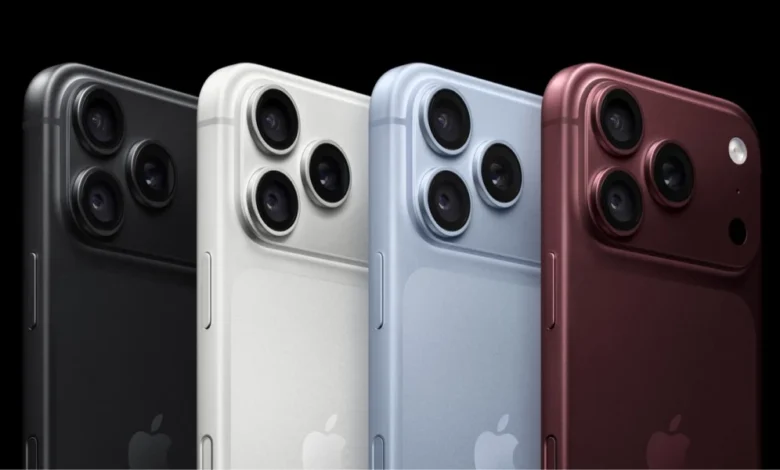
In a striking demonstration of brand resilience and market dominance, Apple has significantly expanded its footprint in the United States smartphone sector, capturing a 57 percent share of total shipments in the third quarter of 2026. This performance marks a substantial year-over-year increase from the 50 percent share held during the same period in 2025. According to the latest data from Counterpoint Research, Apple stands as the sole major manufacturer to effectively navigate a challenging economic landscape that saw the broader US smartphone market contract by 9 percent.
The divergence between Apple’s growth and the industry’s decline highlights a deepening polarization in the mobile market. While competitors grapple with rising component costs—particularly in the memory sector—and a softening consumer appetite for mid-range and entry-level devices, Apple’s strategy of maintaining stable pricing throughout the year until the September introduction of the iPhone 18 Pro lineup has proven to be a decisive competitive advantage.
A Chronology of Market Resilience
The current market conditions are the culmination of several quarters of instability within the global supply chain. Throughout 2026, manufacturers faced a "perfect storm" of logistical bottlenecks, inflationary pressures, and a notable surge in the cost of raw materials.

In early 2026, the industry saw the first signs of strain as semiconductor and memory costs began to climb. While many Android-based manufacturers were forced to pass these costs onto consumers through repeated price adjustments, Apple largely absorbed the financial impact or leveraged its immense purchasing power to stabilize its cost structure.
By the second quarter of 2026, the disparity in performance between the premium and budget segments began to widen. As consumer discretionary spending tightened, the low-end Android market, which is particularly sensitive to price fluctuations, began to experience significant shipment volume drops. This trend culminated in the Q3 results, where Apple’s ability to command the premium segment shielded it from the broader market downturn that plagued its competitors.
Analyzing the Data: A Disconnect in Trends
The 9 percent year-over-year decline in total US smartphone shipments reported by Counterpoint Research serves as a sobering indicator of the current state of consumer electronics. The contraction is not limited to device manufacturers; even the primary US wireless carriers reported a 4 percent year-over-year decline in smartphone sales, suggesting that the hesitation is not merely a preference for one brand over another, but a general reluctance among consumers to upgrade their hardware.
Despite this downward pressure, Apple’s growth trajectory remains anomalous. In the Latin American market, a report published earlier this week indicated that while total regional shipments plunged by 24 percent, Apple managed to outperform its peers by recording the smallest decline in volume. This performance allowed Apple to grow its regional market share from 7 percent to 9 percent, reinforcing the narrative that the brand’s ecosystem and prestige status act as a buffer against broader economic headwinds.

The Impact of Component Costs on the Android Segment
The primary catalyst for the decline in the broader market, specifically for Android manufacturers, has been the volatility in memory prices. The cost of NAND flash and DRAM—essential components for modern smartphones—has remained elevated, forcing manufacturers to either reduce their margins or increase retail prices.
For the budget-conscious consumer, these price hikes often render new device purchases unjustifiable, leading to longer replacement cycles. Samsung, the primary exception among Android makers, managed a one-percentage-point increase in market share to 25 percent. Analysts attribute this to Samsung’s diversified portfolio, which successfully bridges the gap between high-end flagships and the lower-cost Galaxy A-series. However, even this modest gain does not obscure the reality that the majority of the Android ecosystem is currently struggling to maintain volume in the face of rising costs.
Implications for the Holiday Season
As the industry moves into the fourth quarter, which is historically the most lucrative period due to holiday shopping, expectations remain tempered. Counterpoint Research suggests that the factors currently suppressing sales—specifically elevated memory costs and reduced promotional intensity from major carriers—will likely persist.
Historically, carriers have used heavy discounting and trade-in incentives to drive volume during the holiday season. However, with the current financial climate, analysts are observing a shift in strategy. Carriers are becoming increasingly selective with their promotional spend, focusing on high-value customers rather than broad-based incentives. This shift is expected to favor premium brands like Apple, which typically see high demand from customers who are less impacted by minor fluctuations in retail pricing or subsidy availability.

Strategic Advantages and Long-Term Outlook
Apple’s success in this period can be attributed to several strategic pillars. First, the company’s vertical integration allows it to manage its supply chain with a level of precision that few competitors can match. By securing long-term component agreements, Apple has been better positioned to avoid the spot-market volatility that has hampered other manufacturers.
Second, the "stickiness" of the Apple ecosystem—encompassing the iPhone, Apple Watch, and various subscription services—continues to drive brand loyalty. Even in an environment where consumers are delaying upgrades, those who do choose to purchase a new device are increasingly gravitating toward the iPhone. This is evidenced by the successful launch of the iPhone 18 Pro, which helped Apple maintain its momentum even after adjusting its pricing strategy in September.
Finally, the shift in market share to 57 percent underscores the consolidation of the US market. As smaller players struggle to compete with the scale and efficiency of industry leaders, the market is effectively bifurcating into a high-end segment dominated by Apple and a highly competitive, cost-sensitive segment where only the most efficient manufacturers, such as Samsung, can maintain significant volume.
Industry Reactions and Expert Sentiment
While official corporate responses to such reports are often guarded, market analysts suggest that the results of the third quarter represent a "new normal" for the smartphone industry. The era of explosive, year-over-year growth in total shipments appears to have been replaced by a mature market characterized by intense competition for existing users and a heavy reliance on the premium segment to drive revenue.

Industry observers note that the challenge for Android manufacturers will be to decouple their pricing from the volatility of the memory market. Failure to do so could result in further erosion of market share as consumers continue to favor brands that offer perceived long-term value and stability. Conversely, for Apple, the focus will likely remain on maintaining its premium positioning while managing the potential saturation of the US market.
Conclusion: A Shift in Market Dynamics
The data released by Counterpoint Research provides a clear snapshot of an industry in transition. The decline in US smartphone shipments, coupled with the rising costs of production, has created an environment where only the strongest brands can thrive. Apple’s expansion to a 57 percent share is not merely a reflection of successful product launches, but a testament to the company’s operational efficiency and its ability to maintain consumer demand despite macroeconomic pressures.
As the industry heads into the final stretch of 2026, the focus will shift to whether the trends observed in the third quarter will persist into the new year. If memory costs remain high and carrier promotions stay conservative, the current market dynamic—characterized by Apple’s continued growth at the expense of a contracting wider market—is likely to define the competitive landscape for the foreseeable future. The coming months will be critical in determining whether the broader smartphone market can find a path to stabilization or if the industry is bracing for a sustained period of reduced consumer activity.
Related posts: