The 9to5Google Best of 2026 Awards: A Year Defined by Iterative Excellence and Economic Realignment

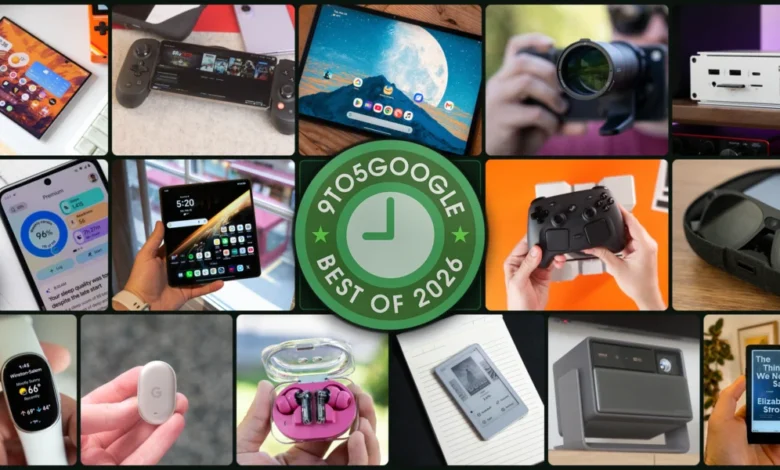
The technology landscape of 2026 was fundamentally shaped by "RAMageddon," a period of significant supply chain volatility that drove the cost of essential components to historic highs. This industry-wide inflationary pressure necessitated a shift in product strategy across the board, forcing manufacturers to move away from experimental "moonshot" hardware toward refined, value-driven designs. Throughout 2026, the most successful products were those that prioritized incremental iteration—optimizing weight, battery life, and user experience—over radical, high-cost innovation. As the market stabilized toward the end of the fourth quarter, this focus on efficiency allowed consumers to distinguish between hardware that justified its premium price tag and devices that relied on novelty rather than utility.

Chronology of a Challenging Year
The year began with lingering concerns regarding the global semiconductor shortage, which had reached a fever pitch by late 2025. In the first quarter of 2026, manufacturers began announcing revisions to their roadmaps, scaling back on speculative categories to focus on core consumer staples. By May, the industry saw a pivot toward specialized wearables and revamped gaming peripherals, exemplified by the release of the Fitbit Air on May 26 and the Steam Controller (2026) on May 4.

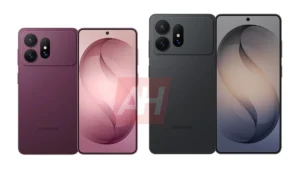
As the summer months approached, the foldable smartphone market saw its most significant maturity spike in years. The launch of the Honor Magic V6 in March and the Samsung Galaxy Z Fold 8 in August demonstrated that the form factor had finally transitioned from a niche luxury to a viable daily driver for power users. The fourth quarter marked a return to aggressive consumer electronics launches, with the XGIMI Horizon 30 Pro, Amazon’s rebranded Alexa Tablet 12 Pro, and the long-awaited Google Pixel Tag all arriving in time for the holiday shopping window, effectively capping a year of pragmatic design.
Analysis of Market Drivers and Consumer Sentiment

The defining characteristic of 2026 was the "cost-to-value" ratio. With hardware prices rising, consumers became increasingly discerning. According to market analysts, the "premium-midrange" category saw the highest growth, as users sought flagship-level longevity without the $2,000 price point. This trend favored companies like Nothing, which continued to gain market share by offering high-fidelity audio equipment at aggressive price points, such as the Ear (3) and Ear (3a) series.
Furthermore, the emergence of the XREAL Aura in November signaled a potential shift toward a new class of Extended Reality (XR) hardware. Unlike the bulky, expensive headsets of the early 2020s, the Aura utilized a compute-puck architecture to reduce facial weight, addressing one of the primary barriers to mass adoption of spatial computing.

Fitbit and the Wearables Evolution
The Fitbit brand underwent a strategic reorganization in 2026, splitting its product focus between the screenless, minimalist Fitbit Air and the more traditional, display-equipped Fitbit Edge. The Air, released in May, represented a departure from the "smartwatch-as-notification-hub" philosophy, opting instead for background health tracking. Conversely, the October launch of the Fitbit Edge served the demographic that requires immediate access to data, such as heart rate or time, via an always-on display. This dual-pronged strategy allowed Google to capture both the "digital detox" segment and the performance-oriented fitness market simultaneously.

Breakthroughs in Gaming and Productivity
Gaming hardware in 2026 was defined by the democratization of high-end performance. The release of the 2026 Steam Controller and the popularization of the open-source DroidDeck project provided users with unprecedented control over their gaming ecosystems. DroidDeck, in particular, gained significant traction by utilizing advanced translation layers like Proton and FEX to allow mobile devices to run PC-grade software, essentially bypassing the need for native Android ports for a vast library of titles.

In the productivity sphere, the Keychron Thunderbolt 5 Dock stood out as a critical piece of infrastructure. As workers continued to rotate between home offices, hybrid setups, and varying machine architectures (from x86 to ARM-based systems), the need for high-bandwidth, reliable connectivity became paramount. The 14-in-1 dock provided a centralized hub that supported the massive data throughput required for 2026’s high-resolution displays and peripherals.
The Rise of Specialized E-Reading

A surprising trend in 2026 was the resurgence of interest in dedicated e-paper devices, driven by a collective desire to mitigate screen fatigue. The Onyx Boox Picco and the XTEINK X4 Pro captured this market by offering "distraction-free" reading experiences. The XTEINK X4 Pro, specifically, catered to the "second-screen" movement, allowing users to magnetically attach an e-paper display to the rear of their primary smartphone. This innovation allowed for long-form reading without the blue light exposure associated with OLED smartphone panels.
Oppo and the Global Hardware Divide

Despite the successes mentioned, 2026 also highlighted ongoing regional disparities in hardware availability. The Oppo Find X9 Ultra was widely cited by critics as one of the best-designed smartphones of the year, yet its limited global availability remained a source of frustration for enthusiasts. Its success in China, however, proved that there is significant consumer appetite for uncompromising camera hardware and refined software experiences like ColorOS, even as the global market faced consolidation.
Implications for 2027 and Beyond

The legacy of 2026 will likely be the industry’s newfound respect for iterative refinement. The "Best of 2026" list was populated not by experimental failures, but by mature products that solved real-world problems—whether that was the need for reliable object tracking (Pixel Tag), the desire for lighter VR alternatives (XREAL Aura), or the necessity of accessible PC-quality gaming on the go (DroidDeck).
Looking ahead, the successful integration of AI-assisted health monitoring, the continued refinement of foldable screen durability, and the expansion of the Android XR ecosystem appear to be the primary pillars of the next development cycle. Manufacturers who learned the lessons of 2026—prioritizing supply chain resilience and focusing on the core utility of their devices—are poised to lead the market into 2027.

The shift toward a more conservative, value-centric approach has not hindered innovation; rather, it has forced it into more meaningful directions. By abandoning the "growth at all costs" mentality that dominated the early part of the decade, the tech sector has entered a period of stability that benefits both the manufacturer and the end-user. As the year concludes, the focus remains on devices that don’t just add features, but integrate seamlessly into the daily workflows and health habits of a global consumer base. This is the definition of success in a year where every component counted, and every product had to prove its worth on the merits of its performance, not just its marketing.