The shadow of Grand Theft Auto 6 and the internal pressures facing open-world developers in a post-launch landscape

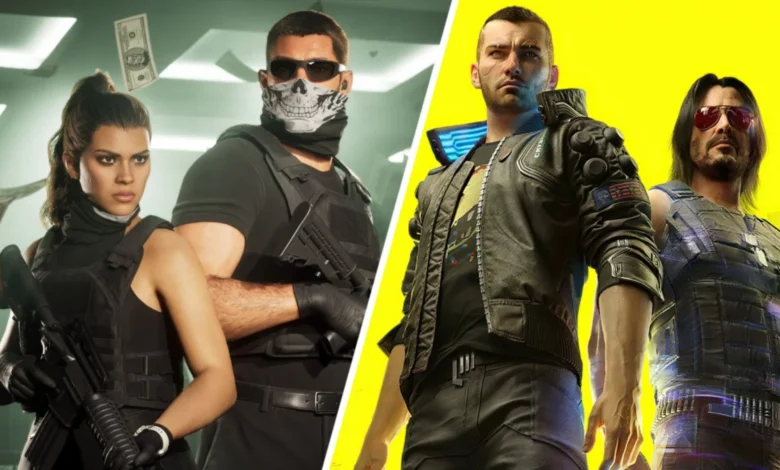
The release of Grand Theft Auto 6 has fundamentally altered the discourse surrounding the current state of the interactive entertainment industry. As Rockstar Games celebrates a historic commercial milestone—surpassing $3.7 billion in revenue within its first 24 hours of availability—the sheer magnitude of this achievement has triggered a wave of introspective commentary among veteran developers. Igor Sarzynski, the creative director of the upcoming Cyberpunk sequel at CD Projekt Red, recently catalyzed a broader industry conversation by characterizing the game’s scale, density, and technical execution as a singular achievement in the history of the medium. While his initial comments were framed through the lens of humorous hyperbole, they highlight a burgeoning anxiety regarding the sustainability of AAA development budgets and the increasing difficulty of competing in the high-fidelity open-world subgenre.
A Chronology of Industry Disruption
The path to this moment has been paved with years of anticipation and significant capital expenditure. Since the initial announcement of the title, Rockstar Games maintained a rigorous standard of secrecy, punctuated by highly controlled trailer releases that managed to break concurrent viewership records on digital streaming platforms. The fiscal trajectory of the project is equally staggering; reports from financial outlets, including Bloomberg, have placed the total production budget for the project at upwards of $1 billion. This figure accounts for not only direct development costs but also the massive logistical, marketing, and infrastructure requirements necessary to support a title of such unprecedented scope.
When the game officially launched, the immediate financial impact underscored the shift in the gaming landscape. By eclipsing the $3.7 billion mark in a single day, the title essentially created a new fiscal ceiling for the industry. This performance has effectively reset investor expectations, forcing other major studios to contend with the reality that the "standard" for success in the open-world category has been moved significantly higher.
The Developer Perspective: Competition vs. Inspiration
The public discourse on the social media platform Bluesky between Igor Sarzynski and lead writer Anna Megill provided a rare glimpse into the psyche of developers working on competing tentpole projects. Sarzynski’s assertion that the game represents a "technological and creative miracle" reflects a sentiment shared by many in the industry who view the title not merely as a competitor, but as an expansion of what is technically achievable on current-generation hardware.
However, the dialogue also addressed the "GTA-induced-open-world-game-dev-depression"—a term used to describe the daunting prospect of matching the polish and systemic depth exhibited by Rockstar’s latest release. For studios like CD Projekt Red, which is currently deep in the development of the next Cyberpunk installment, the challenge lies in balancing technical ambition with distinct creative identity. While the public might draw direct comparisons between two massive open-world experiences, the developers themselves emphasize that their design goals are fundamentally divergent. Cyberpunk, by its nature, relies on different thematic foundations, role-playing systems, and narrative structures than the crime-simulation focus of the Grand Theft Auto series.
Economic and Technical Implications
The broader implications of this release are twofold: the pressure on development cycles and the evolution of audience expectations. A project with a billion-dollar budget requires a level of long-term financial stability that few studios can maintain. This creates a market environment where only the most well-capitalized companies can afford to produce content of such complexity.

Furthermore, the technological benchmarks established by the game create a "bar-raising" effect. Players who experience the level of environmental coherence and artificial intelligence density present in the new title are likely to hold future releases to similar standards. This places immense pressure on mid-sized and even other AAA studios to optimize their engines and production workflows to avoid appearing obsolete upon launch.
From an analytical standpoint, this suggests a consolidation phase in the industry. As development costs rise to meet these new expectations, the risk of failure becomes increasingly catastrophic for individual projects. Consequently, the industry may see a shift toward longer development cycles, more conservative project green-lighting processes, or a greater reliance on iterative franchise building to mitigate risk.
The Search for Unique Value Propositions
In his follow-up statements, Sarzynski clarified that while the influence of such a massive project is undeniable, it serves as a source of creative motivation rather than a mandate for homogenization. The "unique flavor" of other projects remains their primary defense against being overshadowed. For the team at CD Projekt Red, the focus remains on delivering a narrative-driven experience that prioritizes the specific brand of dystopian storytelling that defined its predecessor, rather than attempting to replicate the specific mechanical loop of the Grand Theft Auto experience.
Industry observers suggest that the key to success for other developers will be differentiation. While Rockstar has cornered the market on "scale and density," other studios are finding success by leaning into specialized niches, such as intricate tactical combat, branching narrative depth, or non-traditional art styles. By focusing on these distinct pillars, developers can avoid the trap of direct comparison, which is inevitably skewed by the astronomical disparity in budgets.
Institutional Responses and Future Outlook
As the dust settles on the launch, major publishers are likely conducting extensive internal audits of their own pipelines. The sheer efficiency of Rockstar’s output, despite the long wait times between installments, serves as a masterclass in brand management and technical polish.
Looking forward, the industry is poised to see a divide between titles that attempt to chase the "limitless" open-world model and those that prioritize focused, high-intensity gameplay loops. The former will require massive teams and decades of institutional knowledge, while the latter may find success by providing a more curated experience that doesn’t attempt to compete on raw map size or simulation depth.
Ultimately, the anxiety expressed by developers is a natural reaction to a paradigm shift. Every decade or so, a title arrives that redefines the technical boundaries of what is possible, forcing every other studio to re-evaluate their roadmap. While the "GTA 6 effect" is real and creates a daunting landscape, it also provides a roadmap for what can be achieved with sufficient time, resources, and technical vision. The challenge for the rest of the industry is not to be the next Rockstar, but to define their own legacy in a market that has finally reached a new level of maturity and complexity. Whether this results in a period of creative stagnation or a new wave of innovation remains to be seen, but one thing is certain: the bar for interactive entertainment has been permanently elevated.
Related posts: