The Methodology of the Study
The research, published in the peer-reviewed journal NeuroImage: Reports, focused on a cohort of 44 healthy adolescents, aged 16 to 19. The demographic breakdown included 25 female and 19 male participants, all of whom were assessed through a combination of neuroimaging and behavioral metrics.
To ensure a comprehensive analysis, the research team utilized high-resolution MRI scans to map the volume of grey matter—the brain tissue containing neuronal cell bodies, which is essential for processing information and executive function. Parallel to these scans, the participants provided detailed self-reported data regarding their daily leisure screen time, the nature of their smart device interaction, and their physical activity levels. Furthermore, the researchers objectively measured physical fitness through standardized shuttle runs and standing long jumps, attempting to triangulate the relationship between physical health, lifestyle habits, and neurological architecture.

Key Neurological Findings
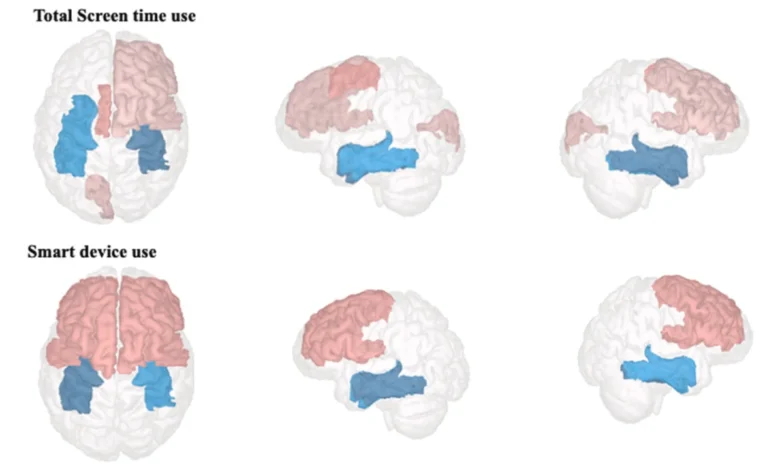
The results of the MRI analysis highlighted distinct, localized differences in brain structure that appear to correlate with how much time an adolescent spends engaging with digital interfaces. Notably, participants who reported higher volumes of daily screen time exhibited lower grey matter volumes in the medial temporal lobe. This specific region is fundamentally involved in the formation of long-term memories, spatial navigation, and the encoding of new information.
Conversely, the study identified larger grey matter volumes in segments of the frontal lobe among those with higher device usage. The frontal lobe is the command center for executive functions, including attention control, working memory, complex decision-making, and motor planning. Additionally, researchers observed structural variations in the occipital lobe, the primary visual processing center of the brain. These findings suggest that the brain may be adapting—or responding—to the specific, repetitive demands of digital stimuli, such as the rapid visual transitions found in modern mobile gaming and short-form video content.
The Developmental Context: Synaptic Pruning
To contextualize these results, it is necessary to understand the adolescent brain’s natural maturation process. During the teen years, the brain undergoes a vital process known as "synaptic pruning." This biological phenomenon acts as a refinement mechanism, where the brain eliminates weaker or redundant synaptic connections while strengthening others. This process facilitates greater neural efficiency, allowing the brain to transition from a broad, flexible network to a more specialized, high-performance system.

The researchers suggest that the larger grey matter volumes observed in the frontal and visual regions of high-screen-time users might indicate a deviation from this standard developmental trajectory. If the brain is being subjected to constant, high-intensity visual and attention-based input, the pruning process may be delayed or altered. In this interpretation, more grey matter is not necessarily a sign of superior cognitive capacity, but rather a reflection of the brain struggling to reach the refined state typical of a more mature, efficient neural architecture.
Comparative Data and Lifestyle Factors
While the study provides a significant snapshot, it also underscores the complexity of modern lifestyle factors. Previous research has consistently shown that sedentary behavior, which often accompanies excessive screen time, can have deleterious effects on brain health. The Finnish study attempted to account for this by incorporating physical fitness data into their models.
However, the researchers noted that once adjustments were made for multiple statistical comparisons, some of the links between physical activity, fitness, and brain structure became less clear. This suggests that the relationship between physical health and digital habits is multifaceted and potentially interdependent. For instance, the time spent on a screen is time that is not spent in physically demanding or aerobic activity, creating a dual impact on both the cardiovascular system and the neurological systems that thrive on physical engagement.

Limitations and the Need for Longitudinal Research
It is critical to interpret these findings with caution. The study is cross-sectional, meaning it captures a single moment in time rather than tracking these adolescents over years. Consequently, the research demonstrates a correlation—a link—between screen habits and brain structure, but it does not establish a causal relationship. It remains possible that teenagers with specific brain architectures are more predisposed to seek out high-intensity digital engagement, rather than the devices themselves causing the observed changes.
Lead researcher Hannamari Skog and her team have been clear that these results serve as a foundational step toward understanding a much larger, more complex phenomenon. "The connections between lifestyle factors and brain structures in adolescence are complex, and more research is needed to understand their long-term significance," Skog stated. Future studies will likely need to employ longitudinal methodologies—tracking the same individuals over decades—to determine if these structural differences persist into adulthood or if they represent temporary, reversible states of neuroplasticity.
Broader Implications for Public Health
The implications of this research are far-reaching. As schools, workplaces, and social spheres migrate increasingly to digital platforms, understanding the "cost" of screen exposure is becoming a priority for pediatricians and educational psychologists.

If high screen usage truly correlates with changes in the medial temporal lobe—a structure vital for learning—the implications for academic performance and long-term knowledge retention could be profound. Furthermore, the potential impact on the frontal lobe’s executive functions suggests that our digital habits may be altering our capacity for deep, sustained focus. In an era where "attention economy" is the prevailing business model for technology companies, the biological cost of participating in that economy is a question that society has only recently begun to ask.
The Path Forward
As we move toward a future where AI-driven content and immersive digital environments become even more prevalent, the findings from the University of Eastern Finland offer a timely warning. We are currently conducting an uncontrolled experiment on the adolescent brain. While the current study does not suggest that smartphones are inherently "villainous," it does suggest that they are not neutral tools. They are powerful stimuli that interact with the most plastic and vulnerable organ in the human body.
The scientific community is now calling for a more nuanced approach to screen time guidelines. Rather than focusing solely on a total number of hours, future research will likely focus on the type of engagement—distinguishing between passive consumption, active creation, and educational use. By differentiating between these modes of interaction, researchers hope to provide parents and policymakers with more actionable, evidence-based recommendations.

Ultimately, the study serves as a reminder that the brain is a reflection of the environment it inhabits. Just as physical exercise shapes the musculature and cardiovascular system, the digital environment shapes the neural pathways of the next generation. As we continue to integrate advanced technology into every facet of our lives, maintaining a balance—one that honors the biological requirements of the human brain—will be essential to ensuring the health and cognitive development of our youth. Further research, particularly large-scale longitudinal tracking, will be the definitive tool in deciphering whether these structural variations are merely a transient adaptation to a digital age or a permanent shift in human cognitive evolution.