The consumer audio market has long faced a persistent challenge: delivering authentic, multi-dimensional home theater sound without requiring the sprawling speaker arrays and cavernous architectural layouts traditionally demanded by high-end surround-sound systems. For apartment dwellers, urban homeowners, and those utilizing secondary living spaces or bedrooms, compact soundbars have served as the primary compromise. While models like the original Sonos Beam and the subsequent Beam Gen 2 established industry benchmarks for balancing footprint, usability, and price, they inherently relied on digital signal processing to simulate height effects, lacking the physical drivers necessary to project true overhead audio.
Enter the Sonos Beam Ultra, a $699 audio solution that attempts to bridge the gap between space-saving minimalism and genuine spatial audio performance. Featuring a redesigned acoustic architecture, dedicated upward-firing drivers, and integration with the company’s next-generation software ecosystem, the Beam Ultra positions itself as a significant evolutionary step for the brand’s mid-tier audio lineup.
Acoustic Architecture and Performance Metrics
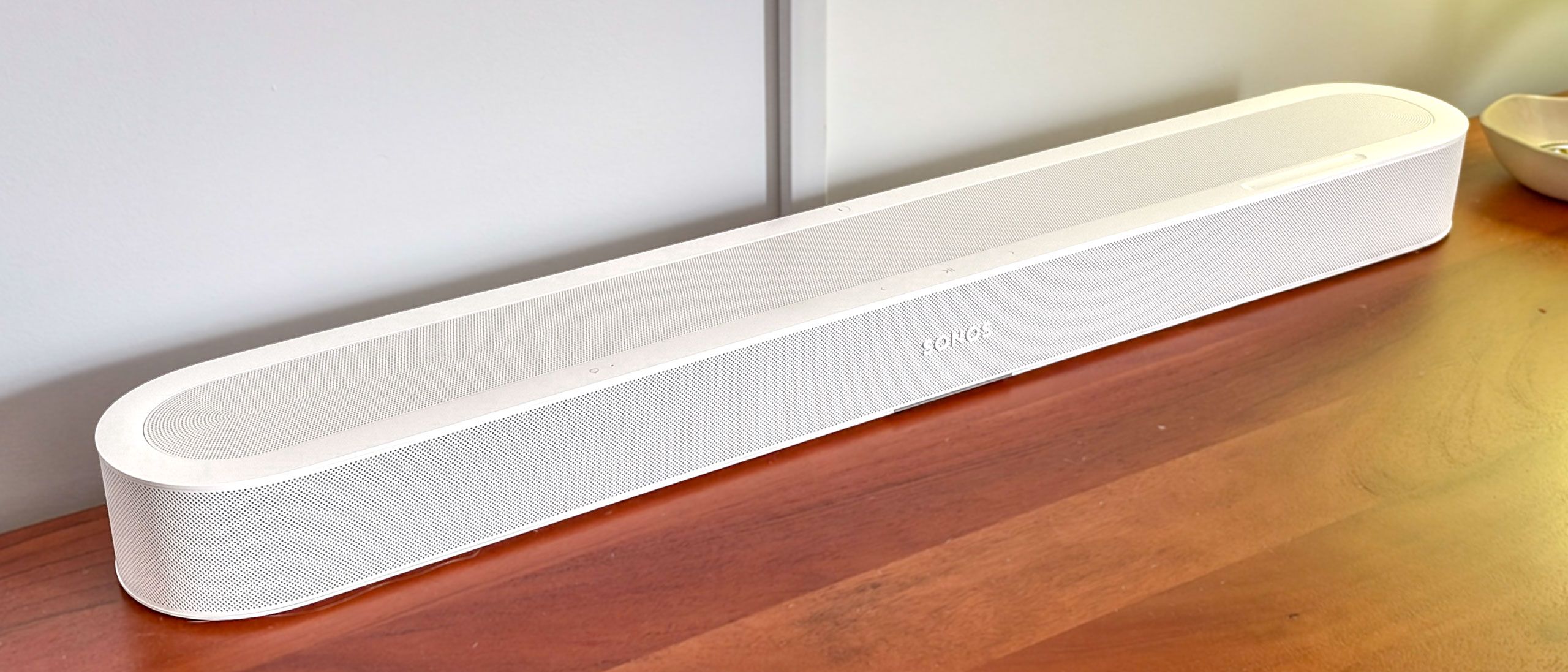
At the core of the Sonos Beam Ultra is a complete overhaul of its internal hardware compared to its predecessors. While the Beam Gen 2 utilized a configuration built around a single center tweeter, four mid-woofers, and three passive radiators, the Beam Ultra expands its capabilities significantly. The device incorporates nine Class-D digital amplifiers driving an array of five tweeters—including two specifically angled upward into directional acoustic horns—alongside four dedicated woofers. This hardware layout facilitates a 7.2.1-channel spatial audio experience, enabling the soundbar to reproduce genuine Dolby Atmos height effects rather than relying solely on psychoacoustic trickery.
In practical testing environments, this physical hardware upgrade translates into a remarkably wide soundstage. During complex cinematic sequences featuring vertical audio cues, such as overhead aircraft passes or sweeping environmental effects, sound elements project visibly upward toward the ceiling and track fluidly across the room. Furthermore, dialogue clarity has seen a measurable enhancement. Sonos has implemented an AI-assisted speech enhancement algorithm designed to isolate spoken word tracks from dense orchestral scores and aggressive sound effects. This processing ensures that dialogue remains anchored to the center channel and easily intelligible without introducing unnatural high-frequency harshness or artifacts.
Design Philosophy and Installation Parameters
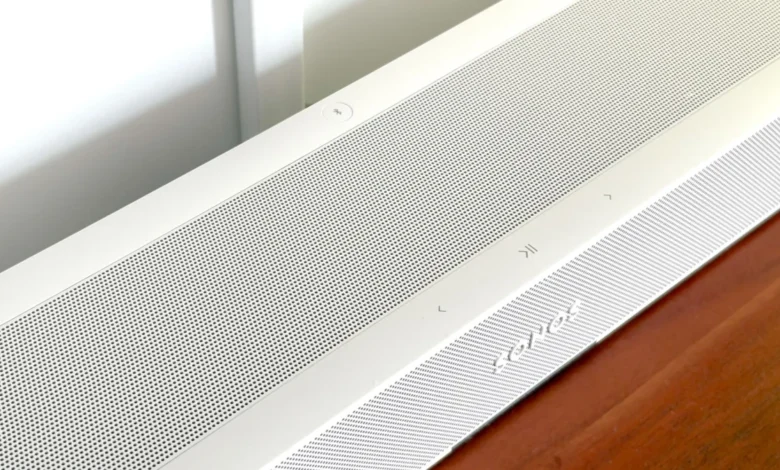
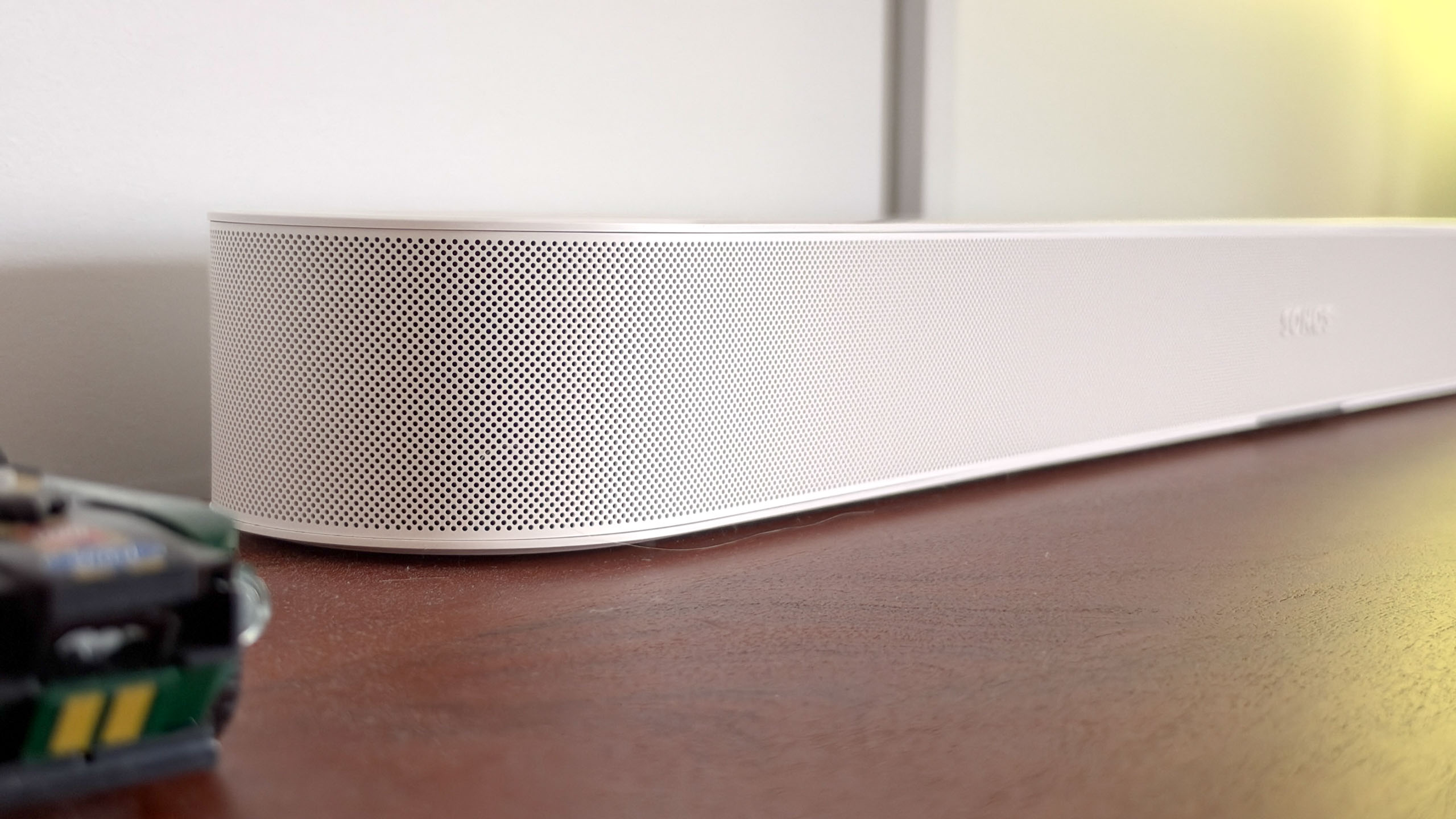
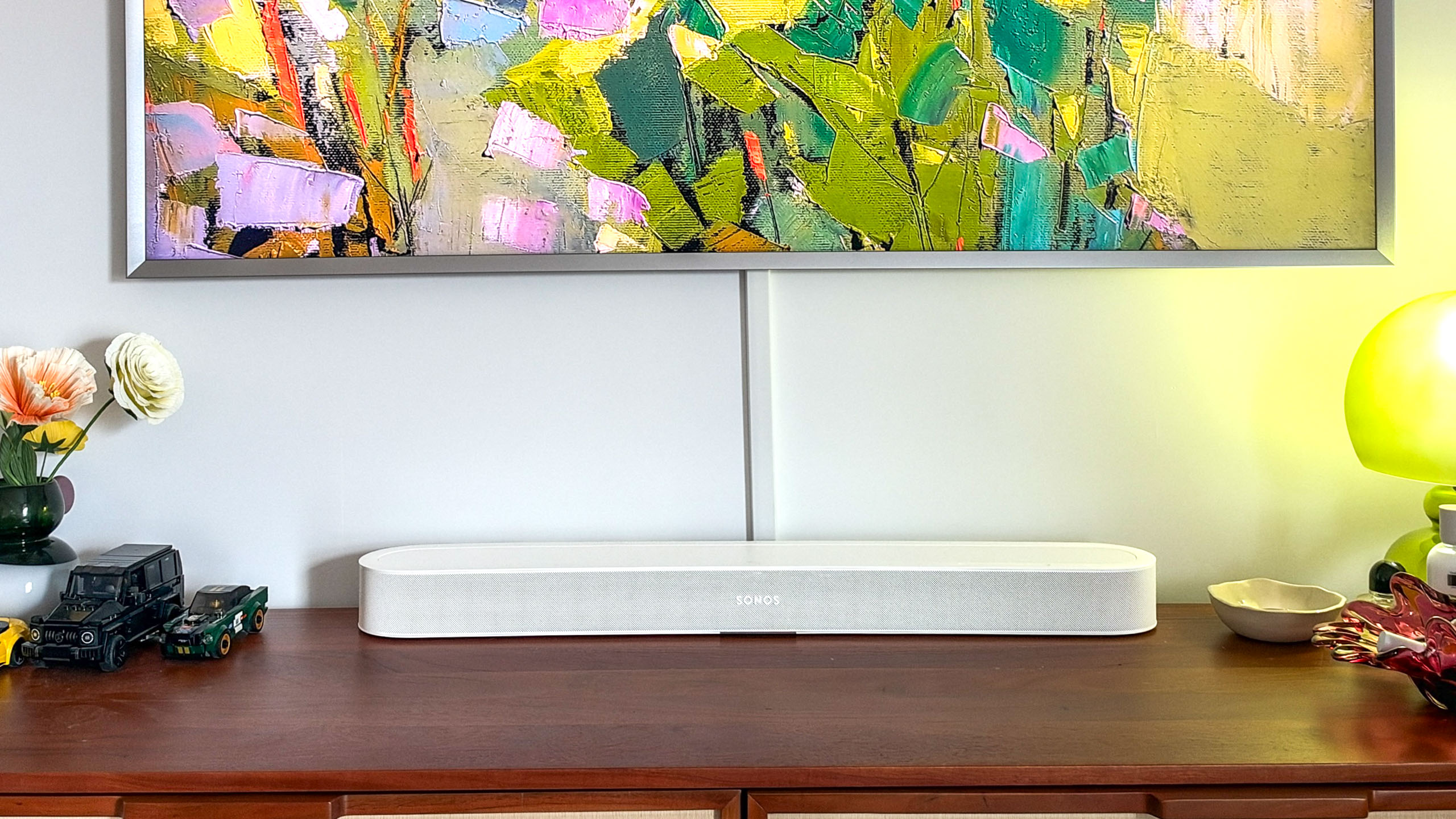
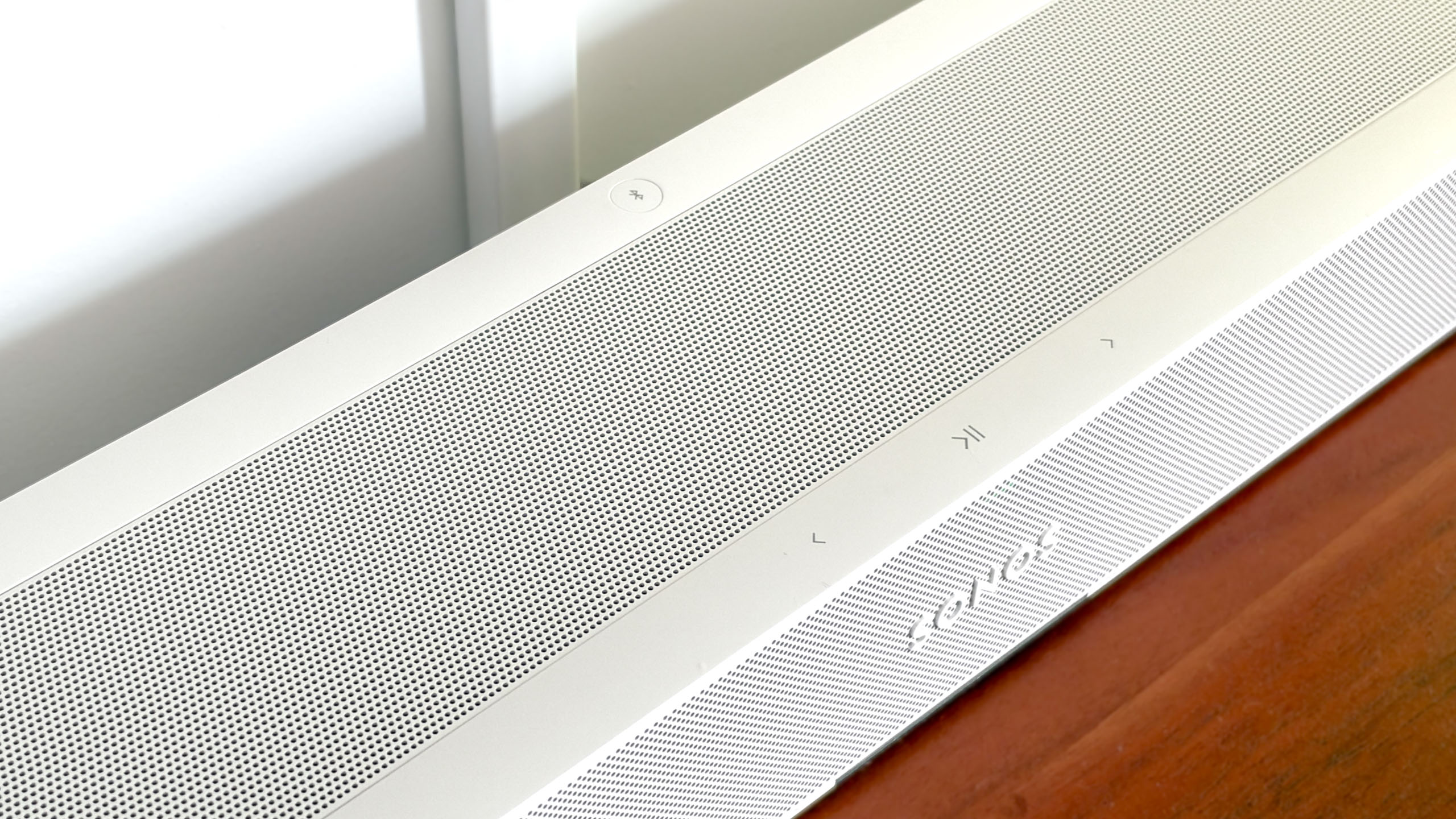
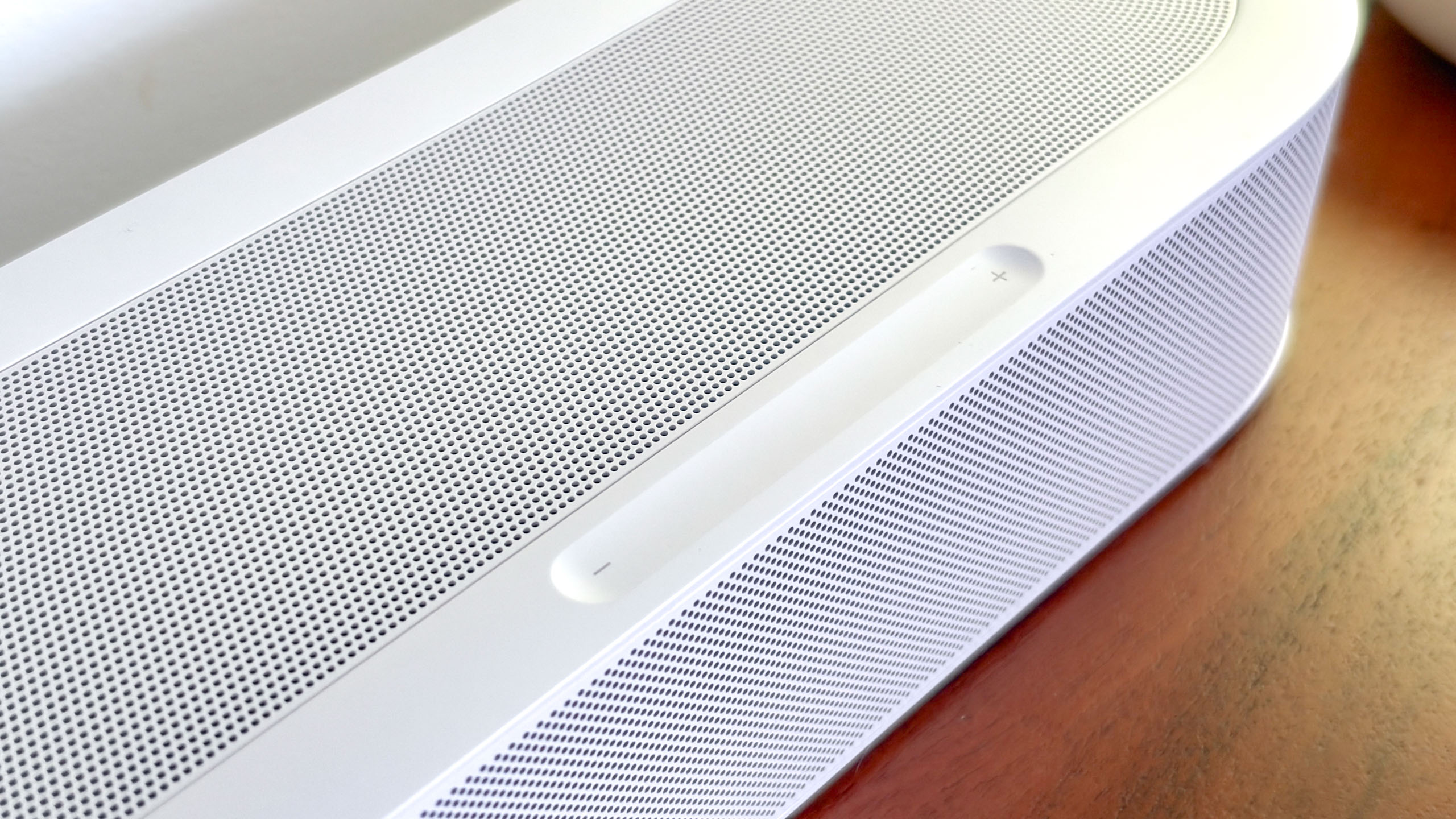
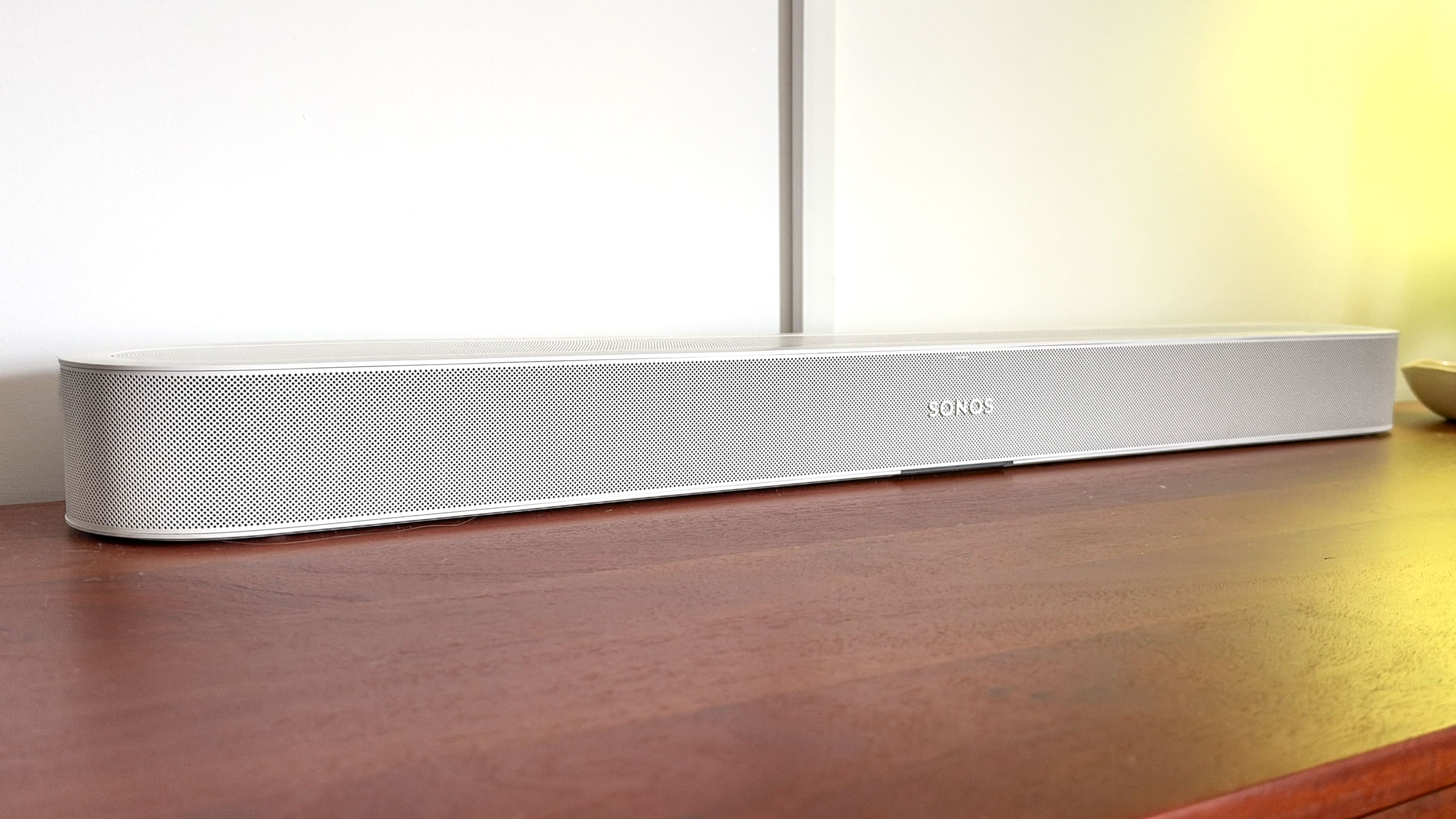
Measuring just 2.5 inches in height, the Beam Ultra maintains the low-profile silhouette that has defined the Beam product line. Its matte finish and uniform micro-perforated grille align with Sonos’s established minimalist industrial design language, allowing the hardware to sit comfortably beneath standard display bezels without obstructing the lower edge of the screen. With a slightly wider footprint than previous iterations, the unit is dimensionally optimized to anchor televisions ranging from 55 to 65 inches.
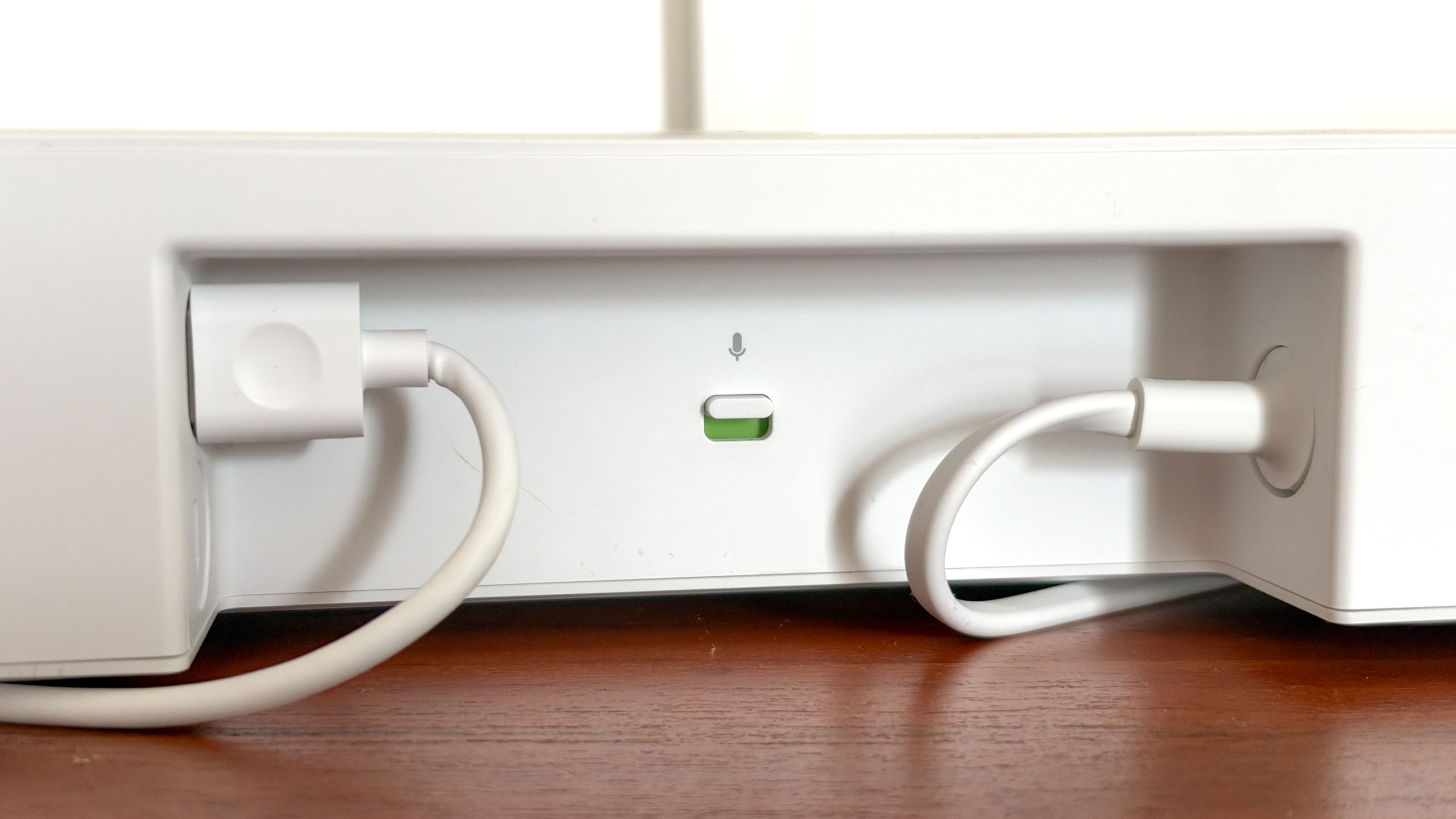
Physical installation remains straightforward. Utilizing a single HDMI eARC connection, the soundbar interfaces directly with the host television to route uncompressed audio formats. In situations where network configuration or device synchronization is required, the setup procedure is managed through the Sonos application ecosystem. Notably, the Beam Ultra introduces an expedited Trueplay calibration routine. Leveraging the soundbar’s built-in far-field microphones, the system can autonomously complete room acoustic calibration in approximately 30 seconds, removing the manual requirement for users to wave a mobile device around the room to map spatial reflections.
Ecosystem Integration and Software Context
The launch of the Beam Ultra coincides with the deployment of Sonos 27, the manufacturer’s next-generation operating system. This software release arrives following a challenging period for the company, marked by user friction and criticism stemming from a major app overhaul in 2024. Sonos 27 aims to rebuild consumer confidence by streamlining navigation, improving system stability, and introducing smarter control protocols.
Within a multiroom audio environment, the Beam Ultra functions as an integrated node. Users can stream audio from auxiliary sources connected to other Sonos hardware—such as a turntable paired with a Sonos Era 100 in an adjacent room—directly to the soundbar. Additionally, the operating system supports advanced headphone connectivity, allowing users to seamlessly hand off television audio streams to compatible private listening devices, such as the Sonos Ace Ultra, without navigating complex Bluetooth pairing menus.
The soundbar also retains its modular surround capabilities. Users can dynamically pair compatible portable or standalone speakers, such as battery-powered Sonos units, to serve as temporary rear surround channels over a localized Wi-Fi connection. This wireless configuration eliminates the need for dedicated speaker wire routing, offering temporary flexibility for home theater sessions before the auxiliary units are returned to general-purpose room duties.
Trade-Offs and Limitations
Despite its advanced acoustic capabilities, the Beam Ultra involves certain compromises that prospective buyers must weigh against its $699 price point.
Chief among these is its performance with traditional two-channel stereo music. While spatial audio and Dolby Atmos tracks benefit immensely from the new driver array, standard stereo music streamed via platforms like Spotify Connect or Sonos Radio sounds competent and balanced, yet fails to represent a generational leap over the preceding Beam Gen 2. Listeners prioritizing dedicated music reproduction with wide stereo separation and deep midrange punch will likely find that a traditional stereo pair of bookshelf speakers offers superior fidelity.
Connectivity is another area of strict minimalism. The Beam Ultra features a single HDMI eARC port and does not include auxiliary HDMI pass-through inputs. Consequently, all external media players, gaming consoles, and streaming boxes must be connected directly to the television, which then routes the audio signal back to the soundbar. For consumers operating within the limitations of older television hardware or a restricted number of high-bandwidth HDMI 2.1 ports, this lack of pass-through capability can introduce routing challenges.
Market Positioning and Competitive Landscape
Priced at $699, the Sonos Beam Ultra occupies a strategic middle ground within the broader soundbar market.
Compared directly to its predecessor, the Beam Gen 2—which remains available at a lower price point—the Beam Ultra justifies its cost through physical height channels and superior vertical dispersion. At the opposite end of the spectrum, the flagship Sonos Arc Ultra, priced at $1,099, features advanced Sound Motion driver technology designed for expansive, dedicated home theater spaces. However, the physical dimensions and acoustic output of the Arc Ultra can easily overwhelm standard bedrooms or smaller apartments, making the Beam Ultra a more appropriate scale for medium-sized living environments.
Competitors in the wider consumer electronics space offer distinct alternatives. The Bose Smart Soundbar 600 provides physical Dolby Atmos height channels at a more accessible price point, while the Sony BRAVIA Theater Bar 7 appeals specifically to gamers and owners of Sony displays by incorporating HDMI pass-through and advanced television-integrated dialogue controls. Despite these alternatives, the primary differentiator for the Beam Ultra remains its deep integration within the Sonos ecosystem, making it a compelling option for users invested in whole-home audio expansion.
Industry Implications and Buying Recommendations
The introduction of the Sonos Beam Ultra underscores a broader industry shift toward packing sophisticated spatial audio capabilities into compact form factors. As consumers increasingly prioritize living spaces that minimize visible hardware clutter without sacrificing cinematic immersion, manufacturers are forced to engineer complex acoustic waveguides and multi-driver arrays into smaller physical enclosures.
For consumers currently utilizing an original Sonos Beam or Beam Gen 2, the decision to upgrade depends heavily on the importance of spatial audio performance. Movie enthusiasts who consume a high volume of Dolby Atmos content will find the vertical separation and clarity offered by the Beam Ultra to be a substantial improvement. Conversely, casual viewers or those primarily focused on stereo music playback may find the performance delta insufficient to justify the cost over existing hardware.
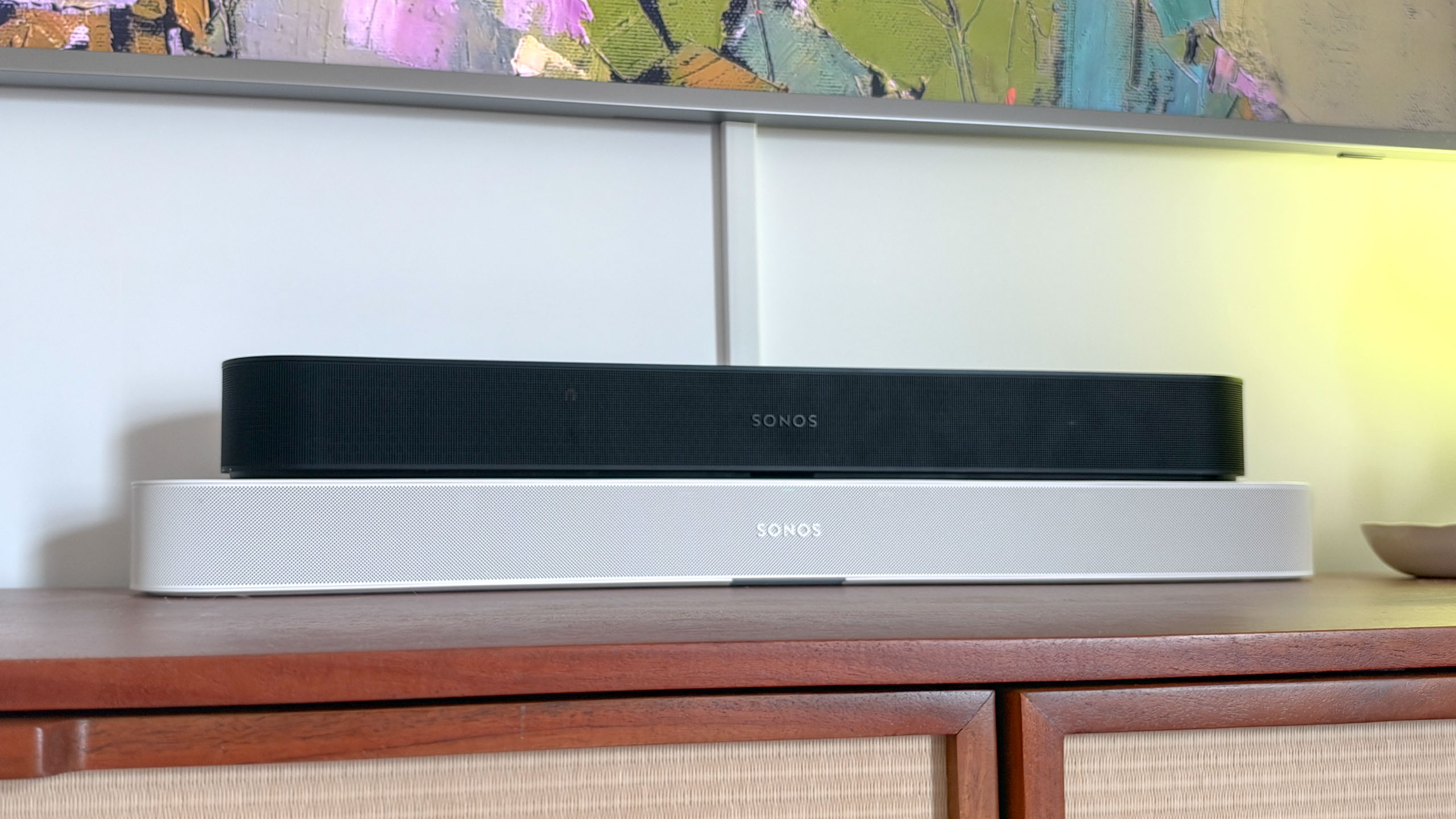
Ultimately, the Sonos Beam Ultra establishes itself as a highly capable audio solution for urban apartments, bedrooms, and mid-sized living areas. By successfully integrating genuine height channels, refined dialogue processing, and ecosystem versatility into a discreet chassis, it addresses the historical limitations of compact soundbars while setting a technical standard for the category moving forward.