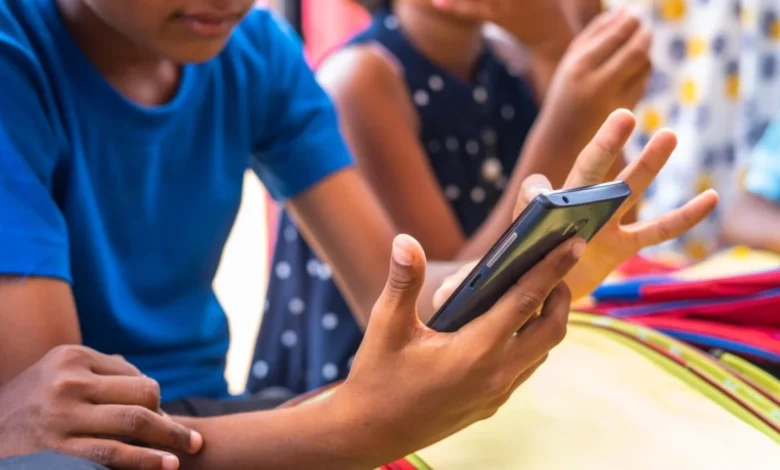
The digital landscape for minors is undergoing its most significant transformation since the inception of the World Wide Web, as a wave of national governments moves to implement strict age-based bans on social media access. What began as a localized debate over screen time has evolved into a coordinated global legislative movement, with Australia serving as the primary catalyst. By mid-2026, more than a dozen nations have either enacted, proposed, or are actively debating laws that would legally bar children—typically those under the ages of 14, 15, or 16—from holding accounts on platforms like TikTok, Instagram, Facebook, and X. These measures represent a fundamental shift in responsibility, moving the onus of digital safety from parents to the multi-billion-dollar technology corporations that design and maintain these platforms.
The impetus for this global crackdown is rooted in a growing body of psychological research and public health data. Governments across five continents have cited a "youth mental health crisis" characterized by rising rates of anxiety, depression, and self-harm linked to algorithmic amplification and "addictive" design features. Furthermore, the prevalence of cyberbullying, online grooming, and exposure to inappropriate content—including pornography and radicalization—has prompted leaders to characterize the current internet environment as a "Digital Wild West" that requires immediate and forceful intervention.
The Australian Precedent and the Global Domino Effect
Australia officially set the global standard in December 2025 with the passage of the Online Safety Amendment (Social Media Minimum Age) Act. This landmark legislation established a hard age floor of 16 for social media usage. Unlike previous attempts at regulation, the Australian law does not allow for parental "opt-ins," meaning even with a guardian’s permission, a child under 16 is legally prohibited from maintaining an account. The law places the burden of proof on the platforms, requiring them to implement robust age-verification technologies or face fines exceeding $50 million AUD.
However, the Australian model has already faced significant headwinds. In July 2026, a government-commissioned study suggested that the ban was proving difficult to enforce, as tech-savvy minors utilized Virtual Private Networks (VPNs) and third-party account creation services to bypass geofenced restrictions. Additionally, the platform Reddit launched a high-profile legal challenge against the Australian government, arguing that the law infringes on free speech and fails to distinguish between "broadcast-style" social media and community-led discussion forums. Despite these hurdles, the Australian experiment emboldened other nations to follow suit, creating a "domino effect" across Europe and Asia.
The European Front: France, the UK, and the European Union
Europe has emerged as the most active region for social media restrictions. France is poised to become the first European nation to fully enact a ban, with legislation targeting children under 15 set to take effect on September 1, 2026. Under the French law, all existing accounts held by minors will be subject to new verification requirements by January 2027. The French government has emphasized that this is not merely about restriction but about "digital hygiene," aiming to return childhood to the physical world.
In the United Kingdom, the government confirmed its own impending ban for under-16s in June 2026. Building upon the existing Online Safety Act, the UK’s new measures are expected to mirror the Australian model but may go further. British regulators are currently debating "overnight curfews" for teens aged 16 and 17, which would involve algorithmic throttles to prevent late-night scrolling, as well as a total ban on infinite-scroll mechanisms for all minors.

Other European nations have introduced varying age thresholds:
- Austria: Announced a bill in March 2026 to ban social media for those under 14, while simultaneously introducing "Media and Democracy" as a compulsory school subject.
- Greece: Plans to implement a ban for under-15s by January 1, 2027, with Prime Minister Kyriakos Mitsotakis citing "addictive design" as a primary threat to adolescent sleep and anxiety levels.
- Spain: Proposed a ban for under-16s in February 2026, with Prime Minister Pedro Sánchez promising to make "algorithmic manipulation" of illegal content a criminal offense.
- Poland and Slovenia: Both nations are drafting legislation to set a minimum age of 15 for social media access, citing the need for pan-European consistency.
At the supra-national level, the European Union is exploring a bloc-wide ban for children under 13. European Commission President Ursula von der Leyen presented a report in July 2026 suggesting that digital platforms must "prove they do no harm" before being allowed to host younger users. The EU has already launched its own age-verification app to provide a standardized, privacy-preserving method for platforms to confirm user ages without requiring the handover of sensitive government ID to private companies.
North America: Canada’s Safe Social Media Act
Canada joined the movement in June 2026 with the introduction of the Safe Social Media Act. While it mirrors the 16-year age floor seen in Australia and the UK, the Canadian legislation is notable for its inclusion of Artificial Intelligence (AI). The law will apply not only to traditional social media platforms but also to companies providing AI chatbots, such as OpenAI’s ChatGPT, Google’s Gemini, and Anthropic’s Claude. Canadian lawmakers argue that AI companions pose a unique psychological risk to minors, potentially fostering unhealthy attachments and providing unregulated advice on sensitive topics.
The Asia-Pacific Landscape: Malaysia and Indonesia
In Southeast Asia, the approach has been characterized by a focus on "high-risk" platforms. Malaysia’s Online Safety Act (ONSA), which became fully enforceable in June 2026, prohibits children under 16 from holding accounts on any platform with more than eight million users. This effectively targets global giants like YouTube, TikTok, and Meta’s suite of apps.
Indonesia followed a similar path in March 2026, with the Ministry of Communication and Digital Affairs ordering the deactivation of accounts held by minors under 16 on "high-risk" platforms. Indonesian officials have been particularly vocal about the link between social media usage and the rise of online gambling and predatory financial schemes targeting the youth.
South America and the Middle East: Brazil and Turkey
Brazil’s Digital Statute of Children and Adolescents, enacted in March 2026, requires minors under 16 to link their social media profiles to a legal guardian’s account. It also mandates that platforms disable "auto-play" features and other "persuasive design" elements for younger users. Turkey passed similar legislation in April 2026, blocking those under 15 and requiring platforms to provide rapid, 24-hour response times to requests for the removal of "harmful" content.
Chronology of Major Legislative Milestones (2025–2026)
- October 2025: Denmark announces plans for a social media ban for children under 15.
- November 2025: Malaysia introduces the Online Safety Act 2025.
- December 2025: Australia passes the world’s first total ban for under-16s.
- January 2026: Malaysia’s ONSA comes into force.
- February 2026: Spain and Slovenia announce draft legislation for bans under 16 and 15, respectively.
- March 2026: Brazil’s Digital Statute takes effect; Indonesia and Austria announce their respective bans.
- April 2026: Turkey passes its social media restriction bill; Greece announces its 2027 implementation goal.
- June 2026: Canada introduces the Safe Social Media Act; the UK confirms its under-16 ban.
- July 2026: France finalizes its ban for under-15s; the EU proposes a bloc-wide age limit of 13.
Supporting Data and Analysis of the Youth Mental Health Crisis
The rapid adoption of these laws is supported by alarming data regarding adolescent well-being. According to 2025 global health reports, nearly 40% of teenagers aged 13–17 report feeling "overwhelmed" by the pressure to maintain a certain image on social media. In the United States and Commonwealth nations, emergency room visits for self-harm among adolescent girls have increased by more than 60% since 2012, a timeline that correlates closely with the rise of the smartphone and image-centric social platforms.

Furthermore, a 2026 study by the Global Digital Safety Council found that the average minor is exposed to at least one instance of "harmful content"—ranging from extreme dieting advice to violent imagery—within 15 minutes of creating a new account on major platforms. This "algorithmic rabbit hole" effect is a primary target of the new legislation, with many countries now legally defining "algorithmic amplification" as a liability for tech executives.
Official Responses and Technical Challenges
The technology industry’s reaction has been a mixture of cautious cooperation and staunch opposition. Meta (the parent company of Facebook and Instagram) has argued that age verification should be handled at the app store level (Apple and Google) rather than by individual apps. TikTok has expressed concerns that "blanket bans" will drive children to the "dark web" or less-regulated corners of the internet where safety controls are non-existent.
From a technical standpoint, the enforcement of these bans remains the greatest challenge. Current age-verification methods include:
- Facial Geometry Estimation: Using AI to estimate a user’s age based on a video selfie.
- Government ID Verification: Uploading a passport or driver’s license.
- Credit Card/Bank Verification: Using financial records to confirm adulthood.
- Third-Party Vouching: Requiring an adult with a verified identity to "vouch" for another user.
Privacy advocates warn that these methods could lead to the creation of massive databases of biometric and identity data, which could be vulnerable to hacking or government surveillance.
Broader Impact and Implications for the Future
The global movement to ban social media for kids marks the end of the era of "permissionless innovation" for Big Tech. As these laws move from proposal to enforcement, the digital experience for the next generation will look vastly different. We are likely to see the rise of "walled garden" platforms—services specifically designed for minors that lack social feeds, likes, and algorithmic recommendations—and a resurgence in offline, community-based activities.
The long-term success of these bans will depend on whether governments can stay ahead of the technological "cat-and-mouse" game played by minors using VPNs and decentralized platforms. Regardless of the outcome, the legislative landscape of 2026 confirms that the world’s governments no longer view social media as a neutral tool, but as a regulated utility that requires strict age-based boundaries to protect the foundational well-being of the youngest citizens.