This phenomenon represents the latest iteration of digital linguistic evolution, where complex social sentiments are distilled into single, recognizable pictographs. To understand why an icon of a salty side dish has become a weaponized insult, one must look at the intersection of fast-food culture, internet meme cycles, and the unique communication style of Gen Alpha.
The Linguistic Roots of the "Fries" Phenomenon
The origins of this trend can be traced back to the viral catchphrase, "Just put the fries in the bag, bro." Emerging on social media platforms around 2024, the phrase was initially used as a mocking rhetorical device. It served as a way to undermine someone who was perceived as overstepping their social boundaries, delivering an unsolicited lecture, or posturing with an inflated sense of self-importance. By telling someone to "put the fries in the bag," the user was effectively dismissing the target’s opinion by suggesting their only social utility was to perform a menial service task.
The phrase itself is a descendant of the 2022 meme, "Just put the ketchup in my bag, bro." Both iterations share a common ancestry in internet-based insults that rely on class-based tropes to belittle others. By framing the target as a service worker, the aggressor attempts to invalidate the target’s argument by suggesting they are "beneath" the level of a serious interlocutor. Over time, the phrase transitioned from a verbal jab into a meme that signaled the end of a conversation.
From Verbal Jab to Emoji Shorthand
As internet discourse moves at an increasingly rapid pace, the tendency toward visual shorthand has become more pronounced. In 2026, the transition from typing the full sentence to using the 🍟 emoji was a natural step for a generation that prioritizes brevity and visual impact.

The usage has bifurcated into two primary contexts:
- The Solo Fry (🍟): This is used as a standalone descriptor for content deemed "cringe" or "corny." If a user posts a video that feels overly earnest, poorly acted, or inherently embarrassing, the comment section is frequently flooded with the fries emoji. It serves as a visual equivalent of a collective eye-roll.
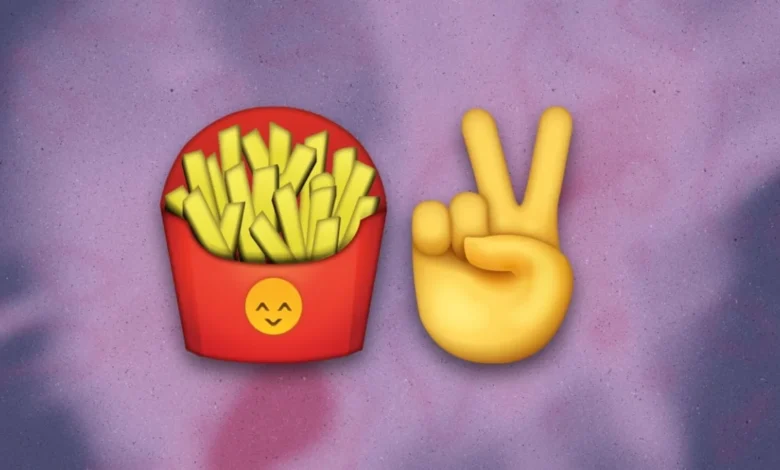
- The Fry and Peace Sign (🍟✌️): This pairing is more aggressive and carries a clearer instruction: "wrap it up." It is the digital equivalent of someone walking away while another person is still speaking. The peace sign acts as a dismissive farewell, suggesting that the speaker has exhausted the audience’s patience and should cease their monologue immediately.
Data and Behavioral Analysis of Digital Slang
The speed at which this trend has permeated Gen Alpha discourse is indicative of the "attention economy" that governs modern social media. According to digital culture researchers, Gen Alpha’s language is characterized by "meme-ification," where words and symbols lose their literal meanings and gain context-dependent social capital.
A study on communication patterns in 2026 suggests that younger users are less likely to engage in long-form, paragraph-based debates. Instead, they utilize "high-density" communication—symbols that convey multiple layers of meaning simultaneously. The fries emoji is an efficient tool in this regard; it communicates a rejection of the content, a judgment of the creator’s social standing, and a command to silence, all in a single character space.
The Broader Implications of "Service-Based" Insults
While the trend may seem like harmless, albeit rude, internet humor, it carries more complex social implications. Sociologists have pointed out that the normalization of "just put the fries in the bag" as an insult reinforces a problematic hierarchy. By using a service industry role as a punchline, the slang implicitly mocks the labor of those who work in the food service sector.
When this sentiment is reduced to an emoji, the original context is often stripped away, making it easier for users to deploy it without considering the underlying classism. For many young users, the connection to fast-food employment is purely abstract; they see the emoji as a tool to win an argument or signal status, unaware—or perhaps indifferent—to the fact that the insult relies on demeaning a specific type of occupation.

Chronology of the Trend
- 2022: The phrase "Just put the ketchup in my bag, bro" gains traction on Facebook and early TikTok, establishing the trope of using fast-food service as a way to shut down conversation.
- 2024: The phrase evolves into "Just put the fries in the bag, bro," becoming a dominant meme on TikTok to mock "oversharers" and those with unsolicited opinions.
- 2025 (Mid-Year): The meme begins to saturate mainstream Gen Z discourse, moving from spoken video content into text-based comment sections.
- Early 2026: Gen Alpha adopts the concept, moving toward pure visual representation by stripping the phrase down to the 🍟 emoji.
- October 2026: The usage becomes widespread enough to be identified as a primary form of "dismissive communication" on major social media platforms.
Reaction and Cultural Reception
Public reactions to this shift in vernacular have been mixed. Older generations on social media platforms have expressed confusion, often asking, "Why is everyone talking about fries?" This confusion only deepens the divide, as the inability of older users to decode the emoji serves as a further indicator of their status as "outsiders" to the current trend cycle.
Among creators, the emoji is viewed with a mix of frustration and resignation. Content creators who rely on high levels of engagement are often the primary targets of the insult, as they are the ones most frequently posting long-form content that invites comment-section critique. "When I see the fry emoji, I know the video didn’t land," says one prominent creator who requested anonymity. "It’s a signal that I’ve lost the room. It’s brutal, but it’s effective."
Future Outlook: The Fragility of Digital Slang
The rapid rise and fall of internet slang is a hallmark of the digital age. Just as quickly as the fries emoji rose to prominence, it is likely to be replaced by another symbol or phrase once its novelty wears off or it becomes too associated with "older" trends.
However, the trend serves as a pertinent case study in how language evolves in a decentralized environment. The French fries emoji is no longer just an icon of a meal; it is a semiotic marker of a specific social attitude. It represents a generation’s desire to maintain control over their digital spaces, filtering out "cringe" content and silencing voices they deem irrelevant or exhausting.
As we move forward, the "fries" phenomenon will likely be analyzed as a moment where the line between digital discourse and socioeconomic commentary blurred. For now, however, it remains a potent, if somewhat unkind, fixture of the Gen Alpha lexicon. If you find yourself on the receiving end of a 🍟✌️, it is perhaps best to take the hint: the digital audience has spoken, and they are ready for you to move on.