Meta Connect 2026: Mark Zuckerberg Unveils the Muse Personal AI Agent, Next-Gen Ray-Ban Glasses, and a Ultra-Lightweight VR Headset

Meta Platforms has officially signaled a definitive strategic realignment, shifting its primary corporate focus away from the speculative boundaries of the metaverse toward deeply integrated artificial intelligence. During the keynote address at the Meta Connect 2026 conference in Menlo Park, California, Chief Executive Officer Mark Zuckerberg introduced a suite of hardware and software innovations anchored by "Muse," a sophisticated personal AI agent. While the company reaffirmed its commitment to immersive hardware, including augmented reality (AR) glasses and a radically redesigned virtual reality (VR) headset, the overarching narrative of the event was clear: ambient, agentic AI is now the foundational layer of Meta’s ecosystem.
The announcement marks a significant evolution from the company’s 2021 rebranding, which prioritized the development of a fully realized virtual world. According to Zuckerberg, initial assumptions within Meta dictated that immersive virtual environments would mature ahead of artificial superintelligence. However, rapid, compounding breakthroughs in machine learning and neural network processing forced a strategic pivot. Meta has consequently restructured its product pipeline to place intelligence-driven, context-aware AI agents directly into the hands of consumers, utilizing hardware as the delivery mechanism rather than the ultimate destination.
The Evolution of Muse: Meta’s Centralized Personal AI Agent
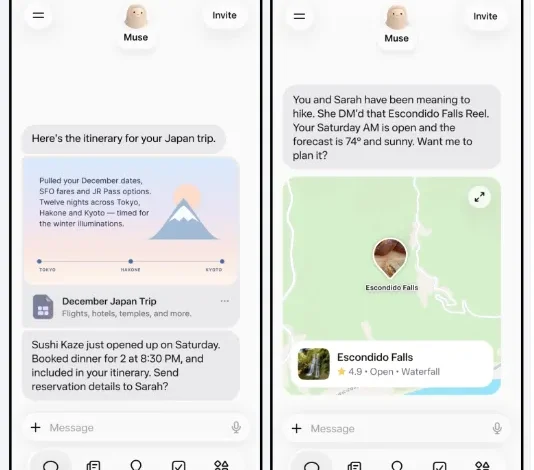
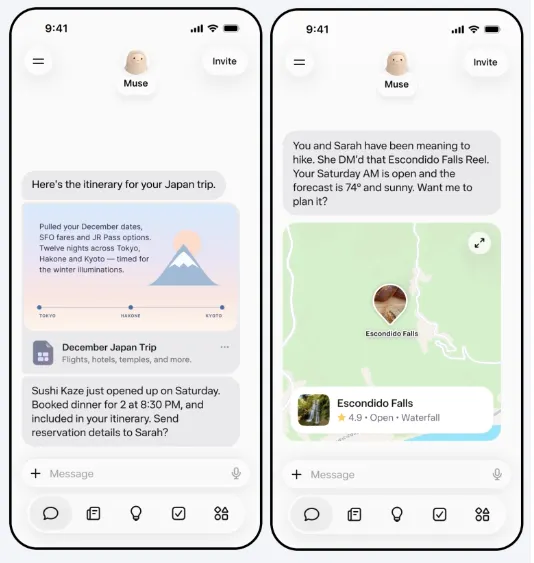
At the heart of Meta’s 2026 product roadmap is Muse, a persistent personal AI agent designed to integrate deeply into a user’s daily digital workflow. Unlike traditional chat interfaces, Muse functions as an agentic system capable of executing multi-step tasks across third-party platforms. Alexandr Wang, Meta’s Chief Officer of Artificial Intelligence, detailed the technological trajectory of the agent during the keynote, outlining upcoming features such as dedicated email addresses for Muse agents to boost operational autonomy.
To facilitate seamless real-world utility, Meta has forged strategic partnerships with major enterprise and retail entities. Companies including Walmart, Best Buy, Gap, Sephora, Expedia, Instacart, and Wayfair are collaborating with Meta to allow Muse agents to interface directly with their respective e-commerce and service platforms. This interoperability transforms Muse from a passive conversational assistant into an active participant capable of managing bookings, orchestrating retail purchases, and organizing logistics.
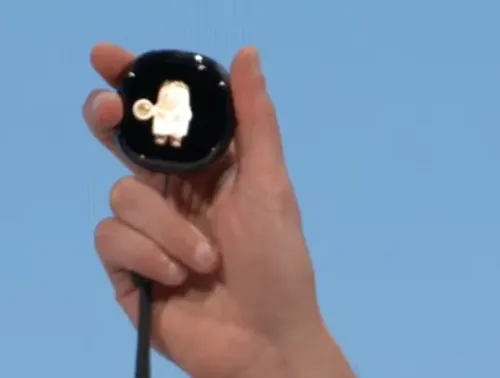
Furthermore, Meta has expanded the geographical availability of Muse, rolling out the service to Canadian users alongside the existing United States market. Users will also gain the ability to customize their agent’s vocal characteristics, offering a more personalized user experience. In a nod to consumer nostalgia and alternative form factors, Zuckerberg also previewed an in-development device called "Muse Charm." Reminiscent of a Tamagotchi digital pet, the Charm is designed to provide persistent, glanceable access to a user’s Muse agent without requiring the user to wear smart glasses or carry a smartphone.
Heightened Privacy Infrastructure: Meta Secure VM and Private Processing
Privacy considerations dominated a substantial portion of the Meta Connect presentations, reflecting ongoing consumer scrutiny regarding data harvesting, device tampering, and unauthorized enterprise access. Both Zuckerberg and Wang addressed these concerns directly by introducing advanced architectural safeguards for both Muse and Meta’s hardware portfolio.
Muse is powered by a proprietary private data processing architecture known as Meta Secure VM. According to Meta’s technical specifications, this system ensures that user data processed by the agent remains encrypted in a manner that prevents even Meta employees from accessing or auditing the underlying information. This zero-knowledge architectural approach represents a concerted effort to build consumer trust as AI systems are granted deeper permissions within personal and professional digital lives.
A parallel privacy overhaul was announced for Meta’s AI glasses. In response to recent public debates concerning LED indicator tampering and the potential for captured visual data to be reviewed by human annotators, Meta is rolling out private processing for all wearable capture devices. This update guarantees that media captured via Meta glasses is shielded by strict cryptographic boundaries, ensuring complete user confidentiality. Additionally, Meta introduced an audio-only variant of its AI glasses, catering to consumers who desire ambient AI connectivity via Meta AI while entirely eliminating the privacy concerns associated with integrated optical cameras.
Hardware Lineup: Ray-Ban Meta Gen 3, Specialized Styles, and Audio Innovations
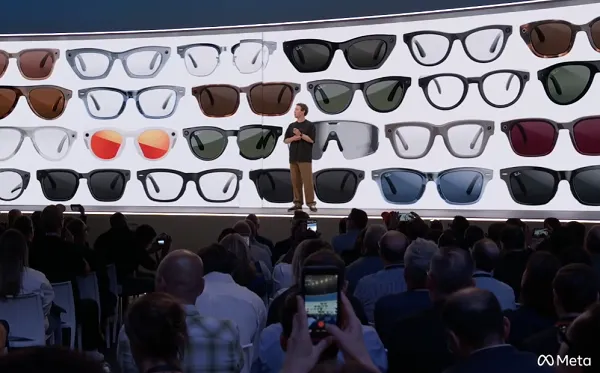
The hardware segment of the conference showcased significant engineering refinements across Meta’s wearable portfolio. The flagship product of this category, the Ray-Ban Meta Gen 3, features a structurally slimmed-down frame profile coupled with extended battery performance.
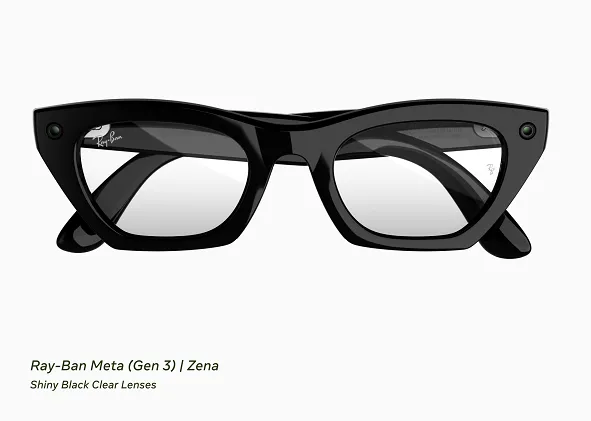
Engineered for enhanced media capture, the Gen 3 glasses introduce advanced capture modes supported by Dolby Atmos spatial audio recording. This capability allows the device to capture and reproduce directional soundscapes with high fidelity, closely mirroring the acoustic environment of the recorded scene. Meta also expanded its aesthetic catalog by previewing specialized styles, including the Aviator and Zena frames, alongside an updated Adventurer model priced at $249.
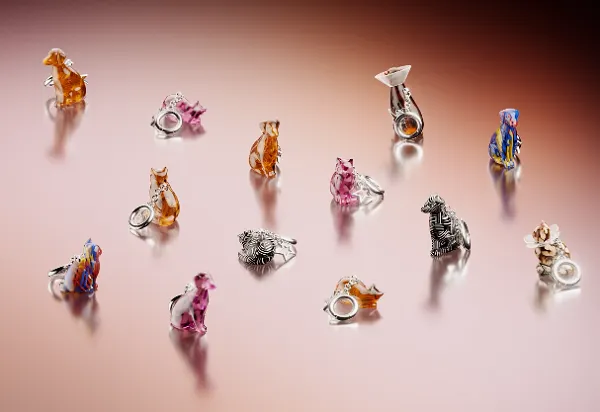
Continuing its successful collaboration strategy with high-profile global celebrities—following previous capsule collections with personalities such as Kylie Jenner—Meta announced an upcoming partnership with K-Pop superstar Lisa. The custom Lisa glasses feature bespoke frames accompanied by physical charms inspired by the artist’s pets.
Concurrently, Meta reported strong market performance for its advanced Display glasses, which have experienced months of supply shortages. Company executives confirmed that manufacturing output is scaling to meet persistent consumer demand, with plans to introduce the Display model to additional international markets in the near term.
Ultra-Lightweight VR Glasses and the Tethered Compute Paradigm
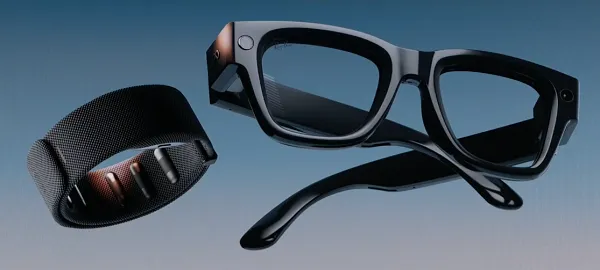
Perhaps the most radical hardware departure revealed at Meta Connect 2026 was the company’s next-generation VR glasses, developed jointly by Zuckerberg and Reality Labs chief Andrew Bosworth. Weighing approximately five times less than the current Meta Quest 3 headset, the new device achieves its featherlight form factor by decoupling the primary computing architecture from the optical display.
Rather than housing heavy internal processors, batteries, and storage components within the facial headset, Meta has adopted a tethered processing unit colloquially referred to as a "puck." Connected to the glasses via a high-bandwidth optical tether, the puck manages all compute, battery, and storage operations while conveniently clipping onto a user’s pocket or bag. The VR glasses themselves are dedicated exclusively to handling advanced sensors and ultra-high-resolution displays, drastically reducing facial fatigue during extended use.
Priced at $1,299 and scheduled to ship in the spring, the next-gen VR device integrates the Muse AI assistant, enabling users to navigate virtual environments and execute complex multi-tasking commands through natural conversational prompts. Meta positions the device as a convergence platform capable of delivering cinema-grade entertainment, virtual workstation capabilities, and immersive gaming experiences within a single unified hardware footprint.
Market Implications and Strategic Analysis
The announcements at Meta Connect 2026 illustrate a calculated maturation of the consumer technology landscape. By pivoting aggressively from the conceptual infrastructure of the metaverse toward agentic AI frameworks, Meta is aligning its vast capital expenditures with immediate commercial utility.
The integration of Muse with major enterprise partners such as Walmart, Sephora, and Expedia suggests that consumer AI agents are poised to become primary gatekeepers for digital commerce. If Meta successfully maintains its stringent privacy standards through architectures like Meta Secure VM, it may alleviate widespread regulatory and consumer anxieties regarding pervasive ambient surveillance.
However, challenges remain. The high price point of specialized hardware—such as the $1,299 next-gen VR glasses—indicates that immersive computing remains a luxury tier market, even as lighter, more accessible form factors like the Ray-Ban Meta Gen 3 and audio-only glasses democratize ambient AI access. As Meta deploys these technologies globally throughout 2026, the success of its ecosystem will depend heavily on the reliability of Muse’s agentic execution and the public’s willingness to embrace deeply integrated, AI-driven daily workflows.